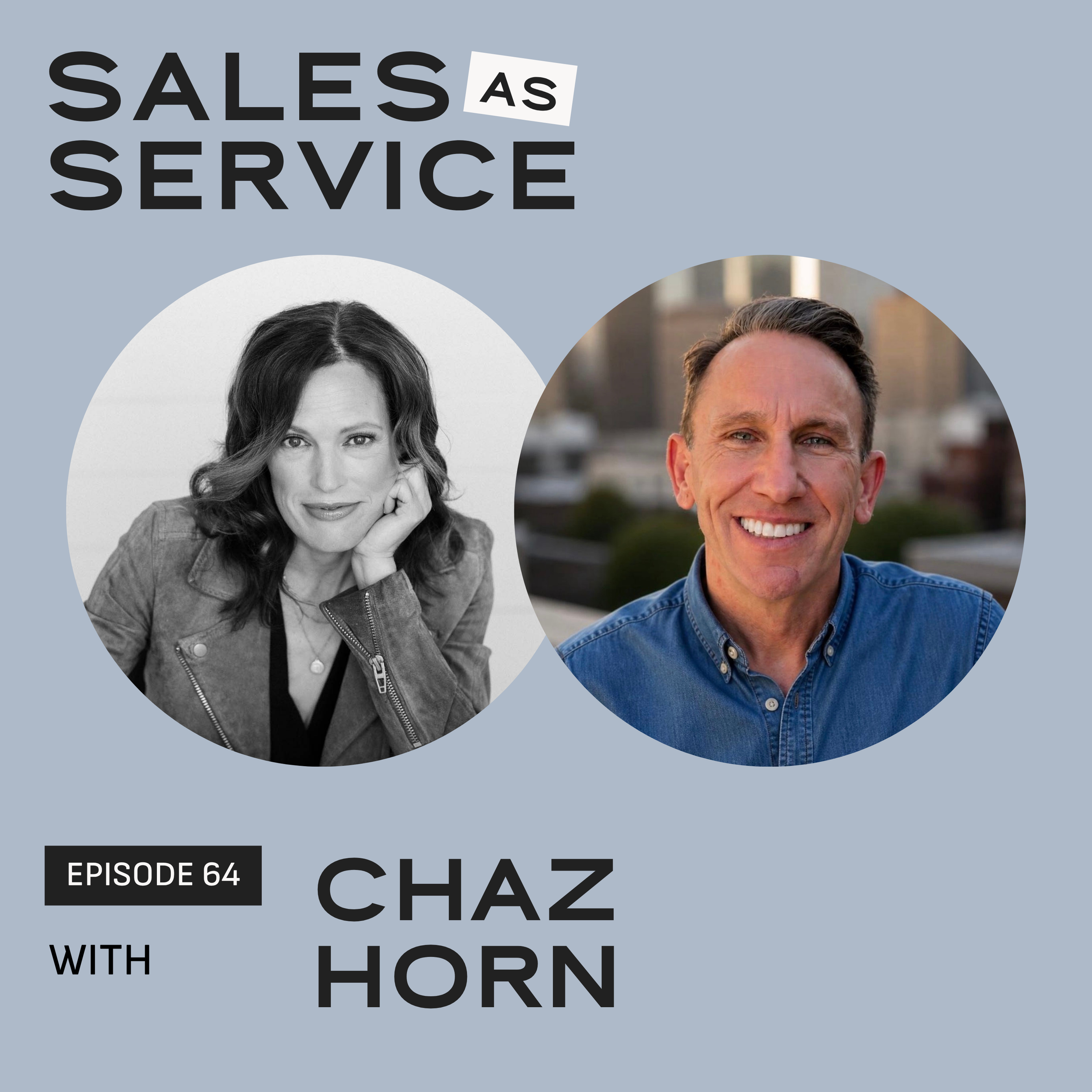
AI Without the Hype: Practical Wins for Sales, Ops, and Marketing with Ed Weeks Jr
EPISODE: 25

If you’ve been curious about AI but hesitant to dive in, this conversation is designed for you. In this episode of Sales as Service, I sit down with AI strategist and GenX advocate Ed Weeks Jr. to strip away the hype and focus on what actually matters—practical, real-world applications that help agencies and service pros work smarter and sell more effectively.
Ed shares how he rebuilt his business after a major setback by embracing simple AI tools that made his sales, operations, and content workflows faster and easier. We explore the fear many founders feel when they hear the word “AI,” why that hesitation makes sense, and how to start experimenting in ways that feel supportive—not overwhelming.
In this grounded, tactical conversation, you’ll hear how AI can become a thought partner, a time-saver, and a powerful ally for small teams who need efficiency without losing the human touch.
Inside the episode, we get into:
How founders can use AI without feeling behind or “not technical enough”
The easiest AI entry points for sales, marketing, and operations
How to use transcripts, voice notes, and summaries to upgrade your prep and follow-up
The three tools Ed uses daily—and why they matter
Why experimenting beats overthinking when it comes to AI
LISTEN TO THE EPISODE HERE 👇🏻
-
Speaker: [00:00:00] What is the biggest misconception about ai?
Speaker 2: That it's the future. I hear it more and more and I'm like, it's, uh, you know, starting to become the past. The time to learn and understand how it can benefit you is now. It's not the future.
Speaker: Welcome to Sales Is Service. The podcast designed to help you change your mind about sales.
Literally, I'm gonna help you change the way you think about selling. I'm Tam Smith, your host. Sales bestie and pitch partner next door. You're tired of bros with biceps telling you how to crush a million dollars in your sleep or battling imposter syndrome on your own. You've come to the right place. All you need to do is listen, then take action.
No gym membership required. Let's get started.
Quick question for you. How many new business inquiries did you generate in the last 30 days? How many were actually sales qualified, and how many of those converted into paying clients? If your results are inconsistent or, hey, maybe you don't even know how to answer that, we need to talk. That's why I.
Created the five minute [00:01:00] sales audit. In just five minutes, you'll walk through a simple set of questions about your sales process and within three business days, I'll send you a personalized video audit and a detailed PDF checklist. You'll see what's working, where the gaps are, and one low lift action you can take right now to improve lead generation and client acquisition.
It's quick, it's actionable, and it'll give you clarity on what to fix Next. Book your audit today at Studio three 40 nine.com/sales audit. Alright. Let's get into today's episode. Hey there, and welcome back to Sales as Service Tam here, sales growth strategist, founder of Studio 3 49, sales, marketing, and your host here on the podcast.
And I've gotta admit something. As someone who values quality over quantity and leads with what I consider to be a human first approach to sales and business development, I just genuinely offended the first time someone suggested I should start using AI in my writing and workflows, words and communication are my craft.
And my first thought was, how dare you suggest such a thing that's cheating. But when I paused long enough to look beneath that reaction, what I realized was that [00:02:00] was fear. Fear of learning something new, fear of losing control over something. I thought I already did pretty well and fear of my role in the process being completely erased.
So I started small. I experimented. What I've discovered is this, AI isn't a shortcut. It's a support system. It's a thought partner, not a threat. And the better I get at asking the right questions, the better my outputs become. And now I can't imagine my business without it, and I know I'm only scratching the surface of what's possible.
That's why I'm so excited for today's conversation with Ed Weeks, Jr. It helps Gen X business owners, especially those of us running agencies and service-based businesses, cut through the AI noise and focus on practical ways to use these tools to grow. We're talking about how to apply AI across sales, marketing, and operations, all without losing the human side of what makes your business work.
We're sharing real examples, favorite tools, and simple ways you can start experimenting this week. So if you've been curious, skeptical, or just plain overwhelmed, we're here for it. Let's dig into how to use AI without the [00:03:00] hype with my guest Ed Weeks, Jr. Ed, thank you so much for being here. Welcome to Sales of Service.
Speaker 2: Thank you. It's my pleasure. I'm glad we finally get to do this.
Speaker: I know, me too. And I'm super excited about this topic and I will let you tell us. Uh, I always like to open these conversations with the same question. Tell us who do you help and how do you serve?
Speaker 2: Awesome. I help a lot of Gen X business owners and.
Don't wanna go deeper than that because it's really, it's more general, but it's it. I found I'm 55, so I found anywhere 10 years below, 10 years above seems to be a really good place. But there's a lot of people that benefit from some of the things that happen in those. Conversations and stuff that I like to put out into the universe now, hopefully can help a lot more people than just that target group.
Speaker: How specifically are you helping them? What are you, what are you bringing to the table?
Speaker 2: Yes. I forgot the second parts of that question. Specifically. I'm helping them get over the fear of that buzzword ai. It's really giving them some [00:04:00] simple tactics and I don't, what I've found is that people who really feel, they know it in depth prompting and all these different pieces that come with ai.
Some simple things can really reset the mind and reset the output that they're getting and they start to understand, oh wow, this isn't a big scary acronym that I'm so scared of. That is, you know, it's not taking my job. It's helping me do better at the current job I have. So that's, that's what I'm finding and that's what I do.
Speaker: I'm super excited to get into this and my, my, uh, hope for this conversation is that it will help to, you know, for those that are fearful. Of it that it'll demystify that, you know, again, that word ai and then for folks that hey are already, um, you know, leveraging it in their own, you know, processes and workflows and, um, new business strategy.
You know, how can they take that next step to really, you know, optimize what they're doing. So let's just start at the beginning for, you know, agencies and service pros listing. What is the biggest misconception about AI that you feel like they should let go of right now? [00:05:00]
Speaker 2: That it's the future. I hear it more and more and I'm like, it's, uh, you know, starting to become the past.
But, uh, that doesn't mean if you haven't done it, you're the time to learn and understand and how it can benefit you is now. It's not the future. So I think it's one of the biggest misconceptions out there. Also. That it's overly complicated. Like the cool part is we can talk to these things now. Right? So I think those two misconceptions that it's somehow in the future because it's here now and it's been here a while and that it's really complicated 'cause it's truly not.
Now I'm not talking about in-depth coding, building out a SaaS even that's not that cool now where you know, for the business purposes it's just play with it and you'll understand. It's not that scary.
Speaker: So, cut. Your own path to focusing on this and your business. Kind of tell, tell us how you arrive at this place.
You know, specifically ki you know, your, the audience that you're working with most consistently and you know, how, how your business evolved to focus on AI and AI implementation. Uh,
Speaker 2: cool. I, so I have run, I ran an [00:06:00] agency for almost eight years. I started in my mid forties. Not midlife crisis, but just, uh, it was time for me to get out of the corporate world.
Started an agency. Loved it. I worked across a lot of media buying across Facebook, Instagram, Google, loved the world. Ended up in a lot of lead generation and. Towards the end of that agency, I started to really dabble and get serious about the AI side of this and started to say, holy cow, you could really just use almost everything, AI to do my job.
How can I buffer? And honestly, I put that agency, which was based mostly in my own area. Out of business to really hone in on, on the AI component of offering what I was learning, what I was understanding to either marketing agency owners or the business owners.
Speaker: Yeah. And so you've built, you know, what you call AI transformation playbooks.
Can you walk us through like a simple, practical example of how, uh, founders and business [00:07:00] owners might use AI in sales specifically without like overhauling everything at once? Like, just an easy, easy first lift.
Speaker 2: I'll give you one of the easiest first lists that you could possibly use, and I know a lot of people use various transcribers.
I'm gonna give you the one I use because I love it across the board. It's tactic.io, and it literally is a game changer for everything that. Comes with the sales side. Even if it's like I do a lot of webinars. I am invited to a lot of mastermind groups and they're all using Zoom or whatever tools they're using.
I use it to go like, I'll give you a good example. If it's a real world, it's happening yesterday, today, and tomorrow. The AI Advantage Summit to Dean Graziosi. It was a long time, Brett and Tony Robbins, and I'm not in the meeting. My tactic is right. I log on and I go away. It's three hours over three days each day.
I don't have that time to do, but my tactic is there taking it. Same. When it comes to a sales meeting, you can take so much [00:08:00] information from tactic, download the transcript. Simple chat GPT to summarize it, create posts, do all these different things. It gives you the easiest solution to start understanding how to use AI in the real world, especially on the sales side.
Speaker: I love that. And I'm having like, why have I not like duplicated myself? There's been so many. Like, again, educational, continuing education, you know, opportunities that I've virtual that I've wanted to participate in, that I just don't have the bandwidth for and I've missed. And so why can't I just, I can like, I can make more of me to be able to take advantage of that stuff
Speaker 2: if, and so the caveat there, so somebody who's a little more advanced, I'm gonna give you the cavi right there.
A lot of people are. A lot of people are starting to understand that, so they're doing YouTube specific trainings or lives that doesn't transcribe for YouTube. However, the go around is if you ever get the replay that you sign up for, you can use the transcript that is put onto YouTube to be able to pull it and do it anyways.[00:09:00]
So it just like you said. You're building in public, right? Basically now building things out in public. That's one of the ways that I can, you know, it's not, so I have my MacBook that I'm on right now. My iPad is right there, my iPhone is right there. I can use my iPad to go in and do the same thing. So. It is a way to duplicate yourself without having, and then it's, it's two seconds to get the summary and what I use and the simple tactic for me is, okay, Chad, here's this, that summary's great, now apply it to me and what can I actually use right now from that?
And I do that all the time and it's, it's a game changer for productivity too.
Speaker: Love that. Okay. Let's talk about the, like the operational side. I mean that kind of, you know, could be leveraged on the operational side too, but like an op specific operational. Tip.
Speaker 2: I hate to be the debtor, but I'm going. So I, I think we talked about this a little bit before in our, in our past conversations, but I think a great operate, and it could be for.
In-person meeting. It could be for operations that, you know, if it's [00:10:00] sales operations out in the field, voice memos, I, I'm specifically talking about an iPhone is a game changer. Like you literally can record and make sure you ask permission. That's the caveat. I always ask permission. I do it now, I even do it with.
Phone calls that come in. I'll use voice memos on my iPad or on my MacBook and just record so I can now have a copy of that transcript once it's over to, again, utilize ai. You do, and it makes you better. You can come at it from perspective of I am a executive assistant and I was trying to, to get all this notes, and here's what I came up with.
Here's the transcription. Tell me what I missed. Tell me how I could do better. Saying you've been doing a sales role. I was out on a sales call. This is the call. What did I miss? What could I do better? Like it. That's how you can start leveraging AI to make you a better player in the space. Right?
Everybody says AI's not gonna take your job. We could fight about that, but. If you're using ai, you're setting yourself up to where that doesn't happen. [00:11:00]
Speaker: Yeah. I was gonna say, you, you touched on a really great point there that it just makes us better. I just know, you know, my own story. It was actually, you know, suggested to me by a client, actually, you know, when we were, when, you know, chat, GPT was first starting to come on the radar and you know, I know ai, you know, is.
It's been around a long time, but as far as like in the public space now, you know how we're talking about it and using it, you know, when the client suggests that to me is a, you know, I'm a content creator, you know, writing and words is my, you know, what I would consider my, my magic. And my first response was, oh, that's cheating.
You know, I can't possibly do that. And then I'm like, okay, let's hit pause. Let's back up. Really investigate this. And I was listening to a podcast where they were talking about, you know, on the visual side of ai, you know, tools like. When Photoshop came out, it didn't replace the photographer, you know, it just made the photographer better.
You know, it gives you tools to enhance creativity, enhance performance and workflow. I mean, I, I think that's a, you know, really for those that are fearful [00:12:00] that, you know, yes there's some automations, things that it does, you know, there's, you know, some redundancy still trying to do things manually, but overall, you know, it just enhances the quality of the work.
And the workflow and the productivity. So I really just wanted to point that out. On the marketing side, you know, you're talking about how you're using it just in your asset creation. Um, tips around that you can share.
Speaker 2: I'm gonna shadow one that we talked about before we start recording. So, you know, the big thing.
So let's to ai, most people now are talking about ai. They mean. Chat, GPT or Claude or Perplexity, and I use them all and I love them all, but I use them against each other. And something we talked about before that I think helped you greatly. You don't have to be a prompt engineer. Like in the beginning you did, right?
You really had the good prompt engineer to get some good output. Now you can literally ask, I think the example I gave you is to ask Claude to act as your prop engineer and create a prompt that you need for what? Ever. It may be I'm a [00:13:00] marketing professional who needs help with my 90 day calendar, my 30 day calendar, whatever it may be.
You can. Put that into Claude and ask it to create the prompt for chat, GPT, and it's amazing how long the prompts can be and you can refine them. If you don't like what it said, you refine it. I do newsletters this way. I literally use various, I use three platforms, specifically Perplexity, Claude, and Chat, GPT, but I have it create my prompts.
If I don't like them, I'll add edit them, and then I just continually. Make the output better by putting them into the different LLMs and make the content come out like, holy cow, you would never know that AI created this. And you have to go in and edit it too, and put your own personal touches on it. But the output is somehow,
Speaker: yeah.
Like it's never, it's, it's never gonna be a copy paste. You know? It, it's as good as the input and it requires, you know, it, I, you've kind of, for myself, you know, it's become a thought partner, you know, in my process that, you know, it [00:14:00] just helps me get that like. Shitty first draft out on the page. Uh, and it saved me, you know, what would take me, you know, half a day, a full day, you know, now I can accomplish and, you know.
An hour or two, you know, if that, so it's just en enhanced my own process and workflow.
Speaker 2: We've done a lot of strategic calls in my old agency. I did a lot in the beginning that would take, like full strategy, would take weeks to put together
Speaker: mm-hmm. Mm-hmm. Hours stuff. Mm-hmm. Mm-hmm. Because
Speaker 2: a, we know the output that we're looking for and once we just, there's a few edits and we're like, wow.
Claude now is learning you too. So that's if you select, let it learn you. That's a good thing. Like, I mean, people are so scared of it that they can know whatever they want about me. They already do on Google. So the reality is once it does that, it the out for me. I hear a lot of people complaining about output and I'm like, it's 'cause your inputs are really bad.
Like the output now. And then when I'm like, no, no, no, wait a minute, you're missing my, what about me apply it to me and how [00:15:00] I would use this. And then it completely changes. Mm-hmm. You know, the edits are fewer and fewer, not that you still, you still need to do them. We agree on that? Yeah.
Speaker: Are you showing up on LinkedIn but not generating leads or referrals?
If you're posting and growing your network, but still not seeing consistent results, the issue likely isn't you, it's your system. Most people don't realize that five to 15% of their LinkedIn connections could be potential clients. That means your next few sales calls could already be sitting in your network.
You just need a strategy to reach them. That's exactly why I created the LinkedIn Lead Generator Challenge. It's a free five day experience to help you turn your profile into a lead generating machine. Inside you'll get access to a plug and play outreach sequence, profile tweaks that attract the right people, and a daily system for outreach and engagement that takes less than 30 minutes to follow.
It's the same method I use with clients to help them build visibility. Create real connection and generate consistent pipeline, all without the salesy energy. So if you're ready to show up on LinkedIn with more intention [00:16:00] and lead with value so you can finally see results, head to Studio three 40 nine.com/linkedin-leads and join us.
Does answering the question, what do you do, send you into a downward spiral. Jamie Cox? Yes. The brand and marketing strategist and green haired girly from episode 12 is running her brand Clarity Lab again this January. It's a cohort based program that helps service providers stop second guessing their messaging, and finally feel confident talking about what they do, who they help and why it matters.
This isn't just another branding course, it's hands-on strategic impact with live experts. Feedback. You'll walk away with a solid brand foundation, a sharper message, and a plan for showing up consistently without the marketing overwhelm. Only 10 spots are available in the next cohort starts January the 12th.
You can apply with the link in the show notes and get all the details at jamie cox.com/brand-clarity-lab. Alright. Back to the episode. So it sounds like you've got, you know, three key tools that you're using, Claude Check, GPT, and Perplexity. And then do you, how do [00:17:00] you organize yourself? Do you, do you keep any kind of like a prompt library or something that you reference to, like how do you, how do you keep your, keep all that organized
Speaker 2: notion?
Right. Everything that I have is on notion, it's my preference. I don't know, it's something I was bought into many moons ago, always was like, why am I paying for this? I don't really use it now. It's like, has all my libraries. Anything that I. I do a lot of giveaways in my newsletter. Like everything is just, just kept on notion.
It makes it a lot easier. And then it also allows me to pull and I'm like, wait a minute, that prompt really stinks. Let me pull that it, and you know, put it back into the LLMs and make a better prompt. So it's consistently making me better.
Speaker: And I know folks listening to this, you know, it can, for all of the platforms that we're talking about, it's like, you know, the, the cost can start to certainly add up where, you know.
For small teams, you know, that are worried about cost and complexity, you know, we're, what are the, I guess those are the essentials, but you know, what's just kind of like a streamlined tech stack to start that you would recommend?
Speaker 2: I, [00:18:00] well, you don't need all of them, right? Yeah. So I love perplexity because of the output that I get from like an image standpoint, like really good.
If you know how to prompt it. The images could be really good. That's why I use it. Honestly, I got that for free. So I'll find that and see if I can give that away to anybody who asked, but somebody gave me a link to get it for free, and it's the pro version. So yeah, why not? But you know, you can use the free version of chat, you can use.
The free version of Claude. I happen to be on the paid 20 and 20. I, I think my, my total tech stack right now is maybe 120. Like I don't use many more tools that I've already talked about. You know, Zapier, when I use it, most of the time, it's on a free side. If it's for a client and we're doing complicated things with Facebook leads and all these other.
Well, generally they're going in and, and I'm having them pay it 'cause I want them to own their tech stock. Something I'm different from other agency. Please make sure you own everything. Yeah, I don't, you don't have to go that deep. I mean you're [00:19:00] talking less than a hundred bucks and most of it can be free.
I'm pretty sure there's a free notion too, right? I think I had a free one for a long time. I, I upgraded 'cause I love the way that their AI on there builds out some of the databases that I use on air make. See,
Speaker: and, and when you think about it, you know, a hundred, 120 bucks a month, put that up against your hourly rate and the time that it builds back, you know, into your day and your week, it makes it so worth it.
Speaker 2: I, I think you just hit, so you said it before and I think it's, you, it as a partner, you can use it as your. Your real virtual assistant, like I use it as my work advisors. I, I've been in a lot of mastermind groups. I have a lot of material that I have uploaded that I use it to run new models against. If you know who Alex or Moey is, Alex and I have all his books that are uploaded.
I have, he has a custom GPT that I run everything through and it. That's not worth 20 bucks to me. I, I don't know what could be. It's, you know, all that material's out there, [00:20:00] something people get a little offended about. I write too, so you don't want all your stuff out there for free, but it's all out there.
And I paid for most of the stuff that I have, but man, my, some of my custom GPTs are so powerful because of that, and that's well worth 20 bucks a month to make.
Speaker: I wanted to ask you about, you know, I've. Used, you know, primarily used the AI tools, you know, again, as a thought partner, but I have not experimented yet with, you know, a lot of automation.
Kind of like is there like low lift place to start with leveraging some of the, you know, automations.
Speaker 2: So, honestly, I, I, I mentioned Zapier before, but I believe you have to be on the paid side of Za. You know, interrupt. People use n and there's so many a make, there's so many other options out there, but they're all, they all have some kind of fee attached to them.
To me, Zapier makes it as easy as could be, honestly, like I. Automation inside of Notion like that and F scan is paid. But man, it's so good. Automation inside of a paid Canva is [00:21:00] so good. The AI is just so good. I'm finding more tools like that. I don't do a lot of these crazy build outs where you're trying, you know, if I do, I use one platform, which is go high level.
Uh, you know, GHL is an automation king and it's a paid side to this equation, so to. I hate to, like, if you can automate some of the things that we talked about in the beginning, like the, the tactic and start automating, making sure that's in every meeting, making sure we're recording as many things as we possibly can to get all that data.
That, to me is more important than automating publishing. You know, uh, I don't know. I think that there's so many other things that are bi and that's why a lot of people have messed up even on the enterprise level. You know, they brought in these. AI experts and I do that in my air quotes because you know, they pay for some, some serious level of automation and then it's just a big mess.
I think that has ways to go. I eventually, if you look at some of the [00:22:00] products that are now aligned inside of Claude or chat, like Notion is another good example. Most of the output I have it automatically go from Claude or chat in, you know, I got my emails automatically read. Like some of those basic things that you could do on.
LLMs are where I would look for automation.
Speaker: Nice. Talk. Talk to me a little bit more about reading. What, what do you have to have automatically You're sending email automatically to,
Speaker 2: no, so I, so I, I, I think it's Claude. I have them both, but I think I use Claude to do it mostly like I have it re so I, I'm a newsletter.
Producer, I, I put newsletter out there, so I have a lot of newsletters that come in my inbox. My log goes in once a day in the morning. 'cause it seems like they all come by 8:00 AM and it reads all of them for me and lets me. No if I should use any of any of the exec. 'cause there's the one thing you learn once you do newsletters is most of the content is just regurgitated.
So you just try to cut through the bf. Like there's one really great one I use. It's called Bagel Box. I love it. And it really [00:23:00] has great prompts in it that you can use as basis or some good sub again, free newsletter. Great. Now, and I have no. Relationship with them. I just love their newsletter, but so I'm sorry we're off track here.
My, my claw goes in and reads all of them for me and lets me know if I can apply anything that is in those newsletters for the day.
Speaker: And I'm assuming you have set up a, like a instructions as far as what you're looking for that's valuable to you, that it would pull out and notify you about.
Speaker 2: And again, I would love to tell you that I am this brilliant.
Prompter understand, but I don't, I so Claude stinks. 'cause you can't, but I literally, I believe I talked to. Chat, TPT, right? I just verse with it to give me the prompt to set this up inside of Claude.
Speaker: I love this. I'm thinking right now this is like next level. 'cause I am using SaneBox in my own inbox and I have a folder right now that has got about [00:24:00] 300 plus.
Well, it's got more than that, but all I'm letting myself like. Uh, look at, but, but it's about 300 plus unread newsletters. Same thing. Subscribe to everything. But there's, you know, a handful that I actually, you know, wanna read and get, get value from. But to set up Claude or, you know, one of the platforms to be able to.
Read all of those for me, you know, based on what is, you know, valuable to me in my business. And give me a summary of that. Oh, that is next level.
Speaker 2: Save time saves a lot of time. So again, I mentioned some things like me and N eight N and zeer, but what happening and what's going or continue to happen? Again, this is why AI isn't the future.
This is happening, right? You gotta learn all these different flows to do these automations. Well, you're gonna start to see happen more and more and it, it does all the time. It, it feels like every other week there's more tools that are API is direct inside of Claw or Chat, GPT. Ity for it, but I'm sure perplexity has the same [00:25:00] pieces Google Mail notion.
There's probably 50, 60 other ones that are on Claude right now that, that allow that instant communication. You just have to set it up and it takes literally seconds. Again, I would love to tell you I was this massive engineer brain, but I'm not. I just use the tools by talking to them, getting the outlets that I need.
It's pretty cool. That's what makes it cool for me.
Speaker: Well, talk to me about, you know, when someone like kind of the. Typically when someone initiates, you know, a conversation with like potential engagement, like what state are businesses in when they start the conversation with you and kind of what's your first step with them and like, can you live two examples?
Maybe you know, one that's like, does it have any ai, you know, implemented in their business? And then one that maybe you know, is a little bit further along. Like how do you start that conversation and get folks comfortable with it?
Speaker 2: So if you were on my LinkedIn right now, you would think that. Every business in the world is knee deep in every AI tool that's available.
And I will tell you still the exact opposite. What I found is [00:26:00] that most people that I've engaged with, especially that Gen X target, we talk about need to be. I've tried it, I've dabbled in it, I hate it, I don't understand it. Or if I'm going specific into. Clinical aspect inside of the clinic that I work in, it's usually an AI component of some other tool that they're using, right?
Maybe it's their, uh, it's inside of dental offices where they do text messaging, right? There's an AI component that they've used in that, that's usually the level, or if it's in a home service, it could be jobber. Like I've used some of the ai, but they don't understand the leaving. Most of the real good AI they, they could use off the table, and that's.
That's usually a starting point. It's something they're already using because now we show them how to maximize it. I will tell you there are, you probably don't, well, you know this, there's a lot of people that are trying to bring components in-house, right? So they, if it's [00:27:00] content, if it's ads, whatever it may be, we can level set to what they're looking to do and start to talk to them about that.
Sometimes when you start going through the process, they actually start to understand why they want to work with somebody different. I don't wanna do this, I wanna bring somebody in, right? I don't need my front end step bothered with trying to figure out AI going and then trying to post it. Like it has the opposite effect where they're now like, wait, I want to use somebody who utilizing AI so they can understand my business better and create the content that I want.
So it's interesting where things go. There's no, it's so unique. Like everything, oh, you know, you iPhone a lot people, like I was point blank, gonna be a fractional cheap AI officer. That was my goal after I shot my agency and then I was like, wait a minute, nobody's using ai. How the hell am I gonna do this?
I the universe that don't have it, the level they should be, they're not there. Yeah. So it's more education, it's more simple things. It's more trying to get more people familiar [00:28:00] and even people that have played with it. Maybe you haven't played with it the right way or from a way that you're thinking from an overall business aspect.
Speaker: Yeah. Nice. Uh, okay. I know we've, we have talked about a lot of tools, a lot of, you know, things people could be doing. For folks listening, what is one win with AI this week? Where should they start?
Speaker 2: Try your. Like I hate, this is so simple, but literally try your, if you're not doing it, try your voice. If you're an iPhone user, try your voice number.
Try it this way. Talk like you're doing a podcast, right? Because I will tell you, I'm actually do my podcast. If I don't have a guest, I do my podcast. Just talking into my phone. Try it. You'll be amazed, even if it's like, as a salesperson, you don't wanna record a conversation with a client in the field.
You go to your car, you go wherever you go afterwards. Probably your car. 'cause you'll, you'll feel less crazy. And just talk to your phone about what just happened, who you met with, [00:29:00] what you were supposed to do. Maybe you didn't get the sale. Here's where you think you did. Try that, take that transcription and upload it and see what it tells you.
That's it. Like literally. And then before you actually upload the transcript, ask chat GPT to act as your prompt engineer. You just had a sales call in. Whatever space. I'm an HVAC technician. I just had a sales call. I'm gonna give you my thoughts on it. Please give me advice acting as my sales trainer of what I could have done better, what I missed, and then upload the transcript.
See what happens if you have the nerve record, the call, that's actually happening. But if you don't do it that way,
Speaker: I love that. You know, I, I feel like the overall message here is just try, just experiment. I think that you know, a lot of the fear. Comes from thinking we have to have this figured out, uh, or that we're gonna break it or mess it up.
And I, you know, I don't think anybody at this point has it figured out. I mean, it's, it's changing so fast and evolving I think. [00:30:00] Yeah, there, there, it's just, just try. Just try. Uh, and just, just experiment
Speaker 2: that that's the best advice. Just do like Nike. Come on. They made a lot of money. Right? Just do it. Like, you'll be amazed.
I didn't know anything about this stuff 18 months ago. Feels like 18 months. It feels like five years, but 18 months I didn't, I just started to play with it. What I don't like to see out there, I'm just gonna say my one pet peeve is all people are just telling you an hour. Learn AI for an hour. Where do you start?
Like what do you do? What do you like? Literally, if you have, if you're gonna start on a chat GPT, just talk to it. Talk to it. It's not gonna tell you, oh, you're a moron, right? Let's talk to it. And you'll start to understand that it'll actually teach you how to use if you start to talk to it the right way.
So that to me is like a great starting point. Talk to the Dart that you can't do that on Claude. I don't know why Claude is so silly and they don't let you talk into it yet, but. That will change.
Speaker: Great advice. Let's jump into our fast five. It's gonna be hard for you to choose, but your, I can't live without [00:31:00] a software app.
If you had to pick
Speaker 2: right now, it's Opus clip. I can't live without it.
Speaker: Tell me a little bit about that. How are you using it?
Speaker 2: So, everything I do podcast wise is also video, like this ordinary. I just have it and I trust it enough. Some of it comes out great for my YouTube shorts and my Instagram, and some of it doesn't, but I just trust it.
I, I generally have to take, I have to always rewrite the copy that it comes out with when it does a pretty good job of consistently making solid clips. That are just no-brainers to put out into the universe. Ultimately trying to use those clips to drive more people to the WARN video.
Speaker: Nice. Uh, best advice you've ever received about sales and business development?
Speaker 2: I think the best advice that I ever received was. Even your losses are wins and you're like the person who told you it's time was, you know, I was probably in my early twenties. I had a great manager who was introducing spin selling and all these things at the record, I'm 55, so that was a long time ago.
But I do remember like all [00:32:00] those losses are wins, and if you start to understand that, you really start to understand some of these things that we're talking about with the tools to use of AI because. Even when you lose, you can get so much better and win the next time. And that's a win in anybody's book.
Speaker: Definitely. Uh, and it really to look at it as an opportunity to learn, you know, it's only a failure if you didn't learn something. Your morning routine must have,
Speaker 2: I have to walk. If I don't walk, I'm really useless. I have actually, I try to do almost five miles a day and things will get in the way and then I'm like, I gotta go in the afternoon because I'm just off.
Like that's, that's my. Must have outside of coffee,
Speaker: your walk-on song, the one song that always pumps you up.
Speaker 2: So I don't know the name of the song. It's from the movie Vision Quest. Oh, lunatic Fringe. I love it.
Speaker: And if you only had one hour a day for business growth, how would you spend it?
Speaker 2: I mean, I'm literally on AI just, just doing some of the things that I talk about.
It's, it's real.
Speaker: Well, where can folks find and connect with you to learn more?
Speaker 2: You could do, I mean, honestly, if you search, you'll probably find me, and it's simple. It's Ed [00:33:00] Weeks Jr. So Ed Weeks Jr. And the only reason I use Junior is because there's a darn actor in the UK Ed Weeks who takes all my SEL.
Speaker: Awesome. Thanks so much, ed, for being here. Really enjoyed the conversation. It was awesome. I
Speaker 2: appreciate it.
Speaker: All right. That's a wrap on today's conversation with Ed Weeks Jr. And I hope this has helped you see AI just a little bit differently, not as something to fear or avoid, but as a tool that can support the way you sell, market and run your business.
And as always, we're closing with your sales of Service Challenge. One small action you can take this week to put what you heard into practice. Here it is, open the Voice Memo app on your phone and record a quick debrief right after your next sales conversation, just 60 to 90 seconds answering what went well, what didn't land.
What questions or objections came up, and finally, what's the next step? Then upload the transcript into your AI tool of choice and ask one simple question. Act as my sales coach and tell me what did I miss and what could I improve next time? That's it. No fancy workflow, no complicated [00:34:00] setup. Just one moment of reflection, amplified by AI to help you sell more intentionally and show up more prepared in every conversation if you try it, be sure to send me a message on LinkedIn and let me know how it goes.
And while you're here, be sure to check out the show notes for special holiday offers from some of our sales as service guests, including Carl Chantis from Epic Made and brand strategist Jamie Cox. Each offering essential is to help you start 2026 off strong. And until next time. Remember, sales is an act of service.
It's about what you give, not what you give, and when you serve well, the RO. Always follows. See you next week.
You've just listened to the Sales Is Service Podcast, the podcast to help you shift your mindset around selling. If you liked what you heard, be sure to hit subscribe and share it with a friend, because we're all about more sales. Awesome and less sales awkward. See you next episode.
MORE OF A READER? 👇🏻
The first time someone suggested I use AI in my writing and business workflows, I cringed. As someone who has spent years sharpening my voice, refining my messaging, and treating communication as craft, my gut response was absolute: “That’s cheating.”
But that instinct wasn’t about the tools.
It was fear—fear of learning something new, fear of losing control over something I believed I already did well, and fear that AI might diminish the human side of my work.
When I finally slowed down and tested a few simple use cases, everything shifted. I realized AI wasn’t asking me to give up my approach—it was inviting me to sharpen it. The more I experimented, the more obvious it became: AI can make the work better, faster, and more grounded in intention, not less.
That same tension—fear, curiosity, possibility—is exactly why I wanted to have a deeper conversation about AI for agencies and service-based businesses. And if anyone knows how to cut through the noise, it’s Ed Weeks Jr. Ed’s a GenX founder who rebuilt his entire business using AI after a massive professional setback. His expertise isn’t theoretical. It’s lived. And it’s practical.
What struck me most in our conversation is how much AI can support the parts of our work that often feel heavy: follow-up, preparation, context-gathering, and decision-making. Not by replacing human judgment, but by giving us clearer data, faster insight, and better starting points.
For most founders, the hurdle isn’t capability. It’s confidence. Ed sees this every day with the GenX business owners he supports. Many feel “behind,” not technical enough, or worried they’re going to break something.
But the simplest entry points are often the most transformative:
Record a quick voice note after a sales call. Not for documentation—though it helps—but for reflection. Upload it into your AI tool and ask: “What did I miss, and how can I improve next time?”
It’s sales coaching in your pocket.
Use transcripts to eliminate guesswork. Tools like Tactic, Otter, or native meeting transcriptions can capture nuance you might miss in real time. Summaries, extracted action items, and insights become instantly usable assets.
Let AI generate your “first draft.” Whether it’s a proposal, an email, or a piece of content, the heavy lift of getting started disappears. You can spend your energy refining instead of wrestling with a blank page.
Turn newsletters and learning materials into digestible insights. Ed has AI read and summarize the newsletters piling up in his inbox—flagging anything relevant to his current work. It’s like a personalized research assistant that works while you’re sleeping.
None of this requires a new department, a big investment, or a complete process overhaul. What it requires is curiosity and a willingness to try.
The real misconception is that AI threatens the parts of our businesses that feel relational, creative, or strategic. What Ed reminds us is that AI actually enhances those things by removing the noise. You’re not losing the human element—you’re making more space for it.
When you spend less time rewriting notes or piecing together updates, you have more bandwidth to think, connect, and serve. That’s where trust builds. That’s where relationships deepen. That’s where sales happen.
AI doesn’t replace the moments that matter. It strengthens them.
Sales at its best is proactive, thoughtful, and human. But it’s also a discipline that requires clarity—what happened in the last conversation, what was said, what wasn’t, where someone hesitated, where they leaned in.
AI gives us a more accurate, nuanced version of that clarity.
It turns reflection into a tool instead of an afterthought.
It makes follow-up faster, not more robotic.
And it supports the parts of selling that are fundamentally about service: staying prepared, staying attentive, and staying present.
Whether you’ve been experimenting with AI or avoiding it, the opportunity is the same: start with one small habit that lightens your workload and sharpens your judgment. You don’t need to master everything at once. But the sooner you begin, the sooner you’ll see what becomes possible.
If you’re willing to try—just one experiment—you might be surprised at how much easier your work becomes.
✦ YOUR SALES AS SERVICE CHALLENGE
Before your next sales conversation, open the voice memo app on your phone. Record a 60–90 second debrief immediately after the call and answer:
What went well?
What didn’t land?
What questions or objections came up?
What’s the next step?
Upload that transcript into your AI tool of choice and ask:
“Act as my sales coach. What did I miss, and what could I improve next time?”
One small reflection—amplified by AI—can meaningfully improve the way you sell.
RESOURCES & LINKS
Connect with Ed on LinkedIn
Join the Sales as Service LIVE Office Hours – get your invite for the next session
LinkedIn Lead Generator – daily actions that lead to real conversations
Grab your 5-Minute Sales Audit – a quick scan to see what’s working, what’s not, and what to improve
SUBSCRIBE & REVIEW
If you loved this episode, please take a moment to subscribe and leave a review on Apple Podcasts! Your support helps us reach more creative agencies and service pros who need these insights. Thanks for tuning in to Sales as Service—see you next week!

TAM SMITH
I’m Tam Smith-Sales Growth Strategist and Founder of Studio Three 49. I help creative agency owners and service pros find, connect with, and convert right-fit clients through scalable, sustainable outbound sales solutions.
No pushy pitches. No bro-marketing. Just simple, structured systems that turn connections into clients.