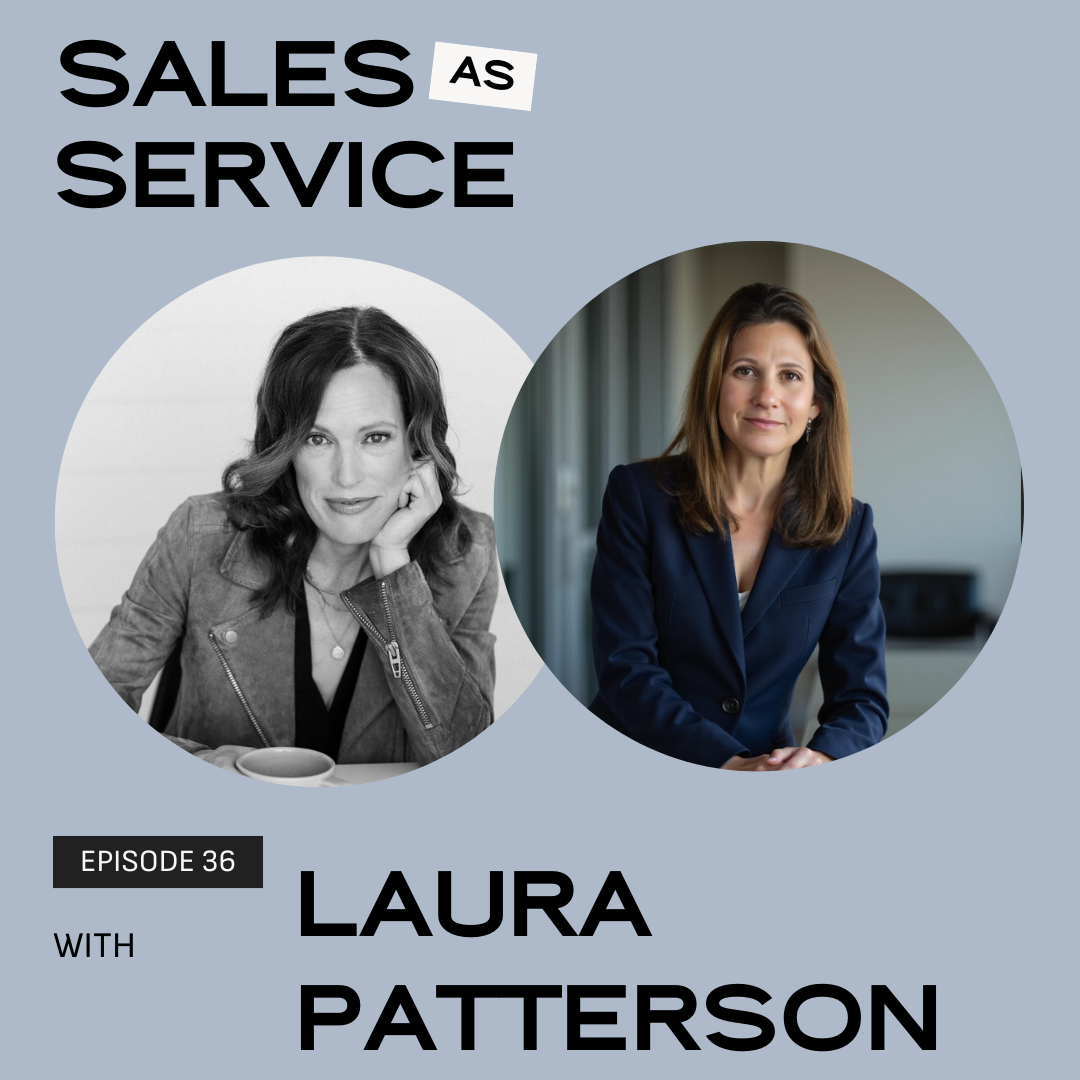
Eliminate Random Acts: The Discipline Behind Sustainable Growth with Laura Patterson
EPISODE: 36
Longevity in business isn’t built on intensity. It’s built on discipline and consistency.
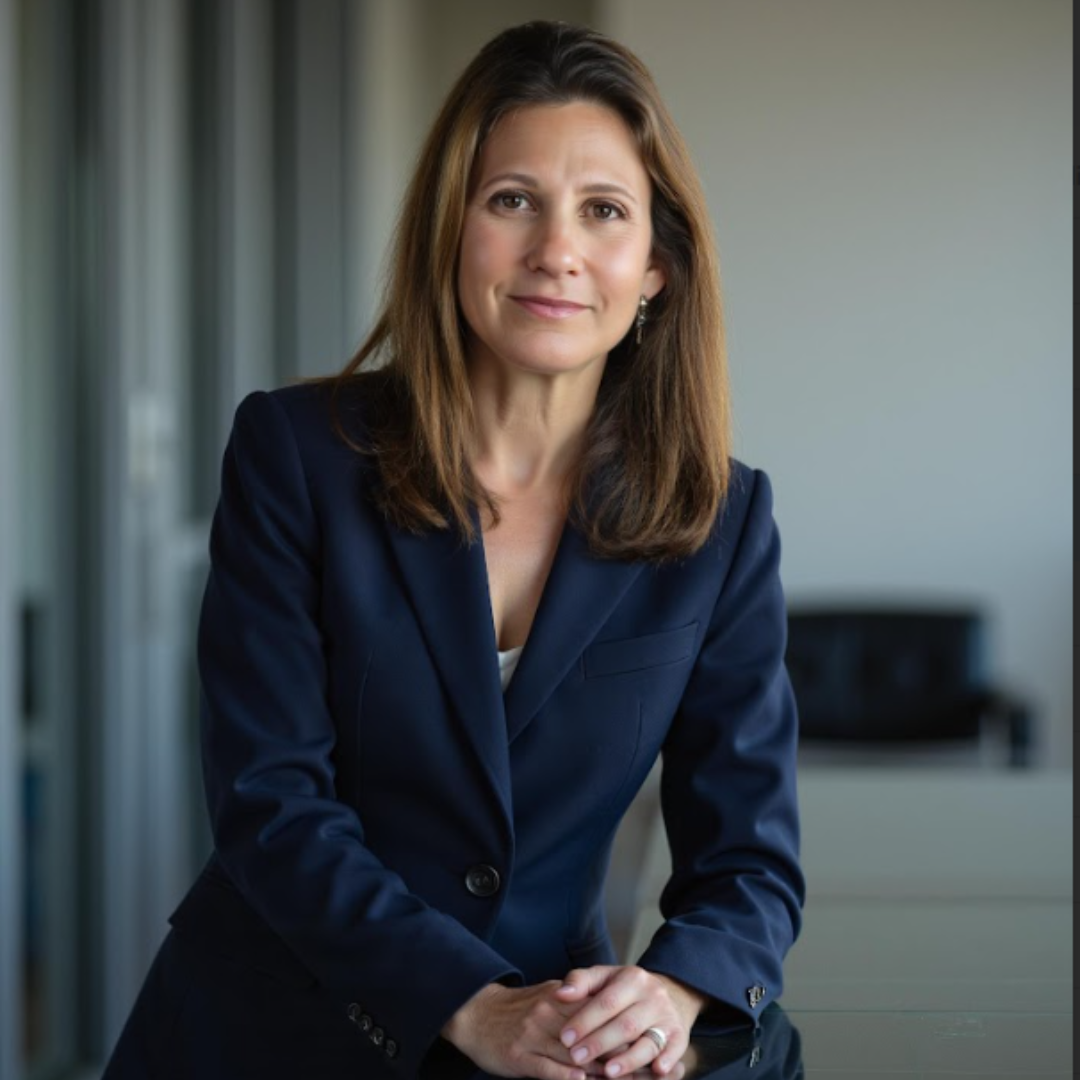
In this episode, I sit down with Laura Patterson, Founder and President of VisionEdge Marketing, a strategic growth consulting firm she launched in 1999. With more than 25 years of experience helping companies drive measurable growth, Laura shares what it really takes to build a business that endures.
We unpack customer-centric growth, the danger of “random acts,” and how to align sales and marketing around outcomes that actually matter. If you’ve ever felt busy but unsure whether your activity is translating into traction, this conversation will sharpen your thinking.
In this episode, we cover:
Why defining outcomes in customer terms changes everything
The difference between performance targets and dashboards
How to identify and eliminate “random acts” in your business
What profitable, sustainable growth actually requires
How to align daily sales activity with long-term strategic outcomes
LISTEN TO THE EPISODE HERE 👇🏻
-
Speaker: [00:00:00] Every decision that I'm making, am I taking into account how it's going to impact my customers? It's very simple, not as easy to implement, but at its heart, a relatively simple concept. But you would be surprised at how many companies don't make decisions in that context. Everybody listening to me has had an experience with their ISP company, their internet, you know, service company, their telecom company.
They have probably had and wondered. Why did they make that decision? That seems like a really dumb decision when it comes to me as a customer. Think about whether or not as a company you're making that same decision and your customers are wondering the same thing.
Speaker 2: Welcome to Sales Is Service. The podcast designed to help you change your mind about sales.
Literally, I'm gonna help you change the way you think about selling. I'm Tam Smith, your host sales bestie and pitch partner next door. You're tired of bros with biceps telling you how to crush a million dollars in your sleep. Or battling imposter syndrome [00:01:00] on your own. You've come to the right place. All you need to do is listen, then take action.
No gym membership required.
Speaker: Let's get started.
Speaker 2: Before we get started, this show is shaped by real questions from agency owners and service based founders who want sales to feel relationship first and values led minus the cringe. If you're wrestling with warm outreach, follow up. Asking for the opportunity or how to lead your own sales process without sounding like a salesy weirdo, send your question in, find me on LinkedIn, or email me at Hey tam at studio three 40 nine.com.
If it's something you are dealing with, chances are you're not the only one. Alright, let's get into today's episode. Hey there and welcome back to Sales of Service. I'm your host, Tam Smith, sales growth strategist and founder of Studio 3 49, sales Marketing As a seasoned sales professional, but a relatively new founder and entrepreneur, I'm always looking for expanders women who help me see what's possible, women whose careers [00:02:00] say this is sustainable.
Women who make me believe in the level of success I want to build for Studio 3 49, and my guest today is one of those women, she's been in the marketing game since 1999. 1999 before marketing automation, before social media strategy decks, before dashboards were one click away. More than 25 years of leading, advising, evolving and staying profitable, that kind of longevity doesn't happen by accident.
So when we sat down to record this conversation, I wanted to understand the recipe. What does it actually take? To build profitable, sustainable growth. Not a hot streak, not a big launch, not a viral moment, but a business that endures. My guest today is Laura Patterson, founder and president of Visioned Marketing.
She's an international speaker, board advisor, bestselling author, and the architect of the Circle of Traction Framework. She's helped more than 300 companies replace what she calls disconnected acts with deliberate. Measurable strategies rooted in customer value. What I appreciate most about [00:03:00] Laura's work is the discipline, the insistence that growth must be anchored in outcomes.
That customer value creates business value, and that if you can't clearly connect your activity to a measurable outcome, you might just be busy, not strategic, and her willingness after more than two decades in business to continue evolving. Today we're talking about what customer-centric growth actually looks like inside a real business.
How to align sales and marketing around measurable outcomes. How to eliminate random acts, and how to build a plan that tells you not just whether you had a good quarter, but why? If you're building a company you want to still love in 10, 15, 20 plus years, this episode is for you. Here's my conversation with Laura Patterson.
Laura, thank you so much for being here. It's great to see you.
Speaker: Great to see you, Tim. Honor to be a, a guest for you.
Speaker 2: Oh, thank you so much. And I always like to start these conversations with the same question. Tell us in your words, who do you help and how do you serve?
Speaker: Well, I hope and the people that I serve feel that I, we are helping them.
So we work [00:04:00] with leaders and boards in, uh, what we would call B2B. Companies that have complex products that require a consultative cell, so companies like in life sciences, biosciences, medical devices, manufacturing, technology, those kinds of companies, we help them grow. And we are a strategic growth consulting firm that believes that the best way to grow is to be customer-centric.
And to be customer-centric, one must have insights. From your customers based on data. So that's the roots of our company, which I founded in 1999. So hopefully we've been doing a good job. We've been around a while.
Speaker 2: You set me up because I wanted to circle back, you know, before we even get into kind of the meat of the conversation.
Our first connection was on LinkedIn and, you know, as a, as a female founder, you know, looking for just inspiration. And like I was so inspired just to see the longevity of your business and just wanted to talk a little bit about that. I mean, you've, you've been, vision Edge has been [00:05:00] around since 1999. I mean, that is a huge accomplishment in an industry where like so many firms just don't even make it past the first few years.
Just to kind of tell us about just your original start and, you know, if, like what would you tell your earlier self. You know, if you kind of that, that classic question of if, if I knew, knew them what I know now.
Speaker: Okay. Well I've been having that conversation with myself and members of our team because we have been around for 26 years and I know we need to make some pivots.
The world has shifted a lot since we came on the scene in 1999. In 1999. Let's just kind of route, roll the clock back for the, those of us. That may have come into the world, entrepreneurship into small companies, mid-market companies later. I mean the last decade or so, the world was very different in 1999.
Certainly it was very different pre the.com bust and nine 11, so you have to kind of put that context in place. And Austin was a very different place, which where [00:06:00] we're located. I mean, Austin has changed a lot. I've been here. Since 82, so 43 years. And I can tell you this town is quite different. So you have to keep that in mind.
Um, when you ask yourself the question, what would you do differently? You, if you forget what the time was like, and you say, what would you do differently? You're still putting that within the filter of where you are today. So looking back then. When data was much more challenging than it is today. Today the challenge is not data.
Today the challenge is really getting good insights from that data. And now with ai, the challenge isn't even the analytics. The challenge is being smart about the kinds of questions you ask for answers to. So if you're not good at knowing how to ask the right questions, you're not gonna get the right answers.
So I think one of the things our firm has been really good at. Since we started is knowing to ask the right questions. So that probably wouldn't change. Uh, obviously our focus on data changed over the years to be [00:07:00] more around the questions and less around the data. As companies have gotten their hands on more data, and we have technology today we didn't have in 1999, that allows us to consolidate our data far better than we did then I think one of the things that is still a struggle that I wouldn't change is the ability to do.
Processes, uh, all businesses run on process and everyone tells every entrepreneur, you know, get your processes down, right? But what has happened is a lot of people have tried to automate without having good processes. And so we really do focus on having the right processes and we focus our customers on processes.
The first processes they should. Be addressing are those that interface with their customers. 'cause we don't create a good customer experience. My mother used to say to me when I was younger, you don't get a second chance to make a first impression. Maybe your mom said something like that.
Speaker 2: Yes. And it still holds true.
It still holds very true now. Yeah.
Speaker: Even more so. Uh, I, I, I don't know if that's true in all parts of the [00:08:00] country, you know, from the part of the country I'm from. That is very common saying, well that's true in business too. And so those processes really matter. And that's a very big portion of what we do.
And I think if I were looking back, I would emphasize that even more than than I do today. 'cause I think a lot of companies are really struggling on process and they do a lot of random things. I'm really all about trying to get companies to eliminate those random acts that come into their sphere and then turn into a vortex that sucks.
Their energy out of them and stalls their growth. And they don't even know it's a random map because it seems like at the time that it's really important and we can come back to that, that part of the conversation in a moment. So those would be some things I might do differently. I'm very, is it okay to say I'm proud of something?
Speaker 2: Absolutely. I don't think we do that enough.
Speaker: Okay. I'm very proud of the work we've done around performance, measurement and management. We, we came outta the gate with that and it's been a, a part of our legacy. We were pioneers, particularly around marketing, performance, [00:09:00] measurement and management, which is still, for many companies a black hole.
And I feel I'm very proud of that work and, and continuing that work is really an, I think, an important part of where our future, so. I hope I answered that question.
Speaker 2: Absolutely. And that kind of leads me to my next question I wanted to get into. When you talk about customer-centric growth, what does that practically look like inside a business and and where, frankly, do you see new founders and business owners making it harder than it needs to be?
Speaker: Well, first of all, I do think we have a tendency to make it harder than it needs to be. We'll come back to that in a moment, but customer centricity at its kernel, at the heart of it is. Every decision that I'm making, am I taking into account how it's going to impact my customers? It's very simple. This decision that I'm making, how will that impact how I do business with my customers, how they do business with me, my reputation with my customers, their perception of our company, the perception of our employees, all those kinds of things.
Every decision, [00:10:00] whether that's a process decision, a pricing decision, a product decision, right? Those decisions, how will that ripple out into my relationship and into the experience with my customers? So it's very simple, right? Not as easy to implement, but at its heart, a relatively simple con concept, but you would be surprised at.
How many companies don't make decisions in that context? It could be because they feel pressured, stressed. They're stressed by what's going on in their marketplace. So they make decisions based on that, not thinking about how it might affect the relationships they're going to have with their customers.
And I'm sure everybody listening to me has had an experience with their. ISP company, they're internet, you know, service company. They're a telecom company. They're, they're a, a hospitality product they use, whether that's a hotel or, or something else. They have probably had and wondered why did they make that decision?
That seems like a [00:11:00] really dumb decision when it comes to me as a customer. Well think about whether or not. As a company, you're making that same decision and your customers are wondering the same thing.
Speaker 2: And it's kind of what I'm hearing is really maintaining that outward focus. Like it's easy inside the operations of an organization you become, you know, very.
Like self focus versus maintaining that outward focus on your client and customer?
Speaker: Yes, and it's easy to get very inwardly focused. We have a lot of issues that we have to address all the time. As an owner, as a CEO, we have a responsibility to those shareholders of our company. We have the responsibility to the employees.
We have all these responsibilities, and it's easy. To try to make a decision, and sometimes we're just not thinking it all the way through to all the ripples it might have. And, and that's normal. So, and that's where random acts can become a Gotcha.
Speaker 2: Yeah. It, let's talk about, again, like you said, you, it's, it's simple in concept, but more potentially complex in how it actually walks itself out [00:12:00] within a business.
You've said like culture, skills, tools and data are the growth foundation. If, if a business owner. Could only focus on one going into this next quarter, which one would unlock the most traction and why? Or are they kind of kind of equal, like all parts equal? Or is there one really that requires more focus in another?
Speaker: I always ask our customers this question, and I think this sets everybody up. What is a value to your customers? How are you delivering on that value? And do they find it to be valuable from you particularly as opposed to from someone else? Right? If you can just start answering from those perspective, then you can add every time you have to make a decision, you could be answering your, asking yourself the question, is this adding value to my customers?
Is this something they will find of value? Will they think that it is more valuable to work with us as a result of this decision I'm about to make? [00:13:00] Right? So if you're thinking from that perspective, because customer value creates business value and business value creates shareholder value. So whether you are the sole shareholder of your company because you are a sole PR solopreneur, or a small company, or you actually have investors or real shareholders in some other way in your company.
The goal is shareholder value, business value, but that only comes from customer value. So if you can always be answering and asking it from the that perspective, then you will come up with the right thing to do. Whether that's a cultural thing you need to do, like do we have the right people that think the way we think and behave the way we think?
I never scold a person in my company for doing the right thing by a customer, never, right? The number one thing, do the right thing by the customer. Like our, you know, customers First is our whole philosophy and our own company. We try to drink our own champagne. I would never tell one of my team members or [00:14:00] people that they made a decision to help a customer over doing something else was the wrong decision.
That was the right decision, because that's our philosophy, personal philosophy. Think about that in your own company, and I have a. Amazing story. I, I tell about my own career of doing something that was right for the customer, but completely opposed to the processes of the company. But they let me do it because I was doing the right thing.
And if I had probably been doing it for a different customer or in a different time, I, I, I probably would've been walked out of the co out of the company day one. And I did it for 18 months. So I kept doing this thing for 18 months because counter to every process in the company. So if you have. An employee doing something for a customer, the right customer, doing the right thing, and you have the wrong processes in place.
Fix your process.
Speaker 2: Definitely, and I, I know in my own experience, just my own sales career. You know, when I have made decisions that, you know, at the end of the day, you know, it, it's [00:15:00] what was best for my client and what was best for their business, what was, versus what was best for me. Like the client sees that when you're acting in their interest and, you know, whatever that, you know, immediate, you know, like I was playing the long game, you know, a, you know, it's just my heart to do what's right, you know, by the client and customer, but also, you know.
For that long-term relationship, the lifetime value of that client and customer. I may have lost that sale in the moment, but the lifetime value of that client and that business relationship was exponentially higher than if I'd made, you know, the choice to do what was right by me. Ver versus what was right by the customer.
'cause they saw that. They, they, they felt that, oh, you know, she's got my best interest in mind. And they came back to me again and again and again and again because they know, you know that you value that the the client first.
Speaker: Exactly. I do wanna say one thing. Customer centricity is not about. Meeting [00:16:00] every whim of every customer.
I do want to put that caveat in, not at the expense of putting your company in jeopardy or putting your company at risk. Uh, but if you have to put your company at Jeopardy or a company at risk to take care of a customer, you might be asking yourself whether or not you're working with the right customer.
Okay? So that's a different kind of thing. This is not catering to every whim of every customer to the detriment of your people, your company. Shareholders. So it is important to keep that balance in mind. But if you are, if you're working with the right companies, if you've got the right customer and clientele and, and serving them well, you should never be in that situation.
And, and, you know, we've been really blessed. We've been in business for 26 years and we have never been stiffed. Never. Our customers have been good to us. We have been good to them. So, you know, I think picking the right customers, even those that went outta business, got acquired. Well, you know, [00:17:00] we've had a number of downturns that all of us have faced, whether it was.com or the 2009 and 10 downturn, COVID, OVID, all these things that happened and affected all these companies and we feel very fortunate.
So. Understanding your business and who are the right customers to serve is an important question to be answering for your company. 'cause if you are serving the right customers, you won't be put your company in at risk.
Speaker 2: Need a better system for getting clients consistently. Grab my VIP Power Hour, a free daily rhythm designed to help you stay visible, nurture your network, and spark new conversations in just 60 minutes a day.
It's not about cold pitching or chasing algorithms. It's about showing up with intention. Do it for 30 days and I promise you'll start to see more confidence, more conversations, and yes,
Speaker: more revenue. Download it free at Studio three 40 nine.com/freebies. Now back to the episode.
Speaker 2: I wanted to go back to the.
Three questions that you were, you know, is asking yourself in terms of the customer-centric growth, [00:18:00] how do you consult your, the businesses that you work with to answer those questions? Because what, and I'm Lee, set this up. I see this time and time again with so many small businesses, that they have invested so much time and budget into creating like a product suite.
Or, or set of services that they think someone wants before they've ever actually asked the question to the client that they have targeted. Is this something you want? Is this as helpful to you? Does this solve the problem you have? And then, you know, wonder why it's not. Moving in the market and versus actually like testing and asking the question to determine, Hey, is what I'm thinking about valid actually something someone wants and needs and would, you know, spend money on?
So how, how do you coach people to answer those questions? Like the internal process, is it, you know, is it audience interviews? Like, is it, what does that look like to answer those questions so that you're [00:19:00] getting the right answers.
Speaker: Okay. So that's a, you know, Jan, that's a great question. And you just describe a product centric company.
Right. The idea, if we build it, they will come. So, and, and, and that's not uncommon. So back to the kinds of customers we serve. 'cause we serve similar customers. E two B companies with complex products that take a consultative sell early on, off, and are product centric. We have something cool, you should buy it because it's really cool.
Sometimes people don't even know. That this product is the solution to their problem. So in some instances, for some product centric companies having a really good product that's solving a problem that people might not have been talking about 'cause they didn't know they have it is a pro is about differentiation, positioning the value prop and really getting clarity on the problem and then marketing it to the people, right?
There are times that. People don't realize how much they want something. Let's, and we are all experiencing that right now [00:20:00] with generative ai, right? Three came out a couple, three years ago. How many of us thought we ever would need a chat GPT? Yet they, it certainly has met a need and it has seen huge amount of traction, right?
So it's not that centric companies can't thrive. It's that those companies have found a, a need that people didn't even know they had and then. It gains traction, but it does take good value proposition and positioning. But in general, in general, I would say have clarity around the problem, and that means talking to customers.
Who is it that this has this problem? How big is the problem that they have? How are they solving the problem today? How would they like to solve the problem? Is today way they're solving their problem today, working or not working? Would they pay what you want? Need for the product that you are creating.
And if not, why not? And those that will often mean having conversations with people. That [00:21:00] could be through real true market research that you do on your own. You know, like proprietary research, whether that's through surveys or focus groups or some other methodology. If you're an established company, it could be by talking to your customer advisory board.
We highly recommend companies. Established customer advisory boards. Happy to have a conversation with anyone listening about the merits of a customer advisory board. We have several very popular blog posts on the Vision Edge marketing site about customer advisory boards and how to set them up. It could be joining into other.
Research, like through a trade association or another association, an industry association, and joining with others to do some research. If you can't afford to do your own research, or it might be looking at third party research, depending on the industry you're in. So for example, in a technology company, it might be a Gartner study or a Forester study that you're looking at.
Or in other industries it might be a McKinsey study. Companies [00:22:00] that are investing in doing research in your space. Or even your own industry analysts, for example, industry analysts oftentimes do research in an area. So I guess what I'm trying to say is get some information. Don't just guess. Get some data.
Once you have that and understand that, ask. Ask the people that you're serving or want to serve, and then, you know. Speak really good about your positioning and messaging, and I think that's the next step that a lot of people struggle to do well is that differentiation, that positioning, that messaging, uh, people are so eager to get to the downstream marketing.
Which is what they, you know, you know, let's, let's get it on our website. Let's get a landing page, let's do an email campaign. Let's do a SEO, let's do a pay per click ad. Let's do social media. Whatever it is. They're so ready to go in that, and they,
that's
Speaker 2: the fun stuff
Speaker: supposedly, [00:23:00] that they haven't stepped back to the upstream, which is where we put our energy, and I know where you put your energy.
Doing the upstream well so that the downstream will be effective. And so stepping back and really doing that upstream hard work, segmentation, persona development, customer buying journey, pricing model, uh, positioning and messaging, maps, all of that kind of work that comes at the front end so that you can do the downstream better.
You have to take, and that takes time. And then having a real true launch plan for a product, again. Nice. It's, you know. What is our launch plan? What is our go to market strategy? Again, a lot of people just, let's do this and they have a whole bunch of things which are actually random acts. Right? Just things are doing activity that may or may not produce any results.
Speaker 2: Yeah. It's kind of back to that just because you're busy doesn't mean you're productive and I'm going to like totally steal the do the upstream well, so the downstream is more [00:24:00] effective to that point, like how do you. What are the metrics that business owners and founders should be looking at? You know, whether it's a weekly, monthly, quarterly basis to measure the effectiveness on, and as far as they, you've made the decision, we wanna be more customer centric.
What are you looking at to determine, hey, are we, have we been successful towards that goal?
Speaker: Great question. Thank you. Because now we're in and, okay, you're gonna have to take the cane out. Don't let me talk too long on this is now we're into something where I can get on a soapbox. First of all, as I'm talking with your community here.
If you take away one thing, I hope you will take away this one thing. It won't be long before you're thinking about the next calendar year plan. When you create those plans and you write your outcomes, not your goals, your outcomes, please, please put them in customer centric terms. By that I mean, for example.
You are going to sell X, Y, Z product to [00:25:00] a, B, c set of customers. Are those existing customers in an existing segment for X dollar amount? Resulting in some amount of revenue because we do not market two buckets of revenue. So when you tell me you're going to VE X number of dollars in revenue with profit next year, I don't know what that means.
I don't know what customers you're going after. I don't know if those are net new customers. I don't know if you're looking at retaining X, Y, Z customers in a b, C market segment. Resulting in X, Y, Z product purchases for this amount of revenue. That's what I'm looking for when I'm looking at a plan.
That's the first thing I look at to determine whether or not, I don't know, if we're looking for a, a set of customers that are gonna have a product adoption rate of your new product in X timeframe at X price resulting in this amount of revenue. I don't know if we're going to be going into a new market and getting brand new customers [00:26:00] for an existing product that has great traction somewhere without knowing those outcomes in customer-centric terms.
How can I create a strategy and when I then, when I have the strategy, now I can be thinking about all the objectives that need to be created and for the teams, my sales team, my marketing team, my product team, so their measures will all connect. To the customer centric measures. And so for example, to your question, the answer would be if I'm going after growing some set of customers in the amount of money they're spending with me.
It might be a share of wallet measure, right? Or it could be a customer lifetime value measure depending on what it is. If I'm getting a particular set of customers to adopt a brand new product in order to validate and determine that the product's market worthiness, it might be a product adoption rate.
If I'm looking at a strategy that involves existing customers helping me get new [00:27:00] customers, expanding the footprint mm-hmm. Inside a segment or somewhere else. It could be a footprint expansion or it could be a customer referral rate. Mm-hmm.
Speaker 2: So.
Speaker: Without knowing what those measures are, but those are examples, right?
Speaker 2: Mm-hmm.
Speaker: Share a wallet, net, new customer acquisition rate, product adoption rate, footprint, expansion rate, net, new customer acquisition rate. There's lots of different measures that we can put together, but they all are tied to what it is that's going to be success for your company. So if you understand how you're going to get success.
From a customer-centric perspective, the measures will reveal themselves, and your measures may not be exactly the same measures as another company, although there will be things in common right as you go down, right as you go down the ladder. Down the ladder of measures of what we call the chain of measures, you'll begin to see things in common, such as net new conversations generated, [00:28:00] right?
Or the conversion rate of conversations to appointments, or appointments that convert to demos or first meetings, right? Whatever those are, you're gonna see that in the pipeline, right? And as you engineer the pipeline. Every company will have something along those lines because every company is trying to get deals at the end of the day.
So some number of deals, but those deals will have to tie right back up to those outcomes. Are those net new customer deals in a, in a, in the same segment we're in, are those new net new logos in a, in, in a new segment for an existing product? I won't know until I. What that pipeline needs to look like at the bottom until I know what it is I'm trying to, to achieve.
At the top
Speaker 2: I'm having just, if you see like can't see my face, but I'm having my kind of doing some mental gymnastics now just thinking about the strategy in my own business and. Reverse deciding, really getting, kind of segmenting your audience, pop your [00:29:00] client or audience based population and reverse engineering, you know, what the tactics are like specifically focused on each of those segments.
I'm just now at the feel like I'm at the place in my business where I have the, like the opportunity to do that. You know, up until this point, it's kind of been, it's been very broad, but now I've got the opportunity to be more segmented and focused, and I'm a big believer that the more. Focused and action is, and targeted the more effective it is.
And so that, I'm now thinking just in my, my own process, how do I identify those? You know, for me it's probably, you know, three max of five segments. And then the, the strategies and tactics specifically. Towards each of those segments and then the, what are the daily, weekly micro actions I take towards that in the business.
So you've, yeah, you've given me a lot to process and think about just in kind of the next level of growth in my own business.
Speaker: So if you're an early stage company or a small company, your outcomes might not be more than five. [00:30:00] You might have an outcome for get net new customers in the segment we're in. If you still have the opportunity to gain market share there, because you're probably early stage.
The retention of customers that you have right now.
Speaker 2: Right,
Speaker: and something related to the products that you have in the marketplace, right? That, that's probably it. If you're further along and you're a bigger company, you're gonna get more granular in your segments. You're gonna get more granular in your outcome, so you may end up with five or seven, but there's very few companies that we have worked with, and we have worked with very, very large companies that get much beyond five to seven because they're.
If you're that focused and very customer centric, the clarity is gonna be pretty obvious and this will help. So back to, you know, I'm hammering this home, I'm gonna say it again. When those opportunities present themselves or those ideas emerge for something you can do, whether it's in sales or in marketing, or in product or in operations, or [00:31:00] wherever it might be.
The question to ask is, which one of those outcomes is it connected to? Or is it a random act? So we define random acts as something disconnected from the outcomes. They're orphans, right? So if it's a random act, then the question becomes, are we missing an important outcome? If that is such a critical thing for us to consider doing, or is that truly a random act that's going to take us away and distract us from what we need to really be doing?
Speaker 2: Definitely give a practical example, kind of a, if, if you can think of like a, a specific client example of where, you know, you identified like what you would identify as a random act.
Speaker: Absolutely. I just, yeah, I just used this example previously. It's a real example, A customer who had gone to one of a chamber meeting.
I a, many of our customers are members of their local chamber or their state chamber. Some are actually. Members of even bigger chambers, but gone to, uh, their local chamber. They're in a, it's a pretty [00:32:00] large chamber of commerce. I'm sure most people know what I'm referring to, right?
Speaker 2: Mm-hmm.
Speaker: Okay. And they had been approached by one of the chamber folks about a year end initiative that the Chamber was doing and asked if they would be a sponsor of this particular event.
So this. I, I realize we want this to have a be a Green Evergreen podcast, so I wanna be careful about timing here, but it was only a few months away. All right. And this is a company that has got its own initiatives to get its numbers at the end of its year. So we came back to his team. He thought it was a really great idea.
He called his team together and said, we're gonna go do this event. And he has a very young team. It's a relatively young company, relatively new CEO, not not young, but new CEO. And felt great to be asked to be, you know, in this initiative and had everybody starting to go crank out what they needed to do.
And we were having a meeting that afternoon, so we had a meeting and I [00:33:00] asked him, what outcome is this event intended to support? You? Just spend time putting together your plan for the quarter. What outcome in this quarter is this going to help you achieve? Because this is going to take a tremendous amount of time by your people to put together an event.
Anyone who's done events that's listening knows that putting on a good event is. It takes time, it takes money, it takes energy, and it's, when you have a small team, it also means distracting them or derailing them from the things that you were planning to do because they can only do so much. 'cause all of us only have 20, 24 7.
That's, that's the limit that we have. And he has a relatively young team. There's only like three members in marketing. He's got a three members on his sales team. A small customer service team. So he is not a big company, right? This is maybe 15 people. So pretty small company. Most of what he has, he also outsource.
He is got a product he's, he is a, he's thriving company, growing [00:34:00] company. So you've got some pretty big targets, performance targets for your team and for your company for this last quarter. Will you be able to make those targets if you take your eye off the ball? As we say, down here in Texas, you take your eye off the ball and do this other thing.
Will this other thing help you get those numbers faster than the things you were planning to do? Or will it slow you down or derail you from getting those numbers? Because he hadn't asked himself those questions. I said, is this a random act? Is science to me like it might be a random act? I said, you know, they have this event every year.
We could look at how this event might not be a random act in the coming year and think about. What locally you wanna achieve. But if you looked at what your outcomes are for this coming quarter, it's not gotta have any emphasis here in locally in your local market. 'cause that's not really who you serve.
It's not where you've built your [00:35:00] business. So that doesn't mean we can't make it be something we wanna do, but is it the right thing to do right now or is it a random act? And he thought about that. It took him a few minutes as he went through and his, you know, we reviewed what the outcomes were and we reviewed what the customer targets were and we reviewed what the performance measures were for his team and he decided that, yeah, it probably was a random act and he went back and kind of, you know.
We talked about how to reframe it because now he is gonna jerk the chain again, right? He jerked the chain with his enthusiasm, and now he's gonna jerk the chain again, and that's going to create a different kind of thing. And so I said, you know, just be honest. You were excited. It was, it, it, it was, you felt excited.
You were honored. But in thinking about it, you, that you were asking a lot of them and you were already asking a lot of them, and that let's not get too ahead of ourselves and stay focused. And I think that people will appreciate the fact that you can recognize that, [00:36:00] and that's what he did. And so that, I hope that's a story that others can relate to, whether it's something that happens in your chamber or some other thing, that it doesn't even have to be an event.
It could be an opportunity to do an email campaign with a partner. It could be any number of things. You just have to really think it through and say, is that going to help us get where we have? Said we are going to go. Sometimes you do need to be flexible. It might be something that you didn't think about that really will do a better job than something you have on the plan.
And in that case, what I recommend is eliminate what's on the plan and replace it if, because again, time and money only, right? If you have unlimited time. And unlimited money. I would love to hear from you.
Speaker 2: I, that is such a great, such a great example and I like, I see it, hear it, read about it, you know, all the time. Particularly with. You know, smaller, you know, [00:37:00] smaller teams, small businesses like, you know it, but really pausing to be intentional about, I would say, like plan to work and work the plan. And yes, you know, be flexible and if there's something that comes along that you know is going to, you know, fit in better and drive to that end result better, great.
Be flexible. But it's just, we're. The shiny object syndrome, you know, you're on course and then it's like, you know, squirrel, look over here and like, let's try this thing, that thing. And you don't stick with anything long enough to actually reap the benefits of being consistent. So like, plan to work and work the plan and really be thoughtful and intentional about, okay.
Yeah, there's gonna be plenty of things you could do, but what should you be doing that's really gonna move the needle and drive the end result?
Speaker: And that's where the, and that's where data can be helpful, right? You can look and say, oh, this thing is actually producing more because this is so, this is why performance targets are so important.
In your plan. It can't just be, we're [00:38:00] gonna run a campaign. I would, I would be asking, well, how will we know if that campaign is successful? What is it? What we are gonna use as a performance target? Right? What does that look like for our company? What does it, what does a benchmark for companies like ours?
So we have some context, and then if we see that our numbers are better. Then we should do more of that, and if we see that our numbers are not coming in, then the question is, is it an execution or not? Something that's worth putting our energy into. Right. If you don't set performance targets, you won't know whether or not it's something you should continue to do or not do.
And a good example to help people maybe think about that in a way that will be helpful is think about playing golf. If you, uh, I'm, I don't play golf, but I am married to a golfer, so I list, I hear a lot about golf on a regular basis, so I feel like I can talk about golf even though it's not a game. You
Speaker 2: might as well play golf.
Yeah.
Speaker: Yes. That's a conversation. If for your [00:39:00] listeners, they wanna talk more about this metaphor gate should gimme a call. 'cause this is a really powerful metaphor. When you go to play a round of golf, you are given a scorecard and that scorecard tells you for every hole what the par is, how many strokes it should take for you to play that hole so you know what the performance target is.
And depending on how you play your golf game, but the bottom line is there's some number of strokes per hole for that round of golf. And they change the holes around all the time, right? They move the hole to make it. They change all kinds of things and there's all different things that happen to that golf course.
It's usually never all the same. When you finish that, you will know whether or not you had a good round of golf, 'cause you will have performance targets, right? That they have set. You won't know why your game was one way or the other. That takes a dashboard, not a scorecard. You won't know [00:40:00] the reason your number on the, on that hole was because you had too many puts or you had not enough drive, or you had too many things out of bounds, or you didn't, you know.
You didn't get to greens and regulation, you won't know the reason. You'll just know the performance target. Good dashboards for a company will help you tease out the reason. So if people are wondering what the difference is and why they're both important, those performance targets are like the scorecard for the golf course.
But for the leader of a company, he needs a dashboard to understand. Where we need to make improvements. Do we need to improve our short game, or do we need to improve our long game?
Speaker 2: I love that differentiation. And I, I know this is gonna be different for, you know, every business, every company, but when you describe like a, a good dashboard, just the, the basics when someone setting that up for themselves that they should be leaders should be looking at what are those?[00:41:00]
Speaker: Yes. So, so. Our plan will help us know our dashboard. This is why you can't just click the button on your CRM system and have a dashboard. I know it says dashboard on there. Click here. Right,
Speaker 2: right,
Speaker: right. Click here, click here. Wherever it might be or whatever system you're using that will give you data, but your plan.
Gives you what you need to play out your dashboard. And this is where a lot of dashboards are fa are failing, is that they don't tie back to what the plan was. They're really scorecards, not dashboards. So your plan, well, if you set it up properly, will provide you what you need for the dashboard and next year.
You might have to have some different numbers. It may not always be the same because maybe you're doing something different next year. Maybe you're going into a new market that will change something you're looking at. Maybe you're bringing out a di, a new product. Maybe [00:42:00] you're going after a different customer segment.
In an existing market, all that will change. And if that is the case, your dashboard will probably look slightly different.
Speaker 2: Let's jump into our fast five. Your, I can't live without it. Software or app?
Speaker: Well, we just made a migration, which bit the bullet and we migrated vision nudge marketing onto go high level, which we are learning.
So I, I guess that would be, we can't live without it because we have just made a huge commitment. To it. So I guess I better say that I think he'd probably, uh, be very unhappy with me 'cause we've made a huge investment in going to go high level. And for those of you out there looking for a cr, an affordable CRM system or affordable all-in-one platform, so far so good.
So I can say that.
Speaker 2: Nice. Best advice you've ever received about sales and business development?
Speaker: Well, the best advice I got was from one of our own advisors who has since passed away, and I miss her every day. Sonya. And her biggest advice to me early on was, [00:43:00] do only what you can do. And what she meant by that was the things that I was not an expert in that others could do, let others do.
And that's a, a, a story in of itself. So only do what only you can do. Was, uh, good advice,
Speaker 2: good stuff. Morning routine. Must have.
Speaker: Okay. I am, I am an unusual critter. I start my day quite early. I am on the track usually between four and four 30 to get my miles in.
Speaker 2: Mm-hmm.
Speaker: And that is my brain. I reason I'm on a track is I can go in circles and in the dark and I don't have to do any thinking.
And so my brain can just be thinking about what I need to be. Preparing for. So get my run-in from there. I might do, depending on the day, some other form of meditation or whatnot. I have a three-year old to OIE and he gets his morning routine. 'cause he has to have his lessons. He's very, very smart and [00:44:00] he is in service dog training.
So he gets his lessons every day. So that's a part of the morning routine. 'cause if we don't do it in the morning, mommy gets busy and then he gets, he gets overlooked. I know that's a terrible Mommy.
Speaker 2: Aussies are so smart. I had, I had one. They're so smart.
Speaker: He's the best and he's our sixth dog that we've had in our life, and they've all been wonderful.
Of course there's, you know, they all have a place in our hearts, but. He is my little love without a doubt.
Speaker 2: Your walk-on song, the one song that always pumps you up.
Speaker: Oh gosh. I know you were gonna ask me that. I am not musically oriented and I tried to think about that, uh, a song that I really like or that is on my walk-on song, but I, I had to pick a song.
I know this is not on walk-on. I've always thought that Dust in the Wind was a powerful song. 'cause reminds us how precious time is and there isn't really anything more precious. There's no more precious resource, no more precious [00:45:00] asset than time.
Speaker 2: It goes back to and focus on only do what you can do.
Speaker: Yes.
Speaker 2: Yeah. If you only had one hour each day for business growth, how would you spend it?
Speaker: Talking to people? You cannot have a business if you do not have customers, and you cannot have customers if you do not talk to people. I know that. I know, I know, I know. Everyone says, oh, we don't need to do that. We can just go on LinkedIn.
We can just send out email, whatever. But. You have to talk to people and I am happy to talk to people anytime because uh, even if, even if they don't become a customer, if I can be of any help, and yes, time is precious, but I offer 30 minutes to people. I was given a lot of grace in my career and people gave me their time.
And I remember one of our advisors, Jean. Early on when he was being so generous early on with his time and I said, you know, we have no money to pay you to be an advisor. He says, well, just remember that down the road you will be the, have an opportunity to be an advisor. Pay it forward.
Speaker 2: Thank you so much [00:46:00] for being here and sharing your time with, with the sales of service audience.
Where can folks find you and connect with you online?
Speaker: Well, on LinkedIn, of course, Laura Patterson on LinkedIn or send me an email. Laura p. So first name, last initial for Patterson at Visioned Marketing. All one word, all spelled out. Dot com. Would love to hear from you.
Speaker 2: Thanks again so much for being here.
Speaker: Oh, thank you. It is my honor and privilege. Thank you very much, Tim.
Speaker 2: Thanks again to my guest, Laura Patterson. This conversation reconfirms that longevity isn't built on short-term intensity. It's built on consistency. Laura has stayed in business since 1999, not because she chased every opportunity, but because she disciplined herself and the companies she advises to stay focused and anchor activity to outcomes.
Everything else aligns from there. Here's your sales as service challenge for this week. Pick one specific customer outcome you're driving toward this quarter. Maybe it's acquiring X number of new clients. Maybe it's expanding services within [00:47:00] X number of existing accounts. And then ask yourself. What am I currently doing that directly supports that outcome?
And just as importantly, what am I doing that doesn't, if it doesn't clearly connect, it might be what Laura calls a random act. And random acts might feel productive, but they dilute profitable growth this week. Eliminate one random act, just one, and then reallocate that time towards something that directly supports your defined customer outcome.
Whether that's initiating five intentional conversations, deepening relationships with existing clients, or tightening your positioning around a specific niche. Clarity creates focus. Focus creates traction, and traction creates the foundation for sustainable growth, and that's what we're building here.
If this episode challenged you or gave you something to think about, be sure to share it with another founder who's in it for the long game. And until next time, remember, sales is an act of service. It's about what you give, not what you get. And if you serve well, the ROI. Always follows. I'll see you right back here next week on Sales of Service.[00:48:00]
You've just listened to the Sales of Service podcast, the podcast to help you shift your mindset around selling. If you liked what you heard, be sure to hit subscribe and share it with a friend because we're all about more sales, awesome and less sales awkward. See you next episode.
MORE OF A READER? 👇🏻
When I first connected with Laura Patterson on LinkedIn, I noticed something immediately.
Longevity.
She founded VisionEdge Marketing in 1999.
Before marketing automation.
Before social media strategy decks.
Before dashboards were one click away.
More than 25 years of building, advising, evolving — and staying profitable.
That kind of staying power isn’t luck. And it isn’t intensity. It’s discipline.
In our conversation on Sales as Service, Laura made something very clear: customer value creates business value. But most companies skip a step. They define growth in revenue terms, not customer terms.
That distinction matters.
If you tell me your goal is to generate $1 million in revenue next year, I still don’t know:
Which customers you’re targeting
Whether they’re new or existing
What problem you’re solving
How that growth is being created
Revenue is the result. It’s not the strategy.
Laura encourages companies to define outcomes in customer-centric terms first. For example:
Acquire X new customers in Y segment
Increase share of wallet within existing accounts
Improve product adoption within a defined client group
Once the customer outcome is clear, strategy becomes focused. Sales activity becomes intentional. Metrics become meaningful.
And that’s where many businesses go sideways.
They get busy.
They launch campaigns.
They sponsor events.
They try new tactics.
They chase partnerships.
Laura calls these “random acts” — activity disconnected from defined outcomes.
Random acts feel productive. But they dilute profitable growth because they pull time, energy, and budget away from what actually moves the needle.
One of the most helpful distinctions she made was between a performance target and a dashboard.
Performance targets are your scorecard. They tell you whether you hit the goal.
A dashboard helps you understand why.
Without clarity on the customer outcome, neither tool works the way it should.
If you’re building a business for the long game, the lesson is simple:
Anchor activity to outcomes.
Define success in customer terms.
Eliminate what doesn’t connect.
Longevity isn’t about doing more.
It’s about doing what matters — consistently.
✦ YOUR SALES AS SERVICE CHALLENGE
Pick one specific customer outcome you’re driving toward this quarter.
Maybe it’s acquiring X new clients.
Maybe it’s expanding services within X existing accounts.
Then ask yourself:
What am I currently doing that directly supports that outcome?
And just as importantly —
What am I doing that doesn’t?
If it doesn’t clearly connect, it might be a random act.
And random acts may feel productive… but they dilute profitable growth.
This week, eliminate one random act.
Then reallocate that time toward something that directly supports your defined customer outcome — whether that’s initiating five intentional conversations, deepening relationships with existing clients, or tightening your positioning around a specific niche.
Clarity creates focus. Focus creates traction. And traction creates the foundation for sustainable growth.
RESOURCES & LINKS
Learn more about VisionEdge Marketing
Connect with Laura on LinkedIn
Find VisionEdge Marketing on YouTube
Join us for the next SAS LIVE Office Hours Event!
Simply sales with the VIP Power Hour - download the FREE guide
Learn how to consistently book 3–5 sales-qualified meetings each week - Book your free strategy call
Get on the list -Become a SAS Email Insider
SUBSCRIBE & REVIEW
If you loved this episode, please take a moment to subscribe and leave a review on Apple Podcasts! Your support helps us reach more creative agencies and service pros who need these insights. Thanks for tuning in to Sales as Service—see you next week!

TAM SMITH
I’m Tam Smith-Sales Growth Strategist and Founder of Studio Three 49. I help female agency owners and service-based founders find, connect with, and convert right-fit clients through scalable, sustainable outbound sales solutions.
No pushy pitches. No bro-marketing. Just simple, structured systems that turn connections into clients.