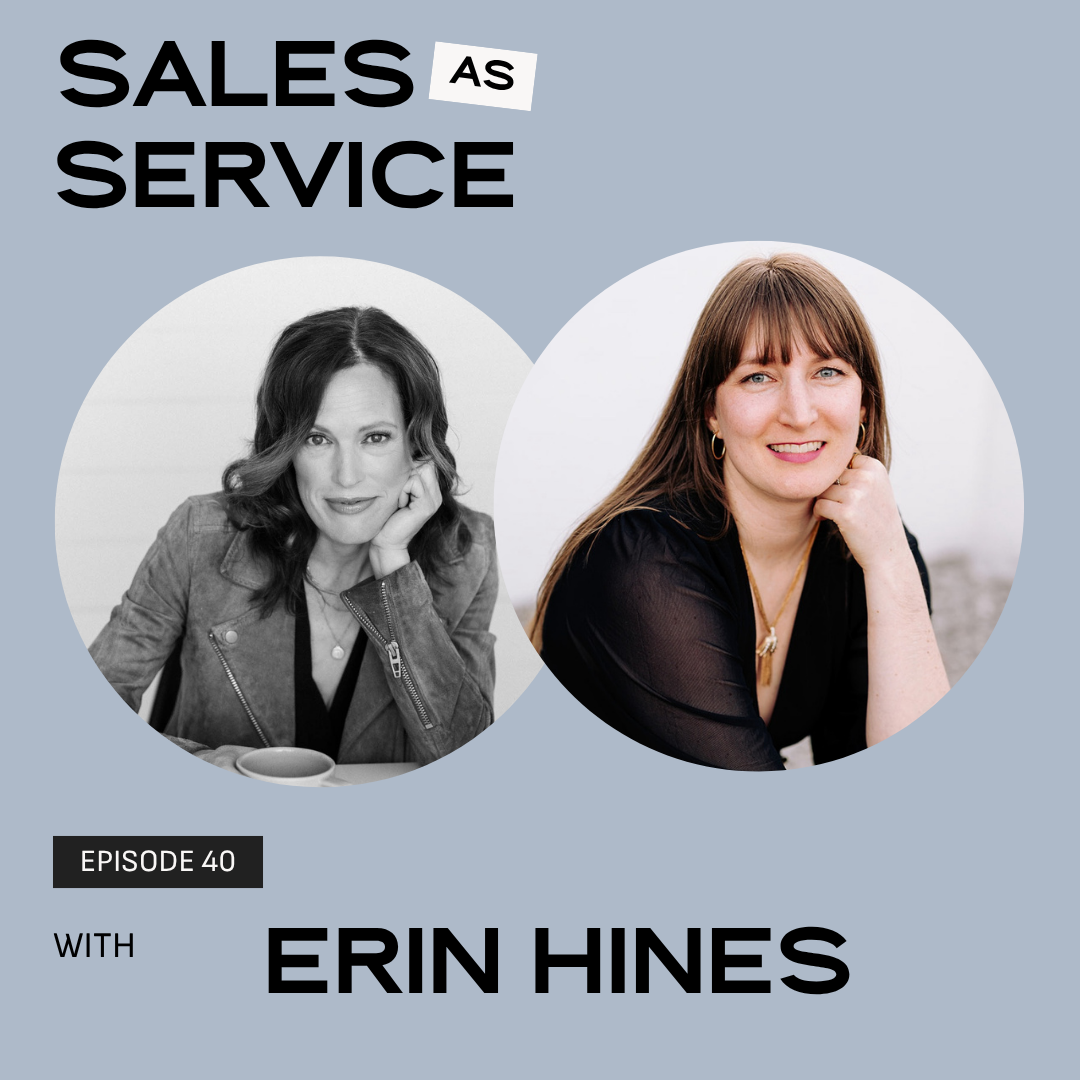
Success on Your Own Terms with Erin Hines
EPISODE: 40
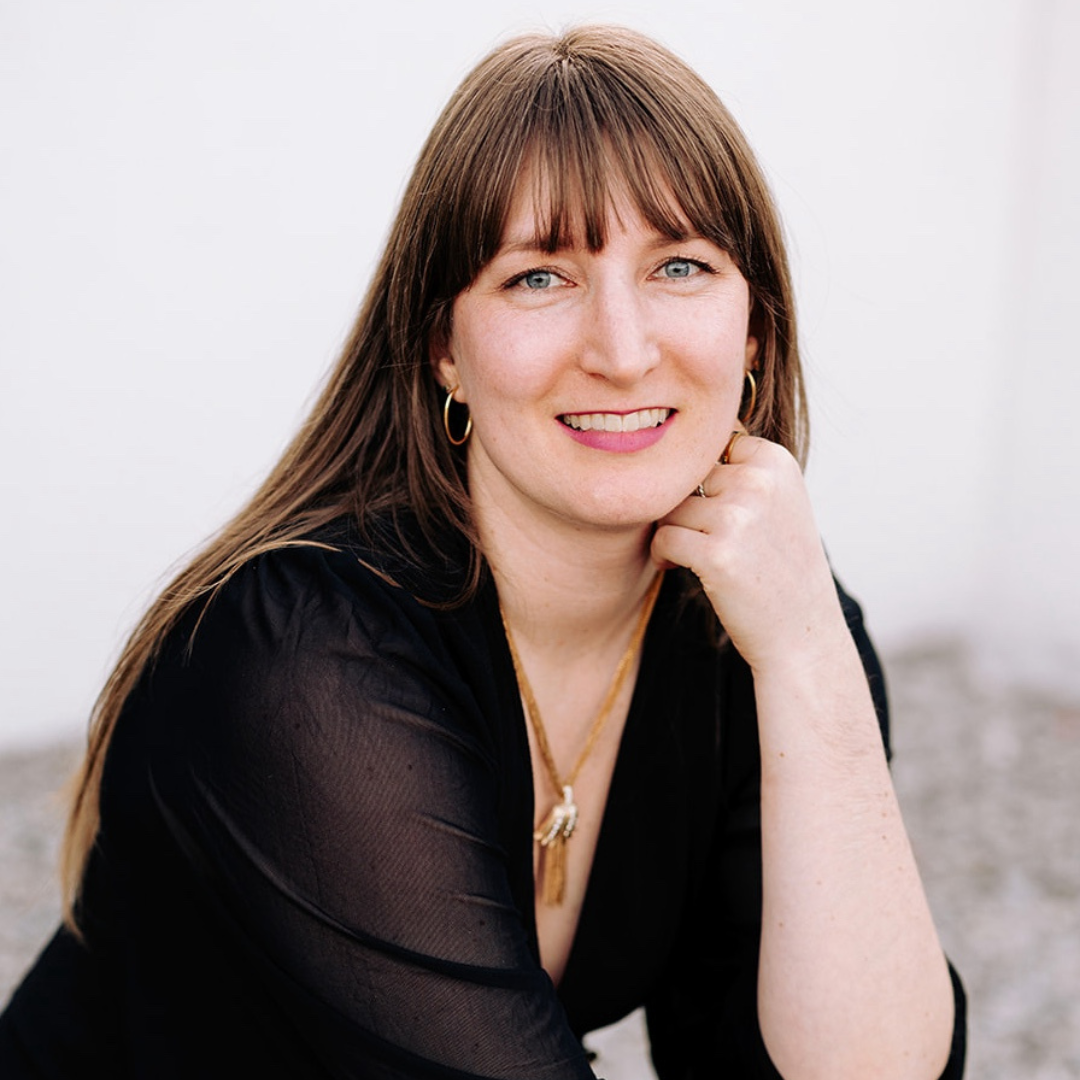
What if the version of success you’ve been chasing is not actually the one you want?
In this episode, I sit down with Erin Hines, founder of Darn Good Business Coach, to talk about the pressure so many business owners feel to keep doing more, growing bigger, and pushing harder. We unpack the conditioning behind that mindset and explore what it looks like to build a business that feels aligned with your values, your energy, and the life you actually want to live.
Erin brings a holistic perspective to business growth, blending strategy, Human Design, and a clear-eyed look at burnout, boundaries, and overdoing. This conversation is especially timely for anyone who has been questioning whether scale is really the goal — or whether success might look more personal, more intentional, and more sustainable than what the business world often celebrates.
In this episode, we talk about:
Why bigger is not always better in business
The difference between growth you truly want and growth you feel you should want
What “undoing” looks like in a real workweek
How to honor your boundaries when there is still work left undone
The role of energy, decision-making, and self-trust in sustainable business growth
LISTEN TO THE EPISODE HERE 👇🏻
-
Speaker: [00:00:00] I am great at sales, but I cannot cold call people like it drains me. I mean, I think a lot of us don't like it, but at the same time, just understanding myself better, it's like, Erin, just stop doing that. It's not benefiting you. It's draining your energy. And there's other ways I could make sales, like I don't have to do that.
And so it's kind of undoing this belief that. You have to copy someone else.
Speaker 2: Welcome to Sales Is Service. A podcast designed to help you change your mind about sales. Literally, I'm gonna help you change the way you think about selling. I'm Tam Smith, your host sales Bessie and pitch partner next door.
You're tired of bros with biceps telling you how to crush a million dollars in your sleep or battling imposter syndrome on your own. You've come to the right place. All you need to do is listen, then take action. No gym membership required. Let's get started.
Before we get started, this show is shaped by real questions from [00:01:00] agency owners and service based founders who want sales to feel relationship first and values led minus the cringe. If you're wrestling with warm outreach, follow up. Asking for the opportunity or how to lead your own sales process without sounding like a salesy weirdo, send your question in, find me on LinkedIn, or email me at Hey tam at studio three 40 nine.com.
If it's something you are dealing with, chances are you're not the only one. Alright. Let's get into today's episode. Hey there, and welcome back to Sales Is Service, and I'm just gonna get right into it today because I am genuinely so excited for this conversation. Today's guest is Aaron Hines, founder of Darn Good Business Coach, and this one is landing at a very timely moment.
For me personally. I've been thinking a lot recently about the direction of my own business and questioning some of the assumptions we're taught to make about success as business owners. We're constantly surrounded by the message that growth means bigger. Bigger team, bigger offers, bigger revenue, scale, scale, scale.
But I've had to stop and ask myself, what's [00:02:00] actually underneath that? Is it what I truly want, or is it what I've been conditioned to believe I should want? Erin helps business owners and leaders unpack exactly that. She comes from a background in business analysis and her approach blends strategy, human design, and a real understanding of burnout.
Boundaries and the trap of overdoing. She helps her clients build businesses that feel more aligned with who they are and how they actually want to live. In this conversation, we talk about the pressure to keep doing more, the stories we carry around about success and what it looks like to define success on your terms, even when it looks nothing like the person next to you.
Here's our conversation. Well, Aaron, thank you so much for being here. Welcome to Sales of Service.
Speaker: Well, thank you so much for having me,
Speaker 2: and I always like to start these conversations by asking, tell us in your words, who do you help and how do you serve?
Speaker: Yes, so I help, I kind of give a blanket term businesswomen, but specifically I've helped CEOs, I've helped managers and companies, I've helped business owners really move from the mindset of they constantly need to be doing something [00:03:00] they need to hustle to be successful in switching into the mindset that.
Business could be fun and joyful. You could have a lot of energy doing the work you do. You don't need to wake up exhausted every day. You could come in with excitement for the work you're doing, and I help them transform into just kind of a new way to lead, just not. Their team or their business, but also just their life.
So I like to call myself more of a holistic take, a little holistic approach, because a lot of the work we do is both just not for your, you know, your career, but it's gonna overflow into your personal life. And I just love serving the people. I do. 'cause I think we get so caught up in constantly doing, doing, doing.
And you don't necessarily need to. You could be successful however you see fit, and I wanna help you. Find that vision of how you wanna be successful, what you want your life to look like and help you get there,
Speaker 2: your own path. You know, you've described it as going from overworked business analyst to Revel business coach.
What was the moment that you realized like do [00:04:00] more, that model just wasn't actually working anymore?
Speaker: I guess it started before I started my business. I think there was signs of it. You always look back and you're like, oh yeah, okay. I miss that. But it was definitely, I was burning out in my job. I liked like what I was doing as a business analyst, but it just.
It didn't really excite me at the end of the day, like who, I think specifically who I was working with, but it was kinda like the first sign, like something needed to change because I did feel like I was burning out and it's like I didn't wanna go down that path 'cause I felt like I was too young at the time.
And so once I started my business, it was like this big burst of excitement. It's like I'm building something and I was. Able to, you know, have the freedom to focus on what I want. But at the same time, all those same habits were coming back of like, I gotta prove myself, I gotta keep going. I gotta keep constantly be working because in one, as a business owner, it's like it's all on me.
So if I'm not working, how are [00:05:00] things gonna keep progressing? How am I gonna grow my business? So about a year in, I already felt I was burning out, like. I was doing what I needed to do. I might have, I would feel like on the outside I did look successful. My business was growing, but at the same time, I was not waking up excited to jump out of bed in the morning when I tried to go to sleep, my mind just wouldn't turn off.
'cause there's always something else to be doing. And it was like. I'm only a year into this. This is not a good, like I love what I'm doing. I wanna do this forever. And so it was kinda that wake up call, like something needed to change because I couldn't keep pushing myself the way I had. And my back decided to wake up for me.
I ended up bulging a disc in my back. It's really not really sure how, it wasn't like an accident or anything. I just kind of. Felt like a pulled of muscle and then it just, within minutes I was in pain and I took that time to like, Hmm, some like it gave me so much time to sit. 'cause I really couldn't move.[00:06:00]
And I gave me that time to kind of like, wait, something needs to change. 'cause I feel like this was the sign of my body actually was pissed off. And as I laid there, I was like, oh wait a second. Like I did start seeing some of the signs that I was ignoring. You know, it's like the little tap on the shoulder and then it searches like bam slaps you in the face.
'cause I haven't been paying attention. So that was kinda like the first step. But then once I recovered. I kinda went right back to my old habits 'cause that's really easy. And then about six, six months later, my back flared up again. And this time it was 10 times worse. And so I was like, okay, I get it.
'cause at that point I was down for about three weeks and that was like the time I really needed to give myself like just space to think, kind of big picture, like what am I doing? Do I wanna keep doing what I'm doing? But then. What needs to change. And so that was kind of, I think the biggest wake up call.
Like, this is not sustainable [00:07:00] and I wasn't listening and now my body is rebelling and I don't, I mean, I don't wish that kind of pain on anyone. So I was like, okay, I don't wanna live through this pain again. So like what could I do to build my business in a way that just more sustainable and exciting for me, but then also coming from a place where I'm actually.
Caring for myself and like listening to what my body's telling me and actually taking space to regroup. But then also restructure so my body feels nourished and not just my business.
Speaker 2: I've, you know, just shared with you, I'm just really excited for this conversation and you know, I've been really honest and kind of transparent and you're talking about that my own struggle with, you know, still, you know, coming from that idea that.
Success equals suffering. And that, you know, it has, if it's not hard, it doesn't have value really. Now trying to unwork that or out of myself and, and you've used the term undoing that you know that success doesn't require doing more, [00:08:00] but you know, undoing more. What does that actually like look like inside a real business week?
And can you kind of give us some practical examples?
Speaker: Yeah, so what I mean by the undoing part is we have been so conditioned. To do so much we don't actually need to be doing. In my work, I use human design and we could dive into more what that is specifically, but just an overview. It's really about bringing you back to who you were born to be, how you were designed to be your purpose.
Because from a very young age, I think we've been conditioned to be a certain way. Like, and it's not good or bad, it just, you know, I think back to me, it's like I always knew I was gonna go get a college degree. Like I, I deeply wanted that, but thinking back, it's like. How did I choose what I chose to get a degree in?
Like does that, was it just kinda like I was kind of pushed that direction 'cause you need to get something that makes money or is it something that really lit me up and it's like, I think subtly through our lives it's, you know, as childhood. You can't be loud. No one wants to hear a loud child and you suppress that expression of, you know, [00:09:00] yelling or just expressing yourself as a young child.
And as you get older, there's little things and it, you know, like you always need to study, you need to get grades to be successful and there's some truth to that, but people find success in their different ways. So human design had kind of brought me back to, I am designed to be successful in one. This idea of.
I could be successful in a different way. And so it's kind of undoing that, conditioning those, you know, limiting beliefs, those ways you've been told. I mean, even by, you know, mentors or people close to you, they're telling you what was successful for them. And that doesn't necessarily mean it's gonna be successful for you.
I mean, me personally, I know I am. I am great at sales. But I cannot cold call people like it drains me. I mean, I think a lot of us don't like it, but at the same time, just understanding myself better, it's like Aaron, just stop doing that. It's not benefiting you. It's draining your energy. And there's other ways I could make sales, like I don't have to do that.
And so it's kind [00:10:00] of undoing this belief that. You have to copy someone else. If you see someone else that's successful, like, I need to do what they're doing, and it's like, wait, no. Does that excite you to do that? Because if it doesn't excite you, people are gonna feel that resistance. When you show up and your energy isn't there, you're not excited.
You're just kind of like going through the motions. This is what I'm supposed to be doing. And so a lot of this undoing is becoming just aware of what you want. Does your career align with what you want? How could you. Align it better to what you want, and then kind of unwinding these beliefs like, yes, you do need to work hard to be successful, but you don't need to hustle and fill 12 hours of your day with zero breaks.
Some people can do that great for you if that's what you wanna do, but it's more of. What feels good to your body? A lot of the awareness is tapping into your, what your body is feeling and telling you. 'cause it tells you it's more than [00:11:00] just, I'm hungry. It is. There's little signs guiding you to what, where you could use your energy best.
And so a lot of the undoing is tapping back into what feels good to me Because you could be, again, you could be successful however you envision. And so for me personally, it's really tapping into what excites me. When I wanna grow my business, what do I wanna be doing? And, you know, digging into my human design too, it's kind of showed me different ways I could create visibility for myself.
But like a big one. I just love talking to people. I mean, we met on a networking call and like, look out now we're here. Like, it's, it's little things like that. So it's not me just cold calling someone to like, Hey, work with me. It's like, how could I make it fun and like. We connected. Let's have fun. I'll come on your podcast.
That it's like, find these ways to be successful. What just really excites you and it's this, you know, really asking like, should I be doing this or do I want to be doing that? Because there's plenty of things you should be doing, but doesn't necessarily mean you [00:12:00] need to do them to be successful. And so it's, it's a very much a mindset part, but it's also, you know, a lot of it just experimentation and seeing what.
You know, feels good and what doesn't and you know, don't internalize a failure. Just go, okay, I learned something, let's switch. And it's, you know, kind of undoing that. There's nothing to be shameful about when you know you're taking this approach. It's just, you know, it's a little more, I think, adventurous and a little more fun and keeps you on your toes every day.
But that's kind, you know, that's personally what I like because no two days are the same and I just kinda, it's definitely a mindset thing, but it's also just. Approaching it from, I just wanna have fun and I think we all do, and how can I make this fun?
Speaker 2: And I, I love what I'm hearing in that, and what I pull out is it's so important to ask ourselves, you know, just get, get curious about the why you are doing the things that you're doing and, and the like, is it supporting your idea of success or someone else's?
And then, and getting really clear on how, how, what that is for you. And then [00:13:00] being able to, you know, design a, you know, a daily, weekly. Whatever, you know, month, like whatever schedule, look to support your vision versus supporting what you think you, you know. Should be doing that. There's only, you know, one like hard fixed path to arriving at a goal.
Speaker: Yeah. EE, exactly. And it's making the space to figure that out. And that's the hardest part. But it, it's so worth it. It's so worth it.
Speaker 2: Need a better system for getting clients consistently. Grab my VIP Power Hour, a free daily rhythm designed to help you stay visible, nurture your network, and spark new conversations in just 60 minutes a day.
It's not about cold pitching or chasing algorithms, it's about showing up with intention. Do it for 30 days and you'll start seeing more confidence, more conversations, and yes, more revenue. Download it free
Speaker: at Studio three 40 nine.com/freebies. Now back to the episode,
Speaker 2: I, I did wanna get into a little bit about human design, you know, for listeners that are curious, but, you know, perhaps intimidated and haven't explored that before.
What's the simplest way? To [00:14:00] explain it and then to use it as a, you know, a practical tool and not necessarily just like a personality test.
Speaker: Yeah, so human design, it's known as kind of the science of differentiation, and specifically the background of it is it's a mixture of ancient sciences, like a astrology Eye Chang chakras and combines it with modern sciences like biology and physics, and really creates this.
It's a body graph chart, so. It's produced by your birth time, your birthplace, and your birthday. So, and then it creates this chart, and what I love about it is. It's literally just those three facts. 'cause there is a million different personality type tests out there, but like Myers-Briggs are strength finders.
I feel like you're kind of answering the questions how, maybe not how you actually are, but maybe how you perceive yourself. I really loved human design because there was no way to sway the answers. It's whatever was produced that. That's just you. And so what it does is human design. It's a lot about energy, and so it really shows you how your energy naturally wants to flow based on what you're doing.[00:15:00]
And so there's five different types you could be, and based on those five types, it kind of tells you more about how you make decisions, how to figure out what is best for you, how to pull things, like opportunities into your field, how you connect with people, how you communicate with people best. And it's really showing you that.
All of us on this planet are very different. We all have a unique purpose on this planet, so it helps you bring you back to your purpose. You know, we're not all supposed to be the same. I think we often want to be the same because in, it's easier than being different and standing out, but at the same time, if we were all the same, how are we gonna evolve?
How are we gonna grow? How are we gonna actually feel satisfied if we're all just doing the same thing? It's really bringing you back to, to yourself in a way, building this awareness. Like, no, this is who I am. Because I think a lot of us, if we're just doing a bunch of things we think we should be doing, there's something inside of us that's kinda like, mm, no.
Mm, [00:16:00] but we're just doing 'em anyways 'cause that's what we should be doing. And so human design kind. Pulls you back and brings you into awareness of like, no, this isn't for me. And trusting that, no, it's not for me. And you know, just approaching life from a little more ease and things just flow a little easier for you.
And it's not about just sitting back and taking what life comes with you, it just an approach to kind of move, bring movement into your life. And so you could see things progressing. You could see results happening without you forcing. Like the worst thing you could do is force. And so human design kind of brings you back to a grounded place so you could move with grace and excitement, but still get things done.
And it just overall, you feel more satisfied and grounded and really just ready to take on whatever comes your way. And it's not meant to box you into a certain way. Yes, there's five types. You could be one of those five types, but it's not about, there's so many nuances under that. So it's more [00:17:00] of just.
Take what resonates with you and try it. And if something doesn't resonate, forget it. There's no hard and fast way to approach human design. It just come with curiosity. If something piques your interest, go with it. But from my experience and a lot of my clients, it's, it's very validating that they're feeling this way for a reason, and here's kind of a path to try something new that might excite you a little more and, you know, get you from that.
Burnout, the overthinking, the overwhelm, and bring you to a place that just feels more sat, you know, just, just not satisfying, but just I think soul satisfying. Like it feel, you feel it in you
Speaker 2: when you said forcing, you know that I, I so identify with that because that, you know. My whole life I felt like I've been, you know, driving, chasing, forcing.
And I'm now, you know, at that stage where I recognize, you know, that's not, it's successful to a point, but then it becomes destructive and it's not really in alignment with, you know, how I'm defining success and how I want to, you know, support my vision of success. But it's really hard, you know, [00:18:00] going back to that undoing and to undo those habits and, you know, fall falling back into the.
What I think I should be doing to be successful and, you know, working in a way that's more in flow and ease and joy. And just any clients that you work with, you know, when they're, when they've come to you, you know, kind of at that breaking point and you are, you know, coaching them to work in a different way, how do you do that?
How do you make that, like, how do you make that transition
Speaker: baby steps? Again, everyone is different, so, but like kind of the. I always start with understanding just how your energy wants to flow. And so for me, I'm a generator in human design, and what that means is I have endless energy as long as I'm doing the things that really light me up and how I decide that is simply checking with my gut.
So it's kind of tapping into. Is it yes or it's a no, and it's really that simple. And so playing with that in really small ways to kind of start seeing these small transformations just not in business. I mean, it could [00:19:00] be as simple as like, where do I want to eat today? Like asking me que like tapping into that to kind of build that awareness and connection with your body to understand.
Another big part I always do with my clients. I wanna say it's one of the hardest things, but it's also like you literally don't do anything is create space to just sit. Like, I learned this from a coach years ago, and it was, I wouldn't say it was painful at first, it was hard because she said, go outside and just sit for 20 minutes and wash the birds.
Feel this, like, just sit there. Don't, don't have a phone, don't do anything. And. I started with 10 minutes because your mind automatically goes, it's like, what do I need to do next? Or it's like you think of all that's going on with your life, but the more I practiced, the easier it got. But it's those times where I gave my mind a break.
Is when things started to fall into place, because I think, I don't know really anyone, especially in today's world, there's constantly things being thrown at you and then you break like constant stimulation, [00:20:00] your phone's dinging, you're at work, people are asking for things. There's always something. And so to actually give yourself space to just not have to think about anything, just zero expectations of an outcome and just sit there and it, you don't have to go outside.
Just sit at your desk for five minutes. And just let your mind wander wherever it wants to go and start building that. You don't have to do 20 minutes. 'cause I know that could be a lot, but just five minutes, two minutes between meetings is like, it's so life changing because so many of us don't do that.
And that is, you know, we haven't evolved enough to today's standards of constant noise being thrown at us and our ways, our mind is still kind of, you know, like 300 years ago where we're just firming. And so we're not used to this in a way, so it's like. It brings a calm to you because really what our problem is when we're hustling so much is that our nervous system is so wired and it's not giving us that space to think.
So I always start my clients off with understanding their human design, but then also creating [00:21:00] space in their calendar and. Again, it's waking up, giving yourself five minutes to just sit there and tap in, breathe, relax, to start your day and pepper in, you know, a minute or two throughout the day. It doesn't have to be huge shifts.
And you could build up to, yeah, if you wanna do 20 minutes, you wanna do an hour, whatever works for you. But I always try to figure out what is best for your lifestyle, where you are right now, because. A huge change is usually a shock to the system and it's not gonna be sustainable. So I usually just give some, you know, ideas like go sit outside.
Is there something that you could do that's mindless? I mean, I love knitting or crot, like something that's just kinda like mindless, but you're still somewhat doing something to kind of start breaking that habit from always having to do something productive. Like you don't always have to do something productive.
You need to pepper in some stuff where you're just being like, just sit there. Be. Whatever comes up, emotions or just thoughts, whatever comes through, let it come through, but don't have this. I need to [00:22:00] go act on it. Just allow yourself to be, and I think that's the biggest first step because once you start calming your mind, then you start getting the clarity, things start coming through that maybe you've been missing, but when you give that your mind just.
Settle down a little bit, the answers will start coming to you. 'cause I, I deeply believe we all have the answers witness of this, but we just move so quickly we don't hear them. And so when you give yourself that space to really slow down it, that's when the transformation slowly starts to happen. And in a way that feels good to you.
And not gonna be like, way too much, oh, I gotta cut out half my day. It's like, no, you don't. Five minutes. I think we could all do five minutes if we realistically think about it
Speaker 2: as you're talking about this. I'm thinking a, I can't remember the last time, if ever I've done that and how, like what a treat that sounds like.
That just to be deliberate, intentional to add just that those few minutes of just stillness in the course of the day, what was the, you know. Impact on [00:23:00] you? I mean, when you started doing that, like how did it show up for you, just in your own work?
Speaker: For me, initially, yes, it was very difficult 'cause my mind's going, but the more I did it, the more it calmed down.
And I just started, like me personally, it's like. You could go over, like you might have a decision you have to make. And I would just overthink it. Overthink it, like trying to be super logical. And then I start getting frustrated. Why can't I make a decision? And it's like those times I just gave myself, I don't have to think about anything.
I just be here. And suddenly it just pops to me. And I'm like, no, I just spent like an hour thinking about that. Like, like why did it just suddenly comes to you? Because you calmed yourself down enough to where your brain had a little extra space. And the answer just popped into my field. I'm like, yes, that's it.
It's giving, it's trusting that by doing this, that the right opportunities are still gonna come. So like the, I think in coming from that space, so then it's like, okay, when I get really frustrated, like it's not good for me to just sit and stare at my computer, like, okay, what do I write next? It's like, [00:24:00] no, get up, go do something else completely.
Or just sit there and do nothing and the answer will come. Don't like remove that pressure. And I think, I think that's the good word for it. It's like removing that pressure from myself to always have to be. On top of it. Because I don't actually need to be, and some decisions do take a little more time, and I need to give myself that grace to give myself the space for the answer to come up because again, your body knows it.
It just needs to slow down enough to, for you to hear it and actually pay attention.
Speaker 2: Yeah. Oh, I love this. Yeah. I'm thinking specifically of, you know, okay, you know what you've. The new habit that you're trying to put in place. Like, practical example for me, like I've, I again am a, you know, the classic over doer and am trying to establish some boundaries for myself just within my, like, what are my work hours?
Because, you know, as a, as a founder, business owner, like I, I'm. I could be on 24 7 and I genuinely love what I do, so it's kind of easy to fall into that. But I know just, I mean, kind of back talking about [00:25:00] just, you know, health and how, you know, I'm defining success moving forward. I wanna have, you know, some better boundaries around, you know, what my work hours and then my, you know, personal time is.
But inevitably, you know, I tell myself I'm gonna, you know, I'm gonna cut it off at, you know, six o'clock and, you know, 5 55 rolls around and I'm still, you know, got that never ending list of things I could be doing. And I've, I struggled to honor my own boundary that I've set in that place. Like, how do you coach clients to again, really just kind of start honoring the boundaries they've set.
For themselves in this sort of new way of working.
Speaker: The first thing, 'cause I struggle with this too, because it is very easy when you love your work, but you also know you need to stop and go eat and end the day and go to bed eventually.
Speaker 2: Yeah.
Speaker: For me, the biggest thing is you have to be careful with to-do lists because they will be never ending and when you accept they will be never ending, then you could kind of start thinking outside the box.
And [00:26:00] so what I really help people with is. Prioritizing what they do each day. And so really focusing on what are like the top three biggest impact things that just have to get done and do those first. Because when, then when you get them done first, then you could transition to stuff that you have a little more wiggle room with.
So then when six o'clock comes around, you feel a little more comfortable, like, okay, this could wait till tomorrow. And it's totally fine if you say, okay. I need 20 more minutes. Give yourself 20 more minutes. Like there's some flexibility here, but it's really understanding that or tapping into the, I love Byron Katie, the, is this true?
Is this like really true? What would it be without this thought? And tapping into that is super powerful because so many times we tell ourselves things that aren't actually true. It's more to. If I just get this one more thing done, I will feel good mentally. Or the perception of other people, [00:27:00] people, other people watching me be like, Ooh, she did a full day's work.
But in reality, it's like, are people even paying attention to what you're doing? Does it really matter if I end right here? And of course there's deadlines like don't blow off into deadline. But at the same time, really ask yourself. What's the worst thing that's gonna happen if I just stop now? Because so often we create this story that's not actually there, and that's the biggest thing that holds a lot of people back from setting the boundaries.
Because you create this story, if I don't finish this now, someone's gonna be upset with me. Where it's like, well actually, is that true? Is it just a story I'm telling myself? And I think that's the hardest part, because just us as humans. We really just all wanna be liked and accepted and kept in the tribe of not, yeah, like pushed out.
We're gonna be eaten alive by the cyber tooth tiger. And it's, we don't live in that world, but we still have those thoughts in us. And so we wanna be, and you know, I think today it's [00:28:00] like we wanna make the money. If I'm not finishing these things, how am I gonna make the money to pay for my house or what?
Just live. And so. It's coming back to just really, is this a story I'm telling myself or does it really need to get done? And when you make simple distinctions of getting very clear on why you feel that you need to keep pushing, then you could make a choice to just finish it a 20 minutes, half hour maybe.
That really is what you need to do to feel satisfied, and that's okay, but it's at least. Tapping in to seal how you feel and what your body's trying to tell you. Is it your mind trying to tap in and tell you a story? Is it your body telling you like, no, it's time to stop for the day because when you give yourself that rest, then you're gonna come back 10 times stronger versus just pushing through and it's half-assed and you're not even be happy with it tomorrow.
Speaker 2: And I, it kind of goes back to just, you know, giving yourself space to be able to ask that question and, and, and have the discernment to know like, is this. [00:29:00] Is this true or is this just a story I'm telling myself? But you've gotta create that space to, you know, be able to know the answer to that. I think.
Speaker: Yeah, no, a hundred percent. And I mean like a lot of what I do is just like, I think so much we're so in our head, we're just so focused on what we're doing. It's just like, take one deep breath in, in and out, like feel your feet on the ground and it just be that simple and then it doesn't, again, so much of this is not a big thing you could easily fit in.
30 seconds into your day to just go, do I need to keep working? Do I need to stop? And then, you know, just kind of feel into what your body's telling you. 'cause again, it tells you everything. It just, we're not wired to listen to our body, but it really does tell you everything.
Speaker 2: Well, for the listener who like wants to make the next 90 days feel more effective, more soul satisfying, like what would you want them to focus on first?
Speaker: My biggest thing is. Being, creating that space. I think that, I mean, I would say jump into your human design. 'cause I love it. It's [00:30:00] been so transformative, but I know that's not where everyone's at. So I would just find ways you could create more space in your day. And again, five minutes to just do nothing.
It could be the beginning of the day, your end of your day. It could be at lunch break. Anywhere that you just feel is a good spot for it. Actually schedule it in, put it on your calendar, put those reminders to actually make it happen. So yeah, for the next 90 days, every single day. Put it on your calendar somewhere, because then that'll get you to actually do it and start with, you know, two minutes, build your way up to whatever feels good to you.
And I like 20 minutes because it just, it gives me, so, like now I do, 'cause my, my mind is able to relax. I'm able to just enjoy. The break, but starting off it was not easy. So just start wherever feels really good for you and work your way up and create that time for you, because the more that you could care for yourself, it's the, the more [00:31:00] that your cup's full.
The more you're gonna be able to help and serve other people, and we're kind of wired to be the opposite. The more that you help people, then once I help all these people, then I could take a break and it's like, no, take the break now. Enjoy the journey because one day you're going to like beat yourself up.
And it's like, why didn't I just take that vacation? Why didn't I just take that five minutes to eat my sandwich without. Multitasking like you're gonna regret. That is what you're gonna regret. It's not that, oh, why didn't I help that person? It's, you're gonna regret not taking care of yourself. And so I think that's the biggest thing In the next 90 days, just create space every day.
Some kind of time to be in your own energy, doing absolutely nothing except sitting there. You go outside, you look at the birds. You could do something, but just know. Intentional outcome you're trying to get. Just sit there. Just be
Speaker 2: challenge accepted.
Speaker: Okay.
Speaker 2: This practice,
Speaker: I love it.
Speaker 2: Let's jump jump into our fast five.
Speaker: Yes.
Speaker 2: Your I can't live without it. Software or app.
Speaker: There are so many good ones. I wanna say it's my OneNote's, my notes [00:32:00] app, because I have to keep. I was always resistant to this, but I need one organized space to keep everything, like literally everything. It's just not my notes from a meeting. It is like everything that popped into my mind, it goes in there, it's organized.
I could go back and find it if I need it. It just so powerful to have that for me, and it's been, I'm so happy I found that app written or do you do voice notes to yourself? Both. I think it, it's, it depends on what's coming up. Sometimes I just need to write it down. Sometimes I just need to brain dump something out
Speaker 2: and
Speaker: just get it off and it's better with voice.
Speaker 2: Yeah. Best advice you've ever received about sales and business development?
Speaker: This is from my grandpa who was in sales for years. He was in HR and then moved into sales. It's that. Sales are just conversations and I think over time is the more I actually got into sales. It's also, I think with conversations with integrity because you need to walk in knowing don't force someone to buy.
It's more of really showing up and what do they need and can I actually [00:33:00] meet what they need, but just have a conversation, don't. Pressure on the other person. Just see, you know, whatever comes up, comes up. And then you could make the decision if it's a good for for you, which is not a good for, for them, it needs to be both.
And so it's, when you come from that low pressure, just a conversation, it just, it, it removes the pressure.
Speaker 2: Uh, your morning routine must have,
Speaker: I would say the space, that space every morning, but I think for me is I need like a hot beverage. I don't care if it's, I don't do coffee, so usually it's like. A hot tea or like heating a bone broth or something and just sitting and just enjoying that actually like.
Wakes me up and gets me ready for the day.
Speaker 2: Your walk-on song, the one song that always pumps you up
Speaker: there is a lot of songs. I think it, part of it depends if I'm on the mood, but I think recently it's um, Shania Twains feel like a woman. It just like, you kinda like, you just kinda like you get in this posture, like Yeah.
And it just wakes me up. Yeah.
Speaker 2: Get your power pose going.
Speaker: Yes, exactly.
Speaker 2: And if you only had one hour each day [00:34:00] for business growth, how would you spend it?
Speaker: I think this is so evolved like. Erin two years ago would've said like create more social media content. But I'm like, I don't like that anymore. My podcast probably because I love, I just love it so much.
The entire process, the editing, everything. And then for me, I feel like that's the most. The biggest thing I could just repurpose in like a million places.
Speaker 2: Well, to that point, where can folks find and connect with you online?
Speaker: So there's my website. My business is darn good business coach, and so it's darn good business coach.com.
It has everything about me, all the ways to work with me. If you wanna get into your human design, I have a free chart generator, so. You could go look up your human design for free on my website. I also am on LinkedIn and Instagram, and then I have my podcast. It's Rebel to Rise where Business meets Human Design.
So it's all about business strategy. I get into sales a little bit, but it's all connecting to human design and how you could use your human design to really propel your business growth and your success.
Speaker 2: Love it. Thanks again so much for being here.
Speaker: Oh, thank you for inviting me.
Speaker 2: Thanks again to Aaron Hines for this conversation.
[00:35:00] So many of us have been taught to measure success by what we can prove on paper, more revenue, more clients, more offers, more scale. And yes, growth matters, but bigger isn't always better if it pulls you further from the life and business you actually wanna be building. This episode is an imitation to pause and ask the deeper question underneath all of the doing, is this what I truly want?
Or is this what I've been conditioned to believe I should want? That question shows up in very real ways, in how we sell, how we lead, how we structure our offers, and how we make decisions about growth. So here's this week's sales as service challenge. Look at one part of your sales or business development process and ask yourself, am I doing it this way because it works for me or because I think this is what I'm supposed to do?
Maybe it's how often you're posting. Maybe it's the clients you're saying yes to. Maybe it's the pressure you're putting on yourself to grow in a way that doesn't fit your capacity, your energy, or your goals. Then choose one small adjustment you can make this week [00:36:00] to bring that back into alignment. The goal here isn't to do less for the sake of doing less.
It's to build a sales process and business development rhythm. You can actually sustain one that supports your growth without disconnecting you from yourself. And if this episode gave you something to think about, be sure to share it with a fellow founder or business owner who's been questioning what success is supposed to look like.
And if you haven't already, subscribe to Sales Is Service, so you don't miss our next conversation. See you next week.
Speaker: You've just listened to the Sales Is Service Podcast, the podcast
Speaker 2: to help you shift your mindset around selling. If you liked what you heard, be sure to hit subscribe and share it with a friend because we're all about more sales. Awesome and less sales awkward. See you next episode.
MORE OF A READER? 👇🏻
There's a version of success that gets handed to most business owners before they ever stop to question it.
It usually sounds something like this: more is better. More revenue. More clients. More offers. More team. More visibility. More scale. In business, bigger gets positioned as the default goal, and if you're not actively moving toward it, it can feel like you're falling behind.
That's exactly why this conversation with Erin Hines felt so timely.
Erin is the founder of Darn Good Business Coach, and her work centers on helping business owners and leaders step out of burnout, overdoing, and constant pressure. We talked about what it means to question the assumptions we carry around growth — and to define success in a way that actually fits the life and business we want to build.
One of the most important ideas Erin shared: success doesn't always require doing more. Sometimes it requires undoing more.
That can sound abstract, but in practice it's very real. Undoing might mean questioning the belief that every hour needs to be productive for you to be successful. It might mean noticing where you're following advice that doesn't fit your business, your capacity, or your values. It might mean letting go of the version of growth that looks impressive from the outside but feels heavy and unsustainable on the inside.
This hit home for me personally. I've been thinking a lot about the direction of my own business and challenging the assumption that bigger automatically means better. Like a lot of founders, I've had to stop and ask myself: is this actually what I want, or is it just what I think I should want?
That question shows up in every part of the business — including sales.
It matters in how you structure your workday, the clients you pursue, the offers you create, the boundaries you keep, and the expectations you place on yourself. If your business development process consistently pulls you toward exhaustion or resentment, that's worth paying attention to. Not because hard work is bad, but because sustainable growth requires a rhythm you can actually maintain.
We also talked about the tension between honoring your own energy and still doing the consistent work growth requires. That's where this conversation stays grounded. This isn't about opting out of discipline — it's about making sure the discipline is in service of a business that fits you, not one that asks you to perform someone else's version of success.
The real invitation here is to pause and look at your own process. Where are you overdoing because you think you're supposed to? Where are you chasing a version of growth that no longer feels true? What would shift if you allowed yourself to define success more honestly?
Sometimes the next level isn't found by adding more. Sometimes it starts by removing what no longer fits.
And when your business is built around your values, your capacity, and your actual goals, sales gets clearer, too. It becomes easier to lead, easier to communicate your value, and easier to stay consistent — because you're no longer trying to force a version of success that was never really yours.
✦ YOUR SALES AS SERVICE CHALLENGE
Take one look at your sales or business development process this week and ask yourself:
Am I doing it this way because it works for me, or because I think this is what I’m supposed to do?
Then make one small adjustment this week that brings your process back into better alignment with your values, your capacity, and the way you actually want to work.
The goal is not to do less just for the sake of doing less. The goal is to build a sales process and business development rhythm you can actually sustain.
RESOURCES & LINKS
Connect with Erin on LinkedIn and Instagram
Listen to the Rebel to Rise podcast
Join us for the next SAS LIVE Office Hours Event!
Simplify sales with the VIP Power Hour - download the FREE guide
Learn how to consistently book 3–5 sales-qualified meetings each week - Book an Alignment Call
SUBSCRIBE & REVIEW
If you loved this episode, please take a moment to subscribe and leave a review on Apple Podcasts! Your support helps us reach more creative agencies and service pros who need these insights. Thanks for tuning in to Sales as Service—see you next week!

TAM SMITH
I’m Tam Smith-Sales Growth Strategist and Founder of Studio Three 49. I help service-based founders find, connect with, and convert right-fit clients through scalable, sustainable outbound sales solutions.
No pushy pitches. No bro-marketing. Just simple, structured systems that turn connections into clients.