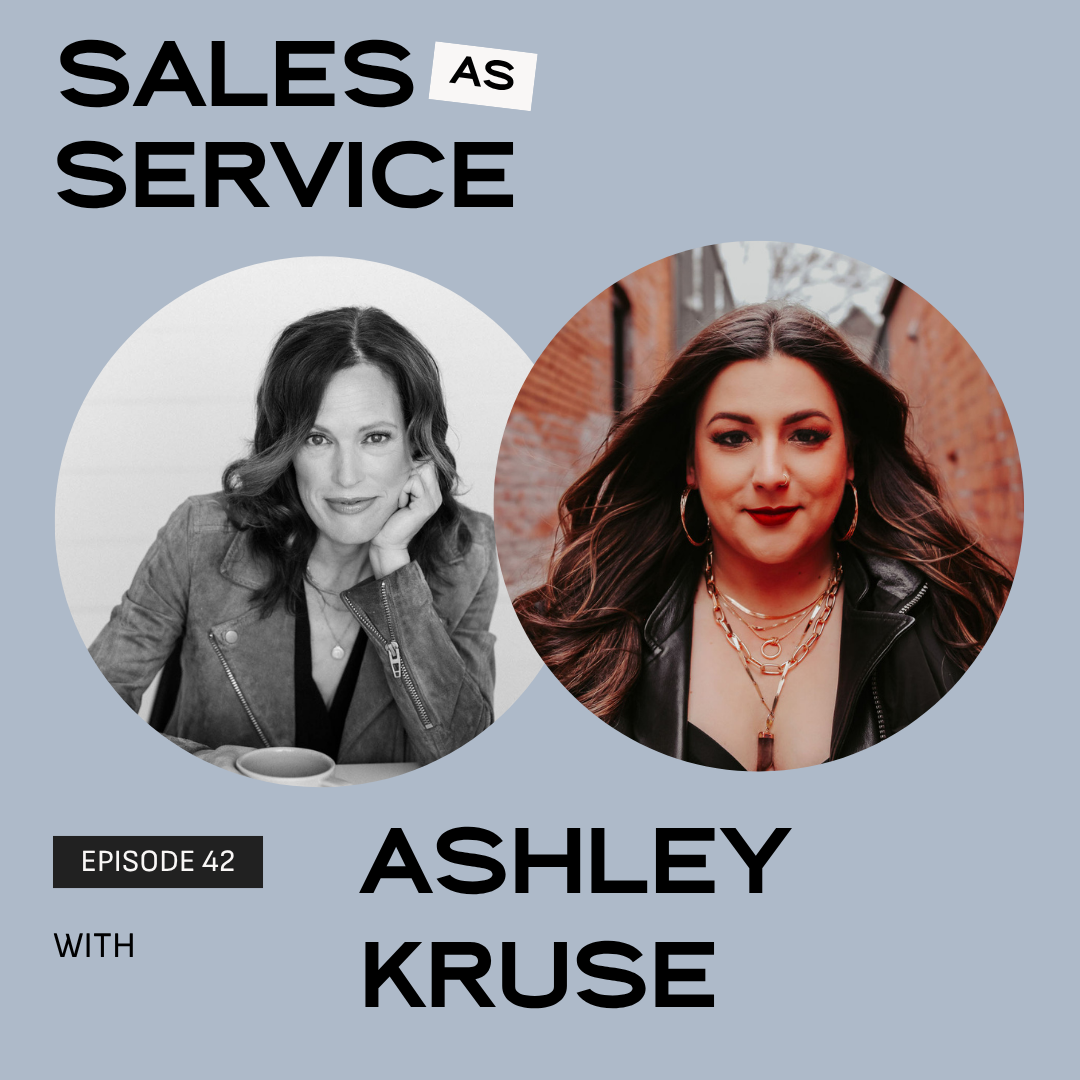
The Gap Between Attention and Decision (And How to Close It) with Ashley Kruse
EPISODE: 42
We’ve been taught that consistency and visibility are the keys to growth. Show up, post regularly, build an audience—and the clients will follow.
But what happens when the content is working… and the sales aren’t?
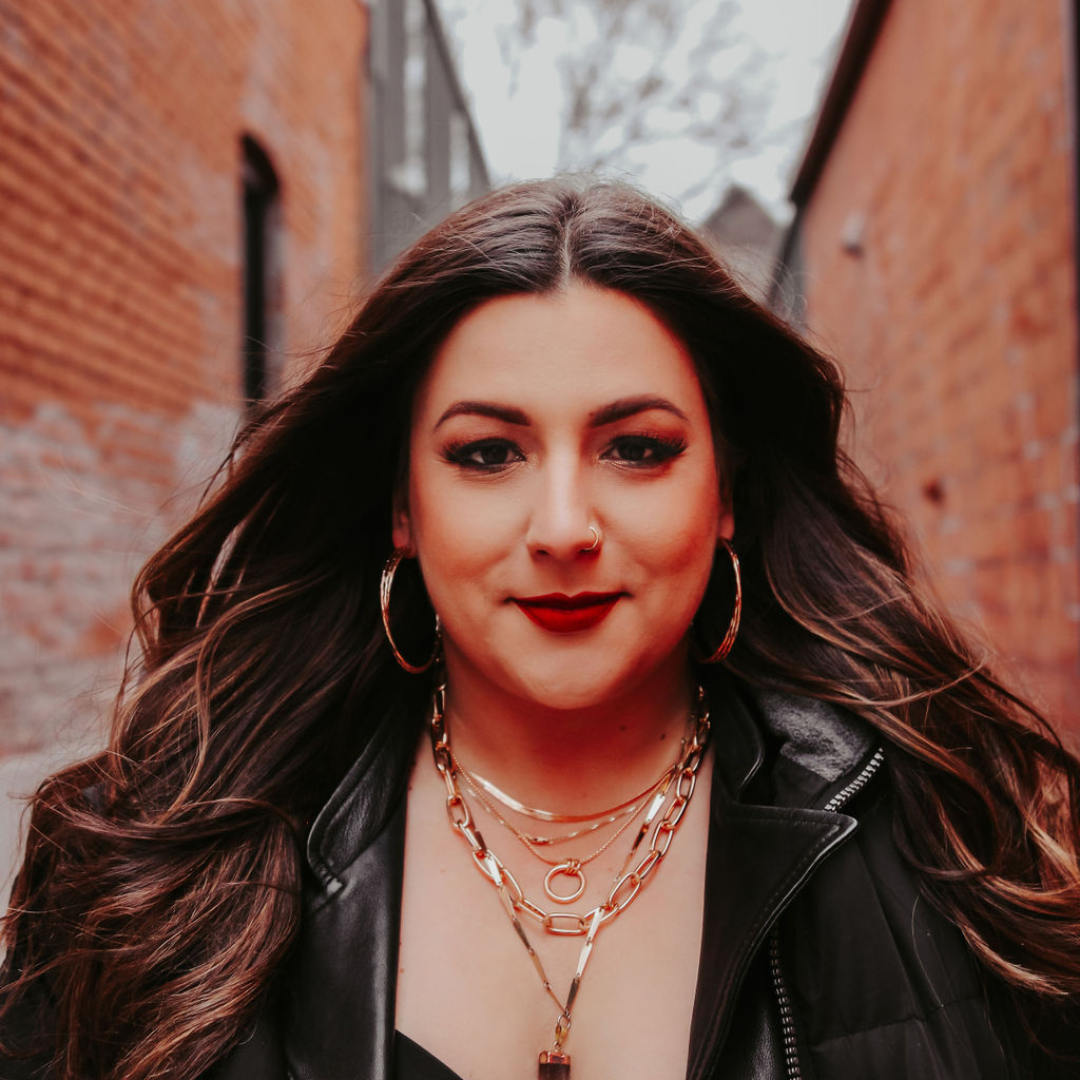
In this conversation, I sit down with Ashley Kruse to unpack the gap between attention and decision. We get into what actually drives someone to take action, what needs to be in place before you ever spend money on ads, and why most content falls flat when it comes to conversion.
Ashley brings a clear, data-driven perspective to marketing—and challenges the idea that more visibility automatically equals more revenue.
In this episode, we cover:
The difference between content that gets attention vs. content that drives decision
What a “proven offer” actually means before investing in paid traffic
Why most messaging feels flat—and how to develop a stronger point of view
How to turn visibility into real conversations and qualified leads
What founders need to understand about the long game of marketing and sales
LISTEN TO THE EPISODE HERE 👇🏻
-
Speaker: [00:00:00] When it comes to getting your ads to really do what you want them to do, which is to get them to the page or to wherever we're driving the traffic to, is to really have a solid point of view. One that is your own, one that is unique to your perspective in the world. One that is probably gonna rub people the wrong fricking way.
That is the truth, especially if you are a consultant, especially if you are a coach because there's 70 other people out there just like you, but no one has your point of view.
Speaker 2: Welcome to Sales Is Service. The podcast designed to help you change your mind about sales. Literally, I'm gonna help you change the way you think about selling.
I'm Tam Smith, your host sales bestie and pitch partner next door. You're tired of bros with biceps telling you how to crush a million dollars in your sleep. Or battling imposter syndrome on your own. You've come to the right place. All you need to do is listen, then take action. No gym membership required.
Let's get started.[00:01:00]
Before we get started, this show is shaped by real questions from agency owners and service based founders who want sales to feel relationship first and values led minus the cringe. If you're wrestling with warm outreach, follow up. Asking for the opportunity or how to lead your own sales process without sounding like a salesy weirdo, send your question in, find me on LinkedIn, or email me at Hey tam at studio three 40 nine.com.
If it's something you are dealing with, chances are you're not the only one. Alright. Let's get into today's episode. Hey there, and welcome back to Sales of Service. I'm your host, Tam Smith, sales growth strategist and founder of Studio 3 49, and I am officially in my contrarian era. It's been a long time coming and today's conversation helped me realize I've been a little too safe with my messaging.
Too careful, maybe a little too polite, more focused on how things land than on saying what I actually believe about sales and business development. 'cause I don't believe in pressure. I don't believe in chasing, and I definitely don't believe there's some magic formula that's gonna fix your pipeline overnight.
[00:02:00] I believe sales is a discipline. It's a daily practice built on initiating and nurturing real relationships, and while everyone else is out there chasing the next tactic, the next funnel, the next big thing. I'm doubling down on what I know works, what has always worked, and what will always work.
Relationships. A lot of the messaging out there right now tells us that if we just show up, stay consistent and create good content, the right clients will find us. But what happens when the content is working, people are watching, liking even engaging, and it's still not turning into real conversations or actual revenue.
That gap between attention and decision is exactly what we're getting into today. My guess is Ashley Cruz, a growth marketing strategist who helps coaches, consultants, and service providers use paid traffic to scale from one to one, to one to many without wasting time or money on strategies that don't convert.
Ashley doesn't just focus on getting eyeballs. She focuses on what actually moves someone to take action. We talk about the difference between content that gets attention. Content that drives decision. What needs to be in place before you ever spend a dollar on ads, and how to think about paid traffic as part of [00:03:00] a longer term sales strategy, not a quick fix.
If your content is do its job, but your pipeline isn't reflecting it, this conversation is gonna help connect the dots. Let's get into it. Ashley, thank you so much for being here. Welcome to Sales and Service.
Speaker: Thank you so much for having me. I am so excited to be here.
Speaker 2: Me too. I'm very much looking forward to this conversation.
Tell us who do you help and how do you serve?
Speaker: Yeah, so my name's Ashley Cruz. I am, I like to call myself a growth marketing strategist, but a lot of people don't know what that actually means. So long story short, I help with like sales and marketing on the paid social side. And a lot of my clients are coaches, course creators, consultants, service providers, and they have this desire to scale from one to one, to one to many.
So their big goals here are how do we use paid traffic? To really bring in the eyeballs and get the attention of our ideal client in the, probably the most noisiest time I've ever seen on the internet. And I think we say that every single time, but it's just feels more and more true.
Speaker 2: I, I [00:04:00] could not agree more, and I, I love, I'm gonna steal this language, but the difference between content that gets attention and content that drives decision.
How do you differentiate that?
Speaker: The thing is with content is you're doing one of two things. You are creating awareness and educating, which a lot of us do in the content world, or you're using content to help that person on the other side of the screen make a decision. There's really one or two like that.
Those, those are the two things, right? And so for me, when I think about content and specifically content when it comes to ads, it's how are we helping that person make a decision? What are the things that we are saying in that piece of content? And this is true for organic too, but how are we moving them one step closer to making a decision, whether it's with our programs, with our offers or not.
Speaker 2: If a founder is looking at their content that they're putting out there, is there. How can they tell if what they're putting out [00:05:00] there is attracting buyers or just an audience?
Speaker: Yeah. Yeah. This is such a good question. I like to, this is gonna be funny and I, I mean, no disrespect when I say this, but the difference between the two in my mind is when you see somebody just liking saying, oh my God, I need to hear this.
I needed to hear this today, or they're not necessarily like reflecting back or identifying themselves in that piece of content. Typically, that's gonna be more of like that educational content for people who are buying or like in a buyer's mindset, they're gonna be asking questions, they're gonna be engaging with that conversation or that content in a little bit different of a way they might be sliding into your dms.
They might be saying, wow, this is me spot on. You just read me for filth in like the best way possible. You know, and, and it's, it's truly like what I feel like is, uh, an aha moment and you can see and sense that in the content and also how they're responding to you. I think one of the most important things that people don't talk about in ads [00:06:00] and when it comes to getting your ads to really do what you want them to do, which is to get them to the page or to wherever we're driving the traffic to, is to really have a.
A solid point of view, one that is your own, one that is unique to your perspective in the world. One that is probably gonna rub people the wrong freaking way. Like that is the truth, especially if you are a consultant, especially if you are a coach because there's 70 other people out there just like you, but no one has your point of view.
When people ask me about running ads, I think that's usually the thing that I tell them. I'm like, what's the point of view that no one else has? And are you okay with a little hater here and there? Because there's gonna be people that are gonna hate on your ads, but usually we don't care because it's our point of view.
It's something that's unique to us. And so to give you an example of that, like I run a course that's about Upwork. Okay? And so one of the things that I hear from people all the time is that Upwork sucks. It's the worst place to find clients. In my content, in my ads, I say [00:07:00] Upwork is the best place I've ever found clients.
It is the most consistent. I do the thing that like the people say is wrong. When you do that in your ads, one, you get engagement, which makes the algorithm just. Pop off and like love you. And then two, you also deflect from people who are never going to buy. They wanna argue with you in your, in your ads, you don't engage.
But like they wanna argue. And that's a good thing. Like kind of going back to what we were talking about earlier with decision making content. When you rub someone the wrong way. You get a little, you get that part of it's like, oh, they, they see themselves or they don't see themselves and then they're making decisions.
Right? And so I love that versus what I see a lot of people, and I refer to this as like beige businesses, where you go into. Or you see an ad that you like and then you just kind of replicate it for yourself. Listen, like, I don't think that's a bad strategy, but you have to put your unique point of view on it.
Because if someone sees it, they're gonna be like, [00:08:00] okay, cool. I've seen that before. I've seen that before. Right? So I think it's like really just honing in on your unique point of view and your contrarian point of view. More importantly,
Speaker 2: when someone comes to you like, and they're considering paid ads, you know, kind of back up what really needs to be working in their business first before they, they add that in.
Or is it, or, or can they, like, do you, can you start immediately? I think we both know the answer to that, but
Speaker: Yeah. I mean, I think that there's nuance here, right? Because there's not a perfect solution for every person. But I will say you have to go into it with the correct mindset, right? If you are going in, I'll, I'll start with saying, here are the three things you need.
You need a proven offer. You need clear messaging that resonates with your audience. Like you've already tested this organically, you've had people buy. And that's what I mean when I say a proven offer. A proven offer is you've sold it outside of your mom and your sister and your brother, right? Like you've sold it to a cold audience and validated that that's something that your audience actually wants.
[00:09:00] And then you need a clear way to convert that interest into a decision. So whether that is a webinar. A workshop, even just a book, a call, like sales kind of funnel, that would be totally fine. 'cause the goal of an ad is to just drive traffic. It's up to the sales page or the conversion mechanism to actually convert that person.
I think that's a misconception. But with that in mind, there are lots of people who leverage ads on a smaller scale to test and validate their messaging. Right? So you have to go into it understanding. What you're gonna get and what the goal is, right? If you're spending, you know, one to $2,000 on your ads, that's more of like a testing and validating type of budget, right?
You're testing your messaging, you're testing your hooks, you're testing your creative, and your angles, the content itself, or you're driving and using ads to drive traffic to a lead magnet that's already proven to convert into your higher ticket offer. If you don't. Have these proven things in [00:10:00] place.
It's not to say that you can't test, it's just to say that your expectations need to. Be adjusted.
Speaker 2: That said, can you walk us through like a successful campaign, like one of your most successful campaigns and and what made it work?
Speaker: Yeah, yeah.
Speaker 2: The mechanics behind that. Yeah.
Speaker: I think the mechanics of like campaigns that work really come down to.
The consultant, it's not even actually what you think. It's really, are you in a place where you are looking at the long-term vision of your business and how ads play into it. It's not about immediate sales. It's not about, you know, I need to make this launch the most successful billion dollar launch ever.
Right? It's truly how does, how do I integrate paid social or paid marketing into my efforts so that this launch. 10 launches from now. I've been building an audience that is warm enough to make a buying decision, right? And so when I think about that as the context for my answer here, what I like to point to is a campaign that I've run with one of my clients.
We did a [00:11:00] VIP day kind of experience where we sat down and we looked at her offer. She ran a membership, and this membership is fire. Her people stay for 12 months. So we know that if we can get her a sale. They are go, she will recoup all of her ad spend over 12 months of time, right? Like we know that's the case.
So when we were looking at her offer suite, I was like, girl, you've got all of these like offers that are just sitting in Kajabi doing nothing, right? And so I looked at them and I was like, you know what we could do is we could create a low ticket funnel and essentially use the things that you've already created to build a buyer list, meaning.
You've got these three ticket, these three low ticket offers that you could sell to people in between your launches, which bri, which does two things. It brings you in a qualified buyer that's probably more likely to say yes to your membership when you do launch. And then you've got offers that you can now collect income from and use to.[00:12:00]
Essentially break even on your ads, right? So you're using the offers you've already got, you're spending money on ads, but you recoup that on the backend and then you become profitable once you launch again. So what's so cool about this is that we ended up launching her low ticket funnel. We got her 127 buyers in two months, and she, to this day still.
Uses that funnel so that when she launches, which she launches kind of like I would say quarterly, almost like three times a year, essentially in between all of those launches she's building, growing that list with people who have already purchased from her. And I think when you can do that, it is game over.
It makes everything feel so much easier. And for her, she's like a lot of us. A solo, CEO has a va. She doesn't have time to be on social media 24 7. She needed more of an automated process, but we don't just want leads, we want buyers. And that's kind of why I love a low ticket funnel, because it does that
Speaker 2: need a better system for getting clients consistently.
Grab my VIP [00:13:00] Power Hour, a free daily rhythm designed to help you stay visible, nurture your network, and spark new conversations in just 60 minutes a day. It's not about cold pitching or chasing algorithms, it's about showing up with intention. Do it for 30 days and you'll start seeing more confidence, more conversations, and yes, more revenue.
Download it free at Studio three 40 nine.com/freebies. Now, back to the episode, you and I think with the site we both, I feel like have that one, you know, marketing and sales brain, you know, that's kind of, we understand the, you know, the, the strategy that you know. 'cause I felt like, at least in my.
Corporate environment. Those were the two departments that were always fighting with each other.
Speaker: Yeah,
Speaker 2: so true. I feel like, I think with both brains. So I get it. And I like how you talk about like the sales psychology that you incorporate into the campaigns that you build. So just kind of chat a little bit about that.
Like when you went to set that up, how are you thinking about that?
Speaker: Yeah, so for me what we're looking at is what are people asking for? What are the most common questions that she's getting? And like I said, she already had. These [00:14:00] resources that she created, she'd sold them like, kind of like organically, right?
She'd be like, oh, I created this for you guys. Oh, I created this for you guys. All we did was take the things that she'd already had people purchase from her and strategically set them up so that ultimately they would help her break even with her ad spend. And two, it would qualify them into the membership.
Right? And, and, and so it's, there's a little bit of a, of a process that you go through by looking at that, but the simplest way is what do I have that's. Certainly collecting dust right now that I know reliably I've sold in the past, and then can I put that together in a way that's gonna get me a qualified buyer for the next time that I'm launching.
This type of funnel is really meant for somebody who does have, like, it was probably created a lot of. Things in their business, right? This person's been in business, she's well known. She's been in the industry for years. She's well known in her industry. So she's created all of these little offers that she just never put together strategically, right?
So you do have to be someone who has [00:15:00] created things in the past. The last thing that you wanna do is go create something brand new. I think that's what people tend to do with a low ticket offer, where they're like, oh, I'll just create this thing. The thing that you want though. Is create or use the things that you already have that you know, have already sold.
Going back to that idea of a proven offer, you don't wanna put ad spend behind something that hasn't already sold organically.
Speaker 2: Yeah, I like that. And I think there is this marketing, good marketing has sold us this idea that, you know, it was like kind of the, the magic solution, the silver bullet that you know, is gonna be this overnight success with, you know, very little, little.
Effort behind it. And I think speaking of that, you know, there, you've already done the, the work ahead of time, that you have something that's already proven itself to be desirable before you're putting ad spend behind is what I'm hearing.
Speaker: Yeah. And, and you'll know, like people, if people ask you for the same thing over and over and over again, or you're seeing that people have a clear need or a clear [00:16:00] desire for something, you might even have created it for like your, your other programs.
Pull that out. If it's something that's gonna solve that immediate problem, you could use that too, like that. There's other ways to go about a validated offer that don't include just selling. It's really like what is the, the thing that my clients love the most that I offer, and. What's the thing that the, the, the solution that I'm solving with it.
I think that's the key with a low ticket offer in particular, is like, it has to solve something really specific. It can't be this broad, you know, like, I don't know, like journal prompts or something that you could find in chat GBT. That's, I think, a really important distinction for low ticket offers in particular.
And
Speaker 2: when you say, for the audience that may not know what we're referring to as low ticket offer, can you define that?
Speaker: Yeah, it's anything from between like seven to $97. Right. So like for, I think this client, we did a $7 offer that upsold into a $22 offer. That upsold into, [00:17:00] I wanna say it was like. Maybe a $50 offer.
I can't remember the exact amounts, but they kind of step into, it's like an ascension into other offers, essentially. Okay,
Speaker 2: gotcha, gotcha. Another example that you can share of a, A successful campaign. Yeah.
Speaker: Yeah. Okay. So I will share about a webinar. So this is totally different strategy, totally different structure.
A lot of people don't run low ticket funnels because they do require a bit of a, an ad budget. Right. So, another way that, uh, another client that I've helped, we did a masterclass webinar. Okay. So essentially it's, you know, about six weeks of running ads. Either a lead magnet or to your, directly to your webinar or your masterclass.
The thing with that, and, and I'll share, we got, I think it was 215 leads over that six week time, and I think we spent about $1,500 on the ad spent that yielded her four sales [00:18:00] calls. Okay, so four sales calls from the webinar. That is like kind of the outcome we've run. That's awesome. Yeah, and I've done even webinars for like my own stuff where we're running again, $1,500 in ad spent, we're getting about 700 leads was what I had, and then I converted three times the amount that I spent.
So you could do the math there, but that the, the thing about a masterclass or a webinar is that you've gotta be really good at selling your offer because you're doing it one to many. Right,
Speaker 2: right, right.
Speaker: So, yeah, I think that that's just like another, you know, structure and strategy. But like, I love a webinar.
I, in my mind, consultants, Strat, like anybody who's in the coaching course consulting service space should be doing a webinar. In my opinion. I think that they're the best way to sell personally, but
Speaker 2: yeah. Well, they, they get a taste of your thinking live.
Speaker: Yes.
Speaker 2: And kind of that, you know, your, your energy.
Energy and what it would be like to work with you. And so we've got, you know, example of. A, like a, a low ticket offer. We've got an example of, you know, a [00:19:00] webinar or masterclass. How would that be different if it was like you had a membership group that you were, you were invited like a, like a Facebook community or a LinkedIn group or something that you were inviting people.
Would you, would you use it in that scenario or would you recommend it?
Speaker: I have in the past. The, the thing, the tricky thing about groups is. If it's free, it's hard because then you have to get in the dms and you have to start engaging, right? So like going back to what I said about, you know, the three things you need for ads to work is you need a solid conversion mechanism.
So if you are in a place where you are converting in your group, great run ads to your group, you can absolutely do that. But just know that you're gonna have to do a little bit of handholding in the dms or however that works. You need to have the conversion mechanism set up in that group to make sure that you recoup your ad spend.
Speaker 2: Would you recommend to like podcast either guesting or finding guests for your podcast?
Speaker: I wouldn't say, I wouldn't personally use ads for that, in my opinion. Again, like you want a conversion opportunity versus like, I mean you could, but [00:20:00] it's more of like a billboard ad and there's not like a direct correlation to sales.
Right. So like
Speaker 2: be more like for reach and visibility versus like trying to convert off of that.
Speaker: Yeah. Now if you are someone that's a consultant and you have like this really unique point of view, you could run ads to a blog on your, or a podcast that lives on your blog so that ultimately your next launch.
You're attracting and like have had people engaging with your content on your blog so that when you open the doors for your next thing, you've got a warm set of buyers. And there's this study that Google, and a lot of marketers are talking about this right now, but it's like seven hours of content, 11 touches and four platforms is what's required to help somebody get to a buying decision.
So you can use ads to help speed that process up. Podcast is great. You just have to have it set up appropriately.
Speaker 2: What should someone realistic, I know it differs by campaign and kind of what the, the expectation and the, the desired outcome is, but you know, at minimum, what should someone really [00:21:00] budget to spend going into ads?
Speaker: It's such a hard question to answer. I even
Speaker 2: hate myself for asking that 'cause I know it's such a,
Speaker: so when I think about a, like for me, I'll say this. When I run my master classes just for my own course, right?
Speaker 2: Yeah.
Speaker: I am always budgeting 1500 to $2,000 for that one campaign, like just the one campaign. Okay.
This is on a monthly basis. If you're running a low ticket funnel, you're gonna need thousands because it costs, usually you need three times the ad spend of what one sale is worth. Okay. So, and that's on a daily basis, so. It gets tricky based on, you know, the, the type of funnel and the type of offer that you're running.
But I typically say like, you just need enough data, right? To be able to make strong and decisive tweaks. So, you know, for me, I, when I take on clients, it's like you need at least two to $3,000 in ad spend for your campaign, and that could be on a monthly basis. It just depends on like, you know, what we're running ads to.
Also, it comes down to your expectations, right? Like, what's your [00:22:00] goal? So if, if you're good with maybe not. Thousands and thousands of dollars. You know, just remember like if I spend a thousand, I should get two to $3,000 back. Is that enough for you to wanna invest that $1,000? For some people, that's not enough.
Speaker 2: Rolling things back. How did you get into this? Like how did you like land here as as your focus?
Speaker: Yeah, that's a good question. So I worked at LinkedIn for seven years. I loved working there. It was such a great company. During that time I did a lot of recruitment marketing, so I would help businesses. Small to medium sized businesses with their recruitment efforts on LinkedIn.
So in their sponsored posts, like in a native feed in like their side rails, all of that. So I loved that. And then I left LinkedIn and I started my own business. I was a career coach for a hot minute and then moved into coaching just in general. So I was business coaching 'cause I was like, cool, I have like all of this background and experience and I've seen all these marketing things that I really feel like I could help people leverage in their businesses.
So I did that for about. Three or four years. And I stumbled [00:23:00] across some, like an ad strategy that I like, loved. And actually it was to a group, like it was running ads to a group, getting your, you know, group of people going. Something inside of me was like, oh my God, I love this. I wanna do more of this, and less of the coaching side.
And so I started running my own ads. I started playing around with several different strategies and then eventually I was like, well, I think I'm just gonna go get certified in. Ad like strategy and ad management. So I did, and ever since then, that's just what I've been focused on. Like I love it. It's so, I, I love it because it's so data-driven.
There's no emotions. The numbers don't lie. They don't lie. And it, and I think that's what this industry frankly needs right now. I mean, I think we can be so disillusioned as an industry because we're such a new indu, like coaching course, creating, it's, it's fairly new still. It's a baby. It's like, it's in its infancy stages, right?
And I think that it's easy to get caught up in the emotion, but when you have data that specifically tells you like, Hey, [00:24:00] your baby might be ugly, you can't, you know, you can't.
Speaker 2: Yeah,
Speaker: you can't. You can't argue with it.
Speaker 2: Yeah. You can't
Speaker: argue with it.
Speaker 2: Yeah.
Speaker: So that, that's really why I got into it and like how, and I, it's just been such a great thing and I think for me, like I really.
Enjoy working with founders that have big visions that like are doing something to impact the world at like a cellular level as, as cliche and dumb as that sounds, it's the truth. Like I don't wanna run ads for e-commerce or big businesses. I wanna help solo and smaller businesses who, you know, and it's not smaller, but they're just like, you know, we're talking like seven, eight figures.
Like we could do that or six figure, right? It's like the people have to have the passion to change. And if as long as that's good, then I'm like, cool, let's, let's go,
Speaker 2: let's go. Yeah. I love that. Yeah. And you, you work across platforms, so not just, you know, Facebook, well, Facebook, Instagram, LinkedIn, all, all the platforms.
It's
Speaker: really, I primarily, yeah, I do primarily focus on Facebook and Instagram. I have experience [00:25:00] obviously on the LinkedIn platform, but those are my primary places where I like to play.
Speaker 2: Yeah, yeah, for sure. Well, let's jump into our Fast five.
Speaker: Great. Sounds good. Okay.
Speaker 2: Your, I can't live without it. Software or app?
Speaker: I hate to say it, but it's probably Canva. Like I just love Canva or edits from reels, like I wish they had like a regular. Desktop version of edits because I love playing around in there and I, I do so much creative work that I do it in edits because it's such an easy place for me to edit people's content, so,
Speaker 2: nice.
Best advice you've ever received about sales and business development?
Speaker: Do it messy. Oh.
Speaker 2: That. Yeah.
Speaker: Which for my little Virgo rising sign is really hard. I'm a very do strategy brain. That's why I'm in ads. So to do things messy feels chaotic to me sometimes. But it's the truth. Like you just gotta get in and do it and refine.
Later
Speaker 2: morning routine. Must have
Speaker: movement I have to have. Or like a [00:26:00] solid hour of peace and quiet like. Usually I build the, the movement inside that hour, but I Yeah. Need that time to chill
Speaker 2: in my, yeah. In, if, in my perfect world, I would love to have like an hour and a half to two hours, like just of stillness in the morning, it's like, it feels like such a luxury.
Uh, if I can that
Speaker: you know, what, I get up at 4:00 AM for that reason, so that like before my kid's up, I can collect myself and not have anyone. Talking at me with Buzz light ear in the background. You know, like
Speaker 2: your walk-on song, the one song that always pumps you up.
Speaker: I like, I had a really hard time with this, but I just like, I love anything.
I'm, I'm a hip hop girl, so like two chain, any rap song really is probably gonna be my vibe, but it could be anything. And it's really gonna depend on the day.
Speaker 2: Yep. Oh yeah. If you saw my like Spotify playlist, she'd be like. What, she's slightly unhinged. 'cause it's like ev a little bit of everything.
Speaker: Yeah. Or like, I like Cardi B moment too.
You [00:27:00] know, just like puts me in that feminine energy just ready to throw down.
Speaker 2: And if you only had one hour each day for business growth, how would you spend it
Speaker: in the dms? Probably, I like building relationships. I like connecting with people. I think that's been such a key part of my business and like how I've been able to stay in business for so long.
So I'd really say that those things are, are really important to me.
Speaker 2: Thank you for celebrating that because that is my business. So
Speaker: yeah.
Speaker 2: Thank you.
Speaker: It's connection. It's so important.
Speaker 2: Yeah. And relationship. Yeah, absolutely.
Speaker: Well, and I think that's how you learn a lot about what your ideal clients want and need.
I mean, we didn't talk about this yet, but like one of the biggest pieces of of ads is having a really unique point of view and you don't know, and you don't know how to say it. You don't know how to like communicate that unless you understand. Where your ideal client is at and like what they're struggling with, right?
So to, to win in ads today, you have to have a unique point of view. It's probably, in my opinion, the most important thing that you can [00:28:00] do because creative, pretty creative, pretty ads, all of that is great. But if you sound like everybody else. Because you didn't do the market research, you didn't have that connection built.
Your ads are gonna fail every time. There's no unique point of view.
Speaker 2: Awesome. Well, where can folks find and connect with you online?
Speaker: Yeah, so you can find me on instagram@the.business dot batty, and then my website is batty creative.com. I am always on the gram, like that's probably the best place to find me and where I usually post most of my stories and like little tidbits and things that.
You could see in, in, in practice what like decision making content looks like.
Speaker 2: Thanks again to Ashley Cruz. Check out the show notes to learn more about Batty Creative and connect with her directly to Ashley's point, most content isn't underperforming because it's bad, it's underperforming because it's neutral, agreeable, safe, the kind of message that could belong to anyone, and I think.
AI is making this more common, not less. When your messaging sits in the middle like that, it doesn't move people. It doesn't build trust, and [00:29:00] it definitely doesn't drive decision. So here's your sales as service challenge for this week. Audit your messaging for neutrality. Look at your website, your social content, your sales page, and ask yourself, where am I trying to be agreeable instead of clear?
Where am I softening what I actually believe? And where could this message belong to anyone in my industry? Then choose one belief you hold about your work, something you know to be true from experience, and say it plainly, and then come join me in my contrarian era. Anchor your content this week to that message in a single decision your buyer is trying to make.
Pick one. Should I invest now or wait? Is this the right approach or not? Am I ready to move forward and create content that helps them decide? Because decision driven content doesn't just attract attention. It attracts people who are ready to move. Before I go, our next sales and service live is coming up Friday, April the 17th with Becca Camp, founder of Fearless Fems.
We're talking all about offer creation, how to package your expertise to attract and convert your most aligned clients. Link is in the show notes. Come for the conversation. [00:30:00] Stay for the connections. That's it for me. If this episode shifted how you're thinking about content and your strategy, share it with someone who's building right now, and I'll see you right back here next week.
Speaker: You've just listened to the Sales Is Service Podcast, the podcast to help you shift your mindset around selling.
Speaker 2: If you liked what she heard, be sure to hit subscribe and share it with a friend. Because we're all about more sales. Awesome. And less sales awkward. See you next episode.
MORE OF A READER? 👇🏻
There's a point in every business where you realize something isn't adding up.
You're showing up consistently. You're creating content. People are engaging. But the pipeline doesn't reflect it.
It's easy to assume the problem is volume — more content, more visibility, more reach. But most of the time, that's not the issue.
The real gap is between attention and decision.
In my conversation with Ashley Kruse, we unpack what's actually happening in that gap — and why so many founders get stuck there.
A lot of content today is designed to educate. It shares insights, tips, perspectives. And while that builds awareness, it doesn't always move someone forward.
There's a difference between someone thinking, "That was helpful" and someone thinking, "This is exactly what I need — what's the next step?"
That second response is what drives business. And it doesn't come from neutral messaging.
It comes from clarity. From having a point of view. From being willing to say something that not everyone will agree with — but the right person will immediately recognize.
Ashley shared an example from her own work. Instead of repeating what everyone else says, she takes a stance that challenges common assumptions in her industry. That contrast creates engagement — but more importantly, it creates identification. People either see themselves in it or they don't.
And that's the goal. Because when someone can clearly see themselves in your message, the path to a decision gets shorter.
But even that isn't enough on its own.
The other piece we talked about is what happens after the content works. Because visibility without a next step is where a lot of opportunity gets lost. You can generate attention all day long, but if there's no clear way for someone to move forward — whether that's a conversation, a call, or a defined offer — nothing changes.
This is where marketing and sales have to work together. Content creates the entry point. Sales creates the movement. You can't rely on one without the other.
It's also why jumping into paid ads too early often leads to frustration. Ads don't fix messaging — they amplify it. If the offer isn't proven, if the message isn't clear, if there's no conversion path in place, you're just paying to get more eyes on something that isn't ready.
When those pieces are aligned, everything works differently. You're not chasing attention. You're guiding decisions. That's a more sustainable way to grow.
If you take one thing from this conversation: you don't need more content. You need more clarity in what your content is asking someone to do next.
Growth doesn't come from being seen. It comes from helping the right person move.
✦ YOUR SALES AS SERVICE CHALLENGE
Audit your messaging for neutrality.
Look at your website, your social content, or your sales page and ask:
Where am I trying to be agreeable instead of clear?
Where am I softening what I actually believe?
Where could this message belong to anyone in my industry?
Then choose one belief you hold about your work—and say it plainly.
No hedging. No watering it down.
Next, anchor your content this week to one specific decision your buyer is trying to make.
RESOURCES & LINKS
Learn more about Baddie Creative
Simplify sales with the VIP Power Hour - download the FREE guide
Learn how to consistently book 3–5 sales-qualified meetings each week - Book an Alignment Call
SUBSCRIBE & REVIEW
If you loved this episode, please take a moment to subscribe and leave a review on Apple Podcasts! Your support helps us reach more creative agencies and service pros who need these insights. Thanks for tuning in to Sales as Service—see you next week!

TAM SMITH
I’m Tam Smith-Sales Growth Strategist and Founder of Studio Three 49. I help service-based founders find, connect with, and convert right-fit clients through scalable, sustainable outbound sales solutions.
No pushy pitches. No bro-marketing. Just simple, structured systems that turn connections into clients.