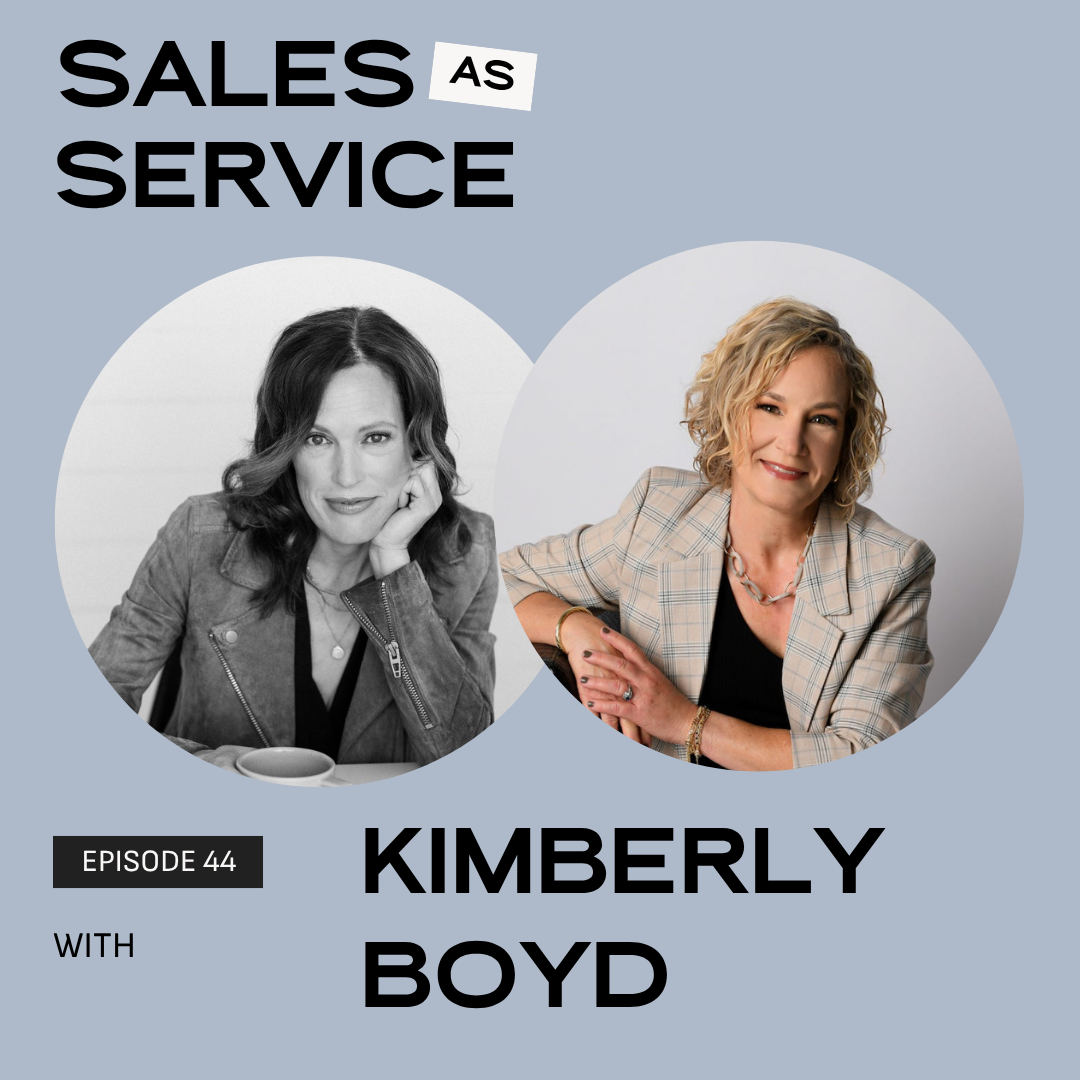
From Waiting for Clients to Creating Real Opportunities with Kimberly Boyd
EPISODE: 44
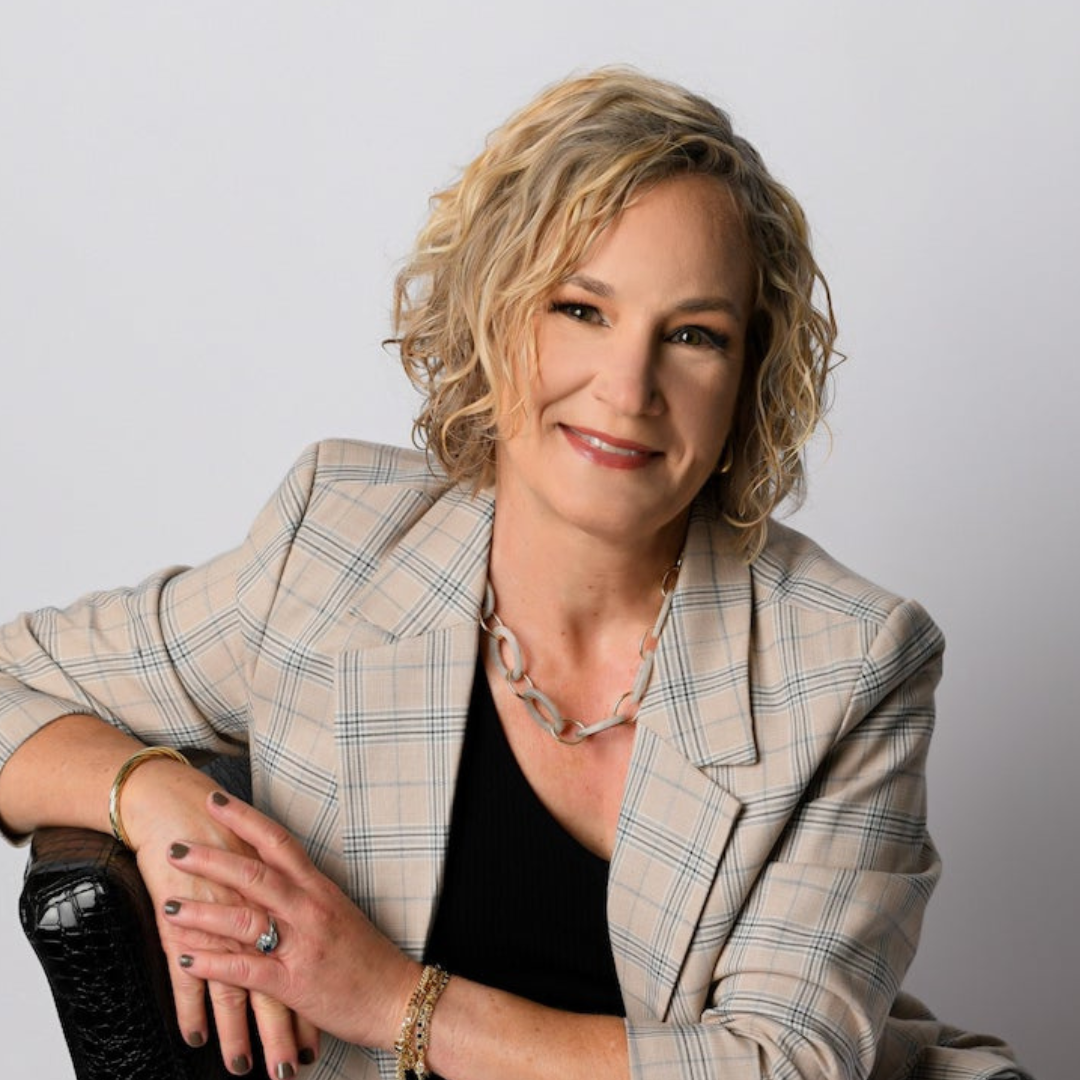
Referrals are a strong signal that your work matters—but they’re not a strategy you can rely on long term. In this conversation, I sit down with leadership coach Kimberly Boyd to talk about what happens when a referral-based business starts to feel inconsistent—and what it takes to build something more stable.
When we started working together, Kimberly’s business was built almost entirely on word-of-mouth. It worked… until it didn’t. What you’ll hear in this episode is how she shifted from “cross your fingers and hope” to a more intentional, consistent approach to business development—and what changed as a result.
This isn’t about doing more. It’s about understanding the difference between waiting for opportunities and creating them.
In this episode, we cover:
Why referrals can create a false sense of security in your business
How referrals shortcut the sales process—and why that matters
The mindset shift from “I’m bad at sales” to building a repeatable practice
What business development discipline actually looks like week to week
The real opportunities that start showing up when you create consistency
LISTEN TO THE EPISODE HERE 👇🏻
-
Ep 44 Kimberly Boyd AUDIO
Speaker: [00:00:00] You're not selling to a person, right? You're not going to a person and saying, I need you to hire me. Right? The shift is getting really clear on what it is you do and do, do well, and narrowing my focus so that when I put it out there, the people who need it could find me.
Speaker 2: Welcome to Sales Is Service the podcast designed to help you change your mind about sales.
Literally, I'm gonna help you change the way you think about selling. I'm Tam Smith, your host Sales Bessie, and Pitch partner next door. You're tired of bros with biceps telling you how to crush a million dollars in your sleep or battling imposter syndrome on your own. You've come to the right place. All you need to do is listen, then take action.
No gym membership required. Let's get started.
Hey, Tam here. Most growth sage founders are great at delivery referrals, prove it, but referrals aren't predictable and you've avoided sales because you think you have to be something you're not. Sales isn't pressure or cringey tactics. It's connection. Starting [00:01:00] conversations, recognizing when you can actually help someone.
The hard part. Doing it consistently. That's why I built the VIP Legion app, powered by Flow Chat. It helps you build a repeatable practice that supports three to five sales qualified meetings per week, ready to create opportunities on purpose. Book a free alignment call at Studio three 40 nine.com. Sales is a practice.
Let's make it consistent. Referrals are one of the most misunderstood grow channels in business because on the surface, they feel like the goal, they mean you're doing good work. They mean people trust you, they mean you've. Built something that works and that's not nothing. Referrals are genuinely valuable.
When someone trusts you enough to put their name behind an introduction, that means something. But referrals aren't predictable and they're not something you can build a growth strategy around on their own. And if they're your only channel, they create a false sense of security because what happens when your warm network slows down?
What happens when the introductions stop coming in and you realize you don't actually have a business development practice to create new [00:02:00] opportunities on your own? That's where things get uncomfortable because referrals do something else too. They short circuit the sales process. They drop you into conversations where trust is already established, where someone has already identified they have a need, and where you're walking in more than halfway to the close.
And when that's the only way you've ever built your business, it can start to distort your expectations. It's very easy to start thinking something is broken when every new conversation doesn't immediately turn into a new client, but nothing's broken. You are just finally experiencing what it actually looks like to build a pipeline, to identify who you want to talk to, to initiate the conversation, to nurture that relationship, and to make an offer when there's a genuine fit.
That's. Sales, and it's a completely different skillset. So today's conversation is about what happens when you hit that season in your business, when your warm network has slowed down, and you have to make that shift when you move from relying solely on referrals to building a consistent, intentional business development process.
What happens when you stop waiting [00:03:00] for opportunities to come to you and start creating them intentionally? I'm joined by Kimberly Boyd, leadership coach, founder, and someone who I've had the opportunity to work. With closely. When we first started working together, her business was built almost entirely on referrals, and like a lot of founders, it worked until it didn't.
What you'll hear in this conversation is what changed, not just in her pipeline, but in how she thinks about sales business growth, and what opens up for you when you stop waiting and start initiating. Here's my conversation with Kimberly. Kimberly, thank you so much for being here. Welcome to Sales of Service.
Speaker: I'm excited to be here.
Speaker 2: Yeah, this conversation has been a long time coming. I'm really excited to have you here. And before we get started, tell us who do you help? How do you serve?
Speaker: I work with companies and organizations that are experiencing pivotal transitions. So it might be change in executive leadership, it might be changing headwinds in the sector, reorganizations, those types of things, and I helped them navigate that and actually accelerate through change as opposed to just riding out the storm.
Speaker 2: Tell me, before we started working together, where were most of [00:04:00] your client client work? Where was most of that coming from?
Speaker: It was all just word of mouth. So just referrals from previous clients, one, one to the next really.
Speaker 2: And let me back up. How did you get started in this work?
Speaker: I got started in this work.
I was named a Wooder fellow when I was serving as CEO of a large nonprofit. And with that fellowship came a scholarship to do executive coach. Certification training, and I did that training and when you're going through the certification process, you need to do a certain number of hours, like 250 hours of coaching before you can apply for your certification.
And the recommendation from our professors was to do it outside of your sector. And so I started coaching and finance and banking and manufacturing and biotech and all sorts of different industries and, and realized that my passion really was in good leadership and not just in the work that I had done throughout my career that I really had.
Found great joy and purpose in helping leaders to lead organizations where people wanna come to work and, and that alone can drive profits at [00:05:00] the end of the day.
Speaker 2: Absolutely. And retention too. I just know my, you know, thinking back to my own corporate days, like all of the challenges, you know, within the organization, you know, typically it was kind of trickle down from the leadership.
So it starts at the top.
Speaker: It does.
Speaker 2: We started working together. You said most of your business, all of your business was coming from, you know, referrals, word of mouth at that point, what felt consistent and what felt maybe more unpredictable and frustrating?
Speaker: I think the consistent was the work was there, but it was only there for, you know, a few months out was the furthest I could see, you know, I didn't have a pipeline that was things that were constantly coming in.
So I was, you know, it was a lot of. Cross your fingers and I hope you get another referral, kind of an approach, which is great for long-term planning.
Speaker 2: So what made you realize. I mean, kind of kind of touched on this, but referrals alone weren't going to sustain the kind of growth that you wanted. What kind of growth were you looking for, I should say, in, you know, that realization that referrals just weren't gonna necessarily provide that?
Speaker: Yeah. I really wanted to create enough of a [00:06:00] stability where I felt like growth was possible. Probably one. One to two x kind of growth was what I was looking for. I think that my aspirations have, have risen since our work started together. You know, that it can be more than that, but I, it, it was really the stability that I was, that I was concerned about, you know, knowing that I would have a stable, predictable income moving forward in this, you know, in this period of starting my business,
Speaker 2: and I know a lot of people have kind of.
Their own, you know, thoughts, hesitations around sales and business development. You know, just from, again, I've, you know, just conversations I've had experience from, you know, the way we've been sold to their own experiences with it. Did you have any of those, like what were your initial thoughts or any hesitations around, you know, developing a sales and business development discipline in your business?
Before we started working together,
Speaker: I was. Quite convinced that I'm, I'm bad at selling. You know, it's just never I can, you know, in, in my nonprofit days, I had no trouble asking for money for mission-driven work, right? That was, that, that felt very different. [00:07:00] But selling myself, I think that, you know, I was always raised on, you know, humility, servant leadership, all of those types of things that sort of selling myself felt, it felt.
Inappropriate in some way, and yet, I mean, my head knew it was totally logical that it needed to happen, but there was a lot of holding myself back for sure.
Speaker 2: What's something you now understand about, about it that you didn't before? Have you had a change of, of mindset, kind of a change in thinking?
Speaker: Yeah. I, I think that it's, it was the shift of you're not selling to a person, right?
You're not going to a person and saying, I need you to hire me. Right. The shift is, is putting out there. Getting really clear on what it is you do and do, do well. That that was a huge shift and narrowing my focus so that when I put it out there, the people who need it could find me. Right. And that's, that feels very different, is that it's not, you know, cold calling and all of those kinds of things.
I, I have been trained in at [00:08:00] sales in that way. It really is not something I'm comfortable with or I particularly enjoy 'cause I don't like being on the receiving end of it either. You know, I don't like solicitation cold calls and that, that type of thing. But I think finding a platform to put out what it is that I do and do well, and if folks need that or know someone who needs that.
Wonderful because it is, you know, I'm selling a service that brings relief to people, right? And energy and optimism and all of those kinds of things which people really want. And so I, I think once I get into really one-on-one conversations, the hesitation goes away. It's, it's the initial getting over the hump of picking up the phone, essentially, which the work that we're doing together is much, is much easier because there's.
You know, you, you're connecting with people along the way.
Speaker 2: I, I appreciate that. You touched on, you thought you were, you know, quote unquote bad at sales and, you know, it really is just a discipline and a practice. What has been the hardest part of creating consistency and what's helped you stick with it?
Speaker: The consistency is the hardest part. [00:09:00] Especially, you know, in my work, I'll have, like the last two weeks I was onsite with clients. You know, five different days. Right. And that's a lot of, for a coach, that's a lot of time, you know, in onsite with them and working with multiple people each day. And, and those days are they, they take a lot of energy and a lot of, you know, you're pouring out a lot emotionally and so the coming home and saying, okay, now I need to do this as well, that becomes more difficult.
But on other more typical weeks, that's a matter of, you know, making sure that. Here's time on the calendar in, in different points in the week in order to get on and, and do that type of thing. It is still very much for me, a work in progress for sure.
Speaker 2: Well, I think for all of us, you know, and because it is, it's a discipline and a practice.
It's not a one and done. It's one of those things, you know, you budgeting that time, whether it's, you know, two or three times a week or daily or whatever you can commit to and you and do consistently. It's, it is, it's a, a discipline and a practice. It's never gonna be a, a one and done. If your pipeline [00:10:00] feels inconsistent, it's usually the sign of an outreach gap.
I created a free tool called the New Client Calculator to help you see exactly what it takes to land your next client. How many messages, how many conversations, how many follow-ups? No guessing, just clarity. If you've ever wondered, am I doing enough or just not doing the right things, this will show you head to Studio three 40 nine.com to download the new client calculator and find out just how close your next client really is.
Alright, let's get back to the episode. Since you've started showing up more consistently, what kinds of opportunities have started showing up for you?
Speaker: I think just the frequency with which people are connecting and, you know, putting out there if you're interested in having a call, you know, in the beginning it was once or twice a month, and now it's more, you know, a couple of times a week that, that, you know, I'm connecting with folks who are interested in, in.
Having a conversation about it, and sometimes it's not a conversation about connecting with me or my services, but helping me, me helping to connect them to other [00:11:00] people in my network and approaching it from that mutual benefit conversation I think is. Has been very helpful.
Speaker 2: You talked, I wanted to touch on just kind of your plans for growth.
You know, kind of when we, very early on kind of your vision for the business and then how that's changed. You had, it sounds like, maybe set the bar a little higher. Talk a little bit about that. Just kind of what, what your vision was before and what it is now.
Speaker: Yeah. I think before it was, you know, just proverbial keeping the lights on, right?
Like I know, yeah. Like knowing what, what it is I need to, you know, pay the mortgage and all of those types of, you know, basics because. Because I was just starting out. I didn't really, I don't think I really knew what to aspire to. And so it sort of went with this, these are the things that need to be covered by my income.
And so this is, this is my baseline. I have to get to that. And, and what I found is that there's just more opportunity out there than that, and I love what I do and I've become much clearer in. The who I help, which has helped a [00:12:00] lot because as I'm talking to people, it resonates with them, specific people that they know, oh, I know someone you, you, you need to talk to.
And that has allowed me to think bigger. And I think it's also settling into the business and realizing that, you know, after years as a senior executive in, you know, larger organizations. The, the frenetic pace at which you run and run and run and run and, you know, don't take much time off and settling into the business and realizing that it provides so much flexibility to be able to go and, you know, be with my grandbaby or, you know, spend, spend more quality time.
With, with the family and, and doing the things that I love to do. Is that it? I think that's also in many ways, raised my aspirations because it's like, I can do this and have a really nice life and in ways that I, I didn't before because just of the pace and expectations of when you're, you know, sitting in those, in those seats.
Speaker 2: So, sounds like you've, you've gotten much clearer in [00:13:00] your, how you articulate who you're for. People can, you know, can, it's a lot easier to refer you and recommend you, you know, versus just saying you're, you know, ex leadership coaching or executive coach. But when you articulate specifically for those executives or at a, you know, inflection point or point of transition in their lives or business, do you feel like you've gotten clear in how to talk about, you know, even like within the work that you do?
Like what the specific kind of offer and work that you do with those individuals is.
Speaker: Yes. And also a work in progress. So, you know, I think in the past six to 12 months I've started to actually create, you know, my own frameworks, right? And things that are, are processes by which I know I find success with, with.
Most of the companies that I work with can go through a pretty predictable set of, of stages and phases working with them. And so part of that clarity is, is beginning the work with the individual, but then also the opportunity to then go on and work with the, the leadership team. And [00:14:00] so I went and did a, a second coaching program to become certified in team coaching as well.
And I think when you're working at the team level. You have an opportunity to really affect the culture, productivity, alignment of an entire organization because you're, you're working with them in a way that supports them. Developing a common language of leadership, a set of behavioral expectations of each other.
They get much more comfortable giving and providing feedback in ways that are just productive and have the enterprise as their focus and not just their individual departments or, you know, the sort of zero sum game budgeting, you know, where. Trying to protect their turf. Um, when, when you see a senior leadership team coming together and focus on what's most important for their set of eyes to be looking at it, em, it empowers the folks below them.
They grow. Faster and, and the whole organization gets lifted up. And so that's what I really love doing the most is working, you know, starting off with a [00:15:00] senior executive, but then working with that person's team to really get the momentum started and having them see in very real time the benefits of that work on their organizations.
Speaker 2: So clarity on your kind of audience offer and how you're messaging that, has that translated to just more confidence in how you show up on. In conversations with pros, prospective clients
Speaker: for sure. Yeah. Because it's not, you know, I don't, I don't need the Empire State Building now for my elevator pitch.
Right. Good five story building. I'm good.
Speaker 2: Yeah. And, and talk about, you know, now that you're, you're able to have, like, proactively initiate some of those conversations, like some of the success that you've had with the connections that you've made. I mean, it's from, you know. New clients as well as there's been opportunities to, you know, speaking, to get in front of, you know, rooms with more of your right fit clients.
Share a little about that.
Speaker: Yeah. It's something that I just started really focusing on this year, was to begin to [00:16:00] look for opportunities to be in front of groups that at, in ways that are productive for them. Right. Where are the, the groups that are gathering, whether it's a. Meetings, conferences, associations that are dealing with a lot of change right now.
I mean, so many industries are, are dealing with pretty substantial changes right now, you know, between AI and the tariffs and now the war and all of these things that are causing influences around supply chain and all of, you know, access to the right people and all of those types of things is causing a lot of change.
And so getting in front of groups who wanna talk about what change is like and how to navigate it, I think is, is a pretty productive. Topic to, to share it with folks right now.
Speaker 2: Yeah, definitely. Well, how do you feel like your relationship, you know, in our time working together, relationship now with sales and business development is, what is your attitude about it now?
Like that kind of, what was that mindset shift and how has it changed?
Speaker: I think I'm just more optimistic about it. I mean, I, I, it feels less like a [00:17:00] chore. You know, than I, than I've ever thought about it before. It's just you had the opportunity to get on, engage with people online and make connections and have really productive conversations that even if they don't result in a new client, they do result in a new connection that, you know, allows me to continue to build my network and, and, and then.
Oftentimes be able to offer some value to someone just based on the conversation, which is, which is a great thing too.
Speaker 2: Well, for someone listening who is still relying on referrals and feeling stuck, what would you want them to consider or do differently?
Speaker: I would say from my perspective, it's it's get a consultant, someone like you, because it's not something I would've tackled on my own.
I mean, I would've. Continued to, I don't know, throw spaghetti at the wall and without anything really sticking. 'cause I wouldn't stick with anything long enough to, to do, to allow there to become traction. Right. I needed someone to walk that journey with me. And that's what you, you have done [00:18:00] at times. I think you're carrying a lot of the load, you know, as, as I've sort of ebbed and flowed in until I got a lot more consistent.
But I, I wouldn't have done it. Alone successfully.
Speaker 2: And I think, you know, marketing has done a really good job of selling us this idea. And I'm, you know, guilty in the past as a marketer of selling this idea that, you know, it is, there's this magic, you know, trick or formula that's gonna, you know, solve the, you know, lead generation problem, you know, or the, the, the new business.
Overnight and that it's gonna be easy and you know, not require us to do anything that, you know, is kind of outside our comfort zone. And you know, I'm just of the belief that, you know, sales is a skill. You know, it can be learned and it just requires practice. And I appreciate you inviting me in to developing your practice.
Speaker: Yeah, for sure. It's, you know, it, in many ways it's the same the reason [00:19:00] organizations need coaches with them as well, right? Because it is unlike. You know, the top selling business leadership books in the country are all seven of this and five of this, and you know, these 12 steps will solve everything. It just doesn't work that way.
Right. It is leadership like. Sales is, is a discipline in a practice, and it's very easy to fall backwards into old habits, especially when you're under stress. And, and most of the organizations that I'm working with, the leadership is under stress. And so they, they're hunkering back into old behaviors, old things where they felt successful, uh, which often means getting in the weeds with their teams when they don't need to be.
And it's, that's what a coach is there for, right? Just as like, you know, I very much felt like you were my coach. In this process.
Speaker 2: Love hearing that. Let's jump into our fast five, your I can't live without It. Software or app,
Speaker: the Weather. Chill,
Speaker 2: especially where we live. Best advice you've ever received about sales and business development?
Speaker: Just do it. Think [00:20:00] you've told me that about 35 times
Speaker 2: your morning routine. Must have
Speaker: the New York Times, the morning,
Speaker 2: your walk-on song. It's the one song that always pumps you up,
Speaker: changes in the latitude, changes in attitude by Jimmy
Speaker 2: Buffett. Nice. And if you only had one hour each day for business growth, how would you spend it
Speaker: interacting on LinkedIn?
Speaker 2: And where can folks find and connect with you online?
Speaker: My website is strategic clarity.net and that's where to find me and all my other contact information is there and website is up and running. And tell us a little bit more about the work that I do.
Speaker 2: Awesome. Well thank you so much for being here and thank you so much for the opportunity to support you in the work that you're doing.
Speaker: Well thanks Tam. I appreciate it. I look forward to seeing you be soon.
Speaker 2: Thanks again to my guest, Kimberly Boyd. I so appreciate her willingness to share behind the scenes, look at her own growth process. So if your pipeline feels inconsistent, if you've been relying on referrals and things have slowed down, and if every conversation isn't turning into a client the way you're used to, I hope what you'll hear is this.
You're not doing it wrong. You're just in the part of the process that actually requires intention, and that's something [00:21:00] you can build. So here's your sales and service challenge. For this week. I want you to identify five people you already know. These are not cold prospects. These are people already in your world, past clients, referral partners, peers, even conversations that just went quiet.
And I want you to start five intentional conversations this week. No pitch, no pressure, no trying to close. Just reach out. Reconnect. Ask a thoughtful question. Share something relevant, because this is where it starts, not with the funnel, not with the perfect message, but with you choosing to initiate instead of wait.
And if today's conversation clicked for you, if you're realizing you don't just need more referrals, you need a more consistent way to create opportunities. I'm currently looking for two case study clients to go deeper with. This is best suited for growth stage founders three to five years in who wanna build a consistent pipeline without relying on referrals.
Here's how it works. We start with an alignment call. That's where we take a look at where you are right now, what's working, what's not, and whether this is an actual fit for you. If it is, I'll walk you through it [00:22:00] exactly what working together looks like, and if it's not, you'll still leave with clarity on what your next move should be.
I'll drop the link in the show notes to book that call. If you know you don't wanna keep guessing your way through this, that's your next step. And as always, thank you so much for being here. Thank you for doing the work, and I'll see you right back here. Next week on Sales is Service.
Speaker: You've just listened to The Sales Is Service Podcast, the
Speaker 2: podcast to help you shift your mindset around selling. If you liked what you heard, be sure to hit subscribe and share it with a friend because we're all about more sales. Awesome and less sales awkward. See you next episode.
MORE OF A READER? 👇🏻
Referrals are one of the most validating ways to grow a business.
They mean your work is landing. They mean people trust you. They mean you've built something worth talking about.
And for a while, that can feel like enough.
But referrals come with a tradeoff most founders don't think about until it's too late—they're not predictable, and they're not something you can control.
That's where a lot of businesses get stuck.
You build momentum through word-of-mouth. Clients come in. Work gets delivered. And without realizing it, you start to rely on that flow continuing.
Until it slows down.
That's exactly where Kimberly Boyd found herself. As a leadership coach working with organizations navigating change, her work was strong and her reputation was solid. Every new client had come through referrals. On paper, everything looked like it was working.
But behind the scenes, there was no real pipeline.
At best, she could see a few months ahead. There was no consistent way to create new opportunities—just a hope that the next referral would come through.
And when your business is built that way, it starts to shape how you think about sales.
Because referrals don't just bring in business—they change your expectations.
They drop you into conversations where trust is already established, the need is already clear, and the path to working together is relatively short.
So when you step outside of that—when you try to create opportunities on your own—it can feel like something is wrong.
Conversations don't move as quickly. People aren't immediately ready to buy. There's more follow-up, more nurturing, more uncertainty.
But nothing is broken.
You're just experiencing the full sales process for the first time.
That's the shift Kimberly had to make—and it's the one most service-based founders eventually face.
Instead of waiting for the next referral, she began building a business development practice.
Not in a way that felt forced or transactional—but in a way that aligned with how she already works best: through relationships.
That meant getting clear on who she actually helps, initiating more conversations instead of waiting, staying connected to her network consistently, and creating space for opportunities to develop over time.
At first, it felt uncomfortable. Like most new disciplines do.
But over time, something started to change.
Conversations became more frequent. Opportunities started showing up more consistently. And instead of hoping for the next client, she had a clearer sense of how to create one.
That's the difference between a referral-based business and a sustainable one.
Referrals can support your growth—but they shouldn't be the only thing driving it.
Because when you know how to initiate conversations, nurture relationships, and create opportunities intentionally, you're no longer dependent on timing, luck, or someone else making the introduction.
You have a process.
And that changes everything.
✦ YOUR SALES AS SERVICE CHALLENGE
This week, I want you to stop waiting—and start initiating.
Your challenge:
Identify 5 people already in your network
(past clients, warm leads, referral partners, or peers)Start 5 intentional conversations
No pitch. No pressure. Just reconnect, check in, or share something relevant.Focus on connection—not conversion
Because this is where a real pipeline starts.
RESOURCES & LINKS
Learn more about Strategic Clarity
Connect with Kimberly on LinkedIn
Your next client - calculate what it takes
Simply sales with the VIP Power Hour - download the FREE guide
Learn how to consistently book 3–5 sales-qualified meetings each week - book an Alignment Call
SUBSCRIBE & REVIEW
If you loved this episode, please take a moment to subscribe and leave a review on Apple Podcasts! Your support helps us reach more creative agencies and service pros who need these insights. Thanks for tuning in to Sales as Service—see you next week!

TAM SMITH
I’m Tam Smith-Sales Growth Strategist and Founder of Studio Three 49. I help service-based founders find, connect with, and convert right-fit clients through scalable, sustainable outbound sales solutions.
No pushy pitches. No bro-marketing. Just simple, structured systems that turn connections into clients.