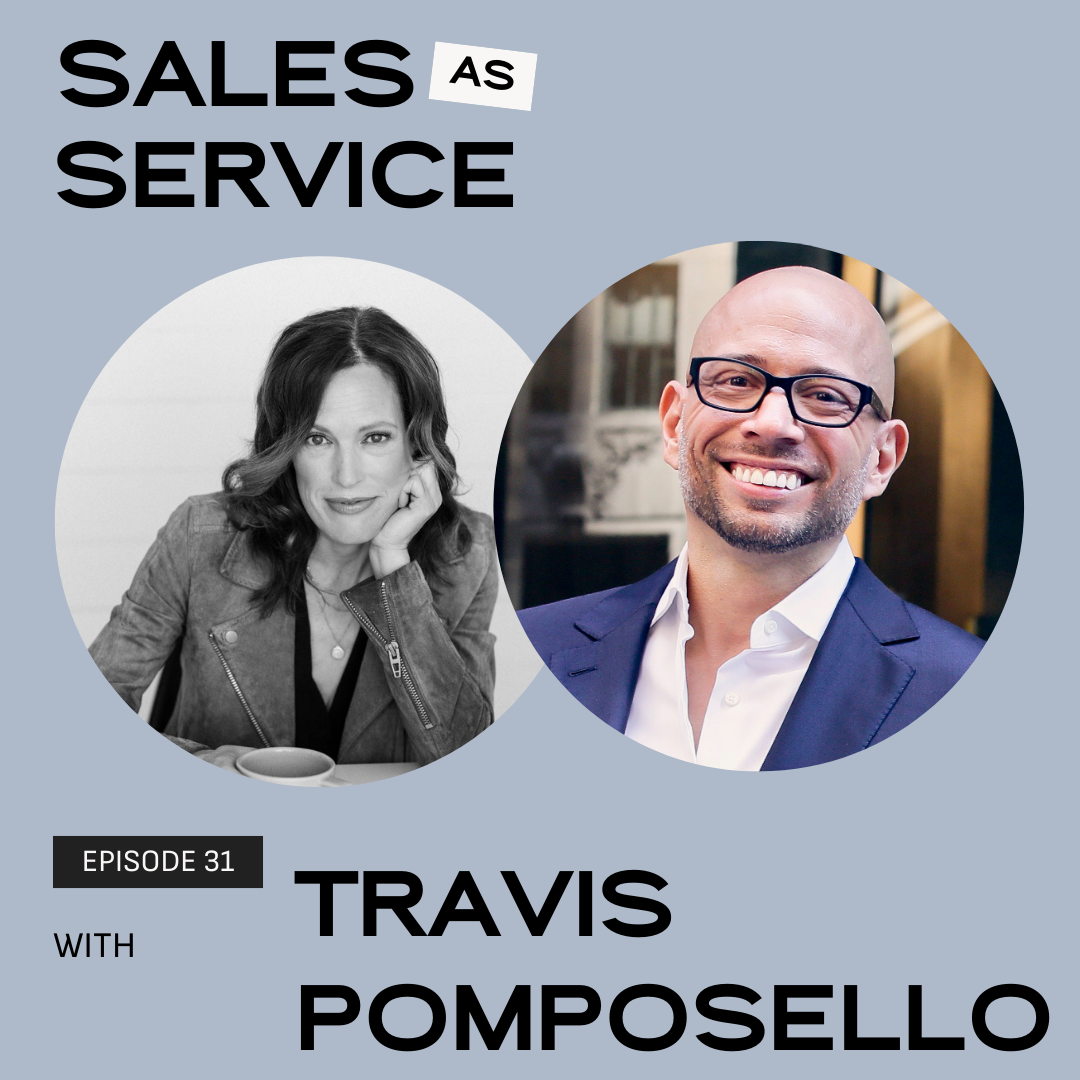
Productize It: How Clear Offers Create Demand and Consistent Revenue with Rhiannon Franz
EPISODE: 23

If your services are hard to explain, they’re hard to sell—and even harder to deliver.
In this episode, Rhiannon Franz, Founder and CEO of RhiVive Marketing, joins to talk about the real cost of unclear offers—and what shifts when you finally productize your expertise. From simplifying your message to creating a scalable offer suite, this conversation is packed with insight for anyone ready to move from custom chaos to consistent demand.
Whether you’re struggling to explain what you do or tired of starting from scratch with every proposal, this one’s for you.
In this episode, you’ll learn:
What it actually means to productize your services (and what it doesn’t)
The difference between marketing copy and messaging that converts
How to structure your services for clarity, demand, and scale
Why packaging one offer can make everything else easier—sales, delivery, and referrals
The mindset shift that helps you stop over-customizing and start leading
LISTEN TO THE EPISODE HERE 👇🏻
-
Speaker: [00:00:00] There are small businesses and service providers who are charging. It's called High Ticket Offer, and it's not based on hours. It's based off deliverables. It's based off of what you can provide to them.
Speaker 2: Welcome to Sales Is Service. The podcast designed to help you change your mind about sales. Literally, I'm gonna help you change the way you think about selling.
I'm Tam Smith, your host. Sales bestie and pitch partner next door. You're tired of bros with biceps telling you how to crush a million dollars in your sleep or battling imposter syndrome on your own. You've come to the right place. All you need to do is listen, then take action. No gym membership required.
Let's get started.
Quick question for you. How many new business inquiries did you generate in the last 30 days? How many were actually sales qualified, and how many of those converted into paying clients? If your results are inconsistent or, hey, maybe you don't even know how to answer that, we need to talk. That's why I.
Created the five minute sales audit. In just [00:01:00] five minutes, you'll walk through a simple set of questions about your sales process, and within three business days, I'll send you a personalized video audit and a detailed PDF checklist. You'll see what's working, where the gaps are, and one low lift action you can take right now to improve lead generation and client acquisition.
It's quick, it's actionable, and it'll give you clarity on what to fix Next. Book your audit today at Studio three 40 nine.com/sales audit. Alright, let's get into today's episode. Hey there and welcome back to Sales. As service as we are now, very rapidly approaching the end of the year. This season always prompts me to think back and there have been so many pivotal moments in my business since launching back in 2020.
If you're new here, I'm Tam Smith, founder of Studio 3 49, sales, marketing, and you're host here on sales as service. And I work with female agency owners and service-based founders to help them stop waiting to get found and start building sales systems that create real consistent demand. And while, yes, I've spent the better part of the last 15 plus years leading sales and business development, most of what I've learned about building a sustainable business has [00:02:00] come in recent years through my own trial and error.
And one of the biggest. If not the most significant Turning Points came last year on a flight reading built to sell. If you are not familiar with this book, I'm gonna link it in the show notes because it is a must read for every founder and business owner. It's the story of an agency owner who is drowning in custom work until a mentor helps him transform his business into something scalable by productizing his services.
And not just to make it sellable someday, but to create a business that's actually sustainable to run. And I remember this moment so vividly, I was sitting on that plane about three chapters in. When the light bulb went off and I thought, oh, this is me. This is my business, because I was doing the exact same thing again.
I'd already burned myself out in the first and second versions of Studio 3 49 saying yes to everything. Stretching myself and my team, way too thin across too many one-off projects and trying to grow without, you know, any real structure in place. And here I was headed down the exact same path again.
Only [00:03:00] this time it was a business focused on sales and business development. That book didn't just change how I think about my offers and services. It changed how I think about my time, my pricing, and what it really means to build a business that runs with you and not on you, which is why I'm so excited for today's conversation.
I'm joined by Rhiannon Franz, founder, and CEO of Revive Marketing. After two decades in the agency world, she's now on a mission to help ex corporate professionals cash in on their expertise with offers people actually understand and want to buy. She's all about building clarity into your positioning, packaging your services in a way that drives demand, and showing up with messaging that starts conversations.
So if you're out there listening to this and you're still stuck in that custom to order trap or wondering why no one's biting on your services, this episode is absolutely for you. Let's get into it. Rhiannon, thanks for being here. I'm so excited. Thank you for having me. Yeah. In your words, tell us who do you
Speaker: help and how do you serve?
I help X corporate professionals [00:04:00] monetize their personal brands to create premium visible. Personal brands love
Speaker 2: it. A lot of creatives and service pros are doing custom work. On repeat, how do you define like productizing? What shifts when someone actually does that? I love this
Speaker: question. I, coming from 20 years of working in corporate America and making this leap into having my own business, I thought that I knew a lot about how to.
Price myself and how packages work and margins and hourly rates. I spent a good amount of time of that, my career consulting or freelancing and charging a higher hourly rate. Now, granted, yeah, I was making a higher hour hourly rate, but I was still treating those hours for dollars and feeling like I couldn't really take, uh, summer Fridays, I couldn't really take a holiday off because.
I could make that $120 an hour if I just worked on the [00:05:00] weekends. And so through that experience and over that time. I just felt more pressured of like, exactly how many hours I commit means how many hours I should work, and probably a little more, right? We're always a little overachievers, and so making the shift into running my own business and being a service provider and understanding what a high ticket offer is, was a huge shift
Speaker 2: for me.
Speaker: Yeah.
Speaker 2: How did you, how did you make that shift? Personally, it
Speaker: took a lot of practice. Yeah. Uh, it did take a coach, so I have a career coach that helped me sort of understand what that meant. It still took me. I mean probably like a year to really understand what that meant. And I kept sort of defaulting back to checking how many hours does this project take me to make?
Okay, so then let me back into what I should charge for this, because this is actually what I would [00:06:00] charge. Let's say it's a $10,000 package. Well, that's because if I really back into it, I'm putting this many hours into it, so I'm around a hundred dollars per hour, and so See, I'm still doing the math.
Yeah, yeah. Like I am still mapping the hourly rate to come up with the project price and the work of understanding that. Honestly, I think what clicked for me is seeing out there in the world this is a thing.
Speaker 2: Mm-hmm. And.
Speaker: Coming from corporate, I just didn't understand that.
Speaker 2: Yeah,
Speaker: that there are small businesses and service.
Providers who are charging high, it's called high ticket offer. And it's not based on hours. Yeah. It's based off deliverables. It's based off of what you can provide to them. Mm-hmm. And as I've kind of dug into this in the, the research or the, the mindset side of it, you know, I, in a good example of this coming from corporate is like the McKenzies and the Sapiens and the big consulting firms.
They sell this back to [00:07:00] corporations for hundreds of thousands of dollars in a package price. Like that's a high ticket offer, and I didn't think that I could compete in that. I didn't think that I could even dip my toe in that. And that shift for me has made all the difference, is just sort of understanding the landscape.
And that's why for me, I just wanna like shout it from the rooftops, go tell everyone that I possibly can and just be like, Hey, hey, did you know that this existed? 'cause I didn. Yeah.
Speaker 2: Well, you say it starts with clarity, so what do people need to get clear on first? Audience offer messaging, like where do you start
Speaker: for the Monetate monetization piece First, I, for me, I have a, a cash out blueprint where I ask.
These questions of like what services do you offer and then how can you break that down into a package of services so that it's in a group of similar things that you know how [00:08:00] to do, and then yes. Like how can you execute that in a fast amount of time and that then creates your package. Gotcha. So it is based in what?
Value what services you bring. Mm-hmm. And then the value and showing those two together Yeah. Is how you then craft. The package. Then you go into positioning and audience and how you, you know, uh, create tension and then you solve the tension. There's lots of, uh, marketing around positioning, but packaging just in of itself is a lot of playing with Chachi.
Bt, okay, I have all these, I know how to do all these things. Uhhuh, Uhhuh. I could do it at these things in 10 hours. I can do this in 40 hours. I can do this in a six week sprint. Mm-hmm. So how do you like package it? And that in and of itself is like a sounding board. Like you can stand on that as a platform and be like, okay, now I know what to talk about.
And [00:09:00] then figure out positioning and then figure out all those pieces
Speaker 2: you say in terms like when you get into talking about like audience messaging and positioning to make it about them. Not you. How does that play into actually getting people to raise their hand and start a conversation, a sales conversation?
Speaker: I love this question also because it really plays into marketing and positioning like. I think a lot of us think, oh, I'm supposed to just tell everybody about me. If I just tell them, okay, I'm so great at this, which is so hard to do, right? I'm so great at this and this is what I know Uhhuh. Like nobody wants to do that, right?
Nobody. Right. But if you actually flip it and then you go, how am I helping them? Mm-hmm. It's actually easier.
Speaker 2: Mm-hmm.
Speaker: It's easier to talk about yourself. Mm-hmm. When you flip it to how am I helping them? And so that one piece. A makes it easier for us to talk about ourselves. And B, the audience feels like you, like they're heard, like they [00:10:00] understand you.
This takes me back to a, something I learned a long, long time ago in in communications class was like people love to talk about themselves. And so how do you in, in like meet somebody new? Yeah. And how do you talk to new people and network? I was really good at this. In my early career, I'd just walk into a room and I'd be like, hi, I am Rhiannon.
And so I would just start the conversation by, let's just get the elephant out of the room. Like we can know each other's names. I'll start first. Hi, I am Anne. Mm-hmm. They usually tell me their name. And I can ask them a question about them. Mm-hmm. And so it creates a conversation. Mm-hmm. Where I can ask them about them because I've started first.
Right. So it's a back and forth. Yeah. So if I start first and then you say your name mm-hmm. Then I can ask a question. Mm-hmm. And from there. It starts this dialogue. People love to talk about themselves. Mm-hmm. Now, in online, it's like, it's a one way screen. Like how do you show up on social and like, hi, I am Rhiannon, and then get the, the human response.
I'm so and so. Okay, then here you [00:11:00] go. So it's that, it's that psychological mindset of being like, you gotta skip that step and then just talk to them like you heard a question or you're giving 'em feedback. Right.
Speaker 2: I feel like that's what I spend so. Much of my time, you know, doing with clients is just coaching on that.
Uh, I mean, like, I mean, for myself, it's kinda like I've, uh, feel like I can talk to anyone, but it's been a challenge for me with this podcast is it's like as soon as you hit record, I'm like, you know, but, and with my clients, you know, it's so we know how to make connection and, you know, build relationship.
But, and when there's a screen involved. When suddenly it's online, it, it, we, we'd forget how to behave and I have to like constantly remind like, it's, it's to say it's all, you know, connection and relationship. Just you treat it like, you know, how would you behave if you were actually in a room with someone having a, having a live conversation.
It's, it's, it's really no different, you know, it's just a, it's just a different room. Exactly. You talk [00:12:00] about creating a clear path, like intro offer, core offer, upsell. Why does the structure work? Like where do you see a lot of people either skip a step or just like go wrong? For me,
Speaker: what I have learned with that intro offer is that it allows you to build authority and trust with your prospective client.
So when I talk about this in my messaging and what I try to help clients do with their intro offer is to use it as a strategic. Set point. So a lot of us who've worked in corporate have done a million times some version of, and I'm gonna list off a bunch of things, a SWOT analysis, a gap analysis, uh, you know, let me do a stakeholder interview and then create a strategy document or a brief, right?
A lot of these terms we're all like, oh yeah, I did that. Oh yeah, I did that. Maybe not that a proposal, right? Like, we all have these terms of these documents that we've created. Corporate because it's part of the process [00:13:00] and it's a natural thing that we would want to get that discovery of information and then create that first touchpoint and say, Hey, I just wanna make sure we're all aligned on this is where, where you've been, where you are, and how to get you where you wanna go.
And that document, that that document. What I recommend to clients is to create is their intro offer, because what this does is it allows you to, one, get the information from the client and in a way that you're setting yourself up as the authority, and then two, when you present it back to them, you are again allowing yourself to show up as the authority.
So that intro offer is so important to be able to get that know, like, and trust you. So that when you sell up. Into the upsell and say, okay, here's your strategy. I've sold this to you, so I made some money off of it. You can go execute it if you'd like, or I'll apply that intro [00:14:00] offer rate to the high ticket offer.
Now you've set up yourself to be able to have that trust and to be able to sell in the upsell to the high ticket offer, and you're incentivizing them saying, Hey, you already paid. 600, 500, a thousand dollars for this. I'll apply that to your 7,000, 8,000, $10,000 offer. It's kinda like a no brainer, like, oh well.
That's nice.
Speaker 2: Are you showing up on LinkedIn but not generating leads or referrals? If you're posting and growing your network but still not seeing consistent results, the issue likely isn't you. It's your system. Most people don't realize that five to 15% of their LinkedIn connections could be potential clients.
That means your next few sales calls could already be sitting in your network. You just need a strategy to reach them. That's exactly why I created the LinkedIn lead generator challenge. It's a free five day experience to help you turn your profile into a lead generating machine. Inside you'll get access to a plug and play outreach sequence, profile tweaks that attract the [00:15:00] right people, and a daily system for outreach and engagement that takes less than 30 minutes to follow.
It's the same method I use with clients to help them build visibility. Create real connection and generate consistent pipeline, all without the salesy energy. So if you're ready to show up on LinkedIn with more intention and lead with value so you can finally see results, head to studio three 40 nine.com/linkedin-leads and join us.
Alright, let's jump back into it. What I experience a lot with clients, I'm working with consistently networking, referrals, you know, is, is a, you know, great source of business. Obviously. It's, you know, it proves you've got something that's working. The challenge is it's not, you know, reliable, predictable, you know, you, you just, you're, you're, you're waiting on someone to initiate with you and to your point about, you know, being able to start a conversation and initiate having that.
Offer like that little that offers, you know, value at kind of a low barrier, you know, barrier to entry. It, it gives you something to initiate and start a conversation. Like we're, I [00:16:00] think so many folks I work with are very comfortable, you know, if they've got an inbound inquiry. But as far as being able to have something to go out and say, and start a conversation in a natural way that leads to like a sales conversation, an opportunity, you know, to, uh, add a client.
You build business. Um, yeah. They don't have a natural way to do that. And this gives you a really natural way to start conversation and initiate. A hundred percent. I love that. A hundred percent, yes. How can someone tell if they've nailed their offer or if it's still like, too vague, too broad, or like, too custom?
Speaker: I don't know. You wanna tell me? I
Speaker 2: know. Well, like where, have what, what have you seen with like the most successful like, uh, offer? Uh. The intro offers that you put out there for folks? Like what has made them most successful?
Speaker: Yeah. Uh, so I, I joke 'cause
Speaker 2: it's
Speaker: always a
Speaker 2: refinement. Yeah, I know. It's
Speaker: in corporate.
It was like, I'm gonna tweak my resume, uhhuh every, you know, year, every three months, whatever. Like your resume's always being tweaked. I feel like that's now. My [00:17:00] offers. Mm-hmm. Like there's always a little tweak I can make. Mm-hmm. Uh, that being said, what I've seen work successfully is Yes. That intro offer.
So I'm talking high ticket. Yeah. So high ticket offers. You have your intro offer. And then that's always step one. So requiring like on my website, I say, you know how I work step one and step two. Mm-hmm. And so step one is the intro offer. Every single person has to do my vitality plan. Mm-hmm. And I name it, you know, you gotta name your products.
Yeah. So my vitality plan is the first thing, and it's a plan and it's the clear plan. So that's step one. And then step two. Depends on the vitality behind. So I like to give pricing on my website. Now this is controversial because I hear so many people will be like, well, I don't know what it's gonna be.
Well, people wanna know what the options are. So from that, your second step can have three different tiers. So you can have your core tier of what you wanna offer to every single person, and then you can have something that's a little bit [00:18:00] less and a little bit more. And so one of my best performing videos on Instagram was talking about a 15 minute proposal because people were like, wait, what do you mean a 15 minute proposal?
And I said, because I have three offers. So if somebody wants to come to me and say, Hey, I kind of want this and this and this, all I have to do is go. Okay. Which one of these offers does it actually fit in? In my, my three? Is it a, is it an upsell? Is it a downsell? Is it core? What is it? And then craft a really nice email about how strategic this would be.
And that's it. Yeah, because all of your service offers are within those three ranges, it's gonna be easier for you to be able to tell people. It also pre-qualifies your inbound stuff where people know, oh, I looked at her website and. Her middle package is around $10,000. Okay. That's either, hell yeah, that's a great deal.
Or that's not right now, and that's okay. [00:19:00] They already know that coming to my website. Right. Love that and
Speaker 2: I appreciate. Talk. It is an experimentation, like regardless of how like strategic and informed an offer or messaging is, there is an amount of like testing and, you know, iterate and there's always opportunity to improve and, you know, slightly 1%, you know better.
So I appreciate pointing that out. 'cause I think the, you know, get asked a lot of questions like, you know, wanting like. Guarantees of how something's gonna perform or like how, you know, what percent growth or, you know, wanting to like see hard numbers before you put anything out there to like test and get some data to inform and make it better.
So I appreciate that you point out that there's always, there's always a little bit of testing involved, like we're making our best informed guess. But until you put it out there in the world, and you mentioned something too, you know, talking about it's, the confidence grows from actually taking the action.
It's not like put your be, be confident. You know, totally have everything all buttoned up and know it's gonna work. Talk a little bit about that [00:20:00] just as far as like, just in your own experience about, you know, taking that action is what builds confidence.
Speaker: Yeah, that's exactly, yeah. I had to come into this business of, again, coming from corporate and being like, okay, I know that there's a market for local businesses and I could blow it outta the water for them because I've done, you know, fortune.
100 clients. And so a local law firm should be easy. Yeah. So that was one of my first clients I sold in. Mm-hmm. And I had a great experience with it. I mean, I, I did their full brand, their full website, their logo, their marketing email series. Their booking links, their social media and a video of like about us, and then social cuts for social, so a whole branding thing for this law firm, and it was beautiful.
Mm-hmm. That was one of the hardest projects I've ever done, and I learned things through that and through [00:21:00] that experience, one of the things I learned is my offering is so specific to like one to two people. Mm-hmm. That when I got four partners mm-hmm. It just didn't work. Mm-hmm. And so that was a learning for me.
Mm-hmm. Is that. Something like branding and marketing is so personal mm-hmm. That it could totally land with two people mm-hmm. And not land with the other two people. Yeah. And so that was a big learning experience for me to be like, okay, let me not work with, with groups of, you know, more than one to two.
And I wouldn't have known that. I would've never guessed that until I did the work. Mm-hmm. And went through that experience and then I was like, okay. Um, I also worked with a hypnotherapist mm-hmm. Who came to me saying, I need a whole new brand. I've retired, I have gone back to school. I have this whole other thing I wanna do, but I don't wanna be called a hypnotherapist 'cause it has a, a, a negative connotation.
And I was like. Fair. Um, how do I brand it fair, because [00:22:00] that's. That was like a great challenge. But, uh, out of that, the, these experiences of testing Yeah. And working with different people, the commonalities of what I learned is that the people who have worked in corporate mm-hmm. Who have experience with that, I just speak the language.
Yeah. And so out of these themes of working with several different clients, that's how I came to my niche. That's how I was able to figure out my messaging and how to talk to that specific audience. People who haven't worked in corporate, they just have a different understanding and maybe they even understand high ticket offers better than I do because I am so into hourly rates.
Yeah. That it took me so much longer to make that leap. Mm-hmm. Versus somebody who just. Didn't ever even know, like, wouldn't have thought of that. Yeah. And so. I work well with that type of audience, so I'm just giving that as an example, like my experience mm-hmm. Of having to kind of struggle through [00:23:00] it a bit in the beginning and then tweak here, tweak there, and then figure out, okay, this is what I'm good at, this is what my offers are, this is where my pricing is, you know, ex palatable right now.
Yeah. For right now. Yeah. Right. Like I want it. I want to grow. Everybody wants to. Yeah. But it comes to those tweaks. Yeah.
Speaker 2: Uh, just question for my own self, like when it comes into having your, you know, productized packages, how do you still allow for customization without. Scope creep, you know, without things just getting, you know, you've got like system and process built for this package offer and your expertise.
Mm-hmm. But how do you still do, can you still allow for customization and not get, just like, stuff, just get completely outta control?
Speaker: Absolutely. Absolutely. So, uh, a couple things to that. One is with, with my site and my client's site. With those three packages, Uhhuh, it very clearly says items may include.
Mm-hmm. So it's not. A prescriptive tactics [00:24:00] listed of what you get in each package, and that's a big point there because everybody's gonna need something a little bit different, but items may include, and when you talk about your packages, you're like, these kinds of things is something I would do in my core package, or this is some things that I might do.
Maybe you don't need a photo shoot. So then a photo shoot is like a big package item that I could say, okay, then you're in, you know, the down sell, my core offer includes a photo shoot. Okay, so then the upsell. So you see what I'm saying? So these are main items that you can remove. That being said, I. I mean, we're all like over-delivers and overachievers, so how you get into scope creep is hard.
That being said, what I've taken away from that is an example where maybe I gave a client a little bit more because they needed it, or whatever happened than in the next client. I can now offer that. So I just try to remind myself, right, like we're all learning, [00:25:00] we're all growing, and so if I do something above and beyond for a client, I can now productize that.
Do it again for somebody else and do it again for somebody else. So now my packages are gonna be ever changing, ever growing, ever. You know, revolving. An example of that is with ai, AI is changing a lot of things and so I right now have a client that. Didn't wanna do a photo shoot, couldn't, you know, budget it.
Not right now. So we did AI photos and so what a difference because now I can take her website to a whole nother level. There are some really good AI specific tools. So how do I take, let's use AI and let's. Still create this beautiful, stunning, high converting website mm-hmm. For her programs. Mm-hmm.
Using ai, AI photos.
Speaker 2: And now that you can incorporate that into your process, it's fantastic. Exactly. Awesome. Let's jump into our Fast five. Your, I can't live without it. Software app.
Speaker: Oh. With chat pt, [00:26:00]
Speaker 2: I remember like, I was so highly resistant because it, you know, initially felt like cheating and now like I cannot.
Imagine my process and workflow without it, like it's never a copy paste, but as far as just is my increased efficiency and frankly just make me better. Um, yeah, it's a can't live without it. I agree. Best advice you've ever received about sales and business development? To be tough but fair. Mm, good. One morning routine.
Must have, uh, a walk, your walk-on song. The one song that always pumps you up. Beyonce's Freedom that's given. And if you only had one hour each day for business growth, how would you spend it
Speaker: making a LinkedIn video? Uh, talk a little bit more about that. How have you used that? Making video content on LinkedIn, so a social post for LinkedIn.
The problem with LinkedIn right now, and it is just so infuriating, is that it doesn't have captions auto generated. [00:27:00] So it's a extra step. Mm mm-hmm. So right now I'll record a video and put it in script. And script will create captions for me that I can customize and have my brand colors, and then I have to take that video and then put it on LinkedIn.
The have time for that. Like, oh my God, every other platform will auto generate captions and do fun ones like Instagram does, like really fun ones. And there's like a, I don't know, a weird thing about like, well, if I created an. Instagram and then I download it and it has the Instagram logo and then I go put that on LinkedIn.
Then people get all in tizzy about it. Right, right. And it's whatever's easier for people, like honestly recorded an Instagram. What I like about recording an Instagram, by the way, is you can set the timer. So if you're in, um. I think stor stories, reels you can set, um, there's a setting in there. So you want a 62nd, you want a 92nd?
Yeah. And it'll count down for you while you're talking. So that is such a nice feature. Yeah. 'cause you know, [00:28:00] oh, I better wrap this up. And so you record your video, you add your captions, like, you know, two steps recording a video, captions, you have it auto saved to your phone. So now you've posted on Instagram and you already have a video.
You can take that same. Copy and put that on LinkedIn. Yep,
Speaker 2: yep. Done. Just
Speaker: make it easy on yourself. That's like the way that I just like, let's just get it up. Yeah. And my audience is on LinkedIn. Yeah.
Speaker 2: Mm-hmm. LinkedIn
Speaker: is where it's at. Mm-hmm. But unfortunately, they have this horrible thing about the captions, so that's my one.
Thing, um, that I will tell people with that I have noticed such increased in growth in my following my career. My like, like LinkedIn. It's just, it's just where people are. It's where business people are. It's where people are in mindset to
Speaker 2: buy. Mm-hmm. Mm-hmm. And to your point, video, you know, we're just in that season where, you know, the, the algorithm, you know, is favoring video over the static [00:29:00] content.
So if you have opportunity to add that to your mix, definitely do it.
Speaker: Absolutely.
Speaker 2: Where can people find you online if they wanna connect, learn more, and how can we work with you?
Speaker: Yes, so my, my name is Riann and Franz, and so you can find me on LinkedIn under Riann and Franz and on Instagram, I'm Rhiannon Brand Boss.
Nice. Thank you. Uh, my website is Revive Marketing. Yeah, those are, you can definitely check it out so that you copy my, my work. I mean, take my step one, step two, and my three tier offers. Please. How at it? Yeah, I'm
Speaker 2: all about the productize offer.
Speaker: Yeah, absolutely. You know, do it. And then on my Instagram I have a store link.
So on my store I have a freebie for the cashout blueprint. I also have a free LinkedIn AI prompt. Oh, awesome. To help with your profile updates. So check out my Instagram and there's a link to my store. Thanks so
Speaker 2: much for being here, being so generous with just the free tools and resources and uh, just the free giving of your expertise.
Appreciate it so much. Thank [00:30:00] you. Thank you. I'm so happy to be here today. Thank you. Thanks again so much to Rhiannon for joining me today. And if you've been nodding along, thinking, yep, I am definitely stuck in the custom to order cycle. Or if you've been struggling to articulate what you do in a way that gets people to lean in, this is your nudge to take that first step.
And that brings me to this week's sales is Service Challenge. Block 30 minutes this week to audit your current offer. Ask yourself, is it clear who it's for and what problem it solves? Is there a defined outcome or transformation? And would someone seeing it for the first time instantly understand that it's for them and what they're buying?
And if not, or if you're still reinventing the wheel with every proposal, pick just one service and start simplifying and packaging. Give it a name. Define the scope, put it in writing because clarity sells and a productized offer isn't just easier to buy, it's easier to talk about. It's easier to refer and build demand around, not to mention easier and more profitable to deliver.
Before you go, be sure to mark your [00:31:00] calendar for Wednesday, December the third, and join me for our next sales is Service Live event. Permission to sell. It's gonna be a live. Honest conversation about dismantling the guilt, perfectionism and overgiving that keep women from consistent revenue. My guest is Dr.
Nadia Brown, founder, author, and someone who brings deep wisdom on sales, psychology, leadership, and how to stop second guessing yourself around money and selling. If you've ever struggled to ask for the sale over explained your pricing or delayed outreach because it just didn't feel right, this is your permission slip to do things.
Differently, and I'd love for you to join us. You can RSVPs in the link in the show notes, and I'll see you there. And until next time, remember, sales is an act of service. It's about what you give, not what you get, and when you serve well, the ROI always follows. I'll see you next week.
You've just listened to the Sales As Service Podcast, the podcast to help you shift your mindset around selling. If you liked what you heard, be sure to hit subscribe and share it [00:32:00] with a friend, because we're all about more sales. Awesome and less sales awkward. See you next episode.
MORE OF A READER? 👇🏻
Some lessons arrive with a whisper. Others slap you mid-flight.
I was three chapters into Built to Sell, wedged into an airplane seat with a notebook open and a highlighter in hand, when it hit me:
This isn’t just a story about someone else’s business.
It’s a mirror.
The book follows an agency owner drowning in custom work—until a mentor helps him productize his services and create a business that’s not only scalable, but sustainable.
That was the moment I realized: I’d built the same trap for myself. Again.
Because when you’re a high-functioning service provider, it’s easy to default to yes.
Yes to every one-off project.
Yes to the special requests.
Yes to tweaking things just this once.
But all that customization? It creates confusion—for you and your clients.
That’s exactly the pattern Rhiannon Franz sees in her work as Founder and CEO of RhiVive Marketing. She works with ex-corporate professionals sitting on a mountain of expertise—but struggling to turn it into offers that are easy to buy, refer, and scale.
Productizing, she says, isn’t about stripping away value or slapping a label on your work. It’s about creating structure—so you can own what you do and communicate it clearly.
“I kept trying to back into pricing based on hours. But high-ticket services aren’t about hours. They’re about value, outcomes, and positioning.”
It’s not a new offer that most business owners need.
It’s a new lens.
You already have a process. You just haven’t packaged it.
You already know how to deliver results. But can someone on your website tell what those results are?
Rhiannon’s framework, the Cash Out Blueprint, is a way to audit your services, group them into strategic packages, and turn them into offers that lead somewhere.
Most people think they have a visibility problem. But when you look closely, it’s often a clarity problem in disguise.
Rhiannon’s approach starts with building a clear offer suite—usually three tiers: an intro offer, a core offer, and an upsell.
This structure not only helps your audience understand what to buy—it gives you, the seller, a way to initiate conversations instead of waiting around for inbound interest.
“The intro offer builds authority and trust. It gives you something to lead with—and it gives the client a reason to lean in.”
If you’ve ever struggled with how to reach out without sounding salesy, or how to respond when someone shows interest but isn’t ready for your full package, this structure is your answer.
Your intro offer becomes a strategic set point—a paid diagnostic, plan, or strategy session that sets the stage for deeper engagement.
What stood out most in our conversation is how generously Rhiannon shared her own learning curve.
From burning out on overly custom work to experimenting with AI-generated client photos, she’s constantly testing and evolving her offer suite.
“Every offer is a living document. Just like we used to tweak our resumes every few months in corporate—your offer evolves with you.”
That mindset shift—from perfecting to iterating—is what gives productized businesses staying power. You’re no longer building from scratch. You’re improving a system.
So if you’ve been stuck trying to “get it right” before putting something out there—
Start with what’s clear.
Start with what you know how to do.
Package it. Name it. Put it in writing.
Because when your offer is clear, the right clients don’t need convincing. They just need a link.
✦ YOUR SALES AS SERVICE CHALLENGE
Block 30 minutes this week to audit your current offer.
Ask yourself:
Is it clear who it’s for and what problem it solves?
Is there a defined outcome or transformation?
Would someone seeing it for the first time instantly understand what they’re buying?
If not, pick one service to start simplifying and packaging. Give it a name. Define the scope. Put it in writing.
Clarity sells—and productizing your service is the first step to making it easier to buy, refer, and deliver.
RESOURCES & LINKS
Learn more about RhiVive Marketing
Get Rhiannon’s Cash-Out Blueprint
Built to Sell: Creating a Business that Can Thrive Without You
Join the Sales as Service LIVE Office Hours – get your invite for the next session
LinkedIn Lead Generator – daily actions that lead to real conversations
Grab your 5-Minute Sales Audit – a quick scan to see what’s working, what’s not, and what to improve
SUBSCRIBE & REVIEW
If you loved this episode, please take a moment to subscribe and leave a review on Apple Podcasts! Your support helps us reach more creative agencies and service pros who need these insights. Thanks for tuning in to Sales as Service—see you next week!

TAM SMITH
I’m Tam Smith-Sales Growth Strategist and Founder of Studio Three 49. I help creative agency owners and service pros find, connect with, and convert right-fit clients through scalable, sustainable outbound sales solutions.
No pushy pitches. No bro-marketing. Just simple, structured systems that turn connections into clients.