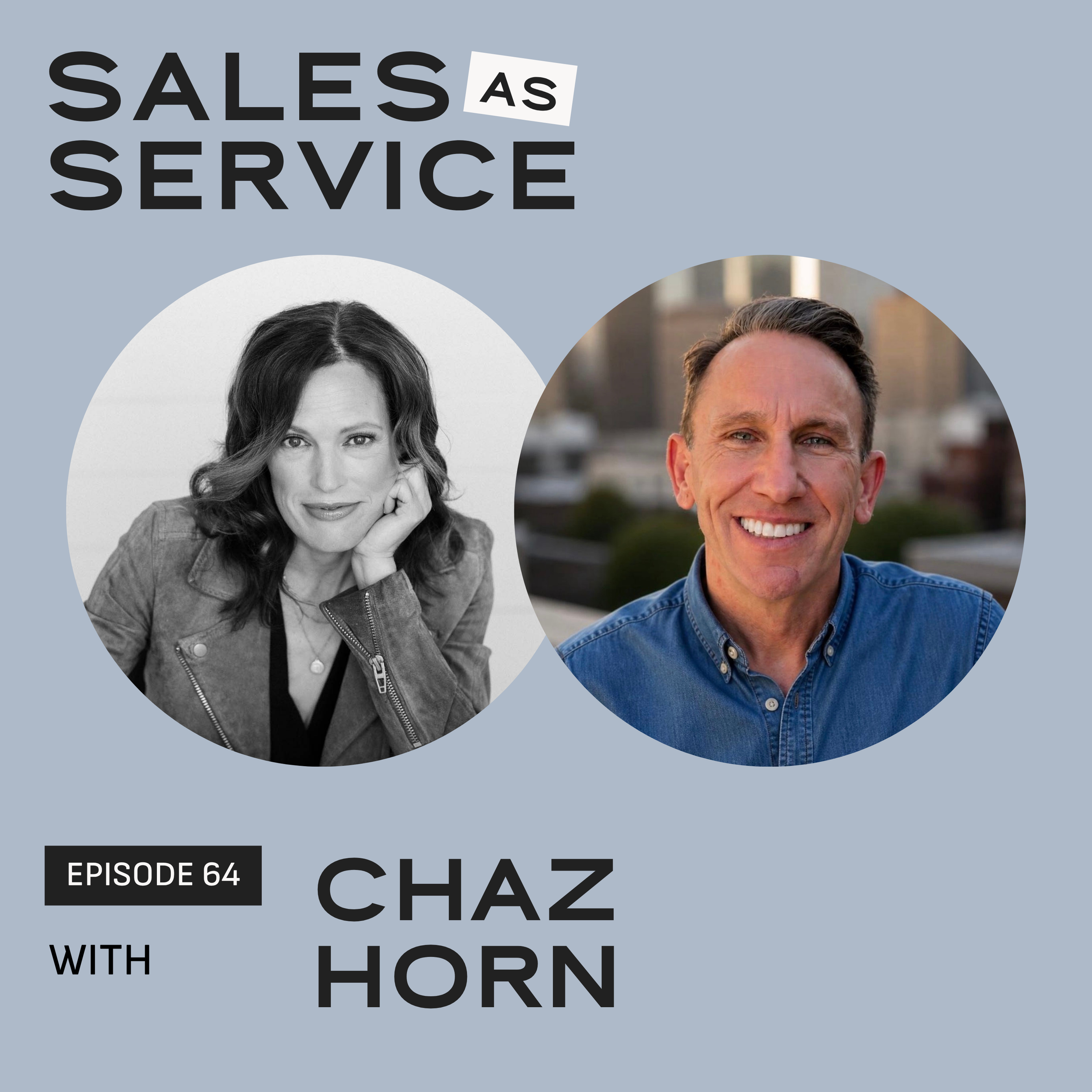
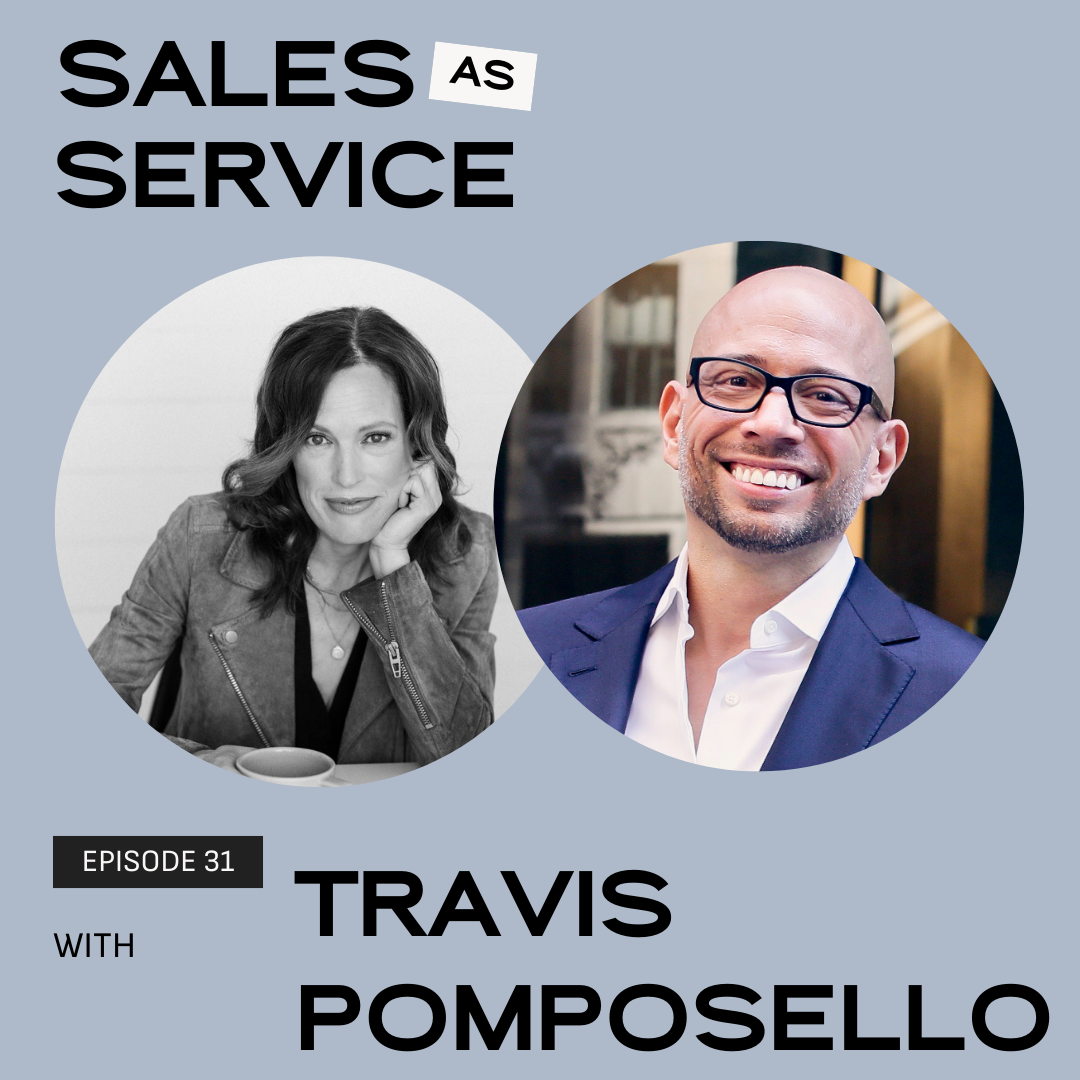
From Persuasion to Partnership: Winning High-Value Clients Without Pressure with Travis Pomposello
EPISODE: 31

For a long time, sales has been framed as persuasion—pitch harder, prove value, create urgency. But modern buyers don’t want pressure. They want confidence, clarity, and a partner who understands their risk.
In this episode of Sales as Service, I’m joined by Travis Pomposello, former media executive turned advisor, to explore the mindset shift creative agency owners must make to move from vendor thinking to trusted strategic partner. Drawing from decades in media, building and selling his own agency, and his work inside the Creative Agency Accelerator, Travis breaks down how agencies can win high-value clients without compromising integrity.
This is also a personal conversation. I share how a simple LinkedIn DM led to mentorship, collaboration, and becoming a student inside Travis’s program—proof that when used well, relationship-first outreach can change your business.
In this episode, we cover:
Why persuasion is losing power—and partnership is replacing it
The Four Pillars of Modern Buying and how they show up in real sales conversations
How to stop selling services and start selling outcomes
What it actually means to de-risk the decision for your clients
Why trust is built in the process, not the pitch
LISTEN TO THE EPISODE HERE 👇🏻
-
Speaker: [00:00:00] Treat every call or every meeting more as a diagnostic and not a pitch, right? You're, you're an expert. You're there to diagnose in a sense. The problem, if you just go and pitch, you're not, you're not really listening. You're not really. Doing that.
Speaker 2: Welcome to Sales is Service. The podcast designed to help you change your mind about sales.
Literally, I'm gonna help you change the way you think about selling. I'm Tam Smith, your host Sales Bessie, and pitch partner next door. You're tired of bros with biceps telling you how to crush a million dollars in your sleep or battling imposter syndrome on your own. You've come to the right place. All you need to do is listen, then take action.
No gym membership required. Let's get started.
Hey there and welcome back to Sales of Service. If you're new here, I'm your host, Tam Smith, sales growth strategist and founder of Studio 3 49, where I help female agency owners and [00:01:00] service-based founders end the feast or famine cycle with sustainable, scalable sales solutions that actually feel good to use, and I'm especially excited about today's guest.
This one's personal. If you've been listening for a while, you know, I'm a huge advocate of prospecting and warm outreach. I consistently encourage my clients to stop waiting and start initiating to make connections, build real relationships, and create opportunities for collaboration and growth. And today's conversation is a perfect example of the power of that practice, and it's one I'm very confident would have never happened if I hadn't sent that first dm.
So let me rewind here for a minute. Before I shifted Studio 3 49 from traditional marketing services into sales growth strategy and building sustainable sales systems, I honestly thought of LinkedIn as just a glorified resume holder. It was a place for recruiters, a place for hr, definitely not a platform I was thinking about as a core part of sales strategy.
Most of my clients at that time were focused on Instagram and Facebook, and I of course, followed suit LinkedIn, barely registered. What I didn't realize at the time was the [00:02:00] scale and the opportunity of the platform when it's used well. Lemme put it into perspective. As of late 2025, LinkedIn had over 1.3 billion registered members worldwide with roughly 310 million monthly active users and about 135 million people logging in daily.
And with less than 1% of users consistently posting content, it's still one of the easiest places to build visibility, credibility, and real thought leadership. It's not social media in the traditional sense. It's one massive ongoing networking event, and that's where I first came across today's guest. I was quietly consuming his very thoughtful, grounded content on how to win high value clients, sell with clarity instead of pressure, and build trust in a way that aligns with how modern buyers actually make decisions.
What stood out for me immediately was the integrity behind its message. So I did what I now encourage my clients to do. I reached out ASIN a m, no expectation, but to my delight, he responded. That conversation turned into a connection. That connection turned into a [00:03:00] relationship, and today, I'm proud to say he's not just a guest, but a mentor I'm actively learning from as a student inside his creative agency accelerator.
Today's guest is Travis Pomello, a former media executive turned advisor who helps creative founders scale their agencies without losing their integrity. Travis has worked at every level of the system. From early roles at MTV and Nickelodeon to producing for the Late Show with Ava Letterman to leading creative and marketing teams at CBS in Paramount and co-founding Epics where he awarded over a hundred million in agency contracts.
He later built and sold his own creative agency, scaling it from zero to over 5 million with clients including Netflix and Amazon. And today, through his accelerator and one-on-one mentoring, he helps agency owners like me move from selling services to selling outcomes, shifting from vendor thinking to becoming trusted strategic partners in their niche.
This conversation is about that shift from persuasion to partnership, from chasing every lead to becoming the safe choice from transactional deals to long-term relationships built on trust, and it's also a [00:04:00] real time. Look at what it means to stay curious, stay teachable, and be a student right alongside your audience.
Here's our conversation. Travis, thank you so much for being here. Welcome to Sales of Service.
Speaker: Thank you. Absolute pleasure to do this with you.
Speaker 2: Yeah, and I always start these conversations off with the same question. Tell us who do you help and how do you serve?
Speaker: Sure. So I mentor creative founders and agency owners who wanna move from selling services to selling outcomes.
What's unique about this for me is that I've been on both sides of this situation, right? I was a C-Suite exec. I was a co-founder of one of the very first streaming networks, and in that job I awarded over a hundred million dollars worth of contracts to different agencies, you know, service providers, you name it.
And. That really gave me a lot of insights when I then went and started my own agency, when I decided I wanted to get a business for myself, I had this sort of, you know, mantra of like, you're never really gonna truly know about business until you're a business for yourself. And I [00:05:00] failed at sales initially because I really thought just my gravitas of being a C-suite exec was gonna just sell people out of the out of the gate.
And I had to really go back and say to myself, what. What made you buy from people when you were the one awarding the contracts and then I built my whole sales philosophy around that, grew that agency to over 5 million a year, a RR, and you know, that's what I, that's what I mentor people with. It's what I learned from being on both those sides and, and speaking about how clients.
Actually buy and how do you position your work so that it or that it, that it earns real trust with your buyers, but also preserves your own conviction and integrity around what you do.
Speaker 2: And to that point, what did get your attention as a buyer? And if you had to summarize your philosophy in one sentence now, what would that be?
Speaker: Yeah, I think you know what it really was, the best sales process feels like a decision the client made on their own [00:06:00] and. You know, that's, that's kind of like, you know, process over pitch, right? So I think often we come in. Wanting to pitch, pitch, pitch, pitch, pitch. And when I say process, I'm not saying process of like how you do what you do, but the process of, of how you, of how you sell, of how you develop that trust, how you get the client to a place where you're not convincing them in the process or the pitch.
They're already, you know, bought in. And convinced that they want it and that they, that they want to genuinely work with you and they wanna find out how we can work together.
Speaker 2: I've heard it said that it's like, rather than being like, you know, trying to to sell someone something, it's just we're helping them make the best decision for them.
Speaker: Exactly. Exactly. That's well said.
Speaker 2: Yeah. And of course you mentioned you scaled and of course sold your own agency, what. Sales habits from that journey still anchor the work that you're doing now today?
Speaker: Yeah. Echoing off of what I just said, you know, treat every call or every [00:07:00] meeting more as a diagnostic and not a pitch, right?
You're, you're an expert. You're there to diagnose in a sense. The problem, if you just go and pitch, you're not, you're not really listening, you're not really doing that. The other would be. Talking about outcomes before tactics, right? I believe always talk about the outcomes of what service you provide as opposed to the tactics of how you do it.
You can't differentiate yourself by saying, I use this, you know, I use Scrum methodology or waterfall, or I have this tool, or I have these things. That's, that's, that's not how you differentiate yourself. You differentiate yourself by the outcome you can provide. And the last one seems very simple. But it was very effective on me when I was the buyer, and I found it to be very effective when I was on the seller side.
And I think the people I work with can say the same Is is to, is to follow up with precision and value as opposed to [00:08:00] desperation. I. It made me so uncomfortable when I felt that the, that the follow-up was coming
Speaker 2: from a place of desperation.
Speaker: It, it, it conjured up so many emotions in me that it almost made me as the buyer passive aggressive.
Not knowing how to reply. And there may have been external forces on, on my, you know, for everyone has a boss when you're, you know, and that I couldn't really be empathetic to your desperation because it would put it a weak, the company in a weak position. So when I say follow up with precision and value, it echoes the other two points that I have, right?
If you've diagnosed properly, if you've talked about outcomes over tactics, you follow up precisely around that and speak to the value of your service. I think that's, I think that that's gold and that's still, and that would still be the anchor.
Speaker 2: You
Speaker: know, I think the thing that, the thing that salespeople.
In general or an agency owner who's doing their own selling or is, is re, is remembering like there's that sleazy salesperson like [00:09:00] connotation and memes or whatever that are like about being the, trying to be the smartest or the loudest in the, in the room. And that never worked for me. It didn't work for me in my corporate career.
It didn't work for me when I owned my, had my agency. But what did work was always being the most useful. And that's, I think the real separation between when people think about sleazy salesperson versus someone they don't even think as a salesperson, is that. Being useful
Speaker 2: in early in my sales career, we're like, we're conditioned to think that that like quote unquote sleazy salesperson, like that's the only way to sell, if you will.
And I actually went through a season where I thought I was a bad salesperson because that's. I was listening to what I thought I should be doing versus, you know, what is, you know, natural and just inherent to me to wanna lead with service and be very relationship focused and how can I, you know, serve and solve versus what can I get and [00:10:00] take, but I thought I was, you know, doing it quote unquote wrong because I didn't have that.
You know, mentality, and I feel like so much of my work now is just either educating or reeducating folks on, you know, what a successful sales conversation can be. It's a win-win for both parties.
Speaker: You really are speaking to something that I've been thinking a lot about. Is how people, how, how people we're selling to are buying today, especially, especially in corporate.
Anyone who has corporate clients who is listening to this. But I believe that trickles down even to, if you're selling to coaches and consultants as well, or you know, maybe not, you know, big, huge corporations, but you know, even local businesses, right? I mean, because of the moment we're in, we're seeing that.
Everybody, but especially buyers, right? More cautious, more deliberate, skeptical, right? There's so much noise out there, it's hard to really figure it out. It takes so much longer for them to [00:11:00] make a decision, not so much because. They want to take to just want to take longer. It's because of those other factors, right?
That you know, there's economic uncertainty, you know, which is, which definitely has increased scrutiny from, from buyers, right? There's, there's so much easy access to information that earning that trust is like so much harder to earn because I think you could probably bet that. The minute you get off the call with them, they're on chat, GPT, you know, analyzing the call or maybe, you know, getting transcript feedback from a note taker, you know?
They're overwhelmed by options, right? There's so many options and they're so wary of all the marketing hype that's out there, you know, in, in the market. And, you know, because of all the layoffs. You know, it's a very sad topic, which I don't wanna, you know, dive into in this, but. There's, it's it's budget protection mode, right?
They're double checking every claim, you know, all [00:12:00] this uncertainty, all this risk aversion. They're only gonna move forward when they feel confident and secure, right? So that's changed the buying cycles. I mean, I read somewhere they've lengthened by like 20% on average, you know, multiple layers of approval.
I mean, even, even for someone who has a small business, maybe a coach or a public speaker, you know, they, they have a financial person on their team that's like, you know, getting more dug in. Then there's no more knee jerk sort of things. Right. You know, on the corporate side, I know all too well that you know.
At least 65 to 75% now require like C-suite approval, even for small numbers. So, you know, and then you're talking like there's no more like handshake, right? Right. It's like, it's like could be five, six. People where it used to be like maybe one, one or two.
Speaker 2: Right.
Speaker: So, you know, going back, even the smallest deals just face significant scrutiny.
And it really, it really goes to what you're talking about
Speaker 2: inside your accelerator, which [00:13:00] I am like very grateful to have the opportunity to be a Sudan. Uh, you talk a lot about. Identifying and committing to a high value niche. I know we were talking before we started recording, that's a, can be a somewhat controversial topic or there's a lot of resistance around that, but what does that look like, especially when you know you've been saying yes to everyone and everything for years.
Speaker: Yeah, especially when you're starting out. Even it often, and, and it can often drift when things start to get a little more challenging. If your pipeline's looking dry or fairly bleak or you know, you've lost an anchor client, you know, we start chasing every project and we start thinking that the opportunities are linear.
The reality of it is, is, you know, you're, you're, you have to become the filter. Not the net. I mean, I don't, I don't know many companies today that have the marketing budget to cast a net. And, you know, having, being able to cast a, you [00:14:00] know, or run a filter in a sense is much easier to, to, to, if I'm gonna use the fish metaphor to catch.
The, the, the, the right fish. So that's, that's a bit of why I speak to that. But it also comes down to where to go really back to, you know, most people start their companies, their agency, their, the service they provide based on their expertise, their skillset, and you know, how they, and how they. Price themselves, right?
The value for that service in the market. Very hard to charge what you're worth. Show your expertise and enjoy what you're doing. When you're trying to be that for everybody. You're gonna dilute something in there, and when you dilute something in there, it makes it very, very hard. To one, differentiate, but also grow client base, that then you could scale into high value clients because you're not, you're not building a reputation or a portfolio.
You know, you're becoming a generalist who's good at a lot of things, and [00:15:00] generalists tend to get paid low money and specialists tend to get paid much more. You can think about it in medicine, right? A, a gastroenterologist gets paid a specialist fee versus a general practitioner not saying you can't make money.
As a general practitioner, you can. But you're not going to have that high value as a general practitioner.
Speaker 2: It, you know, and for myself and my own business, you know, I. Feel like I'm somewhat, you know, a little bit in that transition from moving from, you know, what I'll describe as like vendor thinking to moving into, you know, like, yes, I've made the declaration that I'm, you know, focused on sales and business development.
But even within that, you know, there's so many parts of that cycle and moving from like, I. Vendor thinking to getting more focused and specialized on the audience that I'm serving and the the services that I'm providing. You know, getting it even more narrow within the niche. Like how do you, do you recommend to folks, you know, when they've been, like, what's the [00:16:00] first step to kind of transitioning from that broad net to getting more focused and specialized?
Speaker: I think there is two sentences you have to think about. You have to embody. Experts don't chase RFPs, right? They defined the brief.
Speaker 2: That's
Speaker: good vendors. I'll say it again. Experts don't chase RFPs. They define the brief, the second sentence. The second thing to be saying to yourself is vendors say, we can do that.
Experts say, here's what you need to do. Those can unlock so much. If you take that mindset going into a sales call and meeting with a prospect, it's, it's, that's the shift. I mean, I don't, I don't, I don't. You know, you know, if we think about, if we want to zoom out and take it a little more tactically, you know, finding that, you know, is about, again, going back to [00:17:00] why did I do this in the first place?
Because I'm good at this. I have skill sets that I developed in this. Over the course of time, very few people start in agency. Before having been a practitioner. Right. Whether that be a graphic designer, editor, copywriter, whatever, you know, that may be myself included. Right? So, you know, getting back to that and then, you know, looking for, looking for people who.
Do that. Who, who need that service? And then, and then taking, in, taking in those, those, those two senses. I think that translates then into things. You know, what I, what I talk about in, in my mentoring is around creating things around like a short proposal, if you know, and what I mean by short proposal is you are, there's no more need for that like 30 page tip.
Pitch deck, right? Because now you're already speaking the same language. You're already talking about, here's what you need. You don't need to go back and show and we work for this and we work for that and we work for this and here's who works [00:18:00] here and here's the, here's what they, here's what they went to school and all these things.
You're just getting straight into ROI value and, and cost, right? I could break that down even further, but I think that's, I think that's one thing to think I. I want to also add to that, that there's this fear of losing opportunity and to me it's really the opposite because if you stay focused on not only an ICP, but the pers, the personas inside of that IICP.
Mm-hmm. And you think about what were the projects I enjoyed working on the most. Were those, what projects are those were the most profitable.
Speaker 2: Mm-hmm.
Speaker: What are the, you know, which ones closed the fastest?
Speaker 2: Mm-hmm.
Speaker: Right? Which ones paid on time. You start and you start lining those up. The reality starts, like I said, starts to become the opposite.
You're not really losing the opportunity. You're the, you know, the reality is you're gaining a lot of opportunity and when that's clear, I. For me, and I know for [00:19:00] others that I work with, the referrals double because people actually know what to, who to refer you to. Right. If I, it's, it's like saying this, if I were to, if I were to have a call with you and say, you know.
Hey, Hey Tim, I'm looking, if you could refer me to any other agency owners, that would be wonderful and you'd think to yourself like, okay, well I know, like I'm not really, like, I know a lot of those, I'm not really sure, but if I said to you, Tim, could you refer me to an agency owner that works primarily in, in, in pr?
And you're like, oh, sure. I have a friend who works in PR who has an agency, boom. And then I have, and then I have everything to back it up. So if it's, so if you look at it that way. The referrals will double because the whole marketplace knows who you're for, as opposed to you having to ask this broad.
Question. So knowing those personas inside of your IICP are also very
Speaker 2: important when
Speaker: it
Speaker 2: comes to
Speaker: niching
Speaker 2: down, I, I've said this to you before
Speaker: in some of our [00:20:00] conversations. I have not had an, I have not had a moment in time where somebody hasn't said to me, I know you don't usually work with people like me, but would you consider it?
Speaker 2: Mm-hmm.
Speaker: Because they see the work, right? And they see that it's transferable. You know, we talk about transferable skill sets. If you're doing it right, you don't have to, you don't have to. Pitch them on transferable skill sets, they'll see it. Right. If you're, if I use my example, you know, pr somebody in an adjacent, you know, agency space will say, whoa, cool.
If he could do it with PR agencies, I'm sure he could do it with a design agency or a branding agency. You know, we, we partner with those type of agencies all the time,
Speaker 2: and it's not quite as tangible, but the confidence that comes from being able to show up. In conversations with that kind of clarity and purpose, you can, like I said, it's an intangible, but I, you can feel it like the, I again relate just to my own experience of, you know, discovery calls I've had [00:21:00] when I'm trying to adapt to be whatever I think that prospect needs me to be on the other end of the call versus showing up, like knowing who I'm for.
And, you know, and the problems I solve. It's just that there's a difference in the way I, you know, show up. And I think you show up when you have that, again, clarity and purpose around, you know, the audience you're serving.
Speaker: Well said. I mean, I don't know. Yeah. I don't know how they're better to say it. And, and the, I will say this, the more that you.
Experience that. Yeah. And the more that you live that, the, like anything, right. Repetition mm-hmm. Leads to confidence. Mm-hmm. Leads to mastery. Mm-hmm. Leads to repeatability and always then results to, you know, more and more positive outcomes.
Speaker 2: You talk about, you know, we've said trust isn't built in the pitch, it's built in the process.
Talk, just talk a little bit more about, you know, practically speaking, what you mean by that and what that looks like.
Speaker: Yeah.
Speaker 2: Like an an example maybe that you know played? Yeah,
Speaker: [00:22:00] sure. Mm-hmm. I, so when I was in my television career
Speaker 2: mm-hmm.
Speaker: When I was young in that career, I really, I really thought that trust was built on charisma, especially in that industry and even, even in that industry where we had very traditional salespeople who were selling, selling ad sales, right?
Selling ad space, commercial time. They appeared to be very charismatic individuals. They're often more of very typical arche. Like tall, good looking, well dressed, you know, the whole everything, smooth talkers. When I grew in my career and I started being at the table, in some of those conversations, I realized that their, their clients, their buyers didn't love them because of their charisma.
Speaker 2: Mm-hmm.
Speaker: They love the predictability.
Speaker 2: Hmm.
Speaker: They love the predictability of. How they sold to them, how they showed, you know, the, like, what the value was in what they were selling. They really knew, they really knew their buyers, but they showed up [00:23:00] consistently. Right. And they communicated them like they were e to, like they were equals.
They were the ones who would close the loop on the details. They didn't get asked about the details, right. They, they closed the loop on those details. They may have in the, in the meeting not talked about like the fine details, like. In this case, like this amount of time and that media buy, but they definitely followed up and closed the loop on those details.
Post, you know, verbal communication. And that's how you become the safe choice. Right. And to, and that's what always is gonna win. The safe choice always wins. E
Speaker 2: especially in the business climate we're in right now.
Speaker: Correct? I couldn't, yeah, a hundred percent. A hundred percent.
Speaker 2: Need a better system for getting clients consistently.
Grab my VIP Power Hour, a free daily rhythm designed to help you stay visible, nurture your network, and spark new conversations in just 60 minutes a day. It's not about cold pitching or chasing algorithms. It's about showing up with intention. Do it for 30 days and I promise you'll start to see [00:24:00] more confidence, more conversations, and yes, more revenue.
Download it free at Studio three 40 nine.com/freebies. Now back to the episode. In the age of. You know, AI and automation. I mean, I think we both like that Human connection and relationship is gonna remain the differentiator. In client acquisition, how do you kind of teach people to prioritize that in their sales process?
Speaker: Yeah, with the topic of ai, because of a lot of fears and some of them are, you know, I'm not gonna make a commentary. About that, about, you know, AI taking our jobs and the need dehumanization of it's, it's a be like me commenting on my political views or religious views or these things. It really is a polarizing topic around ai, I believe for where we are today.
The day of recording this, anything could change. AI can simulate knowledge but not conviction. And wood wins isn't what you know. Right. It's what you care [00:25:00] about, enough to protect. And that's again, your skills, what you do those things, right? And that's about, that's in a sense, that's, that's integrity.
That's integrity around what you're selling. The piece that when we think about. AI taking our jobs and all the commentary around that, I am feeling less scared about that than I am about, I'll use this example. So I come from a writing background. That's how I started my television career. I would like to be a purist and just write from my own mind for all eternity.
But what I fear is, is the writer who's equally as skilled or more skilled than me. Who is using AI as a par, as a writing partner, that's gonna be very, very challenging. So I think that that's in the, you know, and I have my own anecdote about this is when I first started as a writer, I had the benefit of spellcheck where the people who were over me, who had been in the [00:26:00] business for a couple of decades, you know, sat there.
You know, with, with, with a dictionary and a thesaurus. Yeah. Right next to them. Uhhuh. Right. And then I had spellcheck and they were telling me how spoiled I was. 'cause I had spellcheck, right? Mm-hmm. And, but it's kind of similar and I don't want to, I don't wanna make light of the situation, especially around the creative community, but that's what I fear, right?
Mm-hmm. Is it whatever you, whatever you are a specialist in as we talk about it, how to compete with. This others that they, the specialist who is using the automation, right, is using the ai, is using the tools, but then it goes back to integrity, right? So again, it, it, it, it, it, there's a lot of knowledge out there, but nothing can replace your conviction and your conviction in, in, in what you do.
Going back to selling value, going back to selling ROI, those are unique, those are unique propositions.
Speaker 2: So what's one action? You want every creative agency owner or service-based founder listening to take this week to start owning their expertise in the sales process.
Speaker: Sure. And I, you know, throughout our conversation we [00:27:00] spoke a lot about things on the emotional level because it is, when you're on your own business and you're a seller, it is a very emotional thing.
But I, you know, to answer this, I want to give some tactical. Advice and my tactical advice would be either, either your next proposal or if you wanna practice on a past proposal, rewrite it to lead with outcomes. Not services and go through and replace every version of we do with you Get. And just read that through and look at the how it transforms it.
And when you do bring that to a, to the next sales call, really listen for how the tone of the cult changes. That classic vendor pitch deck was the state of play, right? That's what worked in our, in our current. You know, economic climate, that's changed. Right? And that's a bit of why I have taken a step back and, and created what I'm calling these four pillars around that.[00:28:00]
Buyer mindset and not all of these are things I did even, you know, 2, 3, 5 years ago. Right. There's a, there's a difference between pre pandemic buying and remember we had a pandemic and then there was, you know, then there's post pandemic buying and then that's even iterated itself more into, you know, what we're seeing at the end of 2025.
And I think going into 2026, I'm hopeful for, you know, some economic turn turnaround, but I don't think it's gonna change. Buyer, buyer behavior. And the same way we speak about how for decades, you know, that that vendor proposal was the state of play. I think we're gonna, I, I believe we're gonna see this, you know, more as, as the state of play.
You know, it's, I don't think it's like fashion. I don't think, like, you know, the version of skinny jeans is coming back, you know, in, in, in, in that, so in these four pillars. The, the first one is empathy, and you as the seller, need to sort of reframe things. [00:29:00] We have been conditioned, this sort of us versus them mentality.
Maybe we had a bad experience in corporate that colors that. You know, we get ghost, you know, as sellers, we get ghosted a lot. We get all these, you know, things happening that create story about us versus them mentality, and we stop having empathy for our buyer. And I believe that's a mistake. I think we really have to understand the client's or prospects situation, their concerns, but also their goals.
And their goals could really just be, I wanna keep my job like. You know, or I want to get this promotion and this project could be the thing. So I think we really have to keep that in mind. Right? And if you have that empathy, and I'm not saying have empathy, where it's like, okay, I'll do it for a dollar.
Okay, I'll, you know, I'll get it done in over the weekend. Uhhuh, it's not that kind of empathy, you know, I'm talking about, right. It's about their, it's about. You know what's going on in their day to day, [00:30:00] and it can be as tumultuous as ours, right on the on the other side. So we need to be empathetic to that.
That's gonna build human connection and trust. We've talked about this. This is something that's so important today. Definitely reduces resistance to change. There's so much change every day. We're just speaking about ai. You know, in this conversation it shows, it demonstrates your emotional intelligence and care as opposed to just trying to drive to a sale.
You know, that's like, those are big things, right? So, you know, if you take actions of acknowledging the client concerns, right? Their budget. Their risk, their timing. Ask those meaningful questions, listen actively. Right. Validate those concerns. Right. We speak about language, it could, you may not agree with it, but you have to understand why that's a priority for them.
Right. It has nothing to do with you.
Speaker 2: Mm-hmm.
Speaker: And showing that you generally can care, care about their success. [00:31:00] Right. And I'm not just saying we generally care about success because we wanna maintain them as a client, but if they have success. Then you have a good case study, a good referral partner, an evangelist, an advocate, all the, all these things, right?
Because you've done the same, you've done the same for them. The second pillar is evidence of value, and this ties into a bit of the short proposal method that, you know, we've talked about. You know, prove that your solution or whatever it's you're selling, can deliver measurable results. Those don't always have to be monetary.
It could be many, many different things, right? And when I speak about ROI, it, you know, it's not always monetary ROI, right? I think we tend to forget that, you know, you have to remember that the client is focused on the outcomes, right? What, what will I get back for working with you? That's for any industry, right?
That's, that's the gym membership, right? I mean, that's like, that's like everything. And to that end, if we think about that, [00:32:00] is. Numbers, right? Mm-hmm. Benjamin metaphor numbers on a scale for right. Mm-hmm. Like, you know, that builds more trust mm-hmm. Than any promise is ever going, is ever going to. And if you want that person to be your internal champion, they need proof that to justify the choice that they made for working with you.
Speaker 2: Mm. Mm-hmm.
Speaker: So. So like, you know, share clear metrics, share case studies, right? Mm-hmm. It could be, you know, reduced, you know, we reduce costs by 30%, right? It could be, you know, you're a personal trainer, like my clients tend to lose five to 10 pounds in, you know, X amount of days, right? I'm really reducing this.
But you know, if you provide RO summaries and benefit statements. That's gonna really, you know, really help develop that, right? We used to do, we used to do these things with like all kinds of line items, right? But so justify every line item, if you will, with a tangible outcome [00:33:00] that's, that's gonna keep you the questions of like, well, why is this this?
If you have, it's already tied to an outcome. You're not having to justify those line items and going back, demonstrate value early in every conversation, like right out, like right outta the gate, and keep it simple. Create simple, shareable materials to support the internal decision making. Right? We, for, we forget, this was something that would happen when I was got final sign off on things is my, is my team.
Essentially would then sell me. On working with that vendor that sold to them, and they didn't always do the best job. So if you supply that person with easily shareable materials that an executive can look at, or another decision maker doesn't really understand the service, but is maybe looking at the economics of it or looking at the ROI that's gonna make that, that decision making.
Much easier. And then you're not gonna be waiting around for what feels like ghosting. Like waiting and [00:34:00] waiting and waiting and you know, the classic like, well so-and-so's out this week. Right? You know, like, you know, it's gonna do a lot to avoid that. The third one is risk reduction. You wanna make it safe for them to say yes, they're fearing poor results.
They're fearing wasting their budgets. Your job is to reduce those perceived risks. It also helps speed up the decisions, right? Today's market. Those decision makers who are in the corporate environment, but also the ones who are solepreneur or entrepreneurs, they, they're actually carrying the personal risk of things going wrong.
And the personal risk is like they could bankrupt their business potentially, or waste time when you're trying to grow or, you know, get fired. I mean, let's be, you know, let's, I don't, I hate to be harsh, but let's speak. You know, real about it. So, you know, when I think about actions that, that, that people can take right away with that is, you know, you could offer a pilot, you could offer a trial.[00:35:00]
You know, you could, you, you could create opt-out options, right? Mm-hmm. Hopefully they never executed against, but it'll help create, it helps create that safety,
Speaker 2: right?
Speaker: Right. Maybe you need to highlight. Some kind of support services, right? Mm-hmm. This is something you do in, in your, in your business. Mm-hmm.
Whether it be, you know, training or customer care or, you know, some type of relatability that that makes them, you know, you offer that as part of what you provide, right? Again, any social proof you can use Testimonials, especially testimonials from, and I think people tend to not do this, is use testimonials from clients who are skeptical at first.
Then became successful. Those are, those are brilliant pieces of social proof that, that, that you can use. Right? And if there's a problem, right, you know, verbalize that you'll fix problems fast at no additional cost. Surprise, you know, fear or surprise billing is gonna cause, you know, a lot of it's gonna help minimize risk, right?
I think that's really what I want to say. [00:36:00] And if you need to start with smaller commitments to build confidence. It's okay. We all want the well, right? But you don't always get the, well, sometimes, you know, you have to build it gradually. So a smaller commitment is your opportunity to build confidence and then potentially turn that into a well client.
The last one is expert guidance and. You know, expert guidance. I, I always say it's how I built my career. On the other side is for the, the companies or the agencies that I wanted to work with over and over again are the vendors. I treated them like trusted advisors, not vendors, and they taught me so much, right?
I was drowning. In data, but I was really starving for like, how did you do that? You know, so I had all that, you gave me all this data, but I was just sort of like, yeah, but teach me how that matters. Right? I, I wanted the insights, I just didn't want the information. And by setting the stage for that and providing that guidance before the sale is even made, [00:37:00] that adds a ton of value.
That, that, that almost feels like ROI, right? Like. I've been tasked with hiring, I dunno, UX UI Agency. I know nothing about UX ui, but this person's gonna teach me all about it and I'm gonna become an expert in this. That's huge, right? You're more likely to pay for that. So some key actions around that is you can help your clients see what they're missing.
Whether that be trends or risks or inefficiencies. Right. Provide them fresh perspectives. When I say I, I wanna say like, uncover blind spots for them. And that's not saying like, you're doing it bad,
Speaker 2: right?
Speaker: It's like saying, you know, I've seen you could, this could be even more efficient, or this could be even better if you do it, you know, this way.
Mm-hmm. Here's, here's how I've seen that happen, right? That's like sharing your best practices from your experience. Not saying like, your thing is wrong or you're doing it wrong. But sharing that from your, from your perspective, also positioning yourself [00:38:00] as a long-term guide and partner. Like beyond the engagement is, I still have, I have, I have vendors who became mentors who were, you know, later in their careers and experts in their field, and that's not in an area I wanted to pursue, but an area I wanted to have some, you know, domain expertise in.
They, those were, those were. Great, that, that helped me simplify my choice and made the decisions a lot easier. So those are, those are essentially the four pillars that I think are important to take or appreciate when you're going into a selling mindset.
Speaker 2: And what I'm kind of the through line through all of that for me is that, you know, it's a, the, the relationship starts before you get the Yes.
You know, and treating it like relationship building from, you know, that. I mean, well, it started before they ever had the first conversation with you. I mean, that's probably another, another topic. But from that first conversation all the way through, you know, it's not a transaction, you know, it's [00:39:00] building relationship.
And I, you know, kind of just like practically speaking, even you talking about the, like, you know, so often, you know, I've. Peer service providers, well, I gave them the information, you know, and they think they're done. Versus, you know, like you said, you know, as, as the buyer, you know, I, well, great, I have all this info, what do I do with it?
And really becoming the, um, the expert advisor to, you know, as you're building that relationship. It goes back to that being that helping people make the decision, you know, being that trusted advisor to guide them through the sales process and, and add value at every point.
Speaker: So much power in that. Yeah. And so much power in what you just said.
And there's a ton to unpack there. We could do a whole nother episode on, on, on that. I could
Speaker 2: talk to you forever,
Speaker: but it's likewise. But it, but it's so true and there's a lot of power in doing all those steps and not. Getting the project.
Speaker 2: Mm mm-hmm.
Speaker: If you did it right.
Speaker 2: Mm-hmm.
Speaker: The no could be because [00:40:00] of internal stakeholders.
Speaker 2: Mm-hmm.
Speaker: Pressure from another relationship. Mm-hmm. A make good with another age, like there's so many mm-hmm. Factors. Mm-hmm. But if you've done that right, you've got a referral partner.
Speaker 2: Mm-hmm. Right?
Speaker: Mm-hmm. Right. Yeah. They may say, you know, wow, I, this person was. Taught me so much, I learned so much.
Speaker 2: Mm-hmm.
Speaker: You should talk to them. You, you know, you should speak to them too. Mm-hmm. You know more about the project than anybody else except mm-hmm. For the other people who didn't get the pitch and the person who. Got the, got the project
Speaker 2: right?
Speaker: So you have a great opportunity to continue conversation where you know, you're developing a relationship and somewhere along the line you have the opportunity to say, so, you know, how did the project go?
And you're gonna get a lot of information from from that. So it is, if you do that right, the relationship can last beyond the or no sell. Mm-hmm. And can really turn into something, you know, one way or the other. I think we. Lose a sale and then we just like run and [00:41:00] like don't talk to the person anymore.
Speaker 2: I wanted to highlight something you said there.
I feel like we undermine our measure of success like that we undervalue, you know? Yeah. Yes. We're always going for that close. Like we want the deal, we want, we want the business.
Speaker: Of course. Of course.
Speaker 2: But we undervalue that, you know, there are other KPIs in, in the course of that sales process between, you know, a win could be, like you said, that referral partner or you know, collaboration partner or you know, just, you know, a.
A really smart insight you had in the course of that experience that leads you to the next right thing, you know, there, that's suc, that's success. So it's not, you know, a encourage listeners to look beyond the closed deal. Like, yes, we know that's the goal, but there is so much value, you know, to be had beyond that, you know, if you really invest in the process and, and, and remain open to.
The opportunity that can come outta that beyond just, you know, a signed deal.
Speaker: I, I agree. And I, I'll, I'll [00:42:00] echo it quickly with this, 'cause of course I'm still selling, right? Mm-hmm. I have, I have my own business.
Speaker 2: Mm-hmm.
Speaker: I sell, and I've reframed my outcome, desired outcomes from sales calls.
Speaker 2: Mm-hmm.
Speaker: And I reframe my desired outcomes.
Again, to echo what you were saying is into three things. Of course. Number one, a sale,
Speaker 2: right?
Speaker: Right. That's, that's, that's the big win. And if we look at it, you know, as a gold medal, that's it. To me, a silver medal is an a referral partner. And maybe they're not my buyer for a multitude of reasons, but if I've done the call right.
They could easily be a referral partner. And to me the bronze medal is that maybe they're not a referral partner, maybe they're not the sale, but they are somebody who potentially becomes, and I think this is different than a referral partner, just an advocate or an evangelist that could, that could look like forwarding your newsletter to somebody, to liking a social post, to making a comment on a [00:43:00] social post, right.
To thinking of you. When they see something or they hear something inside of their organization. If you can have those three outcomes, one of those three outcomes, I consider that a win. Where I feel we used to gauge wins only on closed deals. I don't think that's the path forward in the market that we're in today.
I know a lot of people speak about. You know, wanting to have enough SQLs and not wanting to go to calls that waste their time again, I think that's a very closed mindset going into 2026.
Speaker 2: Absolutely. With that, let's jump into our fast five.
Speaker: Yeah.
Speaker 2: Your, I can't live without its software or app
Speaker: for sure. So for decades.
It's been voice notes.
Speaker 2: Mm-hmm.
Speaker: For me, that's where my, every one of my ideas starts. If I, I will say that I have become somewhat enthralled with using whisper flow in place of voice notes.
Speaker 2: Mm-hmm.
Speaker: But yeah, so that would be it. Voice memo. If you wanna look at an, an AI version, it's now whisper flow, but I was use, I was using that like on the [00:44:00] micro cassettes, like at a time.
Right. So I've, I've grown with the technology, but my, my reason for doing it is, is still the same. It's just for me. It's where every idea starts and it's a way for me to get it outta my head before I.
Speaker 2: Best advice you've ever received about sales and business development?
Speaker: Yeah. Don't sell to everyone. Talk to the ones already looking for you.
Ooh,
Speaker 2: that's good. Your morning routine must have,
Speaker: yeah, so it's a, it's a tri, it's a, it's, it's a trifecta. It's coffee, gym, meditation. Mm,
Speaker 2: mm-hmm.
Speaker: No noise before any of that. No checking emails, slack texts, those three things. First, only listening to the things that are in, in inside my mind and my body. Those are, that's my morning.
Must have, those are my anchors. Everything, everything goes off, course off. If I, if I don't start. Those three things that anchors my entire day.
Speaker 2: Your walk-on song, the one song that always pumps you up
Speaker: Yeah. Would be, can't Stop by the Red Hu Chili peppers. You know, for me it's just [00:45:00] about forward progress, originality, refusing to live life on autopilot.
And it was produced by Rick Rubin. So, you know, to me it works on all, on all levels.
Speaker 2: And if you only had one hour each day for business growth, how would you spend it?
Speaker: Yeah, and I do this, so this is, this is. Real, but if I were to put it, if I had one hour to answer your question Exactly, if I had one hour for growth, I would review five client conversations and identify what, move trust forward and really have an understanding of that, and then leverage that on every call going forward and constantly do that.
We have that ability. We have that ability now, right? We have that ability with, with all the technology
Speaker 2: and look at that and apply it to the next conversation. Mm-hmm.
Speaker: Yeah. That would be my one hour thing.
Speaker 2: Nice. And where can folks find and connect with you online?
Speaker: LinkedIn is my big platform. I, I, I use one platform for business and that's, that's LinkedIn and that's Travis Ello very, very plainly.
And [00:46:00] anyone wants to learn about my mentoring program. It's called the Creative Agency Accelerator, and that's Creative Agency Accelerator. Com
Speaker 2: Thank you so much for being here. You have been such a powerful, you know, mentor and influencer in my own business, and I'm just so grateful for the conversation.
It's been so rich, and I'm excited to introduce it or share it with our listeners. So thanks again.
Speaker: Thank you for saying, and it's, it's been great working with you and I love to see how your, how your business is growing and also how you're able to help your clients. So it's really, really, really wonderful.
That's the full circle.
Speaker 2: Full circle, yeah.
Speaker: Yeah.
Speaker 2: Thanks again.
Speaker: Thank you. Uh,
Speaker 2: thank you again Travis, for your leadership and mentorship and for sharing your experience so generously with sales of service listeners. I am so grateful for our connection and sending that first dm. Before we wrap, I wanna leave you with this episode's Sales of Service Challenge.
This week I want you to pay close attention to how you're showing up in your own sales process. It's. So easy to get overly focused on results and miss the experience you're actually [00:47:00] creating for the person on the other side of the conversation. So this week, practice leading with empathy, then reinforcing trust with evidence, not pressure.
Here's what that looks like in practice on your next discovery call, networking conversation, or DM exchange. Slow yourself down long enough to listen longer than you pitched. Lead with questions to help the other person feel seen and understood before you ever talk about your solution. Then instead of creating urgency, focus on de-risking the decision.
Ask yourself, where can I replace persuasion with proof? What example case study or part of my process shows the client they'll actually be supported and protected, and how can I make the path forward? Feel clear, not faster. The best closers don't rush people into decisions. They take leadership in the sales process to remove uncertainty and help clients feel confident and safe moving forward.
And finally, if you wanna learn more about Travis, his work in the Creative Agency Accelerator, you'll find all the relevant links in the show notes, including where to connect with him on LinkedIn and access his free seven day course for agency owners. The seven positioning shifts that make you irresistible to [00:48:00] premium clients.
And until next time, remember. Sales is an act of service. It's about what you give, not what you get, and when you serve well, the ROI always follows. So you're right back here. Next episode.
Speaker: You've just listened to the Sales Is Service Podcast,
Speaker 2: the podcast to help you shift your mindset around selling. If you liked what you heard, be sure to hit subscribe and share it with a friend. Because we're all about more sales. Awesome. And less sales awkward. See you next episode.
MORE OF A READER? 👇🏻
For many business owners, sales feels like a constant chase. New leads, new proposals, new pitches—often with very little consistency to show for it. The instinct is to try harder, explain more, or push faster.
But modern buyers don’t want persuasion. They want partnership.
That’s the core theme of my conversation with Travis Pomposello—former media executive, agency founder, and advisor who helps creative founders navigate growth without losing their integrity.
Travis has worked at every level of the creative and media ecosystem, from MTV and Nickelodeon to CBS and Discovery, and as a co-founder of EPIX. Later, he built and sold his own creative agency, scaling it past $5M. Today, through his Creative Agency Accelerator and one-on-one mentoring, he helps founders move from vendor thinking to becoming trusted strategic partners in their niche.
One of the biggest mindset shifts we explored is letting go of persuasion. Many founders believe sales success comes from saying the right thing at the right time. In reality, buyers are looking for safety. They want clarity. They want to understand risk—and how you help mitigate it.
Travis breaks down his Four Pillars of Modern Buying, which center on empathy, evidence, and de-risking the decision. Instead of leading with credentials or deliverables, founders are encouraged to lead with understanding—then reinforce trust through proof, not pressure.
Another major turning point in the conversation was the idea that trust isn’t built in the pitch. It’s built in the process. How clearly you explain your approach. How you guide clients through decisions. How you demonstrate that you’ve done this before—and that their success is protected.
This shift also requires founders to stop saying yes to everyone. Committing to a high-value niche isn’t about exclusion—it’s about depth. When you deeply understand a specific client type, your confidence increases, your messaging sharpens, and sales conversations become easier and more natural.
What made this conversation especially meaningful for me is that it started with a simple LinkedIn DM. That outreach led to mentorship, collaboration, and my own decision to become a student inside the Creative Agency Accelerator. It’s a reminder that relationship-first sales—when done with intention—can change the trajectory of your business.
Sales doesn’t have to feel transactional or exhausting. When you lead with empathy, follow with evidence, and remove uncertainty, selling becomes what it was always meant to be: an act of service.
✦ YOUR SALES AS SERVICE CHALLENGE
Pay attention to how you’re showing up in your sales process—not just the outcome you want, but the experience you’re creating.
On your next discovery call, networking conversation, or DM exchange:
Slow yourself down and listen longer than you pitch
Lead with questions that help the other person feel seen and understood
Replace urgency with proof—a case study, example, or part of your process that shows how you protect client success
The best closers don’t rush decisions.
They remove uncertainty and help clients feel safe moving forward.
RESOURCES & LINKS
.Join the Sales as Service LIVE Office Hours – get your invite for the next session
Simply sales with the VIP Power Hour - download the FREE guide
Book your free strategy call and learn how to consistently book 3–5 sales-qualified meetings each week
SUBSCRIBE & REVIEW
If you loved this episode, please take a moment to subscribe and leave a review on Apple Podcasts! Your support helps us reach more creative agencies and service pros who need these insights. Thanks for tuning in to Sales as Service—see you next week!

TAM SMITH
I’m Tam Smith-Sales Growth Strategist and Founder of Studio Three 49. I help female agency owners and service-based founders find, connect with, and convert right-fit clients through scalable, sustainable outbound sales solutions.
No pushy pitches. No bro-marketing. Just simple, structured systems that turn connections into clients.