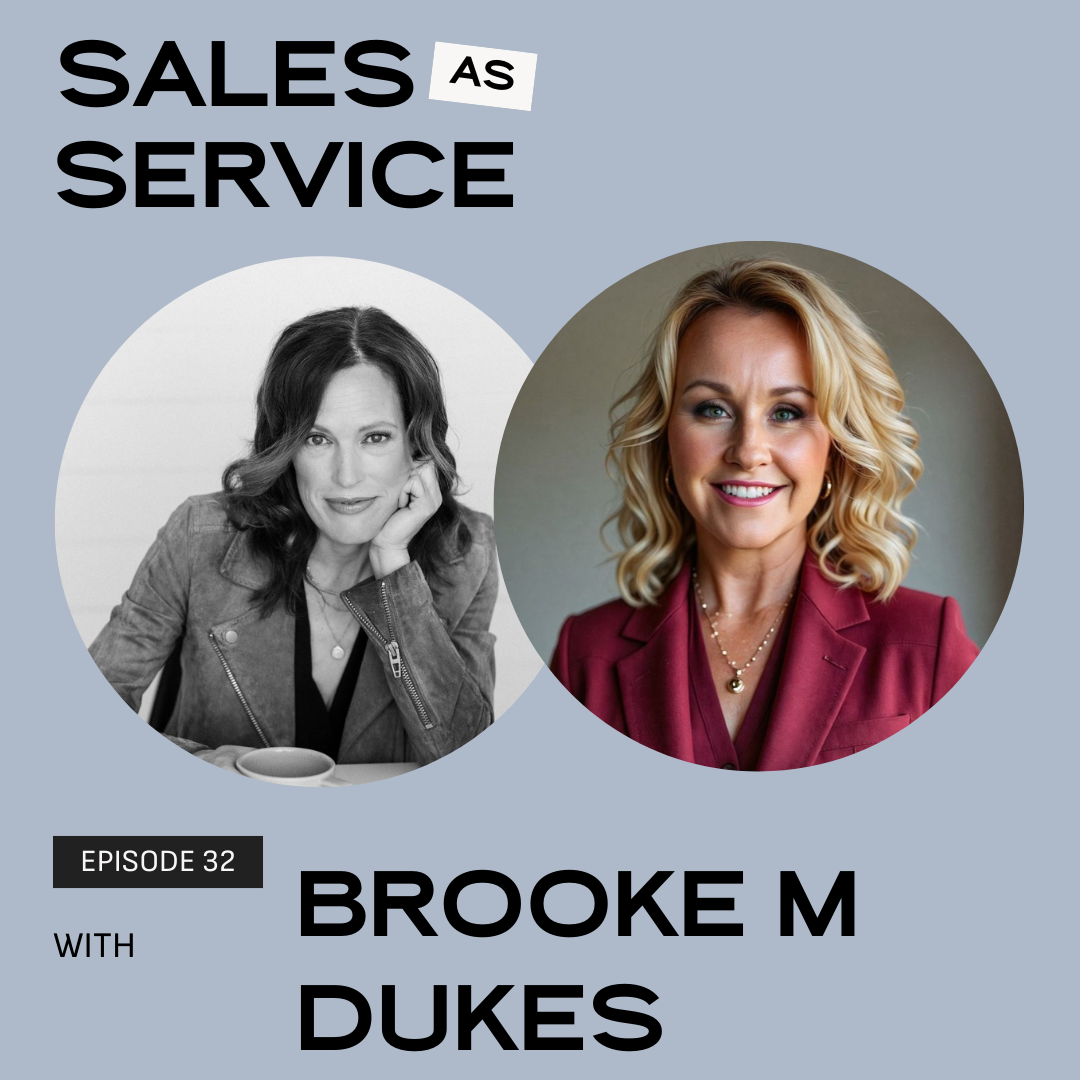
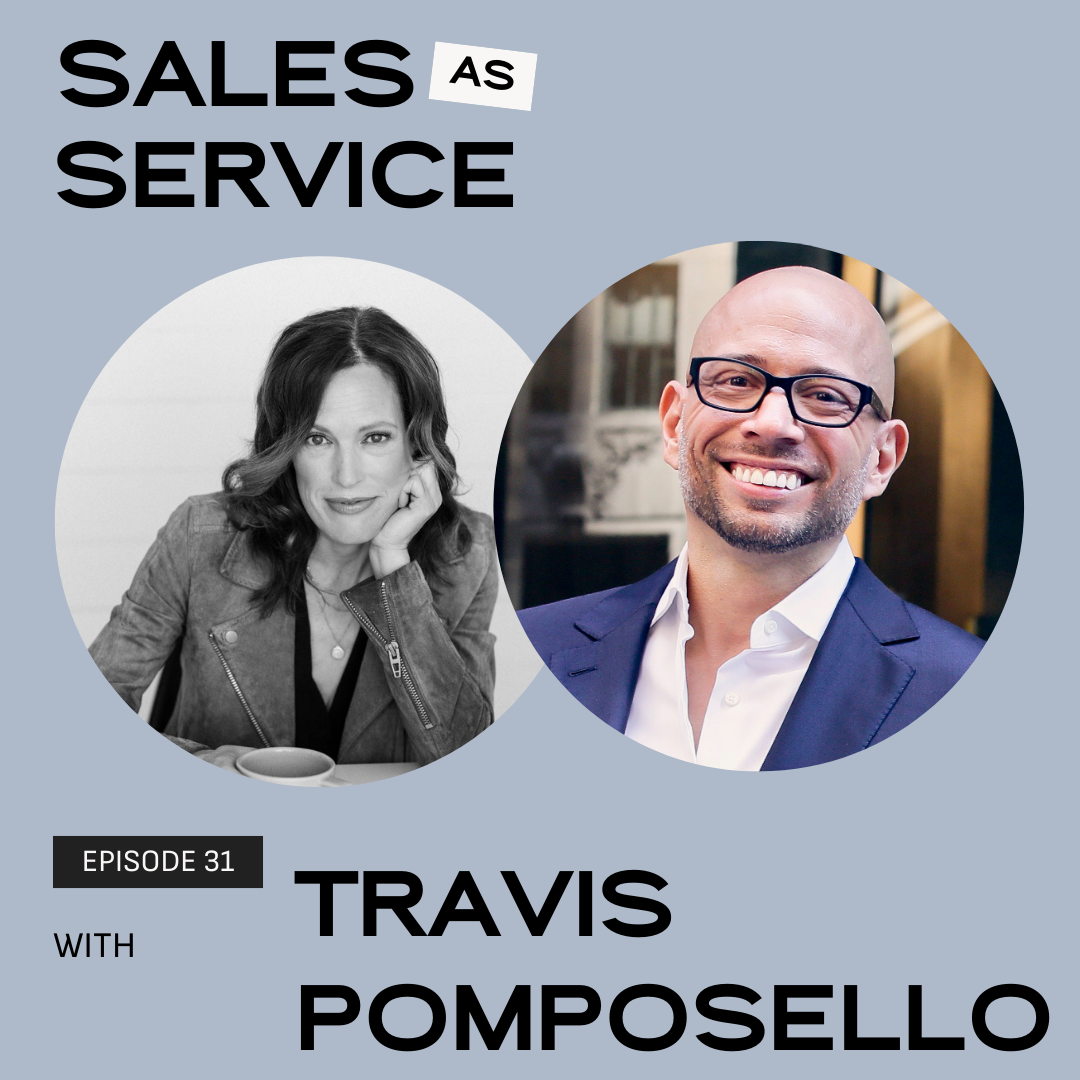
Prepare, Don’t Repair: The Hidden Work Behind Sustainable Sales with Brooke M. Dukes
EPISODE: 32
As founders, we spend a lot of time thinking about how to attract clients—offers, messaging, pipelines, and conversion. But what often gets overlooked is the internal foundation that makes sales sustainable in the first place.
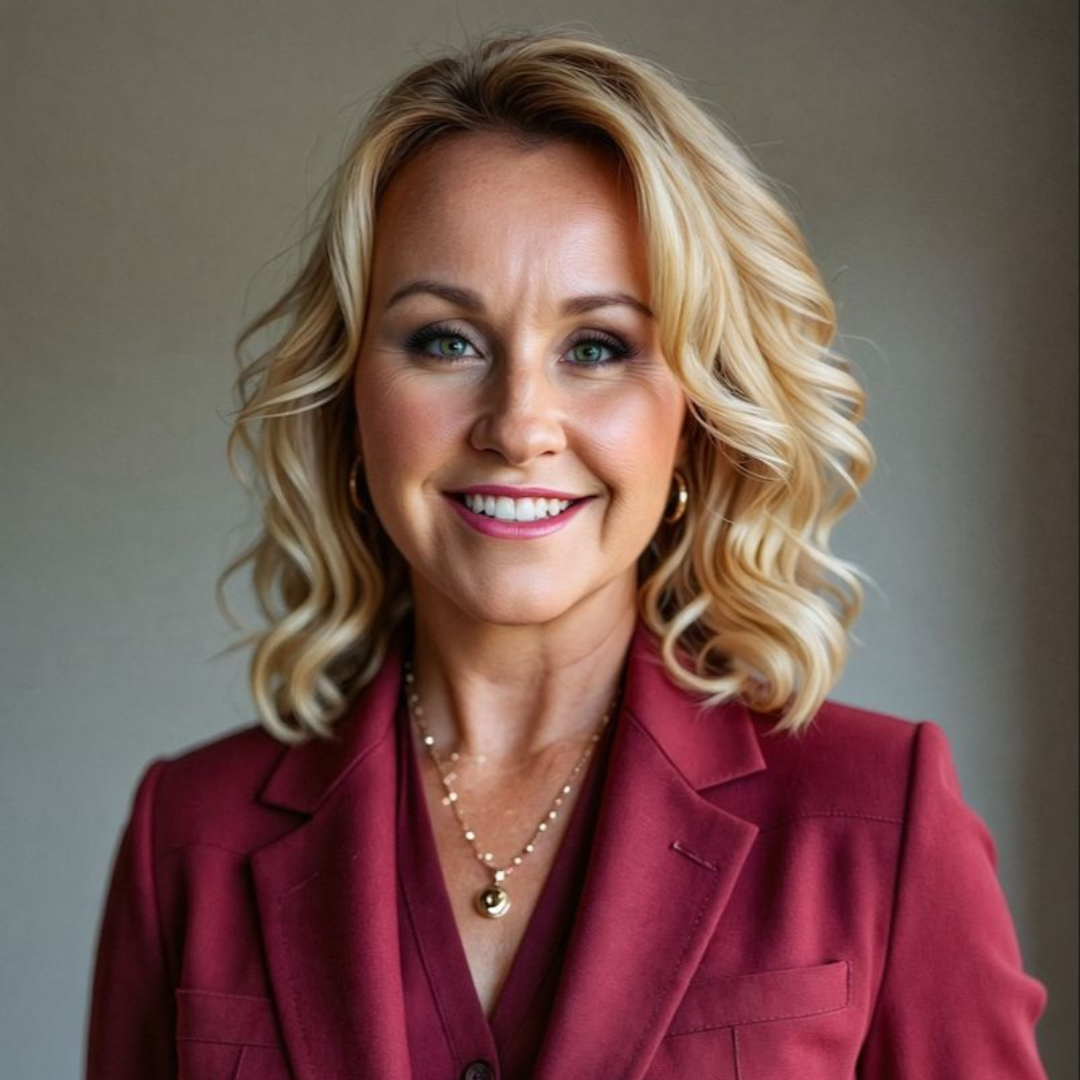
In this episode, I’m sitting down with Brooke M. Dukes, Founder of BMD Consulting, to explore why culture isn’t a “later” problem—and how leadership, communication, and internal alignment directly impact sales performance and growth.
Together, we unpack what it looks like to prepare your business to scale successfully instead of working backwards to fix misalignment, burnout, or breakdowns inside your team.
In this episode, we cover:
Why internal culture shows up in every client interaction
How outdated leadership and communication systems quietly stall sales
The connection between culture, trust, and consistent revenue
What founders can do early to avoid fixing problems later
How to build a sales foundation that supports sustainable growth
LISTEN TO THE EPISODE HERE 👇🏻
-
Speaker: [00:00:00] A lot of us have this belief that things that come naturally and easy to us don't have the same value as things that we have to work on. It's wrong. We need to double down on those natural gifts. If you are struggling in any area of your life, you have a limiting belief about that area. Take a salesperson, they can have the best strategy in the world, the best product.
However, if they don't believe it, if they don't believe in their own skillset, if they don't believe in the company that they're working for, the product that they're selling, that what they're selling is valuable, they will fail.
Speaker 2: Welcome to Sales Is Service. The podcast designed to help you change your mind about sales?
Literally, I'm gonna help you change the way you think about selling. I'm Tam Smith, your host. Sales bestie and pitch partner next door. You're tired of bros with biceps telling you how to crush a million dollars in your sleep or battling imposter syndrome on your own. You've come to the [00:01:00] right place. All you need to do is listen, then take action.
No gym membership required. Let's get started.
Hey there and welcome back to Sales of Service. This week we're continuing the conversation around what might actually be your most important client, your team, your internal client. As founders, we don't start businesses thinking, I'll fix the culture later, but that's often exactly what ends up happening.
We are spread across so much. It's easy to focus on offers, messaging, pipelines, revenue targets, while quietly postponing the work that actually makes sales and growth sustainable leadership. Communication company culture. Then months or years down the line, we're trying to reverse engineer success, fixing misalignment, repairing burnout, rebuilding trust inside teams, while still trying to grow on sales as service.
We talk a lot about foundations, about strategy, about being proactive and preparing to be successful instead of working backwards to fix what's broken, and [00:02:00] that's exactly why today's conversation is so important. My guest is Brooke m Dukes, founder of BMD Consulting. Behavioral business strategist, executive coach, and author of Burn On Not Out.
Brooke works with founders, CEOs and leadership teams to align culture, leadership, and sales at the root before growth creates friction. She has a powerful way of reframing what many of us experience in business. You're not underperforming. Your operating system might just be outdated. In this episode, we're talking about why culture isn't a later problem, why sales performance is deeply connected to what's happening internally and how being intentional early about leadership, communication, and values sets you up to grow without burning it all down and rebuilding it later.
If you're building a business and want your sales process to actually hold up as you scale, this conversation is for you. Let's get into it. Brooke, thank you so much for being here.
Speaker: Thank you so much for having me.
Speaker 2: And I always like to start these conversations with the same question. Tell us in your words, who do you help and how do you serve?
Speaker: So we help CEOs, [00:03:00] founders and executives. We do it in a few different ways. We do it from a consulting perspective. We work on culture, leadership, sales, and we also have a community called Success by Design, where we help leaders that are really. They're either they have been wildly successful or just successful, but they're terrified to slow down because they feel, how can I keep this momentum going if I pull back?
Or companies that they're not reaching the growth that they want, and the leader wants to know like, how do I motivate my team? How do I empower them? All the things or people that they wanna get outta corporate and they wanna start their own business? So success by design helps 'em to do that. I do some teachings walking through my own journey, and then we do round tables, executive tables, hot seats, all the things.
Speaker 2: So it's not just existing businesses, like you're working with people that are just like making the transition. Yeah. To Okay. I didn't realize, I don't know that I realized that. I was thinking it was existing [00:04:00] businesses versus actually enabling folks to make that transition. Mm-hmm. From corporate into entrepreneurship.
That's incredible. You've said most leaders aren't underperforming. Their operating system is outdated. What does that mean for business to be running on an outdated system and how does that show up in practice?
Speaker: Well, it shows up a lot in, so let's just take it in our three pillars, right? In Culture 20, you know, COVID really threw everything.
Upside down where we have everyone went remote, some came back, some didn't. So for a lot of leaders, they're still working on that pre COVI mentality, which they've done so many studies and we realize that. If given the right framework, the right culture, the values, the vision, they feel connected to that mission and that vision, and they understand, here's how what I do impacts the vision of the company, impacts us reaching that they can work anywhere.
[00:05:00] In fact, when given the right tools, people can be more successful, productive, and happier working from home. But we're still stuck in that old, I need to physically see them. I need to micromanage them. I need to see what they're doing. That's just tough, you know, when you move into the leaders. Piece of it.
A lot of our clients come to us because they don't know how to motivate their people. In today's world, you and I were talking prior to this, I am in the same thing. We're really looking at how do I slow down? How do I do less and receive more? We're moving from that. Chasing to more of attracting and allowing in and receiving.
But it's a mindset shift because we weren't, especially my age group, right, and I'm not gonna tell you what that is, but it's older. We were taught that you do your goals, you take the action, it's due, it's [00:06:00] force. I mean, think about one of my past business partners was one of Tony Robbins first master trainers.
Tony Robbins take massive action. I mean, that was a thing, right? And that operating system just doesn't work anymore. And especially as we've got, you know, the Gen Zs and the millennial, they're not operating on that. They wanna enjoy life. Now not grind it out. Kill yourself now and you're gonna be able to enjoy life later.
They know that's, excuse my language, but that's bullshit. They've done studies. Most people die five years after they retire. They wanna enjoy it now. So that was a lot. But now
Speaker 2: I like, I'm feel I struggle with that. You know, I was just having a conversation yesterday with a colleague like I am from. You know, I guess generation or you know, corporate experience that, you know, success equals suffering.
And that if it's not hard, you know, I'm doing it wrong or that it doesn't have [00:07:00] value. And I, you know, I'm now, you know, coming up kind of five years in my entrepreneurial journey, you know, and really challenging myself on that point. And it is, it's, it is, it's a mindset shift, but it is, it's a real struggle when you, you spent so many years with that conditioning, and I'm interested, like on, on this podcast, we talk a lot about.
Foundations. So what do you see as the non-negotiables that need to be in place, like early before? You know, I'm speaking specifically to sales process, but really just, you know, any level of success can be achieved, like the foundations you need to be thinking about earlier rather than later.
Speaker: Well, I wanna touch on a point that you made, and I feel like it goes right into this question as well.
We ha a lot of us have this belief that things that come naturally and easy to us don't have the same value as things that we have to work on. It's wrong. Like we need to double down on those natural gifts. I mean, that's [00:08:00] what's gonna move us forward. So what we teach in both our consulting firm and our success by design community.
That's why I was interested to be on your podcast is all foundational 'cause strategy, especially with ai. That's easy. Strategy's now hard to come by. Don't pay someone for it. You need to pay someone for the foundation. And that is mindset. That's beliefs. Because if you are struggling in any area of your life, you have a limiting belief about that area.
Take a salesperson, they can have the best strategy in the world, the best product. However, if they don't believe it, if they don't believe in their own skillset, if they don't believe in the company that they're working for, the product that they're selling, that what they're selling is valuable, they will fail foundationally, you've got to build that belief.
It has to, to me, belief is number one, that you really have to work on that first and look at that
Speaker 2: and, and [00:09:00] practically, because I think it starts with, I mean, I think of my, I'm just going back to my corporate career, like my unhappiest. Work situations were typically the product of the internal, the culture of the company and the business.
And that started, you know, if I kind of from the top down, you know, the leadership down, so I'm making some assumptions on your recommendation, but that it's gonna start with, you know, the founder, business owner themselves and their mindset. And then how they, you know, the culture that they're creating. So practically like what early steps, what does that look like in action?
In, in practice?
Speaker: Yeah. The, ideally, the way that we love to work at with clients to support them in that foundation is one, working on beliefs. We talked about that, but then it was really. Getting out of the founder or the CEO's head, like what is their vision want, helping them to understand the difference between a vision and a mission, which a lot of times they get that confused, right?
A mission is your y, [00:10:00] your the passion y, what impact you wanna make in this world. The vision is a measurable target, right? It is by x date. We wanna be a hundred billion dollar company by 2030. That's a vision. That is something. And a lot of leaders, they feel a little embarrassed about that. Like, do I really talk about money?
Well, it, it doesn't, it can be we wanna impact this number of people, but it has to be a measurable target. So that's the next thing we work on. And then you're right, it's culture because you've got to really, especially when it comes to sales, because. That depending upon the size of the company, what we will do is we will come in and it's at a maximum of 50 people during in a workshop, and it's typically two days, and it's helping people to understand what values.
Does every employee need to have while they're at work? You're not gonna change someone's personal, but while they're at work, there's going to move that [00:11:00] vision forward and help to fulfill that mission. Now, values, as we've probably all seen, a lot of times, they're just words on a wall. The CEO, the founder typically doesn't even know them, but we make them actionable, so we help to choose the values.
We create a slogan that goes around with them. One of our clients, one of their values, was fun, and the slogan was Fun Gets more done. And so you make that the common language within the company so that if you see someone grinding it out and they're just burning out, you say, Hey, fun gets more done. Why don't you take a break?
And it's working those values into the reward and recognition system. It's hiring to them. You don't hire for competency. You hire for culture fit. You can teach competency. And it's so key when it comes to sales because so many times when we're, where I've been in sales my entire life, I've been chief sales officer, I've [00:12:00] worked in Fortune 500 companies, director of sales, all the things.
And the dilemma that salespeople or sales leaders have is when they have our top sales person that is. A cancer to their culture. What do they do?
Speaker 2: Promote 'em into leadership.
Speaker: So you really, you've got, especially with sales, it doesn't matter how many numbers they've hit for previous companies, if they are not a culture fit, don't hire them.
You can teach that.
Speaker 2: And talking about just like kind of the, the practical steps that you can take. You have developed some tools like the Grace, grace communication model and the culture compass to avoid, you know, friction and misalignment, you know, before it grows into something bigger. Can you talk a little bit about that, share a little bit about that?
Speaker: Yeah, so one of the first things we'll do in that culture, we do a cultural assessment because what we found, I have over 24 years experience in this industry. And it's very hard to get people [00:13:00] to really say what they really feel about the company, about their leaders, and rightly so, I get it. And
Speaker 2: feel safe to be able to do
Speaker: it right.
Speaker 2: Yeah.
Speaker: So we've created, with PhDs a anonymous assessment. Mm-hmm. And what it does is it helps people to explain how do they feel in today's culture. Their culture currently.
Speaker 2: Mm-hmm.
Speaker: Are they able to succeed? What? What does that look like? Let's define that culture as it stands today. Then where do they believe what culture they believe they be happiest and most productive in?
And then we also give some in the eight areas that we believe most impact culture. How's the company performing? Where do the people feel they need more training with it? So, and then we give a comprehensive report that we go over with the leaders, and it can be segmented by department, by location, depending upon the size of the company while keeping the anonymity.
We don't wanna have two people in a department. They know what they said. Right? [00:14:00] So keeping that. And so that's a two hour that we go over with them and we build everything from. That assessment. So then we'll move into the workshop and what have you. And then on the Grace framework, what we've done, because I believe foundationally as well, whether it's sales or anywhere in the company, communication is key.
What's the number one thing that hits communication? It's quickly within the first 10 seconds. Building rapport. Well, how do you build rapport? If you can pick up on the cues that someone's giving you. That tells you the need that they're asking for. During that communication, you have already hit over 50% of the battle.
You open their ears, they want to hear you, and they want to hear what you have to say. Because with that, and we built it upon four of Maslow's six basic human needs, right? So connection, achievement, [00:15:00] recognition, and growth. And we have an assessment. That people can take to see what their primary, it's not a personality test because your needs can change to, depending on your own work, which employee you're talking to, all the things.
But then we have systems that help you. In fact, we worked with a. A very large was a billion dollar credit union. We got it down to such an art that the tellers, when someone walked up to their booth, someone they'd never met, they knew just by what they were wearing, the first few words they were saying, their posture, their physiology, what need they were asking for in that moment, and they could give it to them.
So for salespeople, it's a, it's amazing because. What do you, you need to know if you can't as a salesperson, hit someone's need right there. You've got it. Because to close a sale is only 5%. Five to 7% is the words that you say, and most people, salespeople think I need to have the [00:16:00] perfect presentation and say the perfect thing.
That's not it. It. Do they feel safe with you? Can you help them accomplish what they haven't been able to accomplish on their own?
Speaker 2: Mm-hmm. Exactly. The process of doing this kind of, you know, internal assessment, at what point, you know, in a organization, like when should you start thinking about doing something like that?
You know, I think a lot of the folks listening to this, you know, smaller teams, you may not necessarily all be, you know, payroll, you know, contractors. This is something that, you know, small teams, like even like contract teams you would recommend doing and at what point.
Speaker: In my opinion, culture needs to be worked on from day one.
It typically doesn't happen that way, and we're working, we, it, it has, I would say over my 24 years, maybe 10% of the businesses were wanted to build the culture, as you know, right before investors are anything they wanted to build that typically we're coming in. When there's a problem and we can do it then too.
It's [00:17:00] fine. Even ideally it's right from the beginning.
Speaker 2: Yeah. And you know, for folks listening, wondering why are we having this conversation? I just am a huge believer and I know you are too, that that your internal client. Is as important as your external client and external client is gonna feel the impact of whatever is happening internally with that organization.
And it, I mean, I fully believe it impacts like a healthy internal culture directly impacts bottom line. So the sooner you start shaping that and being intentional to develop that, the better.
Speaker: I even think it's more important. Than your external client, because think about how costly it is to replace that employee.
I mean, that's, you know, it can, there's so many things out there. There. Some say double the salary, some say three times. It depends upon, you know, the level of competency and all the things going into it. But let's just. For this discussion's sake. It's really freaking expensive.
Speaker 2: Yeah. I mean, it's, it's the time and money you have invested in the, the hiring process, the onboarding and [00:18:00] training, and then okay, it doesn't work out.
And then it's the, the lost, you know, revenue for the time it takes again to go through that whole cycle again. That churn is just expensive.
Speaker: Absolutely.
Speaker 2: Need a better system for getting clients consistently. Grab my VIP Power Hour, a free daily rhythm designed to help you stay visible, nurture your network, and spark new conversations in just 60 minutes a day.
It's not about cold pitching or chasing algorithms. It's about showing up with intention. Do it for 30 days and I promise you'll start to see more confidence, more conversations, and yes, more revenue. Download it free at Studio three 40 nine.com/freebies. Now back to the episode. Sometimes we treat, we kind of touched on this, but we treat, you know, culture and sales as separate tracks.
But you know, we were talking about how deeply connected they are. You know, kind of talk a little bit more about just the impact on sales performance and client relationships in real terms. Just kind of add a little bit more color around that.
Speaker: Yeah, so every, I feel like, especially for sales, having [00:19:00] been in sales my whole life, I mean, even trying to get my kid on the right travel soccer team, it's
Speaker 2: all sales.
Yeah,
Speaker: it's all sales, right? The sales right. Influence.
Speaker 2: Mm-hmm. It.
Speaker: The culture means so much because especially if you are one of those salespeople that are going out and hunting, right, you are finding your own leads, you're closing those. It can be tough to keep up your own internal motivation. It can be discouraging on days.
Well, if you're in a toxic culture, it makes it that much harder. But if you have a company that is supporting you and you feel, we spend more time working than we do with our family. You wanna feel safe, you wanna feel heard, you want. So it's so very important for salespeople to help them to be successful and to keep that motivation and really you want them.
They've done studies on this, salespeople that believe in the vision of their [00:20:00] company, that believe in what they're selling, they are exponentially more successful than salespeople are not, regardless of their competency in that, in sales itself.
Speaker 2: Yeah, absolutely. I think we're doing a good job kind of painting the picture that, you know, attention to culture is not a later problem.
You know, it's a, it's a. Right now, you know, should be a right now. Focus. Practically, what is one thing founders and business owners can start like today to intentionally start, you know, being more mindful of that in their organizations?
Speaker: I would say, and there are others out there, I would say do a cultural assessment.
We're not the only one. There's several out there. We've done studies on those. I personally think ours is the best and the most economical, right? Our real focus is on small and mid-sized business, so we price it accordingly. A lot of others are for the large, but I think that that's so important because you kind of have to know where you're at.
Before you determine where you're gonna go and a [00:21:00] cultural assessment can lay, the groundwork can lay a roadmap. So for us, that's why it's the first step, regardless of the size of the company, because it lays down. A pattern, right? It lays down their journey because we always say you don't wanna boil the ocean when it comes to culture.
Don't try to do everything at once, not just from a financial perspective, but you don't wanna screw up what's working. You wanna make small shifts in the direction of your ideal culture and you know, make sure it's working so you can adjust things that aren't if you're doing everything at once. Once it's.
It's gonna hit your bottom line and how do you know what's working and what's not?
Speaker 2: I, I really appreciate you saying that. 'cause I, I am guilty of being, if I can't do everything, I do nothing. You know, it's like, it has to be all or nothing and I appreciate, you know, it's just making, you know, those small intentional steps and being, we say this, use this word consistent a lot, but just being consistent and it's a, it's a long game, you know, it's not a, it's not a quick.
It's not a quick [00:22:00] fix. It's, it's a, a, a long game. For those who've might feel like they've waited too long, you know that maybe they're already experiencing cracks, what would you say to them?
Speaker: There's, it's never too late. I'll give you an example. We worked with one of the largest, it was the largest privately held plastic surgeon office offices in the world.
They had 32 locations. When we started working with them, their culture was so bad that they had a $9 million. Cancellation issue. So we had to go in, they were one of the first companies that we thought, oh, we need an assessment. It was with the previous firm, and what we found was it was based on sales because what they were doing with this company, they would have a call center.
So people would call all times of the day and night into a call center because they did infomercials, and then that call center would put them to one of their 32 offices where they would go in. They would meet with a consultant or or a consultation, [00:23:00] and then that consultant would then book the surgery.
Well, what we found out was that consultant was paid upon whether the surgery was booked, not whether it actually happened. So they were selling them like a used car person would sell them because they were compensated. And it was toxic to the culture.
Speaker 2: Mm-hmm.
Speaker: Because then even if the person got the surgery, they were pissed at the way that they were sold.
So they would give them horrible reviews so their Google and yell for, I mean, it was awful. They were just bleeding money out everywhere. They'd been in business for. Over 20 years, we were able to come in, they moved to 72 locations. We trained everyone on the grace method from the surgeon to the front desk.
We gave them a eight question questionnaire that they gave each potential patient coming in that then told everyone there what need they were asking for. So that they [00:24:00] could, and that we color coded it, they just, you know, it was a while ago, so they would just put a little dot on their chart with the color code so that anyone that interacted with them knew their primary need that they were asking for and how best to communicate with them.
It was amazing. And that was a 20 plus company that was, you know, multi multimillion dollar company. I mean, if you're losing 9 million, you're making some money.
Speaker 2: That's fascinating though. Like just with that assessment, being able to identify kind of pinpoint. Where the miss was and that it's just that, you know, it's that the client experience, I mean, for any business, you know, whether it's, you know, the plastic surgeon or, you know, any other, you know, business, it's the, you know, closing the sale, you know, as like step one, just they were closing everyone versus just ensuring like, okay, is this even right fit?
But then also for, for. The need or the solution that they had, but then, you know, you just ignored the whole rest of the client [00:25:00] experience and it was just with a $9 million price tag. Yeah,
Speaker: yeah.
Speaker 2: Like it's, 'cause it's one thing to actually, I mean, get the client, you know, and it's, and get right fit client, but then, you know, it's the, how do you take care of them through the process to ensure that, you know, you're able to turn them into your ambassadors and advocates and, you know, we're.
Referral partners and you know, those five star views versus like getting skewered on Google. Yeah. Wow. Other examples like that? The other case study that comes to mind, oh
Speaker: gosh, we have so many. So one, we went into a orthodontics office, they were large, they were expanding. They had two offices, they wanted to get to 10, and the CEO, who was also the main dentist and the COO, were just butting heads.
They could not agree on anything, and they knew that because a lot of times, especially if you're in a merger, if you're trying to. You have to [00:26:00] know what your current culture is because how do you know? We'll get that a lot if there's a merger or there's a founder that wants to step out. Um, we're working with a large construction company right now and the.
Founder wants to, he's been in business for 35 years. He wants to step away, but it's his baby.
Speaker 2: Mm-hmm.
Speaker: How do I know that they're not gonna ruin my company?
Speaker 2: Mm-hmm.
Speaker: Well, that's culture.
Speaker 2: Yeah.
Speaker: You've gotta document it. Yeah. Right. With this orthodontics company. We really had to look at to get them on the same page.
We had to look at what part of the culture's working now, what do you want to move on to the offices and what just isn't working? And when they could see the way that it was impacting the employees, then they could get on. They may not agree with it, but they could get on the same page because they really both had such a heart for the business.
They did a lot of pediatrics, they did a lot of problems. They were really doing good work and they had a lot of heart for it. So they were able [00:27:00] to set their own issues aside and say, okay, here's what's for the greater good of us moving forward to be able to positively impact more lives. And so they could, they could do that.
And that's how we then went through the process and were able to support them and working well together because they were individually, they were fabulous at what they did together. Not so much
Speaker 2: and it was probably like, you know, just that, that that passion, you know, was kind of what the butting heads just both, I mean, coming from a great place, but you know, the passion was just kind of conflicting.
Speaker: Yeah, absolutely.
Speaker 2: You're able to sort of sort that out and get it working together versus against each other. Those kind of two examples of. Businesses exist that had been in, been in the business for a while, that you were kind of untangling a little bit and course correcting an example of maybe a young, younger business that kind of came in up front, you know, to foundationally.
Speaker: Yeah. Right now, because we have a, this is my fourth business and now we really, I wanna work [00:28:00] with companies that are positively impacting the world. A CEO just came to me and he had been in $113 billion business prior to, right. It was a gas company. He's now moves to California and has his passion project that he wants to do, and he wants to really go up against health insurance and they want to be the Costco of health insurance, which is what Mark Cuban's trying to do.
And they're trying to work with all the things. Well, when working with, they saw some of our podcasts and the things and the CEO and the CFO came to us and said, we understand the importance of culture. We don't have funding yet, and we want your firm to come in the moment. We can pay you and help us to build the culture out.
We're gonna go in and because what we pride ourselves, we're very different as a consulting firm. One, we are all, we're content creators. We create [00:29:00] tailored to the client, which means we can also work within budgets. Big or small, we really look at where, you know, what the revenue is, what they can afford. I don't wanna put anyone outta business.
I wanna be able to support it. And we also, and what's that old saying, you know, we want to teach someone how to fish, not give them a fish. Right. We want to, we don't wanna be there forever. So we've committed to helping to build their culture from the ground up. Hiring a chief people officer in over a six month period with that person doing the hirings, doing and teaching that person how to be the chief people officer and building the culture with them.
So here's a CEO. That was the president of $113 billion business when he is starting his own startup. He's 70 years old now. It's his passion project. The first thing he wants to do besides getting the funding, is culture. To me, that says it all. Yeah.
Speaker 2: [00:30:00] That's a tell.
Speaker: Mm-hmm
Speaker 2: And I so appreciate someone with that level of experience Still.
Knowing that they need, they can't see what they can't see. It's like, I, I've used this a lot. It's hard to read the label from inside the bottle, and I appreciate someone like, again, at that level with that level of experience. It's still like coachable and teachable and is aware enough to bring in someone you know, where they know they might have blind spots to help and support.
Which means, you know, always be learning, always like continuous improvement. Inviting those people in that can help you do that. I love that.
Speaker: And I would say one other thing that I would say to someone that's looking for a consulting firm.
Speaker 2: Mm-hmm.
Speaker: Make sure that they're the thing that they're teaching you.
There is an end game that they're going to teach you the process that then you can take on yourself. We've been with clients 5, 7, 10 years, but it was always on different initiatives because they were giant companies. Our goal is to always teach the process. To someone within their firm or hire someone else [00:31:00] that can then take it over for them.
You don't want a consulting firm that just wants to be part of your business for the rest of your days,
Speaker 2: not what they want or what you want either.
Speaker: No, no, no. I get bored. I wanna do my, I wanna work with lots of companies, impact locker companies. I
Speaker 2: say I, I am. I am. Actively looking to work myself out of a job.
You know, when I Right. Yeah. Kind of switching gears a little bit in your book, burn On Not Out, you talk about finding fulfillment beyond success, and I think this kind of comes, kind of circles back to the first part of the conversation, but you know, at least for me personally, when I started this business, it was a lot from that place of, you know, chasing, striving, you know, everything measured by, you know, performance achievement.
And you know, now it's, I still have that same energy and drive, but, you know, in trying to make that jump from, it doesn't have to equate to suffering. It doesn't have to be, you know, hard. It can have ease and flow and joy. And how do you help leaders redefine success [00:32:00] for themselves and the organizations in a way that, you know, balances that chasing, striving, you know, versus that ease and flow?
Speaker: Yeah, it's. So it's really the, one of the main things we do, whether it's in the consulting or in our community, is really help people to change their perspective on when you are happy, you are productive and more successful. Harvard has done studies on this. This isn't just woo woo, oh my gosh, mind, body.
You need to sit on a mountain and you know, meditate. No, this is what we teach it. When you are in, and I, in the book, I write about an experience I had on a corporate jet in preterm labor because I, I was eight months pregnant. I was working for a large IT firm. Our potential client was United Airlines, the CEO of United Airlines.
We'd worked on, I'd worked on this deal with 25 [00:33:00] people. I was the lead. They were outsourcing their call centers to Nova Scotia. The CEO of United wanted us to bring the team to Nova Scotia with them to show them how it would all be set up. Great. I then talked to my right hand person who was, in fact, I was a lead salesperson.
So I was the quarterback of all this. I by no means had any IT experience. That was not my job. That was the job of my IT team prep. My right hand person who was better suited for this to go in my place. My boss at the time said, great, if you wanna give her your bonus, which was a six figure bonus. So I went on the corporate jet.
Preterm labor. My daughter was fine, but it was a huge wake up call and that's when I left corporate and that's when I really started, that's the book, burnout Not Out Fulfillment, because I recognize I was doing and striving for that success, and we all do it for different reasons. For me, I was an abused [00:34:00] child.
My mother stayed in a marriage 10 years longer than she should have because she couldn't afford to not be in the marriage. I didn't consciously know that. That's why success meant so much to me. But when you looked at my life, you would think that that's the only thing I valued, when in reality that was not what I valued.
So it's really looking at one, what life do you wanna live? How do you wanna be? And I tell any company that I start with that's starting out in a business, start the business with the life that you wanna live. Now, if you think you're going to be able to move from killing yourself now to working your way out of a job and, you know, sitting on the beach drinking a pina colada, it's not gonna happen.
Start it with the lifestyle that you want now, because you'll, you'll get there faster. It's just small steps because they're not just gonna believe you. We have all these years of conditioning that have told us that you can't do it that way. But the way that we teach in the community, [00:35:00] our success by design is give your brain evidence.
How does our brain learn? It learns through communication. What's the number one communication? What we show it and tell it ourselves. So don't you know, as you're making shifts and we give specific shifts to do recognize, be aware what's happening, the positive things that you are attracting into your life that you had to grind it out for maybe never achieved before.
And don't just blow past it. Celebrate it. Show your brain that. Oh, wow. I did this differently and this happened. We talk a lot about, I have neuroscience background as well. We talk a lot about how your brain works. Our unconscious mind wants us to stay the same, wants us to stay safe. Not even if it's good change.
It doesn't necessarily want it, and there's things that you need to do to reprogram it.
Speaker 2: So I mean, that's what we work on a
Speaker: lot because to me. That I have a goal and I wanna help change the world. I wanna impact the world and show people how they can [00:36:00] do less and receive more. I
Speaker 2: think you just answered my next one.
I was gonna ask how you define success for yourself.
Speaker: Joy, happiness, right? The life that I, I, yes, of course. Money is important for me. Money is about, I wanna experience. Everything I wanna experience in life the way I wanna experience it with the people that I love, and I want to add as much value as humanly possible that I can offer to the world, it makes me happy.
There's nothing more I love than seeing someone that either has never reached a level of success before and doing it with ease and flow and fulfillment or someone that has been grinding it out for their entire life and watch them make that shift. It's amazing.
Speaker 2: Well, let's jump into our Fast five. Your, I can't live without it.
Software or app.
Speaker: Oh, Chad, GPT. My, our, our bot. We created a bot, our business [00:37:00] bot. Oh my God. Yeah. Love it. I,
Speaker 2: I laugh now, when it was first suggested to me, you know, when the, you know, when chat TPT was becoming mainstream, and it was suggested to me that I should incorporate that into my workflow. And as a, you know, content messaging, you know, writer first, I, I wish my reaction was, oh, that's
Speaker: cheating.
Speaker 2: And you know, now, now I can't, you know, imagine my process without having that as a thought partner.
Speaker: Yeah. Ours is named Babs Badass Spot.
Speaker 2: Love it. Best advice you've ever received about sales and business development?
Speaker: I would say I was not getting the success I wanted and I was being offered all of these strategies and the ways that I could do it different.
Oh, that's not really me. I don't really like that. And the person looked at me and said, you know what? You need to leave your ass at home 'cause she's not getting the results you want. How about you switch it up? Do something you haven't done, try one of them [00:38:00] out and see what happens. Just step outta your comfort zone.
Fear. Feel the fear and do it anyway, because yeah, it might not be you, but guess what? You aren't getting the results you want. So how about not being you?
Speaker 2: Your morning routine must have,
Speaker: oh gosh, I meditate and journal every morning. Every morning and some days I don't. It's funny, I just had to switch up.
I've been meditating for 20 years every morning and I, I think everyone needs a coach. I have a coach and my coach is like, it's starting to become. Too much in your head and routine. And I started journaling because what journal journaling puts your brain in the same state as meditation. So now what?
Doing what I teach, oh, there's a novel idea. I just see what does my body want today? What does it feel like today? But I'm always. In my space, I have my own sacred space that I go to every morning and just be with myself.
Speaker 2: Your walk-on song, the one song that always [00:39:00] pumps you up. Oh my gosh, I should know this.
Speaker: Well, I don't have a walk-on song, but I will. I recently got married and our wedding song I absolutely love, and I think that it's in, it's called Sweet Symphony.
Speaker 2: Oh, congratulate. I love that.
Speaker: Thank you.
Speaker 2: And if you only had one hour each day for business growth, how would you spend it?
Speaker: One hour each day for business growth as a salesperson, I think it should be on LinkedIn, depending.
It should be on LinkedIn. Um, if you're B2B or you know, whatever platform you need or you have, I think every salesperson needs to spend one hour a day on it.
Speaker 2: Well, thank you so much for being here. This has been such a great conversation. Where can folks find and connect with you online?
Speaker: All social media platforms, it's Brooke Dukes.
Our website is brooke m dukes.com.
Speaker 2: Thanks again to Brooke for joining us today and for sharing her insight and expertise so generously with this community. If you wanna connect with Brooke more deeply, you'll find links to BMD consulting and where to find her on LinkedIn in the show notes. That conversation is a reminder of why I'm so passionate about this [00:40:00] work.
We spend a lot of time focused on external client acquisition, but the reality is your internal culture has a direct impact on your bottom line. When your team feels connected to the mission, understands how their work matters, and genuinely believes in what they're selling, that shows up in every client interaction.
So with that in mind, here's your sales as service challenge for this week. Block 30 minutes on your calendar. No distractions and take an honest look at your current culture. Ask yourself these three questions. Does my team understand and believe in our vision? Are we hiring and partnering for cultural fit or just filling seats?
And when was the last time I checked in on how people actually feel about working here? Write down what you discover, not just what you wish were true, but what's actually happening right now. And if you're a solo Purdue working with contractors, this applies to you too. Your contractors are your internal clients.
How you show up for them directly impacts how they show up for your external clients. Culture isn't something you wait to address once you have more time or more money. It's the foundation. [00:41:00] Everything else is built on. Before I go. If building a sustainable lead pipeline is on your radar for Q1, I've got two spots open this month for VIP Legion Pipeline builds.
This is a done for you engagement where we get your outreach strategy dialed in, build your prospect list, and launch a system you can actually stick with. If that sounds like the kind of support you need, head to studio three 40 nine.com or DM me on LinkedIn to grab one of those two openings. And until next time, remember, sales is an act of service.
It's about what you give, not what you get, and when you serve well, the ROI. Always follows. See you next episode.
Speaker: You've just listened to
Speaker 2: the Sales Is Service Podcast, the podcast to help you shift your mindset around selling. If you liked what you heard, be sure to hit subscribe and share it with a friend, because we're all about more sales. Awesome and less sales awkward. See you next episode.
MORE OF A READER? 👇🏻
Most founders don’t start businesses thinking, I’ll fix the culture later.
But later has a way of showing up faster than expected.
In the early stages of growth, it’s natural to focus on external results—new leads, better offers, tighter messaging, stronger pipelines. Sales feels like the priority, especially when revenue pressure is real. What often gets deprioritized is the internal foundation that actually makes sales sustainable: leadership clarity, communication, and culture.
The problem is, culture doesn’t wait.
Whether you’re intentional about it or not, a culture is being created every day through decisions, communication, and behavior. When that foundation isn’t aligned, it shows up in subtle but costly ways—sales feeling heavier than they should, team members disengaging, follow-up slipping, trust eroding, and burnout creeping in.
That’s why this conversation with Brooke M. Dukes matters.
One of the most important reframes Brooke brings to the table is this: most businesses aren’t underperforming because they lack effort or ambition. They’re struggling because they’re running on outdated operating systems. Leadership habits, communication norms, and internal expectations that worked at one stage of growth often don’t hold as a business evolves.
And when those systems aren’t updated, sales becomes the place where cracks are most visible.
Sales doesn’t exist in isolation. It’s shaped by how clearly your team understands the mission, how confident they feel in the offer, and how supported they are in their roles. When people believe in what they’re selling—and feel connected to the bigger picture—that confidence is felt by prospects and clients alike.
What’s often misunderstood is that preparing for sales success isn’t about adding more tactics. It’s about removing friction. Clarifying expectations. Aligning leadership and communication early so growth doesn’t require constant repair.
This isn’t just relevant for teams with dozens of employees. Solopreneurs working with contractors are building culture, too. How you communicate, set boundaries, and create clarity for collaborators directly affects how clients experience your business.
Culture isn’t a soft concept reserved for later stages of growth. It’s a practical business asset. One that influences retention, trust, and revenue—whether you’re paying attention to it or not.
The real work isn’t fixing culture once it’s broken. It’s designing it with intention from the start.
That’s Sales as Service.
✦ YOUR SALES AS SERVICE CHALLENGE
Block 30 uninterrupted minutes on your calendar and take an honest look at your internal culture.
Ask yourself:
Does my team understand and believe in our vision?
Are we hiring and partnering for culture fit—or just filling seats?
When was the last time I checked in on how people actually feel about working here?
Write down what you discover—not what you hope is true, but what’s happening right now.
If you’re a solopreneur working with contractors, this applies to you, too. Your contractors are your internal clients. How you show up for them directly impacts how they show up for your external clients.
Culture isn’t something you earn the right to focus on later. It’s the foundation everything else is built on.
RESOURCES & LINKS
Connect with Brooke on LinkedIn
.Join the Sales as Service LIVE Office Hours – get your invite for the next session
Simply sales with the VIP Power Hour - download the FREE guide
Book your free strategy call and learn how to consistently book 3–5 sales-qualified meetings each week
SUBSCRIBE & REVIEW
If you loved this episode, please take a moment to subscribe and leave a review on Apple Podcasts! Your support helps us reach more creative agencies and service pros who need these insights. Thanks for tuning in to Sales as Service—see you next week!

TAM SMITH
I’m Tam Smith-Sales Growth Strategist and Founder of Studio Three 49. I help female agency owners and service-based founders find, connect with, and convert right-fit clients through scalable, sustainable outbound sales solutions.
No pushy pitches. No bro-marketing. Just simple, structured systems that turn connections into clients.