Facts Tell. Stories Sell: How Founders Attract Aligned, Ready-to-Buy Clients With Kendall Cherry
EPISODE: 34

Facts tell—but stories sell.
In this episode of Sales as Service, I’m joined by Kendall Cherry, founder and executive ghostwriter at The Candid Collective, for a conversation about what story-driven sales actually looks like in practice. We explore why so many founders are creating content that resonates emotionally but fails to convert—and what’s usually missing when that happens.
Kendall breaks down how stories build trust faster than facts alone, why testimonials are one of the most underutilized sales assets in most businesses, and how founders can use story to initiate conversations without forcing a pitch. We also dig into the deeper resistance many founders feel around selling—and why that resistance has less to do with tactics and more to do with self-belief.
In this episode, we cover:
Why facts inform, but stories are what drive decisions
The one story every founder needs to be able to tell
How to turn testimonials into sales-ready narratives
What makes content resonate but not convert
How to use story to attract aligned, ready-to-buy clients
LISTEN TO THE EPISODE HERE 👇🏻
-
Speaker: [00:00:00] Most people don't ever do a one, even a one sentence callback to an offer that they have for sale. So I'll tell you, you know, a lesson learned about this thing, and it's like, all you've gotta say is, if this sounds interesting to you, I also work with clients in this capacity. And you link to a sales page or you link to a services guide, it's that easy.
It can be a, it can be a half of a sentence, just like an aside. It can be in parentheses. Most people leave this out. You have to let people know that you have something for sale. In order to sell it.
Speaker 2: Welcome to Sales is Service. The podcast designed to help you change your mind about sales. Literally, I'm gonna help you change the way you think about selling.
I'm Tam Smith, your host Sales Bessie, and pitch partner next door. You're tired of bros with biceps telling you how to crush a million dollars in your sleep or battling imposter syndrome on your own. You've come to the right place. All you need to do is listen, then take action. No gym membership required.
Let's get started.[00:01:00]
Before we get started, this show is shaped by real questions from agency owners and service based founders who want sales to feel relationship first and values led minus the cringe. If you're wrestling with warm outreach, follow up. Asking for the opportunity or how to lead your own sales process without sounding like a salesy weirdo, send your question in, find me on LinkedIn, or email me at Hey tam at studio three 40 nine.com.
If it's something you are dealing with, chances are you're not the only one. Alright. Let's get into today's episode. Hey there, and welcome back to Sales of Service. I want you to take a minute and think about your favorite book, movie, or binge-worthy series. What got your attention and made you want to read or watch?
Maybe it was the author or the actors. Maybe it was the hook in the trailer. Something grabbed your curiosity, but it's the story that pulls you in and makes you stay. It holds your attention, it makes you care, and it leaves you wanting more. That's the exact same dynamic that's at play in [00:02:00] sales facts and sell sheets inform, but stories connect and connection is what turns interest into trust and trust into action.
Today's conversation is about how founders can use story to not just capture attention, but to connect with and convert their highest value clients without forcing a pitch or sounding like someone they're not. I'm joined by Kendall Cherry, founder and executive ghost writer at the Candid Collective.
Kendall helps founders and service providers use story-driven sales messaging to attract aligned, ready to buy clients through content, email and sales assets that sound human and actually move people to action. In this episode, we talk about why facts alone. Don't convert the one story. Every founder needs to be able to tell how to turn testimonials into sales ready narratives, and.
Really underneath all the resistance, so many founders feel around selling, because selling isn't about saying more. It's about knowing how to tell a better story. Here's my conversation with Kendall. Kendall, thank you so much for being here. It's been a minute since we've seen each other. I'm glad to welcome you to the Sales of Service podcast.
Speaker: Oh, thank you so much. I'm very grateful to [00:03:00] be here,
Speaker 2: and I always like to start these conversations by asking, tell us who do you help and how do you serve.
Speaker: Yes, so I help small business owners and service providers who are looking to elevate. Their target audience into more of a premium market with writing different sales assets, usually content or webpages, email, newsletters, sales sequences that help you subliminally sell your products and services or any other offers in your business while still making it sound like you and telling a story.
So I, I usually tell people I'm the storytelling and sales person. I can pretty much write it all
Speaker 2: and words tell. Stories sell. What's the one story every founder should be able to tell, whether it's on a stage in an email Direct message?
Speaker: Yeah. What is it? It's your origin story. It's, it's truly like, how did you get started?
Why did you start this business? Or I'll say this. Iteration of your business 'cause your origin story. I think so many people think [00:04:00] it's this very like static, stagnant story framework and it very much evolves. Like my, the way I tell my story evolves based on what I'm selling during that time. My story evolves based on the room that I'm in.
So like the way that I'm gonna introduce myself on a podcast like this gonna be wildly different than if I'm in like a spiritual woowoo podcast. My origin story is gonna be totally different and it would be weird for me to talk about. Sales and products and services like that audience, that room, they totally glaze over.
So the origin story is super important, not just in getting the story right, but being able to adjust it based on what's going on in your world right now, who's the target audience you're speaking to? What feels authentic to you in that moment? And especially I, I think a lot of founders get really stuck on this idea that it's this static thing.
Especially when we go through aligned pivots, messy middle, I'm still kind of trying to figure out where I'm going next. So you know, I'm just not gonna say [00:05:00] anything about my origin until I figure it out. And it's actually meant to be a very fluid framework that evolves just like you do as a human.
Speaker 2: I'm gonna just from a personal level ask.
'cause I feel like I'm kind of, I'm in a, I don't know if it's a pivot, not, it's not really a pivot or transition. It's,
Speaker: it's a clarifying,
Speaker 2: yeah. I think clear. That's a good word.
Speaker: Yeah. Yeah. You're just clarifying.
Speaker 2: Yeah. Where I think I've almost been, I'm not shy or quiet or I don't know what the right word is, but I've been maybe hesitant to share too much of my.
Personal story, like I'm very, I'm very comfortable shining the light on others, but I have not, like total honesty, like have not gotten entirely comfortable as a founder and business owner when that light is on me. So how do you like. Work with founders to sort of tease out that origin story and, and then again, like know, like what parts to share and in what room?
Speaker: Yeah. Yeah. Well, this is a, a chapter in [00:06:00] my, my book where we talk about what's on the table. I'm working on a book right now called Here to Sell, and we actually talk a lot about different frameworks. One of them is. How do I share vulnerable parts of my story while still relating to people, but like, what if I don't want to air out all my dirty laundry or like share all my trauma?
Like what's, what's on the table? What's off the table? And I think first and foremost, I think there's this like really bad. I don't know. It's like the internet is a weird place. You never know who's looking at your stuff. And once you release it to everybody, it's everyone's story. And I think people feel like, you know, we have to share like our.
Vulnerable, dark shadowy, like, like parts of ourselves in order to be relatable or to create connection. And that's just not true. I think the, the first and foremost thing, this might be like a little bit of a alternative route, but before you ever start to think about like what's my origin story, I think it's important for founders to decide like what is just on the table, off the table.
So like my coach for example, she's like, you can ask me [00:07:00] about my business. You can ask me about client transformations. Don't ask me about my rate, my revenue, don't ask me about my personal relationship. And those are just things off the table. I'm a, I'm a memoirist by nature, so I'm a little bit more comfortable with sharing vulnerable pieces of my story, but there are like very specific things where I will either, like blur lines, timelines, I'll change identifying details to protect other people sometimes.
And that's just the nature of storytelling. It's not this like. We're not documenting an event, we're telling a story. So sometimes that doesn't mean, you know, let me give you the play by play of this like hella traumatic event and then relate it back to my business. Like that's not what it's about. And so I think it's, it's important to figure out.
For founders, especially with the origin story, figure out what pieces and like psychologically, emotionally, what parts in your own story are mirroring in your customers and what are they experiencing. And those [00:08:00] parallels are more relatable than any amount of trauma dumping you're ever gonna share. So I think that's, that's really how we create connection is through similar experiences, universal themes, without having to again, give a play by play of like, this terrible thing happened to me and it was devastating and it's still not processed.
And I should probably talk to a therapist instead of my audience about this. Like we, we, it's a weird place though, like I think especially like the whole personal brand, lifestyle brand thing has made this a little bit more normal on the internet, but for people that you know. You kind of have to decide, are you still wanting to drive business from it?
Sometimes that vulnerable sharing can actually put people off from you or actually like diminish your authority, so it's really important to kind of keep that in mind with whatever it is that you're sharing. Not that it's not valid, but like maybe your audience is not the most appropriate venue to share it.
Yeah,
Speaker 2: I, I struggle sometimes too just thinking through like, you know, parts of my own [00:09:00] origin story, like how to transition to turn it into like a, you know, I guess relatable business development business tie back to the business, basically. How do I take, take the story and relate it. To like the business point.
I'm trying to make any tips around that.
Speaker: Yeah. I would say a lot of people, I think they, they, we get to, like in our ivory towers. Mm-hmm. So, so we go way too high level. We're like, okay, I've got this story and like now I have this like chicken soup for the soul business business story and like this, and then it, you kind of read it and you're like.
Okay. That just looks like you pulled it from Pinterest. Like it's not actually what we're looking for.
Speaker 2: Right.
Speaker: And so what I would say an important like way to go in and kind of just start to source interesting things instead of looking for the lesson. 'cause you can create a lesson out of anything.
That's the easiest part. Look for specific scenes or moments almost as if you were taking like a camera or a video like on your phone. Imagine like a specific scene. What were you doing? Who was. There [00:10:00] what happened? Very, like, not like it doesn't need to be a dramatic, vulnerable event, but like, where's the drama?
Where's the high and the low happening? Usually if we take more like a cinematographer's view of things, like a specific camera view, that's usually where you're gonna find the, the storytelling elements, and then you can, you can tell that same story six different ways. Six different lessons, but those, those scenes are a really great way to anchor and gi give you kind of the baseline.
And then again, you can shift based on who you're in the room with, or you can shift based on the specific lesson that these people need to hear. Who's, who's the audience that's listening. So I find the kind of scene level, I always think of things like if this were a seen from a book or if I were watching this on a like.
TV show or a movie, what would be the little, you know, 32nd clip? And that is a, it is an easier way to source versus like, you can literally sometimes go through and like create a timeline of your life and just be like, okay, what [00:11:00] happened in 2019? Anything good there? Sometimes even like, literally look at photos on your phone.
Can be helpful. Yeah. Screenshots, that kind of thing. Just like what, just to kind of jog your memory what was happening around then. Mm-hmm. And you'd be surprised how much is kind of just lingering in your psyche and that is kind of waiting there for, you know, content to be developed from.
Speaker 2: Mm. Love that.
And you've also said, okay, in addition to origin story, that testimonials mm-hmm. Are another great place to find stories that convert. First, why is that?
Speaker: Yeah.
Speaker 2: Uh, you know, for audience. And then just kind of a simple, like simple walkthrough to identify like how to mind like what those are and how to mind those effectively.
Speaker: Yeah. So the thing about like testimonial stories, I think that online business owners, especially we originally, when we think about, okay, I need to share a testimonial or social proof on social media, we think that five gold stars. And the photo of the client and the copy paste [00:12:00] testimonial is gonna like, you know, check the bark, check box done.
You know, it's good.
Speaker 2: Yeah.
Speaker: However, social media is not a website. It's a completely different sales ecosystem. Mm-hmm. And what most people don't realize, and what I, unfortunately, I have to tell a lot of clients, this is if you are doing. Five gold stars, photo copy, paste, testimonial. You're essentially training your audience to not read your content.
'cause most people, they're like, okay, cool. You know, great job Kendall. You got five gold stars moving on.
Speaker 2: Mm-hmm.
Speaker: The other thing that happens is you're not telling the. The lead or the prospect, you're not walking them through what that interpretation of that testimonial is. Mm-hmm. So there's a lot of leading the Wi Witness.
There's a lot of assuming going on. Mm-hmm. And you're essentially at the mercy of however that person interprets that testimonial, versus if we use a testimonial in a story format with a, you know, here's what we, they were struggling [00:13:00] with before. That kind of messy middle. Here's part of my process, here's how we solved this problem.
And then the after here were some of the results, whether those are actual quantitative metrics and you have those, or even if you have qualitative wins, like those things still count. Those things are still valuable to people, but that story. Is actually giving someone who's reading it permission to see, do I like this person's process?
Is this something that I see for myself? Are these even the kind of results that I want? I think that a lot of times with case studies in particular, people will. Not realize that so much of your process, how you make decisions, the the specific, especially if you're any kind of like coach consultant, service provider type, where you kind of take a custom journey depending on the person that you're working with.
All of that nuance. There like that doesn't get described in any other place other than a transformational testimonial [00:14:00] piece of story like this. And that's the part of things, especially right now in, in this kind of new age of how people are buying that understanding your process, that messy middle, that stuff that, you know, the magic behind the curtain, how the sausage gets made.
That is the thing that people want to feel confident about before they invest. So if you're leaving that out, you're essentially kind of telling someone like, pay me all this money, but like, trust me, versus show don't tell. And so this is, this is why the case study is so important for. For any business, but truly for service providers where a lot of this, you know, there's thousands of different ghostwriters and copywriters on the internet, but like what is it about my process that would be a good fit for someone or not a good fit for someone?
It's the best way to qualify and disqualify people, but you have to make sure that's kind of on constant rotation.
Speaker 2: You touched on something I wanted to go back to when you mentioned like and how people are, are [00:15:00] buying. In this, this current climate that we're in, you know, as a. Writer, content messaging expert, like how, what are you seeing and how are you educating your clients that we need to be thinking in the client that we're in?
Yeah,
Speaker: it's, I mean, it's taking, I would say at least 50% longer. Of a sales process across the board. It doesn't mean people aren't buying, but people are doing all of their research. And especially if you have been in business for a little bit longer, like they are reading every word on your website, they are reading every post you've ever written on social media.
They're checking to see like. Yes, you may execute, you know, client work, but are you also staying on top of your marketing? Are you actually posting on LinkedIn and emailing your list consistently? Not just posting and ghosting. These are all safety signals that we as business owners subliminally send out to.
To our prospects that now people are kind of [00:16:00] lurking and they wanna see are you just having, you know, you just need the money, so you're gonna go do a big visibility sprint and then gonna ghost me because how you perform in your sales and marketing, a hundred percent chance, if not more, that's how you're gonna respond with client work as well.
And so people really wanna know, are you consistent? Are you gonna be reliable? Are you somebody that who's. Gonna actually deliver what you say you're gonna deliver, and you're not just good at sales and you're not just good at pitching. And that is something that I've seen change definitely over the last couple of years.
But I would say this year in particular, it. All of this, like where people are like, no one's buying or whatever else. It has become pretty much since the beginning of the year, like it, it's like you just turn the lights on in a different room. Like it's, it's completely different and it just means that in your content there has.
To be a different strategy to what it is that you're putting out there. And it can't just be like, you [00:17:00] know, vapid high level things. It's gotta be driving sales so that at every touch point, someone is being nurtured on their buyer's journey.
Speaker 2: Thank you so much for speaking to that. 'cause I feel like I'm still having the conversation, just trying to educate people why.
It is that consistent digital presence is so important and it's not a, you know, it is not a nice to have, it is an essential part of the, just the whole sort of marketing sales ecosystem that, you know, it's just, it's an essential component. Need a better system for getting clients consistently. Grab my VIP Power Hour, a free daily rhythm designed to help you stay visible, nurture your network, and spark new conversations in just 60 minutes a day.
It's not about cold pitching or chasing algorithms. It's about showing up with intention. Do it for 30 days and I promise you'll start to see more confidence, more conversations, and yes, more revenue. Download it free at Studio three 40 nine.com/freebies. Now back to the episode. Many founders, business owners share stories [00:18:00] that resonate but don't convert.
You've kind of kind of already picking up on, you know, where some of what might be missing, but what is usually missing in messaging that is not converting and not driving, you know, inbound inquiry where people are not responding to that, you know, outreach messaging.
Speaker: Yeah. I mean, honestly. And we've kind of not, not to say like, you know, we've already kind of Trojan hors ourself in on here on this, but I mean, most people don't ever do a one, even a one sentence callback to an offer that they have for sale.
So I'll tell you, you know, a lesson learned about this thing, and it's like you. All you've gotta say is, if this sounds interesting to you, I also work with clients in this capacity, and you link to a sales page or you link to a services guide, it's that easy. It can be a, it can be a half of a sentence, just like an aside.
It can be in parentheses. Most people leave this out. And that is the thing, like, especially if you think about now, algorithms drive a lot of our content [00:19:00] except for, you know, email lists. If you send an email, you know, people. Receive it. You gotta do your work on the open rate side. But like if you think about algorithms, so if you post, let's say you post five days a week, but the algorithm's only showing maybe one post to somebody that week out of those five, and that one post that they saw has no sales pitch.
That means that anyone that interacted with that did not get any kind of a sales touch point from you that entire week, an entire week. And now I think people are needing 28. 30, 35 touchpoints of sales content. So just think about that. You have the opportunity to increase those touchpoint. It doesn't have to be in your face.
It can be very, very simple. It can be very subtle, but you have to let people know that you have something for sale in order to sell it. Like that's just how sales works. But in ask for the business, ask for, ask for the business, but doesn't have to feel gross or slimy. But when you think about algorithms in this way, it's, [00:20:00] let's think about how algorithms work, algorithms get.
Traction on the content that has the highest engagement. People are probably engaging on your content that is less salesy in nature. So it might go viral. You might get a bunch of people, it's not driving any kind of business to you. So I usually will tell my clients 'cause they'll be like, what the heck?
Like I. My content's getting less engagement than ever, but like how are we signing three clients from this post that like two people liked and like, because we're building an audience of lurkers and people who know that you have something for sale, it's not about being the most popular voice in the room.
It's a very, very different strategy. And those are the brands in the businesses that are gonna prevail during and even after this, like. I, I always call it like the brave new world of this buyer climate, because I don't look for it to change. I think it's only just gonna get more severe.
Speaker 2: Is it resistance?
Is it fear? Like, is it just, you know, they just forgot to add, like, where does that, the, the mist come from as far as not, you know, including that. [00:21:00] Asking for the business and the content that you're creating?
Speaker: I think people are afraid to sell. I mean, I and I, if you think about, I mean, it's, it's the same thing we've even talked about offline.
It's people that all, I could sell anything for a client. I have clients who used to work in like enterprise sales. They know sales principles. It's the, it's a very different thing that's going on. Am I and the talents that I have and the gifts that I have, are they valuable? Do I believe that I'm, do I believe that I'm worthy and deserving of creating abundance and wealth for myself as an extension of those gifts?
And am I willing to advocate for myself by actually actively selling? That's the problem. It's not a sales problem. It's a self worth problem, and that is. Underneath all of the, you know, you can read any book from a sales bro and like hot take here, but like if the white guys on sales on LinkedIn can learn sales, like anyone can learn sales, it's not a [00:22:00] process problem.
It's a self-worth and it's a belief problem of. A lot of times this is, we're like, I think about my path as a writer. I did not ever think I would be a writer in any capacity making money. Had a corporate career as a writer. Then when it came time to have a business and be a writer and make money. Oh my God.
Like that, that was like unheard of. And this is true for consultants or coaches who have a teaching arm. This is for people who are fixing, who are building, who are creating, who are healing people. It's all the same thing. And so it's, it's very much. Like underneath it, it's a lot of kind of self-belief and self-worth work around.
Do you find the gifts that you've always had this, it's not like what you're doing right now is something that just like beamed into your brain. Like this is stuff that your inner child loved doing when you were like six. You just built a business around it and is, it's good, it's a return and it's a remembering.
But it [00:23:00] does mean that the, the work and the fear of like, oh, why, why can't I just put that one little sentence in there? The, the real question is, do you believe you're worthy and deserving of the money that will result from putting that sentence in there?
Speaker 2: So good. I that's a whole, that that is a, that is like the, that's my book, whole episode
Speaker: dedicated to that.
That's in, that's in my book. If you, if you love that little mini, uh, mini soapbox read my book that's coming out next year, because it's pretty much that vibe.
Speaker 2: Yeah. I mean, I like am so, you know, kind of coming out of that, you know, just in this version of my business, you know, started as a virtual assistant was doing it, had focused on digital marketing and then, you know, up until mid 20, 24, you know, didn't pivot into the sales.
Sales capacity, career sales, career, business development. But you know, I'm still of that mindset that if I was not suffering in my business, that it didn't have, you know, whatever I was doing didn't have value. And like the sales business development thing, I, I enjoy [00:24:00] building and I enjoy creating and I enjoy, like, it, there's a, there's a somewhat, you know, I won't say it's, there's.
There's an effortlessness to it, you know, like that flow. But I, it took someone, you know, a business coach to point out to me that, you know, this thing that I had been, you know, not valuing any that came so easily, naturally was, you know, actually a business. I mean, she said to me, she's like, Tam, it sounds like Yeah.
She's like, unless you're like. Really like digging in to try to build out this digital marketing agency. It sounds like you really want to be doing something in sales and business development. And I started laughing, like belly laughing at ever. And I said, well
Speaker: no,
Speaker 2: I can find the business if I could just free myself up to find the business.
And she was like, Tam. That's a business and it just had never occurred to me because it was the no one's, no one's gonna pay for that. No one does it. Yeah,
Speaker: and this is, this is something I write about a lot and what we're rubbing up on right here is something I write about all the time, and it's called the Starving Artist Narrative.
So [00:25:00] it's very true for writers and creative types, but it's true for business owners, for a writer. I mean, think about any movie you've ever seen on tv, right? Double Wears Prada. She is struggling to become, you know, a big shot writer. So she has to go work at Vogue, you know, LA La Land, the, literally the movie Rent.
Those people are Lobo creative types who cannot pay their rent from the year before, but they're starving and they're suffering for their art. When you think about business owners, the narrative we hear as a society is like, oh, can't keep the lights on. Or, you know, field of dreams, like they're gonna lose the farm, but like they have a baseball field, a passion project that's not making any money, and this is as.
Artist types, writer types, business owners. This is as a collective society. This is the narrative that is just kind of like programmed into our psyches. But the other thing that's interesting is like that exists, but then you also have people like Michelangelo who was quite literally bankrolled by the [00:26:00] Medici family over in Italy to create some of the most beautiful art in the world because they found it so valuable because he found the right audience and the right people who.
Could support his art. And like now you can go to Italy and just like still stand in awe of just like some divine artistic presence. And so this starving artist narrative, this is so much of what, like we're really up against as business owners, as artist types, creative types of, it's, it's almost like it's the art side of it.
I think business is still super creative. It's still art, right? You're making something out of nothing. And it's, it's the same thing of like. As a society, we really love to shame our artists for, you know, making good money from whatever it is that we do. But money is just energy. It's just an exchange of value.
That's it. And so I think like for business owners especially like this, this mentality is really important to. Kind of your next iteration, your next era [00:27:00] that you're stepping into of like, okay, I'm really owning like these gifts. There's some, there's some magic in my hands. I don't know what it is. It's the thing that, that feels like breathing and then trusting, like you can actually make abundant money from the thing that you're.
Best at living your purpose, living your values, and being authentic in the pursuit of that. That is the thing that unlocks the revenue, the, you know, the income, whatever, the financial freedom, the time freedom, it's, it's kind of releasing this, unfortunately, it's a narrative that's been projected onto all of us, but it's choosing to rewrite it for yourself.
And then if you work in client work, I mean by extension, the people that you serve. That's sales as service to me.
Speaker 2: Yeah. And it's, it's so counterintuitive, but it's so, like I am just, we were talking, you know, ahead of this recording, I feel like I, in my own business am just kind of making that transition and realizing that, [00:28:00] you know, it doesn't have to be.
Hard to be valuable. Like there can be ease and flow and Yeah,
Speaker: it's gonna be the cra Like for me, sometimes I'm like, damn. I had someone the other day, they were like, you know, I have a client, I, I write a couple of LinkedIn posts for her a month. And she was like, Kendall, do you know how long it would take me to write just those two posts?
It would take me like six hours because I'm neurodivergent, I can't focus to save my life. She was like, that would probably take you like an hour. And I was like, Natasha, that's, this is my zone of genius. I can write that in. I can write a LinkedIn post in six minutes. Like I can write a sales email in like seven.
Like, yeah, that's, that's my thing. Ask me to make like a fucking software or a spreadsheet. Hell no, it's not. Ask me to do anything like techy, computer related Uhuh. It takes me all day. But this, this is the thing that I think people forget is like the thing that you're so good at it is that like that huge of a contrast, [00:29:00] the thing that you're so good at gonna be different than what I'm good at.
And it's gonna be like if you were to compare how quickly you're able to even just execute it, it's probably like you go into like a trance, like a flow state. Yeah. And, and you can measure, I mean, in this case she was like, yeah. I was like six hours versus six minutes. That's, that's pretty severe. But everyone has that.
Gift, whatever their thing is. And that is something that people are willing to pay for. And I, what I wish, and this is kinda like my, my biggest dream of all time, if we could all just be more in authenticity with our own gifts, like God, think about, think about that kind of economy. Mm-hmm. Like everyone kind of gets to stay in their zone of genius, but we're all like providing value and worth and we're all well paid for it.
And all of the things like that. That's the kind of. You know, if I think of a creator economy, that's the kind of economy I wanna live in. Absolutely. Yeah. Well, in your own journey, can you talk a little bit, did you struggle, have these struggles
Speaker 2: just in your own way to
Speaker: write
Speaker 2: about it? You ha I [00:30:00] was gonna
Speaker: say, to be
Speaker 2: able to write about it,
Speaker: lemme lemme tell you.
Okay. The universe is gonna make you go through your own process in order for you to work with clients. So uhhuh hell to the s. Like everything, everything I'm talking about, I've had to personally debunk explore. Yeah. Not just in myself. I mean, I'm writing literally a book on it, so
Speaker 2: Yeah.
Speaker: Yeah. You, you've gotta be put through the ringer like 20 million times over to be, I think, to this level of clarity on it.
So this is not my first time, you know, doing the self-reflection work, but I think for me. I mean, I, I think about even where I grew up, like my backstory, I grew up, you know, my family was middle class, blue collar. I was the first person in our family to get a master's degree. I was the first person to get a white collar job.
So it was a really big deal when I got a master's and had, you know, the six figure salary, the corporate thing, and I hated it. And so when I started a business, I was, I didn't also know any other entrepreneurs, and so I had to kind of debunk like, why, why do [00:31:00] I think this is so hard? And then what I, I didn't actually start my first business as a writer.
That was actually kind of something that happened as like a last stitch. Like, well, you gotta pay your bills somehow. So like, let's try something and then here we are. But that was always for me, like. It was just something that kind of happened to me where I had to, had to really explore like, why is this happening?
Why is it, as a writer, why does this feel like so? Impossible to me. Why is, why is there so much resistance? Why, why is it so alternative and rebellious, quote unquote for me to take this path versus, you know, I think once you start to find your community, it's a little bit easier to, to see that for yourself, but I had to be completely expanded to what was even possible for me.
Then I had to make it happen for myself. Then I had to know that it was real and help other clients get there. And then once that happened, I was like, okay, I, I see the connections, I see the patterns, and then [00:32:00] that's kind of what's inspired what I, I pretty much write and talk about. This phenomenon. Yeah.
All the time. Like, this is very much, when I think about my purpose as an artist and a writer, it's this.
Speaker 2: Yeah.
Speaker: So when you're like, oh, you know, oh, this is, you know, prolific and all the things, I'm like, I know, I was told in a, you know, in a, in a vision of, of divine whatever, like, this is why you're here.
Like you are here to help remind people of the value that they already have with the gifts I've already given them. So that I'm like, I'm just out. I'm just out here. She shedding the light so other people can see their own. That that's what I'm here to do.
Speaker 2: You just, you hit on something that, you know, I, I think when I made the shift in the business to focus on sales and business development, you know, what I thought I was starting and what has evolved into, you know, it's just my own observations just in the selling environment that we're in and the missed opportunities that are happening.
You said it earlier, it's not like [00:33:00] a, you know, a sales problem per se, or a systems process problem. It's a self-worth problem.
Speaker: Mm-hmm.
Speaker 2: You know, at the core of it, it's mindset, you know, self-worth to believe in the, the value of the gifts that we have and that we deserve to get, you know, paid and compensated for it.
Speaker: Totally. I mean, again, it's, it's this stuff that I, I, I, I always tell people it's not like this is the first time this has come up. Right. It's, mm-hmm. It's not like you're like, oh man, I'm gonna be a chef, but I've never cooked a day in my life like it. That's not it. It's quite literally, the universe will drop little hints.
All your life, all your life. I've been writing since I was a kid, teaching since I was a kid, like when I was a kid, when I would play dress up, quote. I was dressing up as a teacher, okay?
Speaker 2: Mm-hmm.
Speaker: Like my first bar, my first Barbie was Teacher Barbie. Okay. Like, she's been here for a minute, but the universe will drop hints and I think then as we get into business, our ego sometimes takes over and you'll, there's also an experimental.
Part of that as well, like, let's not [00:34:00] shame. Business is iterative and you're gonna learn more as you go, but as you become more established as a business owner, the universe is gonna just keep dropping those little hints to remind you of the, the person, the gifts, the interests that you've always had. Now the question is, do you believe in yourself enough to basically incorporate it?
Literally and figuratively into the business of who, like who you are today and who you wanna keep becoming.
Speaker 2: I suspect this is so much of the work, you know, that you end up Yes. You know, again, writing, messaging content, but as far as the clients that you're working with, it's, you know, helping them just with their own self-belief.
Speaker: It is not, it is not uncommon. It, it's actually unfor, it's actually very common for people to read something I've written for them. A, a sales post. A website page, an email welcome sequence, and literally email me back and be like, why did that make me cry? And I'm like, because it's just a mirror of who you already are, but you can't see it.
And I'm, [00:35:00] if you're not gonna gas yourself up, then I sure as hell will. And so it's, it's like clearing, it's clarifying. Very much of my work is, you know, when people are like, you know, you don't really know what it is, or I think it's this, or I think it's this. I'm like, permission to brain download, permission to word vomit.
I will clarify. That is my job. I will trust and I will channel your highest self as I'm writing it. Mm-hmm. And then I think it's usually. People kind of see this like, oh my God, the veil has been lifted. Mm-hmm. It's like this is, mm-hmm. This is usually the first time, a lot of times that people will actually see and experience like, oh, that's, that's what I look like or feel like in my head, but this is it in like a physical forum.
This is it on a webpage, this ist in an email sequence, or you know, even a LinkedIn bio, which sounds so silly, right? It's a very like normal kind of thing. You wouldn't expect that kind of transformation, but it's the thing that it's like you can't put your finger on it, but then you're like, wait. Yes, that is actually exactly what I've been trying to say and it, and a lot of times I think my clients too, so I oftentimes get people who are like, I have no [00:36:00] idea.
Like this is my last resort. And I'm like, you're much closer than you think, but you're too close to it. Mm-hmm. And that's the problem
Speaker 2: our CL clients coming to you with. Content. Do you do a lot of like edit, review or are you creating content from
Speaker: I try to create stuff fresh. Yeah. I have had some people be like, oh, could you edit it for me?
And I honestly just end up scrapping it because, and, and I'll, I, I just now I'm like, no, we, we start from a blank page because I think people, it's, it's kind of like if you're gonna, are you gonna get the full makeover or are you gonna change the color of your shirt? What, what are we kind of doing here?
And I usually get people, this is kind of like what I help people with, but like really taking you from like, okay, you've got something that's kind of market validated at this point. You know, you're selling something. Let's turn up the volume to 10. Clarify the hell out of it and get you into a premium market so you can charge more.
And that's just premium sales messaging and hell a clear storytelling like that. That's what that is. And so I don't normally see [00:37:00]
Speaker 2: And confidence
Speaker: and, and the confidence. Yeah. And I, I think that's the other thing is like I'll have clients who are like, oh my God, you worth this LinkedIn post for me? But I had a sales call like, you know, 15 minutes after I looked at the document and I, my brain, it was like.
You already wrote it for me, so I knew what I needed to sound like, and I'm like, yeah. Mm-hmm. That's, it's kind of like the other, it's kinda like sales training, but I force you to hear it in your own voice. Mm-hmm. Versus like, I can sit here and tell you all day how to sell something, but mm-hmm. If you don't have the script or the words, like it's not really doing any good.
So that's the, the kind of magic of what it is that I do is it's really, you know, a mirror and. Again, people are usually a lot closer than they think they are, but it's like that last little, you know, waiting for the last little puzzle piece to click in.
Speaker 2: Mm-hmm. You, you hit on something there too, that I think so much of the discomfort or a lot of the discomfort with sales and business development comes with your reading.
Whatever you're reading or [00:38:00] listening to, you know, that person, like I'm this, I personally don't believe there are any sales experts out
Speaker: there. No.
Speaker 2: Like there are people that have like a lot of reps and a lot practice and they've been very successful.
Speaker: Yep.
Speaker 2: But what. And I've like take, you know, and am inspired by ideas, you know, from all of them.
But when I have tried to take, you know, anything and like they're, they're teaching what worked for them mm-hmm. The way that worked for them.
Speaker: Yes.
Speaker 2: And you can take that as inspiration, but if you're trying to do that in someone else's voice, that's not true to you and who you are.
Speaker: Yep.
Speaker 2: It's, it just, you're gonna feel like a failure.
It's not gonna work. Totally. You're gonna have a whole Totally. Like, just, I think that's where a lot of the distaste, you know, for sales comes from. Mm-hmm. Is you haven't found a way that is true to you and who you are and how, how you want to support [00:39:00] others.
Speaker: Yeah. I mean, this is true for me. Like I remember my very first business coach I ever hired.
There. A lot of times sales experts, quote unquote, are very tactical in nature. They will tell you exactly what worked for them. However, they don't, you know, tell you that they have X amount in startup capital or they have a background in X, Y, Z thing. Or they joined a community where all of these random clients came from.
Like there's a lot of stuff that gets left off the table and for me in particular, it's not even a. Like any sales strategy, any sales tactic. If you, or if you do it long enough and you're consistent enough, it will work for you. But for me, for example, the first business coach I ever worked with, all of her methodologies were extremely extrovert coded, and spoiler alert, I know I'm good at social skills.
I know I ha I'm a good communicator, but I am an introverted person. I get very drained by being on too many calls. You know, having too many ca like things on my social calendar, like that really drains me. [00:40:00] And so I was trying, and for a little bit it worked. It was like, oh yeah, you can make money this way.
And then it was like all of a sudden I couldn't actually existentially keep up with all the, like, talking that it takes. And especially like the group conversations and on the in-person stuff, like I just, it wasn't sustainable for me. And so when I started thinking about how I was gonna. Teach people about sales and about storytelling.
I wanted it to be an approach that's very agnostic to your personality type. It's very agnostic to like your personal circumstances. Like it didn't have to just rely on, you know, years of functioning like a startup and you know, your partners kind of bankrolling you for a little bit. Like, I wanted it to just stay agnostic as possible, as as agnostic as possible to where.
When we really look at what's underneath it, what most people in sales, again, it's kind of a process. It's sort of the same sort of not, but like the high, high level of it. Like it's still, we are all kind of doing the same thing, but what most [00:41:00] people in the sales industry aren't teaching, even in the storytelling industry, they're not teaching self-worth.
They're not teaching abundance mindset, and. Connecting it into the sales process. So it's just what, like, when I was first thinking about developing this book, called Here to Sell, it was originally gonna be a course in a certification, and I was, as I was developing it, I just started looking at the market and I was like, well, like I'm watch, I'm looking at all this.
I'm like, I don't wanna create frameworks and formulas and templates. Like, who cares? Mm-hmm. That's not mm-hmm. The actual like, like read my book here to sell, go buy any copywriting. Uh, you know, the thousands of them, you're, they're gonna teach you the same thing, but read this one $30 book and like, completely change any other course that you've probably already paid for and didn't finish.
Mm-hmm. Like, just, just do that instead of having to do the course thing. But I think this is, you know, part of the whole kind of sales strategy expert [00:42:00] con, you know, conundrum. There's, there's. Any, anyone can teach you sales, anyone can teach you copywriting formulas, even to write pretty much any deliverable teaching you sales in a way that reflects your self worth.
That, I mean, I don't know anyone else that's doing it. Anyone else? I'll be the first. I don't know, but that's, that's my flavor of sales when I think sales training.
Speaker 2: Yeah. Well, it's the everything else that's kind of like you're getting to the, the core of, you know, what ultimately is driving. Success or not.
And it's, you know, the attitude and energy that you bring into everything. You know, everything else, like from a tactical standpoint, you know, it's kind of the, it's, it's the bandaid, you know, but you're getting to like the, the root problem cause of, you know, the challenges you're having, you know, that really, and it's not just gonna impact, you know, it's every, every corner, every aspect of your business from the quality of the work that you're delivering to, you know, um, every end of your business.
Not just necessarily the sales and business development end. [00:43:00] It's the. It's, it's it's mindset. I would say. It's not a, anybody listening, I, it's not a like, oh, fix that, you know, it's, it's not, you know, you put some concentrated effort towards, you know, your kind of fixing whatever, you know, mindset. For me, it's a, a lifetime practice of deciding every day, like, yeah,
Speaker: am I worth it?
Am I worth it? Yeah. Am I worth it? The answer should always be yes, every day. And there's gonna be days when you're snotty nose and looking in that mirror and like, yeah, what the hell have I done? But the, the question in like that darkened eye of the soul uhhuh, am I worth it? And it's the moment when you still say yes, when like the world is crumbling or like you're in the middle of a big transition or an aligned pivot.
Mm-hmm. I mean, this just happened to me in my business. We were talking offline in September. I gutted, I would say. 80% of our business of just like the offers, the infrastructure. We stood up several other things and I had to sit there being like, girl, that was a big ass [00:44:00] swing. I hope this works. Like mm-hmm.
Like you have this vision, it seems and feels aligned, like you feel like you were always going here, but was it too soon? I don't know. Like, what's gonna happen? And I just had this moment where I was like, lock in. Like we're going, this is it. Mm-hmm. Like this is this, is it like,
Speaker 2: mm-hmm.
Speaker: You know, what is it?
Line in the sand, like this is,
Speaker 2: yeah,
Speaker: the next. Era, like we're here first step and they, it takes a little bit, you know, sales cycles still take some time, usually 90 days. But like we're already seeing the early results of that because it's that decision and that like, it's that gritty like bite down there.
There is no backup plan, there is no plan B, it's this. And usually when you align and you lock in like that, that's the moment the magic starts. Just working on overtime. Mm-hmm. Every time.
Speaker 2: Let's jump into our Fast five. Your I can't live without its software or app.
Speaker: Oh my God. I just got this one. My friend told me about it.
This shit is changing my life. It's called Whisper. [00:45:00] It's voice to text. I started and I was like very anti voice to text. I started using it for client work and even my copy editor's like, dude, this was fucking great. I was like, thank you. It took me even less time to write and I just spoke it. Like, okay, you just hold it down
Speaker 2: promptly check.
Yeah,
Speaker: yeah. You just hold down the, the function key on your computer and you just speak. But like, if you kind of know what you're gonna say, just go. Yeah, you can go as slow as you want, so be, be effective and efficient. But like, I'll just like wait for the words to come. I'll write like half the sentence and I'll just be waiting and then I write the other one.
Game changer. I was, I will say I was using it on LinkedIn for comments, but they flagged me for third party software, so don't use it for comments. Oh, I know, I, but I was able to get, you know, 50% more comments written that day, so that was great. But yeah, I did it for a email newsletter I sent this week too.
Took me like three minutes just. Do, do do. 'cause I write very like, you know, I just kind of say in order. [00:46:00] So yeah, it was that one whisper. My friend was like, yeah, I'm even like regular emails to people.
Speaker 2: That's fantastic.
Speaker: That's crazy. Try that. It's whisper without an E. So W-H-I-S-P-R. Worth it. It's incredible.
Speaker 2: The best advice you've ever received about sales and business development.
Speaker: Oh, God. Believe you're worth it. And the money will come.
Speaker 2: That's gonna be a t-shirt that needs to be a t-shirt.
Speaker: I know. Don't worry. Merch coming soon.
Speaker 2: Your morning routine must have,
Speaker: Ooh, EFT, tapping. I do it every day. Mm-hmm. That's a, it's a little weird.
You got a tap on your face, but, uh, I pretty much do it every day. And if you ever get like. I mean, you know, those anxious girl thoughts kind of come in. It's the quickest way to get 'em out. EFT tapping, just you go on YouTube, type in Brad Yates, EFT, pick a, pick a video that resonates with you and just takes probably seven minutes.
Get to tapping.
Speaker 2: Your Walkon song, the one song that
Speaker: always pumps you up. Ooh, someone asked me this once. I think it's maybe [00:47:00] different now. No, it's not. Walk-On Song would be Learning to Fly by Tom Petty. Yeah, it's just, it's just like so nostalgic, so good.
Speaker 2: And if you only had one hour each day for business growth, how would you spend it?
Speaker: Well, I have all my ecosystem set up, so I would just be. Commenting and engaging on LinkedIn and letting the algorithm in my ecosystem work its magic.
Speaker 2: This has been such a valuable conversation. I mean, I know we came into this, you know, talking about, you know, content and messaging, but it's been, I think, a really, a much broader conversation, really powerful conversation about just, you know, value, self-worth and self-belief.
Thank you so much. Where can people find and connect with you online?
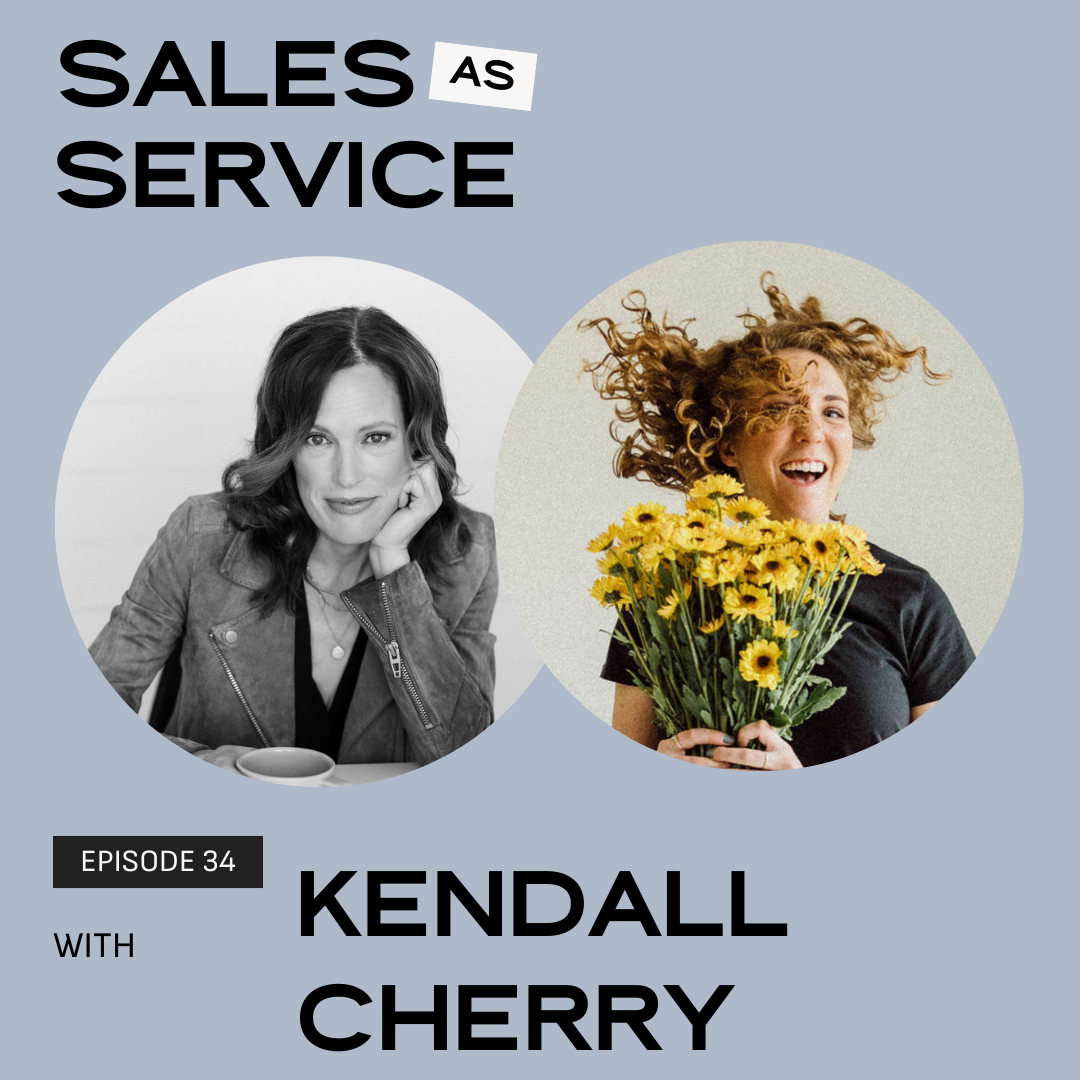
Speaker: Yeah, totally. So. I always tell people, if you wanna connect with me on LinkedIn, send, send me a connection request. It's Kendall Cherry. You'll see me with the sunflowers jumping the photo. It's, it's very me. Send me a connection request.
Tell me that you listen to this episode. I love getting to to chat with you. And then if you like my speaking style, my writing style is [00:48:00] even better, and I write a newsletter every week. Called Wallflower Fridays, where I talk about a lot of different content just like this. Lots of storytelling, but it's all about sales.
And then of course, underneath the, the nuances about self-worth, of course, but you can sign up for that@wallflowerfridays.com. Awesome. Thank you so much. I'm excited to keep the conversation going.
Speaker 2: Me too. Thanks again to my guest, Kendall Cherry. Before we wrap, I wanna leave you with this week's Sales of Service Challenge.
This week I want you to stop trying to sound convincing and start telling a clearer story. Here's what to do. Set aside 30 minutes and pull one client testimonial an email or message from your smile file where someone described what working with you actually changed for them. Not just the praise, not just the outcome alone.
I want you to look for what they were struggling with before, what felt uncertain or messy in the middle, and what shifted as a result of working with you. Then rewrite that into a short story, the human before and after. And once you have that, put it to work for you. Share it in a post. Include [00:49:00] it in your next email newsletter, or use it as the foundation for a warm outreach message.
And here's the key part. Most people skip or forget, add a simple invite, ask for the opportunity. One line is enough. Something like, if this feels familiar, here's how I help. Or if you're navigating something similar, let's talk. Selling isn't about convincing someone to want what they don't. It's about helping the right people recognize themselves in the story and guiding them to make the best decision for themselves.
As always, thanks for listening and remember, sales is an act of service. It's about what you give, not what you get, and when you serve well, the ROI. Always follows. I'll see you right back here next week on Sales of Service.
Speaker: You've just
Speaker 2: listened to the Sales of Service podcast, the podcast to help you shift your mindset around selling. If you liked what you heard, be sure to hit subscribe and share it with a friend because we're all about more sales, awesome and less sales awkward. See you next [00:50:00] episode.
MORE OF A READER? 👇🏻
Most founders don't struggle with effort. They struggle with conversion.
They're showing up. Posting consistently. Sharing ideas. Offering value. And yet—sales still feels harder than it should.
The issue usually isn't visibility. It's that facts alone don't move people to act.
Facts inform. Stories connect.
And connection is what turns interest into trust—and trust into sales.
In my conversation with Kendall Cherry, founder and executive ghostwriter at The Candid Collective, we unpacked why story-driven sales works so well—especially in today's buyer climate—and how founders can use story to attract aligned, ready-to-buy clients without sounding salesy or performative.
One of the most important distinctions Kendall made is this: resonance is not the same as conversion. A piece of content can feel meaningful, insightful, or inspiring—and still fail to move someone closer to a buying decision. When that happens, it's usually because the story stops short.
Strong sales stories don't just describe the outcome. They walk the reader through the transformation.
That means naming:
The problem before
The uncertainty or friction in the middle
The shift that happened as a result
This is why testimonials are such a powerful—and often misused—sales asset. Most businesses treat testimonials as proof points: a few kind words, five stars, and a name. But when you turn a testimonial into a story, it becomes something much more useful. It allows a potential client to see themselves in the process, not just the result.
Another theme we explored is why so many founders avoid selling altogether—even when they believe in their work. According to Kendall, this isn't a strategy problem. It's a self-worth problem.
Many founders are comfortable selling for someone else. But when it comes to selling their own ideas, skills, or gifts, hesitation creeps in.
That hesitation often shows up as:
Sharing stories without making an invitation
Posting insights without connecting them to an offer
Waiting for someone else to initiate the conversation
Story-driven sales offers a different approach. It doesn't require pushing, performing, or persuading. Instead, it invites alignment. When a story is clear and grounded in real experience, the right people recognize themselves in it—and opt in.
The goal isn't to say more. It's to say the right thing, to the right person, at the right moment.
Selling, at its best, is service. And learning to tell better stories is one of the most effective ways to serve the people you're meant to help.
✦ YOUR SALES AS SERVICE CHALLENGE
Turn one client experience into a sales story.
Set aside 30 minutes and pull one testimonial, email, or message from a client where they describe what changed after working with you.
Don’t focus on praise or outcomes alone. Look for:
What they were struggling with before
What felt uncertain or messy in the middle
What shifted as a result of working together
Rewrite that into a short story. Then put it to work:
Share it in a post
Include it in a follow-up email
Or use it as the foundation for a warm outreach message
Finish with a simple invitation:
“If this feels familiar, here’s how I help.”
Selling isn’t about convincing.
It’s about helping the right people recognize themselves in the story.
RESOURCES & LINKS
Join us for the next SAS LIVE Office Hours Event!
Simply sales with the VIP Power Hour - download the FREE guide
Learn how to consistently book 3–5 sales-qualified meetings each week - Book your free strategy call
Get on the list -Become a SAS Email Insider
SUBSCRIBE & REVIEW
If you loved this episode, please take a moment to subscribe and leave a review on Apple Podcasts! Your support helps us reach more creative agencies and service pros who need these insights. Thanks for tuning in to Sales as Service—see you next week!

TAM SMITH
I’m Tam Smith-Sales Growth Strategist and Founder of Studio Three 49. I help female agency owners and service-based founders find, connect with, and convert right-fit clients through scalable, sustainable outbound sales solutions.
No pushy pitches. No bro-marketing. Just simple, structured systems that turn connections into clients.