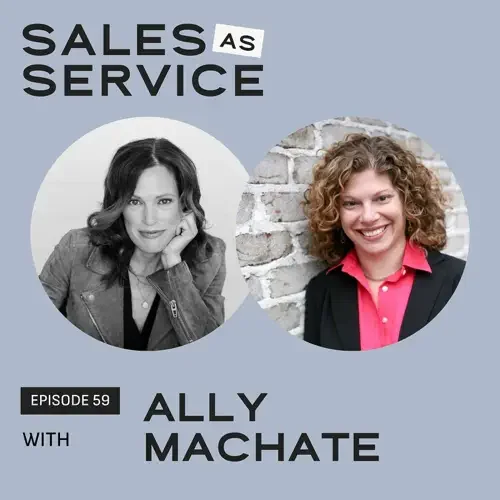
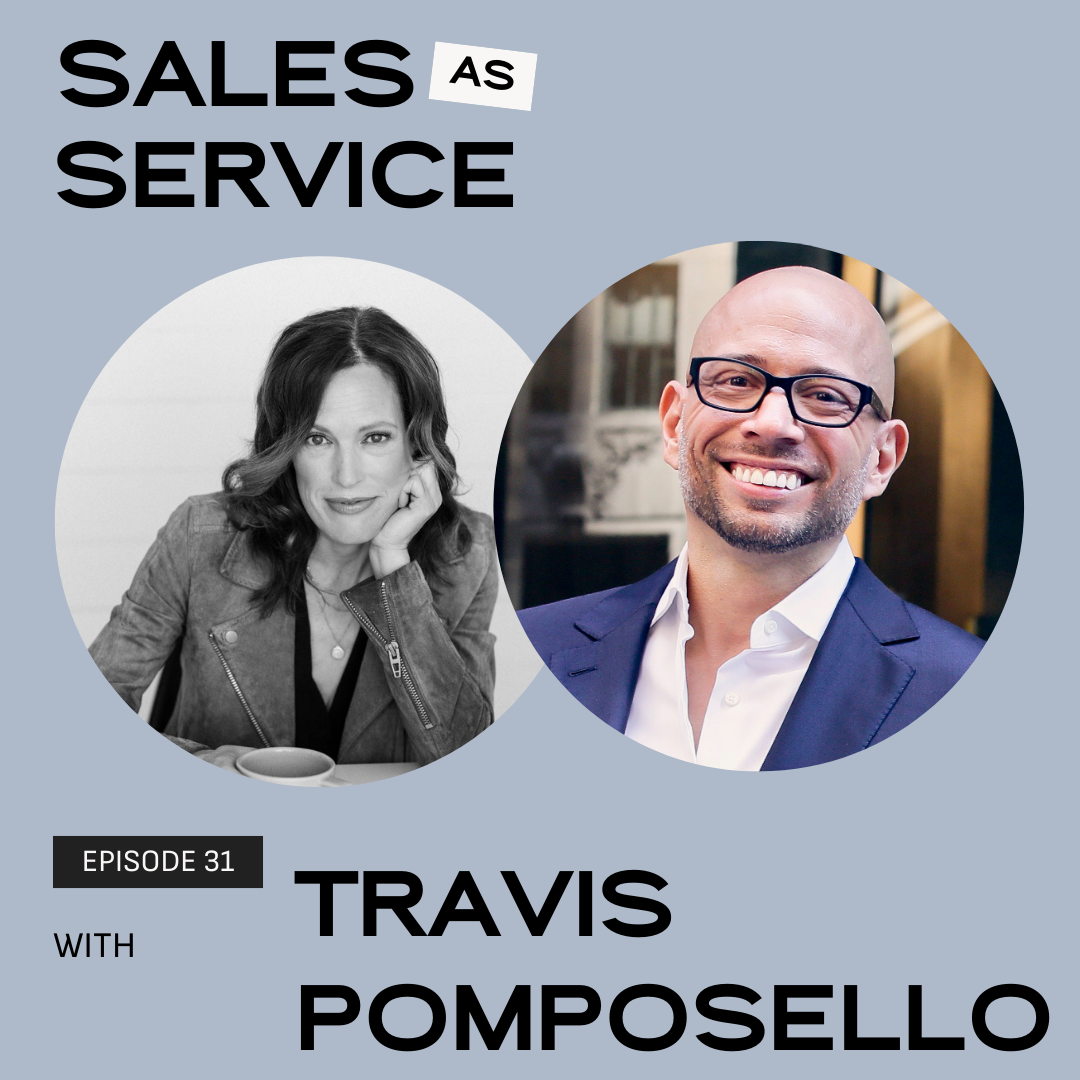
The Right Book, Not Just a Good Book: Turning Your Expertise Into a Business Asset with Ally Machate
EPISODE: 59
For a lot of founders, writing a book lives on the “someday” list. But what if a book isn’t simply a personal milestone? What if it could become a strategic tool for building authority, reaching the right people, and creating new opportunities for your business?
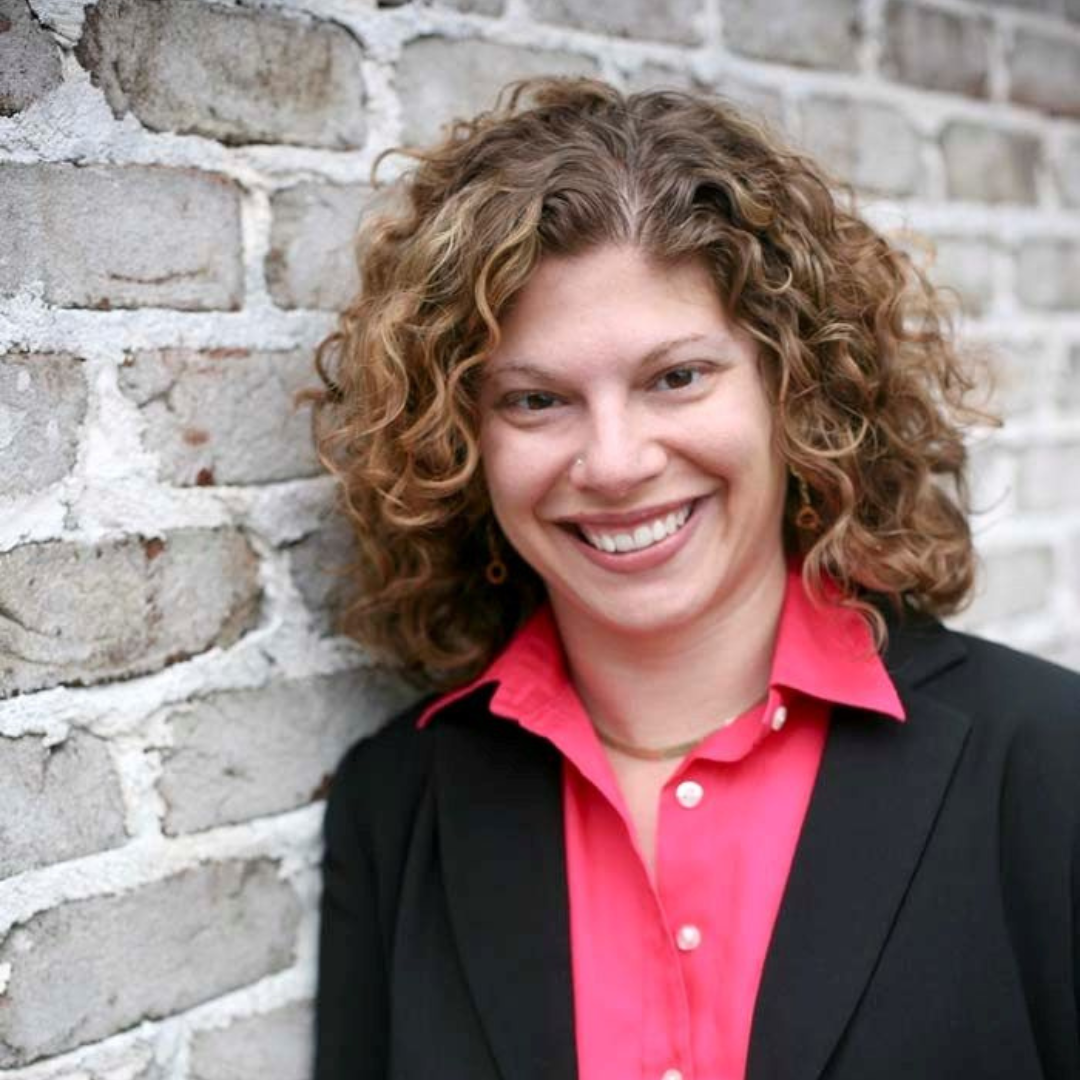
In this episode of Sales as Service, I’m joined by publishing strategist Ally Machate, founder of The Writer’s Ally. Ally has spent her career working with books, authors, and publishers, and she makes an important distinction: there’s a difference between writing a good book and writing the right book. We talk about how to work backward from your business goals to determine what your book should actually be about, why knowing your reader matters as much as knowing your subject, and how the process of writing a book can change the way you see your own expertise.
In this episode, we talk about:
Why a book can be a business-growth tool, not simply a credibility piece
The “good book, wrong book” problem—and how to avoid it
How to work backward from your business goals to find the right book idea
Why your book needs to meet readers where they are instead of simply sharing everything you know
How becoming an author can help you more fully step into your authority
LISTEN TO THE EPISODE HERE 👇🏻
-
Tam: [00:00:00] When you're solely focused on writing an objectively good book and you don't pause to think and ask the question, not is this book good, but is it the right book? Is this book strategically aligned to attract the right people, the right readers for my goal to happen? If you aren't asking those questions, you can very easily end up publishing a book that objectively is good, and then it just sits there gathering virtual dust because it's not attracting the right people.
The right book is strategically dialed in and aligned with your business and with where you want your business to go next.
Welcome to Sales as Service, the podcast designed to help you change your mind about sales, literally. I'm gonna help you change the way you think about selling. I'm Tam Smith, your host, sales bestie, and pitch partner next door.
If you're tired of bros with biceps telling you how to crush a million dollars in your sleep or battling imposter syndrome on your own, you've come to the right place. All you need to do is listen, then take action. [00:01:00] No gym membership required. Let's get started.
Hey, Tam here. Most consultants and service-based founders are great at delivery. Referrals prove it, but referrals aren't predictable. And you've avoided sales because you think you have to be something you're not. But sales isn't pressure or cringey tactics. It's connection, starting conversations, recognizing when you can actually help someone.
The hard part? Doing it consistently. That's why I built the VIP Lead Gen Pipeline System. It gives you a repeatable way to book three to five sales qualified meetings each week through relationship first outreach, not cold pitching. Ready to create opportunities on purpose? Book a
free alignment call at studio349.com.
Sales is a practice. Let's make it consistent.
For many founders, the idea of writing a book is either a someday, maybe item they'll get to once business slows down or a credibility trophy to check off the list. Neither one is quite right, and both get in the way of a book that actually does something. A book [00:02:00] can be well-written, professionally published, and sitting on a shelf looking impressive and still do absolutely nothing for your business.
But when used well, a book is a lever. It builds credibility. It builds thought leadership. And when it's written thoughtfully and strategically, it can generate leads and new business. It's definitely not for everyone, and it's not a small ask. The time investment is very real and it deserves the same scrutiny you'd give any other major business decision.
Developed with intention, though, it can end up being one of the most valuable assets in your business. My guest today has spent years inside publishing, first at Simon & Schuster and now running her own agency, The Writer's Ally, helping founders figure out the difference between a good book and the right book, the one actually built to move their business forward.
Allie Michaud is here to talk about backward engineering a book from your business goals and what actually changes in a room the moment someone learns you've written one. Let's get into it. Allie, thank you so much for being here. Welcome to Sales as Service.
[00:03:00] Thank you so much for having me.
Absolutely.
Well, tell us in your words, who do you help and how do you serve?
We help authors who are writing and publishing a book as a part of their business strategy to make sure they write the right book, which is the one that's actually going to move the needle for their business and not just look good.
You've got quite the resume as far as inside the publishing world, including, you know, work with major publishers and best-selling authors. What pulled you in specifically to this work?
Oh, goodness. Um, working with books and the written word has really been the through line of my entire life. I have always been a big fan of reading and writing.
Family legend has it that I started teaching myself to read at the age of three because I was frustrated that my parents wouldn't just sit and have story time with me all day. I wanted to read. And, uh, you know, if they weren't gonna do it for me, I was gonna do it myself. So I started trying to learn very early and, um, even, you know, as a toddler, I was making [00:04:00] books out of construction paper and crayons, and I would give them to people, and I would say that I was a book publisher.
So, uh, it's really just in my blood. It's been, uh, something I've always been very passionate about, and getting the job at Simon & Schuster was the culmination of a lifelong dream. And going out on my own and building The Writer's Ally, uh, was certainly a path I didn't expect, but it's really just a continuation of, of the things that I've loved my whole life
Love that.
I think a lot of founders listening, you think that book is sort of an aspirational someday- Mm-hmm ... you know, I may do. How can we rethink that, that it's really, you know, it can be a big part of, you know, the role it can play in your business as far as building and growing your business, and, you know, rather than it putting it off for this, you know, someday aspirational thing, how you can use it in your business?
Talk a little bit about that.
Yeah. So I mean, a book is an absolute power tool when it comes to business growth. There are lots of ways that leveraging the right book can really expand your visibility, [00:05:00] establish you as more of an authority in your space, actually be a part of a pipeline that brings people into your business ecosystem, just so many different things.
And I do wanna say that for people who, you know, don't feel like it's the right time, I am not one of those people who think everybody should write a book, and I acknowledge that it's not always the right timing for a book. You know, it is a very large investment of time, energy, and money, and there is an opportunity cost.
You know, when you're working on a book, there are lots of other things you have to say no to, so you do wanna make sure that it's the right time. But for people who are putting it off when, you know, maybe they're just intimidated or, you know, it just seems too big or overwhelming, I would say to you that the opportunity cost goes both ways, right?
So not having the book also means that if it is the right move for your business and you've been putting it off and delaying it, you are missing out on all the opportunities and benefits that that book really could be bringing you, and it's possible that you're putting a lot of that, those resources of, you know, time, energy, and money [00:06:00] into other things that would not be getting you the results as quickly or as well as a book might.
You talk about writing the right book. What is the difference between writing a book, you know, let's just say for the credit to impress people versus writing a book that actually supports the business?
Yeah, this is something I really love to talk about because a lot of people get this idea that I'm in business, I'm an expert, I have to have a book, or everyone's telling you, you have to have a book.
Mm-hmm. You know, as I just said, there are really good reasons to have a book. It can be incredibly powerful, but there's a real difference between writing a good book and writing the right book. I call it the good book, wrong book problem.
Hmm.
And what that looks like in practice is many people, they get an idea, there's something they're passionate about, there's something they think they wanna say that people need to hear, and they kind of get, you know, head down, work on the book, and they're so focused on writing a good book, this sort of phrase, it's a good book, right?
One of the most common questions I get when people [00:07:00] come to me is, "Is my book good enough?" Right? "Is it worth publishing?"
Mm-hmm.
And that's not crazy. Like, obviously we wanna write a good book. That's not a dumb thing to think.
Right.
But when you're solely focused on writing an objectively good book and you don't pause to think and ask the question, not is this book good- But is it the right book?
Is this the book that's going to get me to my goals?
Mm-hmm.
Is this book strategically aligned to attract the right people, the right readers for my goal to happen? Is this the book that's gonna create the kind of transformation or the kind of connection with readers that will encourage them to take the next step with me?
All of which is really important when that book is designed as part of a business growth strategy. If you aren't asking those questions, you can very easily end up publishing a book that objectively is good, you know, by any objective measure it's got a, a professional, nice cover, it's well-written, it's easy to read, and then it just sits there gathering virtual dust because it's not [00:08:00] attracting the right people.
It's not designed to generate the right opportunities that you were hoping for, right? So that's how you end up with a book that can be good, but isn't the right book. The right book is strategically dialed in and aligned with your business and with where you want your business to go next.
It kind of makes me think really just about a sales conversation.
One of the downfalls of, you know, just in a sales conversation is showing up and, like, you've got all of this expertise in your head and everything you think you want to say and tell someone, but then the best thing you... It- it's not what they need to hear. It's, like, the problem that that individual... a challenge or problem or goal that they're trying to so- and speaking to that versus, you know, everything, you know, that we want to talk about, our, again, expertise and product and service and all the things that we want to share.
Like, that's great, but it's what is, what is the audience in front of you really need to hear?
Yeah. And you know, I, I bet you guys talk about this a lot, too, is, you know, sales as a [00:09:00] service, right?
Yeah.
When you're thinking of sales from the perspective of, well, this... I know this... I know that I have something that this person needs.
I can see where they're trying to go, and I know how to get them there. Again, not dumb. Right, right. That's what you should be thinking. But there's a sweet spot that you gotta find in the Venn diagram between what you know they need to hear, what you want to say, all the things you want to share with them that you know are valuable, and what they're looking for, what they need, what they want to hear, what they think they're coming to the book for.
And if you can't find the sweet spot between those things, again, you end up with something that could objectively be good, but isn't going to attract the opportunities and people you need it to do.
And there's a lot of founders that struggle to articulate their expertise because I... what comes naturally to them...
I mean, I'm one of these. Like, it took me a long time to even land in the, in my business to focus on sales and business development because it's what came natural- naturally to me that [00:10:00] I felt some ease and joy and flow in, and I just dismissed it as not having value because I'm having too much fun. Like, no.
Like I've still, I've, I've p- uh, audience has probably heard me say this a lot, you know, from that, you know, our just that conditioning that success equals suffering, and it has to be hard to have value. How do you help someone identify a message or perspective that's, you know, worth building a book around that they may have overlooked or dismissed?
It's a really great question, and something I've been thinking a lot about, especially recently, because There's been this big sort of, um, kerfuffle, if you will, in the publishing industry, I'm sure that you've seen it too, as, you know, just somebody in sales and copy, around Tim Ferriss' blog post about a couple of weeks ago, published a blog post basically asking the question, has AI killed the nonfiction book?
Other people are calling it the death of the expert or the how-to apocalypse, you know? So everyone's- Mm-hmm ... having this conversation. So it is really important to [00:11:00] think about what exactly should your book be about? And I like to take people through a little bit of a backwards engineering kind of thought process, right?
So when you're writing a book where the end goal is to achieve some kind of business growth goal, some kind of purpose or result beyond simply selling books, you wanna work backwards. What exactly is that goal? What is the thing that you're trying to achieve? You wanna be clear about that. It almost doesn't even matter what you think you wanna write about, right?
If you're not clear about that part, then your choice of what to write about, your topic, is really ill-informed. So you wanna start from the end game. What do you want this book to do out in the world beyond selling books? Backwards from that is, who are the people you need to reach in order to make that goal happen?
And then working backwards from that is, like we talked about, what are those people looking for? What is the promise that I need to make that's gonna be compelling enough to attract those people and provide what those people are looking for? When you start thinking about it that way, it starts to help you [00:12:00] organize all the different ideas you might already have in your mind, and start to see which ones are perfectly good, interesting ideas, but the wrong ideas.
The right ideas are gonna be the ones that excite you and also fit into that rubric.
Well, you were talking about some, like, the tangible benefits of the book, but there's some intangible too.
Sure.
What is the, kind of the impact been on, you know, the way founders and business owners, you know, that have gone through this process see themselves and their business?
When we work with clients, we like to say that the book not only provides transformation for the reader but also for the author. I really think that's true, and it's a little bit different for everybody, but just sort of speaking broadly, when people are able to take their experience and their expertise and put it together into a really solid, transformative book, something that's really gonna connect with people, they get to the other end of that process, and sometimes they're shocked at how much they knew.
You know? Mm-hmm. Like, "I didn't know I [00:13:00] knew enough to fill a whole book." And then they realize, "Oh my gosh, not only did I have enough for a book, I got enough for three books," right? Yeah. It was harder to figure out what not to put in the book. They feel more confident. You know, they're able to see their brilliance in literal black and white, you know, laid out on the page- In a very organized, compelling, entertaining perhaps, engaging way, being able to see that outside of yourself reminds you just how deep your own expertise is, and you start to really step into that identity that we want you to have, which is not just as an author but as an authority, right?
Author is the root word of authority for a reason, and I think that writing, the process of writing that kind of book and publishing that kind of book, and especially seeing that book actually land with people, is what makes that transformation possible within you. It com- combats the imposter syndrome that you may have had at the start.
Why should I write a book? Why would anybody [00:14:00] care what I have to say? You know? I, there's a million bestsellers that have already said it so much better than me. Why would I write a book, right? And you get to the end, and you have this thing that people are loving and benefiting from and learning from, and the more your books transform other people, the more it continues to transform you, and that your inner sense of self starts to better match the sense of your expertise that other people have when they see you.
Do you recall, like, a specific, like, success story or ex- project, client that you can share? I know there's so many, but
Well, I'll tell you one in particular. Yeah. Um, so we have this client, Gwen, not too long ago, maybe a couple of years ago. Her book came out, I think, a- about one year ago, and when she came to us, she had a business.
She knew roughly what she wanted to write about. She knew how a book was gonna fit in, but she didn't know exactly what the book was gonna be, and so we helped her nail down the concept for the book. We helped her to nail [00:15:00] down, you know, exactly what was going to be in the book. Once she had a draft, we took her through our developmental editing process.
We, you know, designed it, published it, marketed it, did the whole thing, and I remember her a couple of weeks after the book published, we checked in. "How are things going? You know, what are you seeing?" And she told me how she had had a handful of meetings with potential clients. Um, a few of them had been literally in person around a table.
Some of them had been Zoom calls with a bunch of, of folks, and she said that every meeting that she was in, when it came to the part where she was able to bring up her book, and she would bring it up sort of organically in the conversation, "Oh, well, I talk about this in chapter two," you know? Every time she mentioned her book, she said she could see a real change, that she could actually see everyone's faces change.
When she was in those in-person meetings, she said everybody kind of leaned in a little bit more, and it was very obvious to her in that kind of intangible but very clear way how the tone of the meeting changed, and the [00:16:00] way that they were seeing her and receiving what she had to say changed the moment they knew she had written a book on this subject.
They hadn't even read the book, mind you. Just knowing she had written this book immediately changed the level of expertise she was perceived as having, the amount of seriousness with which they were taking her. That sort of feedback loop of them treating her that way and her being able to rise to that occasion and see herself through their eyes over and over and over, she's gone on to do incredible things and be visible in ways that she really was a little nervous and hesitant about being visible before.
Now she's just, you know, stepping out and being a leader in all ways.
I can relate to that. Like, I'm the, I'm the one that needs the, like, regardless of... You know, I, I need the document. I need the proof.
Well, if, if someone listening knows they have expertise worth sharing, but keeps, like, waiting until they feel ready-
Mm ...
what would you want them to hear?
I would want [00:17:00] you to hear that you really need to analyze that feeling, right? This is, this is a moment of a, a come to Jesus moment, if you will. What is keeping you, right?
If you don't feel ready, what exactly is that about? Is there, is there a logical, strategic reason, like some of what we talked about earlier? Is there a reason why it's not the right timing? Maybe you don't have the budget for it, maybe you're focused on other growth opportunities, it's just, you know, not something that's right for you right now.
Or is it really fear? What exactly is causing the hesitation? And if it's a, a real logistical issue, that you just can't devote the time and energy to it right now, that's fine. Revisit it periodically. But I think most people know inherently if it's really just about fear or something rational, right?
Mm-hmm.
So if you know that it's fear, what I would say to you is, a book can bring amazing benefits to you as a person, to your business, to your bottom line, to your clients. Um, you know, one of the reasons I got into this business [00:18:00] is because I really believe that books change lives, and it's an incredible privilege to be able to help people to then create something that goes out into the world and helps thousands, if not millions, of other people.
Creates an amazing ripple effect. And you wanna be part of that, and you should be part of that. So don't let your fears hold you back. Every successful author, the biggest, most successful bestselling author you could ever think of, was once exactly where you are right now.
That's encouraging. What's the one small next step someone could take?
Well, if you're just thinking about writing a book, I would encourage you to go to the bookshelf, right? Uh, if you live near an actual bookstore, you know, please, uh, they'd love to see you, I'm sure. Go in and actually look at the shelves. If you're browsing around on Amazon, that counts, too. Just start to get a sense of what other books are there already out there kind of on your topic or in your general category.
It's a really good idea to get a sense [00:19:00] of the marketplace. I always like to compare it to a cocktail party. When you show up to a cocktail party, conversations are already in progress. You don't walk up to a group of people and just start talking in their faces, right? Like, you, you walk in, and you get a sense of like, "What are we talking about?
What's the conversation? Oh, okay, now I can join in." And publishing a book is very much the same way. There is a conversation already happening in your space because there are already books being published in your space. The people you're trying to reach with your book are already reading other books.
You want to get a sense of what that conversation is before you dive in with your own two cents. So that can be a really great place to start for inspiration. You start to notice patterns. What are people gonna expect me to have in my book? What are things other people have covered that I take a different stance on or have a disagreement with?
So it can really start to get your creativity going, and it really gives you some very important practical information and context for what your book might become.
And when have you coached [00:20:00] someone that it's not the right time?
Oh, gosh, uh, it happens more often than you think, honestly. People think I'm crazy.
I actually believe in talking people out of writing a book because it is such a huge investment of time and energy and money, and if it's not right for you, I don't want you to do it. One example, I talked to a woman not too long ago. She was a very experienced CEO. She was an executive. She'd been in the C-suite for many, many years in large corporations.
She had a ton of experience, and she had recently decided to leave the corporate world and be an executive coach, so she was starting her coaching business, and as many people do, she heard that, "Oh, I should have a book." So she came to talk to me about what that, my book might be, and the more we talked, the more it became clear that as much as she had tons and tons of experience, she didn't actually have any experience yet as a coach.
And so she didn't have any client stories. She didn't have any frameworks for her own philosophy, translating all of that rich experience into practical solutions for her coaching [00:21:00] clients. She hadn't done that work yet. So the kind of book that she needed to write- She really didn't have the material yet to make that kind of book really meaty and, and really worthwhile.
And perhaps more importantly, she didn't have an income stream yet. So in her case, we really talked it through and realized the more important thing for her in that moment was not to have a book, but was to start actually growing her business and getting some clients. We ended up talking about the particular set of content she was thinking about using, and turning it into a workshop or an online course that she could then use to kill a few birds with that stone, not only to start building a client base and getting people into her ecosystem, making a little bit of money, getting some income flow, but also giving her the sandbox that she needed to start, you know, really testing out her ideas and theories and practices, all of which, even a year from now, will make that book a much stronger commercially viable product.
Yeah, so it's not really necessarily no, it's just not right now.
That's right. Sometimes. Yeah.
[00:22:00] Absolutely. Well, let's jump into our fast five. What is the best advice you've ever received about sales and business development?
Ugh. The best advice I've ever received still lives on a sticky note right here on my monitor, and it says, "You can do anything, but not everything."
So good. What's something people are always surprised to learn about you?
I am a super deep nerd. My husband and I, uh, we haven't done it as much in recent years, but we spent many years, uh, going to science fiction and fantasy conventions and cosplaying, so I have many, uh, interesting costumes, and- Mm-hmm
have spent many hours of my life playing board games and, you know, just generally sort of geeking out.
What's your stance on AI in your industry, and, like, what is one task you kind of ha- Are you using it, and what is one task you've happily turned over to AI?
I do use AI. Um, like many people, I dropped ChatGPT and switched to Claude when the whole DoD sort of scandal [00:23:00] unfolded.
Um, and I'm very happy with the switch. It's an incredible tool. I do use it in my business. I don't use it for anything regarding the clients, um, but what I do use it for is sort of back-end stuff. So I use it to help me with planning, uh, with structuring, creating templates, creating SOPs, sometimes creating drafts.
One of my favorite things to do, um, is when I do calls, when I have my sales call days or when I have my networking days, I'll just sort of be back-to-back calls. So all of my notes kind of get dumped into this text file. And now I just give it to Claude, and of course, it's got some context and some preexisting instructions, but it cleans my notes up into something actually legible that other people could read and benefit from.
Nice.
And it's much faster and easier for me to then copy and put that into the, the system where it needs to be.
Nice. What's your go-to way to recharge after a busy week?
I'm incredibly fortunate. Um, we live in a little cottage on a river, and so I love [00:24:00] to just go outside with a drink and just look at the water.
Yeah. Just enjoy being outside.
Nice. And if you only had one hour each day for business growth, how would you spend it?
I would spend it connecting with people. I would spend it networking. I would spend it looking for partners to do cross-promotions and referrals and just generally broadening my network of people.
It's all about relationship.
Absolutely.
Where can folks find and connect with you online?
Well, they can come to thewritersally.com. That's our website. We have a nice library full of free resources they can check out. Of course, if they have a book or a book idea that they're ready to move forward on, there's a form they can fill out to get a free 15-minute call, and we can chat about it.
And I also love to connect with people on LinkedIn, so they can find me there.
Thank you so much, Ally, for being here. I love her point about backward engineering, starting from the goal, not from the idea you're most excited to talk about. That's the same discipline that shows up in any sales conversation.
It's not about what you want to say, it's about [00:25:00] what the person in front of you actually needs to hear to solve their problem or reach their goal. So here's your sales and service challenge for this week, and you don't need to be writing a book for this to apply. Pick one piece of content you're working on right now.
That could be a proposal, a lead magnet, a talk, whatever it is, and run it through Ally's process. Write down the actual business goal and then get really specific about the audience it's meant to serve. And once you've got that down, ask yourself, "Is what I've created actually fulfilling the promise that person is looking for, or is it just the thing I wanted to say?"
And if there's a gap, that's useful info. Close it before you put more time into it. All right. That's it for me this week. As always, thank you so much for listening, and remember, sales is an act of service. It's about what you give, not what you get, and when you serve well, the ROI always follows. See you next week.
You've just listened to the Sales as Service podcast,
the podcast to help you shift your mindset around selling. The executive producers for the show are Jess Milanes and me, Tam Smith. The show is [00:26:00] produced by KNWN Media and Studio 349.
MORE OF A READER? 👇🏻
For many founders and experts, writing a book sits somewhere between a business goal and a bucket-list item.
Someday, when there’s more time. Someday, when the business is bigger. Someday, when you finally feel like you have enough to say.
But a book can be much more than a personal accomplishment. When it’s approached strategically, it can help build authority, increase visibility, attract potential clients, open doors to speaking and partnerships, and give people a deeper way to understand how you think.
The important word there is strategically.
Publishing strategist Ally Machate describes a problem she sees frequently as the “good book, wrong book” problem.
A founder has an idea they’re passionate about. They put significant time, money, and energy into creating a professional book. The writing is strong. The cover looks great. The information is useful.
By every reasonable measure, it’s a good book.
But then…not much happens.
The problem isn’t necessarily the quality. The book simply wasn’t designed around what the business needed it to accomplish.
Ally recommends working backward rather than starting with, “What do I want to write about?”
Instead, ask:
What do I want this book to do?
Maybe you want to become more visible in your industry. Perhaps you want to generate speaking opportunities, reach a different type of client, introduce a framework, or create a natural entry point into your services.
Once you understand the destination, the next question becomes: Who needs to read the book for that goal to happen?
And then: What does that person need from me?
That sequence changes the conversation.
Instead of trying to squeeze everything you know into 250 pages, you begin identifying the intersection between your expertise, what your audience is actively looking for, and the business outcome you want the book to support.
It’s remarkably similar to a good sales conversation.
Selling as a service isn’t about walking into a conversation determined to tell someone everything you know. You listen first. You understand what the person in front of you is trying to solve or accomplish, and then you bring forward the information that can actually help.
Your book should do the same thing.
There’s another interesting benefit to writing a book that has nothing to do with sales numbers.
It can change the way you see yourself.
Founders often discount the knowledge that comes most naturally to them. When you’ve solved a particular problem hundreds of times, the solution can feel obvious to you.
It isn’t obvious to everyone else.
Ally sees authors go through the process of organizing years of experience and suddenly realize how much they actually know. Instead of wondering whether they have enough material for one book, they discover they could probably write three.
There’s something powerful about seeing your expertise organized in black and white.
You aren’t simply becoming an author. You begin stepping more confidently into your authority.
One of my favorite parts of this conversation was Ally’s willingness to tell prospective authors not yet.
Writing and publishing a book requires real time, energy, and money. Sometimes the smarter business move is to get more clients, test your ideas, refine your framework, or build a reliable revenue stream first.
That doesn’t mean the book is a bad idea.
It means timing matters.
And if the only thing holding you back is fear? That deserves a different conversation.
The goal isn’t to write a book because someone told you every expert needs one.
It’s to understand what you want the book to accomplish, who you want it to reach, and whether it’s the right tool for this particular season of your business.
Because the goal isn’t simply to write a good book.
It’s to write the right one.
✦ YOUR SALES AS SERVICE CHALLENGE
Pick one piece of content you’re working on—a proposal, pitch, lead magnet, or presentation—and run it through Ally’s process.
Define the business goal and get specific about who it’s meant to serve. Then ask: Does what I’ve created actually deliver what that person needs, or is it simply what I wanted to say?
If there’s a gap, close it before you invest more time.
RESOURCES & LINKS
Learn more about The Writer’s Ally
Watch the free webinar Don’t Write the Wrong Book
Follow The Writer’s Ally on YouTube
Your next client - Calculate what it takes.
Learn how to consistently book 3–5 sales-qualified meetings each week - Book an Alignment Call.
READY TO STOP WAITING ON REFERRALS?
If this episode sounds like where you're at right now, let's talk. Book a free Alignment Call and we'll map out what's actually stalling your pipeline. Book an Alignment Call →
And if you loved this episode, subscribe and leave a review on Apple Podcasts — it helps more service pros find the show.

TAM SMITH
I’m Tam Smith-Sales Growth Strategist and Founder of Studio Three 49. I help service-based founders find, connect with, and convert right-fit clients through predictable, sustainable outbound sales solutions.
No pushy pitches. No bro-marketing. Just simple, structured systems that turn connections into clients.