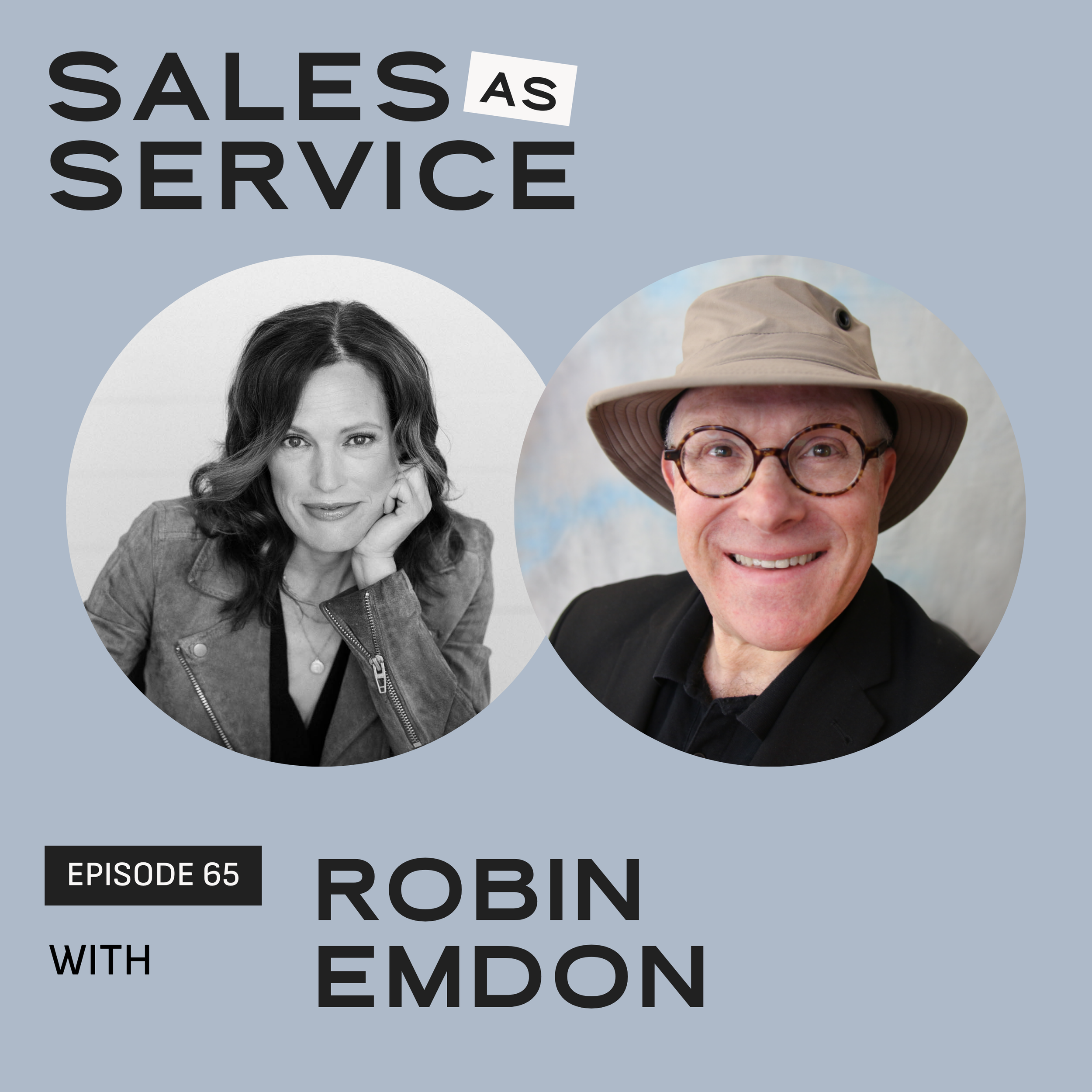
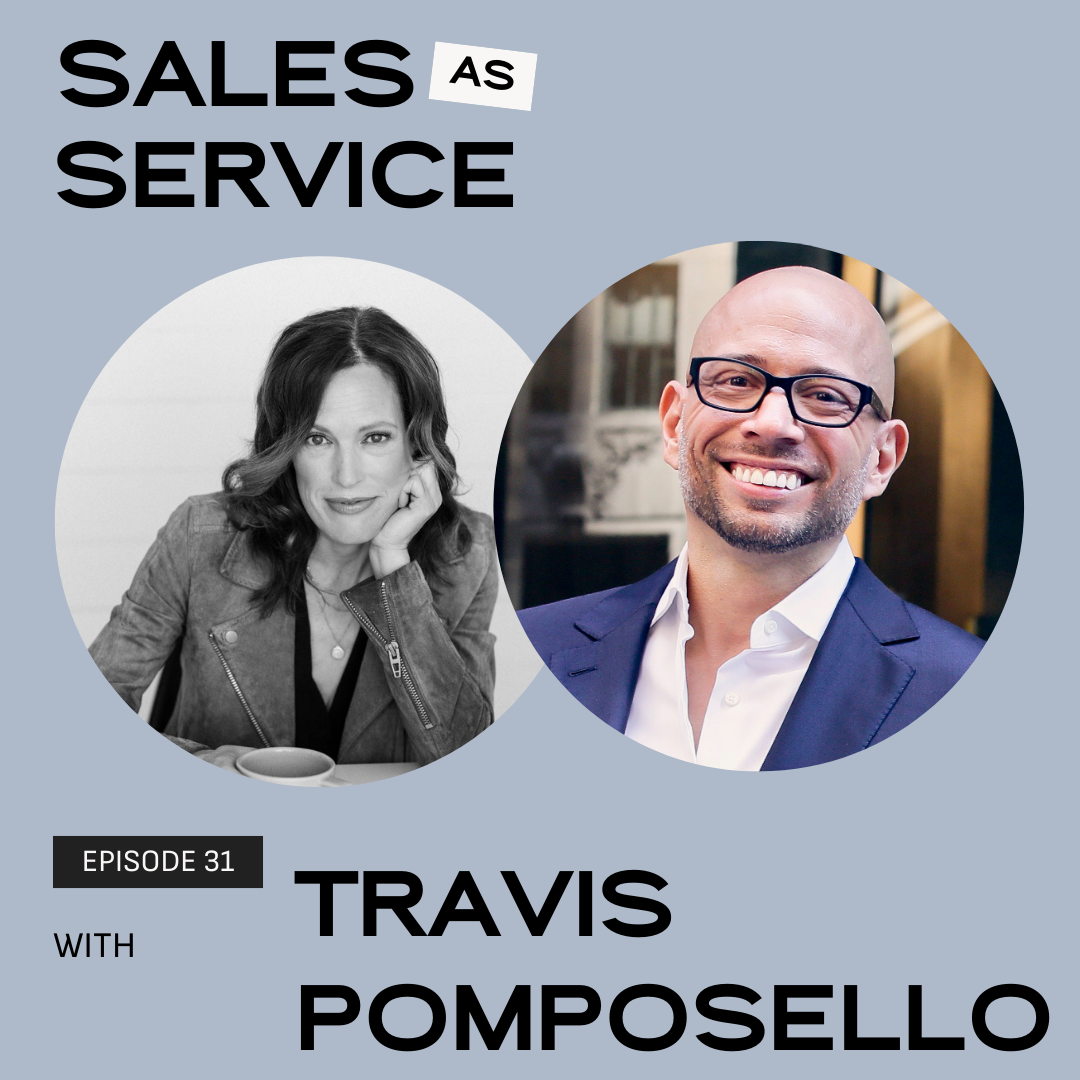
Small, Imperfect Action: How to Stop Procrastinating on Sales with Robin J. Emdon
EPISODE: 65
When it comes to sales and business development, most of us know what we should be doing. Reach out. Follow up. Ask for the referral. Start the conversation. But knowing what to do and actually doing it are two very different things.
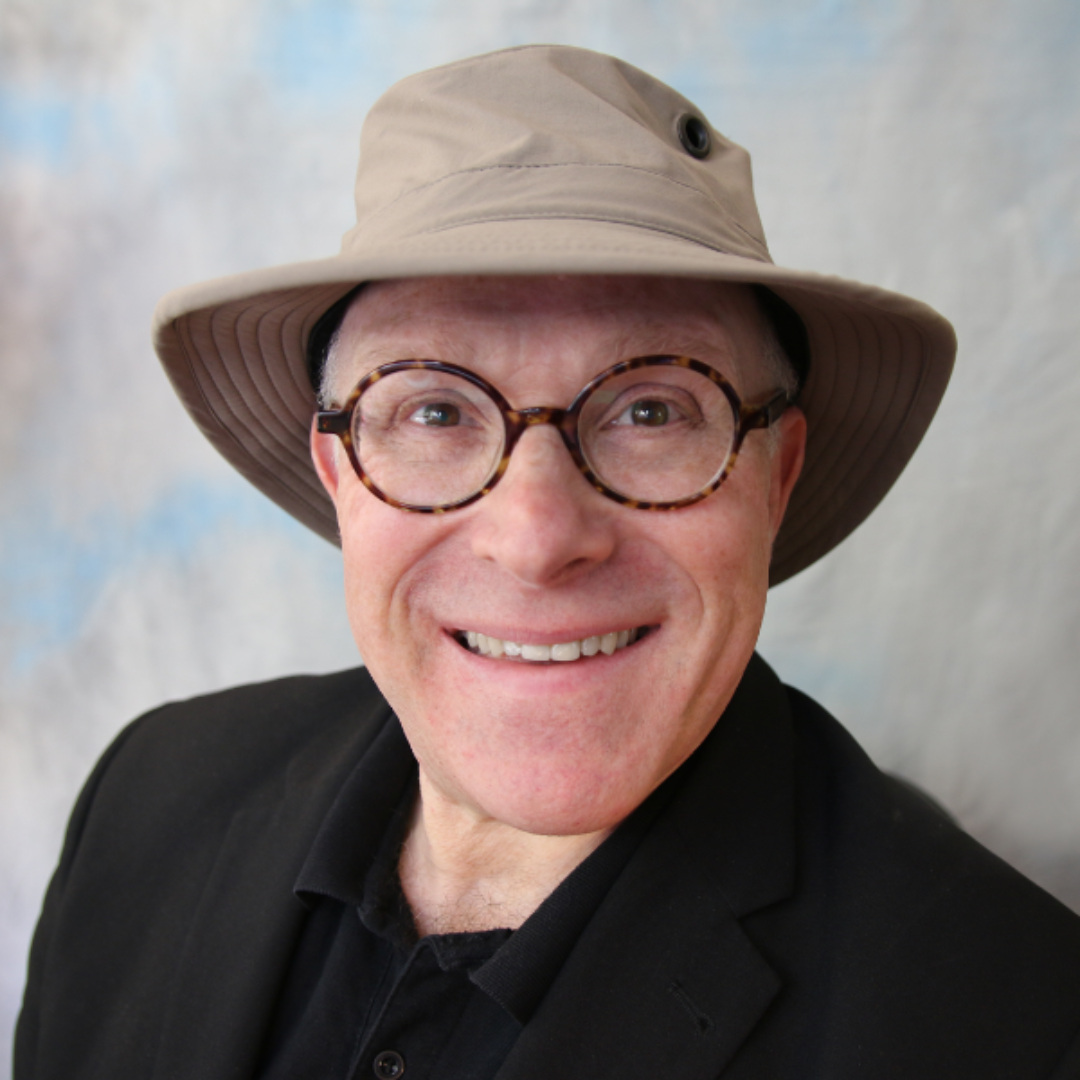
In this episode, I'm talking with Robin J. Emdon, creator of GetResultsology®, about why capable, motivated business owners still procrastinate on the work that matters. We look at procrastination through the lens of sales, including why we'll suddenly decide the website needs our immediate attention when there are outreach calls to make. Robin shares how accountability can help close the gap between knowing and doing, why big goals can sometimes create more resistance, and how taking small, imperfect action can help us build momentum instead.
In this episode, we get into:
Why procrastination isn't always a discipline or motivation problem
What makes sales outreach particularly easy to avoid
Why accountability works differently than simply knowing what you should do
How Robin's "island hopping" approach makes big projects easier to start
Why small, imperfect action can be more effective than waiting until you have the whole plan figured out
LISTEN TO THE EPISODE HERE 👇🏻
-
Robin Emdon: [00:00:00] Will I actually do this isn't really an information question, it's a doing question. And human beings respond powerfully to social commitment. We are social creatures. Another person becomes the recipient of the promise and the witness to whether you followed through. That's it in a nutshell. So if I promise you, "I'll get this done by next Friday," I'm gonna be, feel a lot more obligated and a lot more compelled because I like you and I respect you and I don't want to let you down.
Tam: [00:00:36] Welcome to Sales as Service, the podcast designed to help you change your mind about sales literally. I'm gonna help you change the way you think about selling. I'm Tam Smith, your host, sales bestie, and pitch partner next door. If you're tired of bros with biceps telling you how to crush a million dollars in your sleep or battling imposter syndrome on your own, you've come to the right place.
All you need to do is listen, then take action. No gym membership required. Let's get started Welcome back to another episode of Sales as Service When it comes to sales and business development, I think we all know what to do, we're just not doing it. And it's not like we're sitting around doing nothing.
We're working, answering emails, tweaking something on the website, reworking a document that was probably fine the first time. We can all be incredibly productive while avoiding the things, those revenue-generating things, we absolutely know we need to be doing. Because reaching out to someone, following up, making the ask, or putting a new idea out into the world comes with uncertainty.
We don't know what the response will be. So suddenly, that other task feels very important. It's tempting to call that a discipline problem, but my guest today would tell you it's something older than discipline. Robin J. Emdon spent years as a trained life coach before he had his own reckoning with this.
In 2019, sitting in a coffee shop and bragging to his older brother about finishing a degree, he admitted out loud that a six-year program had taken him 10. And that admission sent him into years of research on why very capable, motivated people still don't do the thing. And what he found wasn't about willpower at all.
It was about survival instinct and what happens when the work we know we need to do also triggers fear, uncertainty, or discomfort. Robin is the creator of Get Resultsology. And today, we're getting into the science behind procrastination, why accountability works when information alone doesn't, and how to build momentum around the work you keep pushing to next week.
Here's my conversation with Robin Emdon. Robin, thank you so much for being here. Welcome to Sales as Service.
Robin Emdon: [00:02:41] Thank you so much for inviting me. I'm really excited to be here.
Tam: [00:02:45] Well, tell us, who do you help and how do you serve?
Robin Emdon: [00:02:48] Okay. So I work with solopreneurs, freelancers, creators, founders, people that have important work that's stalled, but in a not ne- but in maybe in a nearly there state, or maybe they'd like it to be in a nearly there state.
And I provide structure and accountability to somebody to, so that they can own the forward motion. I own the forward motion with them until the work reaches a clear finish line.
Tam: [00:03:14] So what surprised you most, or let's say changed your mind, once you actually got into the research around procrastination?
Robin Emdon: [00:03:22] Well, it was what got me into the research about procrastination. It was, uh, it was 2019. I was sat in a coffee shop bragging to my older brother, "I got my degree, I got my degree. Aren't I clever? Aren't I clever?" And he's like, "Ooh, is that the time? I think I'll have to go." We'd only been there two minutes.
So I thought, "Oh, well, you can't impress older brothers." So I thought, "Oh, I've got to tell him something." And I thought, "Oh, I know." And I said to him, mind you, I said, "I got my degree, but trust me, it took me 10 years to do something I should have done in six." And he went, "Yeah. Why was that?" And I thought, "Oh, yeah, the caffeine's kicking in now, isn't it?"
So I said, "Oh, you know, procrastination." And I laughed, and he laughed, and we changed the subject. And then when I was driving home, I was thinking, "Wait a minute." I trained in 2001 in the States under Tony Robbins' tutelage in California to be a life coach, and I did that for a few years. I thought, "Robin, you can't procrastinate.
How dare you? That's outrageous. What are you talking about?" And I realized that I'd always treated procrastination much like before COVID we used to treat the common cold. And the common cold, you know, "I've got a cold," sniff, sniff, sniff, sniff. "Oh, don't worry about me. I'll be fine. I'll spread it around the office.
You'll all get it, but in two or three weeks we'll all be fine. It'll be fine. Don't worry about it." "Oh, I'm procrastinating today. Oh, don't worry, I'll do it tomorrow." When I was driving home, I was thinking, "Well, that's outrageous." You know, I've done that for years. W- And then I thought good, good coaching questions were like, "What does it cost me?"
And I thought, "Uh, a lot." Relationships, career, finances, health. I was 60 pounds heavier then than I am now because my go-to procrastination I now realize was comfort eating. So, and I just did it because I didn't consciously think about it. And then we had the gift that kept on giving, which was COVID. And, uh, and I don't mean that in a...
I mean that in an ironic sense. I meant all the lockdowns. COVID was horrible, of course. And, uh, and I had time to look into it, so I thought, "Oh, you know, did I mention I've got a degree?" So I thought, "I know how to study research." So I thought, "I'll go and look at the research." And I thought, "Oh, yeah, you know, what's the cure for procrastination?"
And I, and even though I'd trawled in the depths of my mind, and I'd asked my brother, who was also a mental health professional, neither of us could quite put our finger on it. You know? Yeah, yeah, it- it's on the tip of our tongue. It... The cure for procrastination is, ah, damn it, can't quite figure it out. So I thought, "Well, there's tons of research on it."
And boy, was there tons of research on it. I found that in just one 10-year period between 2000 and 2010 Over 900 research papers have been conducted into procr- into procrastination and productivity. So I thought, "Wow, I don't need to reinvent the wheel. I just need to find out what their commonalities are."
I'm a humanities guy. I'm not a science guy. I got 90% in my last biology exam at school, and that's 'cause I spelled my name right, and I'm not even kidding. So I thought, "Okay, but I can take that information, synthesize it, and turn it into something practical." And what I discovered, answering, going full circle back to your question, was, "Oh, so we're hardwired to procrastinate.
Oh, I didn't realize that. I thought it was a learned behavior." No, no, no, no, no. It's a n- it's a survival instinct. It's very, very basic. It's primal, and it st- If you think back to the times... I mean, you know, I'm getting on in years, and you're not very old at all, but, you know, if you can think back to the time when we all lived in caves, yeah, maybe I am going back a few thousand years now.
You'd be in a cave, and there'd be a man-eating bear outside the cave, and you're lunch, and you're there with your loved one and your children, and you're thinking, "Yeah, I don't wanna be lunch. But if I don't go out and fight the bear, I could end up starving to death, and my loved ones would starve to death.
Equally, if I do go out and s- and fight the bear, I might be just lunch. I know. I'll think about it tomorrow." Procrastination. It's fear, isn't it? It's procrastinating. So we're hardwired. That, for me, was the epiphany that I'd not really picked up on before. I'd not really thought about it.
Tam: [00:07:18] I hadn't thought about it that way either. At the e- it's, it's just the underlying, it's just fear, all fear based.
Robin Emdon: [00:07:24] Yes. Exactly that. Exactly that.
Tam: [00:07:27] How does having another person in the loop kinda change the outcome and get you out of that?
Robin Emdon: [00:07:35] Will I actually do this isn't really an information question. It's a doing question, and human beings respond powerfully to social commitment.
We are social creatures. Another person becomes the recipient of the promise and the witness to whether you followed through. That's it in a nutshell. So if I promise you, "I'll get this done by next Friday," I'm gonna be... feel a lot more obligated and a lot more compelled because I like you and I respect you and I don't want to let you down.
And so I will do that, and I will follow through on that as opposed to... See, when you're on your own, I mean, w- people that work for themselves, solopreneurs like, like you and me, I, I, certainly like me, you know, I get up in the morning and I look in the mirror, and it's the boss looking back. "Tamara, he's a lunatic, but he's my lunatic."
But he doesn't hold me accountable, not really. If there's a client waiting for me to do something, absolutely, that gets done because there is an accountability, a professional accountability towards your client, but that's still another person. If there are deadlines that have to be met, w- if they're not too long into the future, 'cause they tend to be a bit wooly and ethereal, and that's, that's where procrastination really resides.
But if they're really, really close, that might get done. You know, like if I don't pay such and such a bill by the end of the day, you know, I won't have any electricity if I don't pay the electric bill, for example, right? That gets done. But the things that maybe are the next big thing in our business, the seminar, the book, the project, the, the, the, the new technology that we wanna roll out that all our clients will benefit from, if it's all just in your mind and there's nobody there making you do it, it keeps getting kicked onto the, into the back burner.
That's the problem. So that's when you, if you bring another person into the loop, when you... and if you think about it in the traditional workplace where procrastination is also a big problem, but it's less of a problem, particularly if you're lower down in the feeding chain. If you're, if you're a lowly, at a fairly low level, you're not higher management.
Even higher management, there's people above them as well. But quite a long way down, it's like if you don't hit your targets, if you don't do your job in the time you've been given- It's the high road for you, isn't it? It's the highway
Tam: [00:09:54] For sure. Wanted to go back around kind of the underlying mindset underneath procrastination.
I- is it, is it always fear? Did the research surface anything? Is it always kind of just that, that fear-based resistance, or is there something else underneath it w- as well?
Robin Emdon: [00:10:10] So if you think about it in, I, as I, I think I said, I'm not a scientist. I'm an arts and humanities guy. Yeah I s- so I looked at the science.
Now, I have schoolboy level of science. I can retain that information for about 10 minutes, which is usually long enough for me to translate it into English. And what I discovered was was that in your brain, there are two centers that we're interested in. There's the limbic system, which is where all this primal fear behavior exists, and there's the prefrontal cortex, the, the evolutionary speaking, the youngest part of the brain here.
Curiously, if you're under 25, that's not fully developed yet, which explains why students are the biggest group of procrastinators in the world by far, right? It's nature, right? It isn't just 'cause they've been released from all the shackles of being at home all the time and having to answer to the parents.
That plays a part, but it's also because they don't fully have control of their rational faculties yet. They might like to think they do, but they, they don't entirely. I looked at that and I thought, "Well, okay, limbic system, prefrontal cortex. H- what's that in plain English?" Now, this is not my terminology.
This is someone else's terminology. It's about reward modality and threat modality When you're in threat modality, the limbic system is in charge, and it's instant. You know, uh, the bear, right? We don't have bears anymore that are necessarily a daily threat to our lives, but we have utility bills we can't pay, we have landlords we can't pay, we have illnesses that we can't cure, loved ones that are sick, ourselves when we're sick.
F- all of the, all of these things rise up to the surface and give us fearful feelings every day of our lives, which triggers threat modality. And when we're in threat modality, it's all about fight, flight, or freeze. And then we can't work. You can try to work through those things, and many of us do, but the le- but the quality of our work suffers, doesn't it?
So what you really want is you wanna get into reward modality, which is the front of, front- prefrontal cortex, where your rational thinking takes place. And when your rational thinking is in charge, that's when you can really make progress on things. I call it like the Madonna song Get Into the Groove. In fa- I can't play that 'cause it's copyright, but I always have that humming through my mind, getting into the groove.
I'm definitely not gonna try and sing it for your listeners. They would sue me for bad taste. So I won't do that. But it is about, if you think about it, the groove on a, on a vinyl record, getting the needle into the groove, and not having that needle stuck out. So then I thought about, so what do I need to keep the needle in the groove?
And the science says you need three things. Are you ready for this? You need dopamine, which is a famous and, and popular, uh, neurotransmitter. You also need acetylcholine and noradrenaline. Now, I know I just said those things off the tip of my tongue, but that's because I spent a year and a half learning to say them out loud, because I couldn't remember them.
I still struggle with those things. And I don't care about the scientific names. People in medicine and neuroscience do, and I respect that, but that's not what I'm about. So I translated those into images, avatars if you like. What do they do?
Tam: [00:13:10] Mm-hmm.
Robin Emdon: [00:13:10] And n- and that's when I came up with the, uh, productivity trifecta, the three things that you need to get yourself out of threat modality and into full reward modality when you are in the groove and you're most productive.
Do you wanna know what those three are?
Tam: [00:13:25] Absolutely.
Robin Emdon: [00:13:26] Okay. I thought I'd just check in case you was falling asleep. So, and that's, that's, that's a comment on me, not a comment on you. So I don't wanna bore you. So the first thing is you need dopamine. I call that the conductor, and the conductor, like the conductor of an orchestra.
Or the captain of a ship is another one. But I like the conductor of an orchestra, 'cause I think about, if you think about all the disparate i- instruments in an orchestra, they make an absolute cacophony of sound until the conductor comes in, gives them all this music, these are the parts you have to play, instructs them, strategizes with them, brings them together to make the music of your life.
You know, Wayne Dyer says, "Don't die with the music still in you." We have to know how to make the music. So I like the conductor. They, he or she is in charge. But the conductor alone can't work unless the other two are there, and that's acetylcholine and noradrenaline. Noradrenaline is what I call your fun-sized warrior.
A bit like fun-sized chocolate bars that you put in your children's lunch boxes. Not the big warrior. He or she comes out when you're in fight, flight, or freeze mode, and, and they are literally... That's the one that's putting on the trainers to outrun the lion. Why do you put on your trainers? 'Cause your friend says, "You can't outrun a lion."
And you say, "Yeah, but I can outrun you, and that's all I need to do to survive," right? So silly, dad joke, but it gets the point that, that, that warrior is instantaneously there. You don't think, you just do. No good if you wanna be productive in a constructive, meaningful way. Very good if you wanna run away from a lion.
Not good if you wanna run away from a bill you can't pay. You need to think about how you can do that. Not good. But the fun-sized warrior is just a little bit of, that little edge, that little tiny bit of stress, a little bit of anxiety, and that creates noradrenaline, which is, like right now, I'm talking to you, I'm sitting on the edge of my seat.
You can't see it, 'cause I'd fall off it, which would be embarrassing, but I'm sitting on the edge of my seat talking to you because the minute I sit back and relax, I will lose my train of thought. Now, I might still do that anyway, but I'm much more likely to do it because I've become a little bit too relaxed and not really there.
I need a little bit of stress, which by the way is what accountability is all... Just that little bit of kind and supportive stress, not the, you know, beat you up and tell you that you're usu- you're useless stress. That's the wrong kind of accountability. We don't do that. That's silly. But we do do with the fun-sized warrior is just having that little bit of anxiety in your life, that little bit of stress.
And the other one, the other avatar is the scholar, and that's acetylcholine. Now, acetylcholine's an interesting neurotransmitter I discovered. I didn't discover it, I discovered what it does, and that it is present in children Very present in children because if you think about children, children are easily distracted, but when they're not distract...
You know, "I've got gas, I've got gas. Ah." Right? "I'm hungry. Ah." But equally, if you give them something to play with, like never mind the elaborate Christmas present, the box it came in will keep them happy for hours, won't it? Hours and hours and hours of fun, and that's because children are fully in survival mode, and they have a long road ahead of them.
They have to survive for many years. So they have to learn to understand the people around them, so they have to learn to understand language. They also have to learn, same time, simultaneously, they have to learn to speak it, they have to learn to walk, they have to learn to run. They do all of that in an incredibly short amount of time compared to the rest of their lives.
If you think about it, you know, I've tried as an adult to learn a language. Not a chance. Not a chance, other than my own, and I struggle with my own. I didn't master it when I was a kid, and I definitely can't master it now in its years. But I did master English. I was able to speak English just about. Just about.
As long as you're understanding me, then it's worked, right? But that's because I had acetylcholine there that enabled me to focus for hours and hours and hours and hours. But here's the kicker: when you're an adult, it's no longer naturally present. You have to create it. Now, you can't... There's no drink.
You don't, you know, you don't drink a Red Bull or something, and other product, other products are available. You have to create it, and you create it by creating focused time when you can focus. How do you know you've done it? Distraction-free time. How do you know? It's simple. That thing behind me is a clock, and it's a real moving live clock.
If I look at that clock and I've been talking for five minutes, that's great. But if I th- but if I discover actually I've been talking for two hours solid and I thought it was five minutes, I was in the zone. I was in the groove. I was focused. I'd lost track of time. Time is meaningless. If I'm doing whatever project I'm on, five minutes working on a project, turns out I was there for five hours.
I didn't even go to the bathroom. I didn't eat. I didn't drink. That's acetylcholine. You need those three things. When you've got those three things, you are in the absolute perfect peak performance productivity groove.
Tam: [00:18:03] Hey, Tam here. Most consultants and service-based founders are great at delivery.
Referrals prove it. But referrals aren't predictable, and you've avoided sales because you think you have to be something you're not. Sales isn't pressure or cringey tactics. It's connection, starting conversations, recognizing when you can actually help someone. The hard part? Doing it consistently. That's why I built the VIP Legion pipeline system.
It gives you a repeatable way to book three to five sales qualified meetings each week through relationship first outreach, not cold pitching. Ready to create opportunities on purpose? Book a free alignment call using the link in the show notes. Sales is a practice. Let's make it consistent I'm gonna put this in a sales frame.
I'm thinking of a particular task that I know a lot of founders and business owners procrastinate around, and it's doing outreach. So let's just use that as a specific task. Like, how would you have someone build, like, a- accountability or, or, um, create space where they can get in the zone to stop procrastinating around, like, a specific task like that?
Robin Emdon: [00:19:07] Well, so first of all, they've gotta make that their absolute priority. And it's, it's all right having these things, but if you, if y- you know, procrastinating behavior typically is, "Well, I could call that person, I could do that outreach," or, "That webpage sucks. I could really improve that webpage. Oh, I'll do that.
That'll only take me 10 minutes." Three weeks later, "Yeah, it's nearly right, nearly right. Just waiting for the printer now that I've b- spent all of last week ordering so I can print it off so I can have a proper look at it. What was I doing before all this? Outreach. Outreach. Oh, yeah, customers. Mm, yeah, I ought to do that."
That's why an accountability coach re- really helps you, because they will get you focused much more on, you know, yeah, you got... There's a time and a place for those things, but without the outreach, your business isn't gonna grow. You're not gonna be able to pay yourself. You won't be able to pay the coach.
Come on, that's no good from my point of view. But the point is, is that that's where you start. You gotta, you gotta, you've gotta... You know, one of the first things any coach will tell you this, you've gotta be outcome focused. Outreach, it's scary.
Tam: [00:20:07] Mm-hmm.
Robin Emdon: [00:20:07] It's scary. Some people love it. Most people don't. Mm.
Because they feel all their fears about social anxieties kick in, and, and I'm guilty of this as anybody. Some, for some people, it's okay, but the majority of us, for the most people, it's not, but you still have to do it. So you just add in that element of accountability, and you just say, "Ah, hang on a minute.
Yeah, actually, I promised Tam that I would, I would make three outreach calls in the next hour, or in the next day, or in the next week. I better have them to show her, or I'm gonna be embarrassed."
Tam: [00:20:40] How do you keep it from turning into, I mean, kind of that point where, you know, an, an accountability structure that actually, like, sticks and one that, you know, that it just...
We don't want it to turn into just, like, one other thing you feel guilty about not doing.
Robin Emdon: [00:20:53] Yeah. Look, smart people don't need more information. Smart people need a clearer next action, a finish line, and they need structure around executing to keep moving when the initial enthusiasm disappears. And I, I call this, uh, uh, in, in my book I, I never actually name this in my book.
If I ever wrote a second edition, I might do, but I call it my M cubed, three Ms, 'cause when you're talking about getting more productive, you need to have your, your three Ms. You need to be motivated. We're talking about motivation. Well, hello. It's not hard to get motivated. You know, I gotta get up this morning.
Oh, gee, I don't wanna, but if I don't get up, then the kids will still be here and they won't go to school. Okay, so I'm motivated, right? Get the kids out the house. It's not hard, but it is hard to keep it going, which is the second M, which is momentum, and that was the missing ingredient that I, that I dedicate a third of my book to just momentum alone, is it...
But motivation, we're all different. There's tons of motivation strategies. But we have to get momentum. We have to keep going even when we don't want to. And then the final point about that I wanna make that on the M squ- on the M cubed thing is mastery Mastery of yourself. How many times have you heard someone say, I bet you, I bet you've counted hundreds of these, "Get up at 4:00 AM.
Get it all done. Get your day's work done before everybody else is around." Well, that's great if you're a morning person. Makes me have a bunch of
Tam: [00:22:18] guilt around not being... I am not a 4:00 AM riser
Robin Emdon: [00:22:21] and I hear- Exactly. Exactly. It's perfect if you're a morning kind of person, right? But if you're an evening person, you're never gonna be able to make that happen.
Never. In the evening, yeah. But that's about self-understanding, mastering yourself, understanding your own energy levels so you can get smarter about working at times when you know you will be energized and feel motivated, and you can get the momentum moving. But don't pay any attention if somebody says to you, you know, "4:00 AM's the time I do it.
You should do the same," or, "I don't do it. I'm, I do it in the evening." That's them. The core message is just find a time of day when you will do it.
Tam: [00:23:01] And I wanted to ask you about i- in addition, like momentum, like recommendations to sustain the momentum. 'Cause, like, to your point, like, I think our audi- you know, it's easy to get excited about things, you know, but it's like when that, you know, when, when the excitement wears off, you know, okay, you got the momentum, but how do you sustain that?
Robin Emdon: [00:23:18] It comes back to accountability for me is the Rolls-Royce strategy. You don't, by the way, you don't need a- an accountability coach. I know that sounds crazy coming from an accountability coach 'cause that's not serving myself, but I'm not about serving myself. I'm about helping your audience get to their goals.
It's just about asking somebody to hold you accountable, preferably not your nearest and dearest. I make this point in the book. It's not their job. They got enough to deal with. Come on. They're dealing with you. They don't need to hold you account- they hold you accountable for other things. They don't need to hold you accountable for this stuff.
But th- there might be somebody, a business associate, someone that you know, a colleague, a friend who will do it, providing they're not the sort of person that says, "You didn't get that done today, Tim? You suck." Providing they don't do that, providing that they understand that they're supposed to be, you know, fairly, then that, fair- fairly motivational with, with their approach, that helps.
That's why I always encourage people to go to professionals. So that's one thing you can do, just, just by asking a friend, and you might be able to reciprocate for them. That's usually a good deal. It's, it, it, it costs time and not money, and money is a good motivator as well actually. If you exchange money, you don't wanna let your your accountability coach down if you've paid them.
But, uh, and, uh, that's a serious point. But equally, um, more serious is, is- Time is money, so you have to think about that. If you h- if you offer to reciprocate, you gotta think about is that good time? It probably is, but not always. So that's one thing. But in my book, I t- I have other strategies. There's a strategy called island hopping, um, which is, um, which is...
I find it's, it, it's a bit motivational, but it's actually quite a good momentum thing. You know, in the early days of Polynesia, the Polynesians, they, they, they occupy around about, uh, in round enough, rounded off figures, a thousand islands in the, in the, in the Pacific Ocean. How did they find a thousand islands?
And the answer is one at a time. They didn't start with a thousand and then say, "Well, we got a thousand islands. How can we build on these?" They populated them one at a time. We don't know how long that took, probably thousands of years, but one at a time. And they did it by, you know, a little bit, you know, they could see, maybe see some birds coming over from somewhere else on the horizon.
Maybe there's more land over there. Let's go and find another island. And they'd set off, and they would eventually, they'd find another island, and they would colonize it, and they would, they would start, uh, building a co- a small colony there. And it might be years before they, they branch out and find another one, or maybe they found a whole cluster of them m- quickly.
But approach... So I talk about that and I, as a, as a, as a, as the metaphor, or the analogy rather. But the analogy is for the little bits of work you've gotta get done, little island hops I call, or bite-sized pieces, or chunk-sized pieces. I like the word chunks. It makes me think of chocolate, and nothing wrong with chocolate in my book.
But you chunk it down, and it can literally be, you know, like say, say your task this week is to get a website set up. It could literally be the first chunk is pick a domain name. That's island one, done, dusted. Island two, find a domain host. Island three Register with the domain host. Little tiny things that give you some sense of momentum so that when you look back at the end of the day, the end of the week, the end of the month, you can see you've achieved lots of little tiny steps, little island hops.
Because I'll let you s- I'll tell you something which might shock you, being as I'm technically a coach, I don't like goals.
Tam: [00:26:41] Hmm.
Robin Emdon: [00:26:41] Yeah, because I've always instinctively thought there's something wrong with goals. I know a lot of people that have never set a goal in their life, and they're incredibly successful, right?
Mm. There's a reason for that, and that is because when we look at the science, they discovered that goals create feelings of obligation. And obligations, what do they do? They make us feel stressed. We're back in our limbic system. We go into fear, flight, and freeze. And so the goal might be attractive to us, but it also, it feels like an obligation, and then we don't wanna do it.
Isn't that weird? I do like goals, but I, I don't use them in the same way a conventional coach does. I talk about little bite-sized goals, little hurdles that you have to jump, like if you're doing a race. Right? Just little hurdles, little goals. Whereas, what I encourage my readers and my clients to do is to focus on the bigger vision.
Not a goal, a vision. The vision encompasses your whole life, maybe your professional, maybe your personal, maybe both. Pers- for me, I, I do both, but it's a choice. You can do... You can break it down. So suppose, I don't know, I, uh... Suppose you wanna become an oncologist one day. I don't know, 'cause I'm not a medical professional, but I believe you're looking at at least a 15-year training period.
You gotta become a doctor first, seven or eight years. Then you have to specialize, and it might be another seven or eight years before you can actually say, "Yes, I am actually an accredited oncologist," or whatever your medical choice is. That is too big a goal. But as a vision, that is about seeing yourself becoming that person, living the life of that person.
So how do we relate that back to goals? Well, for example, maybe you don't wanna wash the dishes, right? I- it literally comes down to that. Now- Yeah ... we can procrastinate about the dishes. "Oh, I'll wash them tomorrow." Well, whether you put them in a dishwasher or you do them yourself, I'll do it tomorrow. But what if the dishes are on the kitchen island where you put all your text materials out to learn to be a doctor?
And what if what's actually happening is if you don't clear the decks, you can't make space to study for the essay you have to write that gets you to the next part of your course in a month's time that will one day lead you to be an oncologist? So that's why I encourage people to have a vision because all you need to do is you need to think about the dishes on one hand, and on the other hand, you think about, "But I wanna be an oncologist one day.
In fact, I am an oncologist," is a better way of looking at it. Yeah, well, an oncologist needs to get rid of, you know, he needs to adiós the dishes, as they say. So that I can get on with my studies or just get the nagging thought out of my mind that I haven't done something. But they're not goals, you see.
The, the, the goals then become much more manageable. The, that feeling of obligation is like, yeah, okay, but it's, it's done and sorted by the end of the day.
Tam: [00:29:34] Mm-hmm.
Robin Emdon: [00:29:35] It's not an obligation to want to live your dream of becoming the, the person, the job, the career, whatever. The, the, y- the, the, the brilliant parent is a fantastic thing for people to aspire to, and you can do that now But maybe if you had kids.
If you don't have kids, you can aspire to do that in the future. But that's not a goal, that's a vision of how you see yourself, what you see yourself as you see yourself now, and how you see yourself becoming. And along the way, you've got little bite-sized goals, tiny bits of stress. Fun Size Warrior again, tiny bits.
But I don't like big goals because although, you know, you could say, "Well, the vision is a big goal," it isn't really. It's more about living it, breathing it, being it.
Tam: [00:30:14] I love that, and I'm, I'm definitely, like, I can... Setting goals, I tend to be do things in extremes, and I like the, the, you know, chunking things back into smaller bite-sized pieces.
Uh, because I, I can think of any number of things that, you know, you set this, you know, the, the big, hairy, audacious goal, and I get myself so over- overwhelmed that if I can't do everything right now, I do nothing.
Robin Emdon: [00:30:37] Yes, exactly, and I actually tackle that in the book. I talk about taking massive action. You know?
Yeah, take massive action. You know, tell the boss he's an asshole and I quit. Yeah, well, that's no- what are you gonna do for money for the next three months, you know? That's a stupid thing to do, right? So what I instead I encourage people to do, this sounds like a really counterintuitive thing, is I say take small, imperfect action.
Mm. Imperfect action, as in don't worry about whether it's perfect or not. It might, might turn out that it was perfect by pure fluke, but small, imperfect actions that mo- that, that cr- start to create that island hopping again, that start to create that momentum, that starts to build into something else.
And then, you know, along the way you might have to course correct a few times.
Tam: [00:31:23] Mm-hmm.
Robin Emdon: [00:31:23] Maybe you do quit your job. Maybe you need to say to your boss, "Ha, I was only kidding. Can I do it next month?" You know. Mm-hmm. "Oh, yeah, that's all right. I didn't believe you anyway 'cause you, you weren't..." You know, that's fine, right?
Tam: [00:31:32] And I love the, the point about imperfect because I think that's another, um, in, you know, just something that stalls us out from taking action, is that we think we have to have it figured out and it has to be perfect before we even try.
Robin Emdon: [00:31:46] Exactly. So we don't. We procrastinate about it instead.
Tam: [00:31:50] Right.
Robin Emdon: [00:31:51] Right? As I said at the start, if it's a client, you don't do that with a client, but if it's your own project- Mm-hmm ... "Ah, it's not perfect yet. I'll start it next week-
Tam: [00:31:59] Mm-hmm ...
Robin Emdon: [00:31:59] when I've had more time to think about it." Yeah. How long have you been doing that? "Well, I've been thinking about it for about five years now."
Tam: [00:32:05] Small, imperfect action. I love it.
Robin Emdon: [00:32:08] Yeah, yeah, absolutely, because you're allowing your- you're giving yourself permission to make mistakes or, or learnings, as we should call them.
Tam: [00:32:15] Mm-hmm.
Robin Emdon: [00:32:16] Right? But equally, um, you may, you might do something that i- is completely wrong and it's just like, yeah, but, okay, so I wasted my afternoon yesterday.
I've gotta redo it today. Not, "Boss, you're an a- you're an a-hole and I'm quitting." Y- and he go, "I didn't mean it." "Nah, too late, I've already got someone to replace you."
Tam: [00:32:36] And it, there's a right. It's like with these small imperfect actions, hey, if it is the wrong way, you know, you can kinda easily steer it back versus you take-
Robin Emdon: [00:32:43] Yes, in theory, yeah. Most of them you can. Yeah. So, and, and that, and, and it just feels... The point about it is, is it feels less stressful. It brings the temperature down. It feels like, "Oh, yeah, I could do that." Telling your boss where to go, "No, I'm not ready to do that yet," you know, uh, telling your boss where to go so you can go and launch your full-time self-employed business, that's a step you will need to take at some point.
But when I trained to be a coach, you know, people were saying to me, "Oh, just tell your boss, you know, you quit today, and then, and then you'll rise up to the challenge." Well, you might. As, there was a sign on my school when I was at primary school. They were building a swimming pool. "Will your child sink or swim?"
I've been known to sink. I can swim now, but there's no guarantee that you will.
Tam: [00:33:31] Let's jump into our fast five.
Robin Emdon: [00:33:33] Sure.
Tam: [00:33:34] What's the best advice you've ever received about sales or business development?
Robin Emdon: [00:33:39] Well, I know that you've probably heard this a million times before, but I think it's a truism you can't escape from. Do what you love.
Tam: [00:33:45] Mm.
Robin Emdon: [00:33:46] And I mean genuinely something that you are passionate about. Mm-hmm. Uh, you know, there's a saying that says, "Do what you love and the money will follow." Well, maybe. Maybe it will. Maybe it, but doesn't. Apart from l- eating and sleeping, work takes up the majority of our lives, and if you're not enjoying your work, what's the point?
Right? Do what you love. And I, I think, I think all of us aspire to be in a situation, one of these people that says, "You know, I get paid to do what I do, but I'd do it for nothing."
Tam: [00:34:18] Mm.
Robin Emdon: [00:34:18] We can't always have that in our lives, so I would just say I think the, the, the final rider I'd put ride on it is, well, learn to love it then, whatever you're doing.
You know, there was a guy at my local, uh, store, uh, grocery store, and he's always there. He's doing the end-of-day knockdown prices on stuff, and he's always on his hands and knees doing this stuff. And I've, and I, I spoke to him a few times, and I said to him something like, "Crikey, you know, you really work hard on doing this, you know?
It- don't, don't you worry about, you know, it's, it's getting cold or getting bad knees or..." And every t- or, or it's just, you know, it's t- too hard to do this day in, day out. A- and his reply was always the same. "It's a job. I got a job. I'm happy. I've got a job. I don't mind."
Tam: [00:35:02] Hmm.
Robin Emdon: [00:35:03] You know? And I just thought, okay, he doesn't love it, but he does like it.
Tam: [00:35:08] Yeah. Yeah, he's found a way to enjoy it.
Robin Emdon: [00:35:11] Yeah.
Tam: [00:35:12] What's something people are always surprised to learn about you?
Robin Emdon: [00:35:16] Well, what I loved was that I loved becoming... I didn't love the process, but I became a single father to two boys, and I was able to live by my values, which is to be present for my children growing up.
Now, it wasn't by choice. In my case, it was divorce. Um, uh, that's 'cause I'm impossible to live with. Well, that's what she said. I'm not bitter. But, uh, but the point was was that I actually ended up being the single parent- Mm ... to two very young boys.
Tam: [00:35:42] Mm-hmm.
Robin Emdon: [00:35:42] And, uh, my father before me, um, had, uh, done exactly the same thing.
That was through, that was through bereavement. He was a widow. Although my father was an incredibly hard worker, I don't remember him never n- n- w- working really hard- He was present.
Tam: [00:36:00] Mm.
Robin Emdon: [00:36:00] Yeah, okay, he didn't take me to school in the mornings. I had to walk, but I did take mine to school. I walked with them. I learned from that, you know?
So yeah, that's for me is, uh, I'll, I'll talk about coaching and then all the other things I've done in my life, but for me, the thing I'm proudest of is that I was just present for my kids so that I will always have that, and they will al- whether they love me or hate me, they will always know, yeah, Dad was always around.
Yeah, yeah. I was woken up this morning. Well, I wasn't. I was already getting up, at like half five in the morning by a message from my son who lives 200 miles away. "What does this light mean on my car?" He's 25.
Tam: [00:36:38] But it's so g- like, that you have the relationship that you're the first one he c- he is in touch with when he's got those questions.
Robin Emdon: [00:36:43] Or the one mo- or the only one that he knows he can get away with that with, yeah.
Tam: [00:36:49] What's one task that you've handed over to
Robin Emdon: [00:36:53] AI? Uh, I'm glad you asked me that, 'cause AI, of course, is very topical.
Tam: [00:36:56] Mm-hmm.
Robin Emdon: [00:36:57] I was talking to my, my older brother one day and he said, "Well, of course I don't need your accountability coaching anymore. I use AI." And I said, "No you don't." He said, "Yes, I do." And I said, "Well, you might think you do," but actually, you know, the thing that I would hand over to AI, and I agree with him on this, and in answer to your question is scheduling, timekeeping. Mm. Keeping you on track, keeping you b- keeping it, making sure that everything is happening and you are reminded of it.
It's the sort of admin that used to feel like a chore just to set it up. Now you can do it in, in moments. AI will, will do that for you, and it's brilliant at the front end of productivity, planning, reminders, organizing ideas, helping you think through what comes next. I give all of that to AI. It's brilliant.
But I've actually written a bonus chapter for my book because my book was v- I did not have AI. There's not a single word of AI in my book, and I'm very proud of that, and also because it wasn't around when I actually finished the first main draft of my book. But what I realized was was that AI can't replace accountability.
It can help you to get to the next step, but it can't make you take it. Mm. If you get the AI program to say, "Have you done it?" And you go, "No." "Well, I think you should." You go, "I don't care what you think. You're not real. You're a machine. Shut up." Not gonna say that to you though, Tamara, am I?
Tam: [00:38:20] No.
Robin Emdon: [00:38:20] You know, you'd reach through the broadband and throttle me, and I, I like my life. I don't want to upset you like that. So for me, that's a very important distinction. There is so much more you can get done with AI than you used to be able to, and that's what I use it for.
Tam: [00:38:34] Mm-hmm.
Robin Emdon: [00:38:35] But it will not make me do the next thing.
Tam: [00:38:39] That's a really valuable distinction. What's your go-to way to recharge after a busy week?
Robin Emdon: [00:38:45] Oh, I go to nature, water, rivers, uh, streams, the sea. I live near the sea. The shower. Sometimes just the sound of the water. I also totally geek out on history, so if I can go somewhere where it's, that's got some history for me to learn, I become a crushing bore then. I can, I, I don't just look around the place.
I have to know what every brick and every, every stone means and why it's important. And then we've got a lot of history in our country, but I live in a town that's not much older than Am- that's actually younger than America in terms of its conventional modern history. It's a seaside resort that, that, that was founded in the early 1800s.
Don't get me started on that. So I like going to the older stuff, 'cause we have that, but I have to travel. But, uh, nature. Nature is always my first answer
Tam: [00:39:30] And if you had only one hour each day for business growth, how would you spend it?
Robin Emdon: [00:39:35] Build relationships with people, period.
Tam: [00:39:38] Yep. Full stop. Agreed. Well, this has been such a great conversation. Thank you so much for being here. Where can folks find and connect with you online?
Robin Emdon: [00:39:47] Oh, well, y- you're welcome to come round. I'll put the kettle on, being British. Not that I drink tea, I drink coffee. Um, so, uh, online, though, um, right, so couple of things, uh, that I'd like to offer your, your, your listeners and viewers.
I talk about a lot... I've talked a lot about the book. Uh, here's the book, and you can buy that off me on Amazon. God bless you if you want the printed version of it, and may... and, and all, and all who sail with it, but actually, I wanna... I, I don't... I'm not worried about that. I will give it away as a free unabridged PDF, and you can get that from an easy-to-remember domain called reallyusefultips.com.
Really, as in, yes, I really mean it. Get it before I change my mind. Useful as in, I hope you find it useful, and it's full of tips. Reallyusefultips.com, and that way you can get the free book. If you're not a book person, I understand that, so I've also done a five-day video course, just 10 minutes a day, 10 minutes-ish, and you can get that from skyrocketyourproductivitychallenge.com, and that's also a freebie.
N- no charge for that. And finally, if you just wanna read more about me, but those links link you through, but my website is getresultology.com. Easy word to remember if you've trademarked it like I have, but if you haven't, you'll probably need to look it up because you've never heard it before. But it's get results, as in getting results, and it's a science, ology.
Kind of. It's a method, and it's based on science, but I'm not a scientist, so it's also ironic.
Tam: [00:41:17] That's fantastic. Thank you again so much for being here.
Robin Emdon: [00:41:20] It's been a pleasure. I hope I've, uh, I hope I haven't completely sent you to sleep, and I hope, I wish you a very successful and productive year.
Tam: [00:41:27] Thanks again to my guest, Robin Emdon, for being here. And I keep coming back to Robin's idea of taking small, imperfect action.
Because I think when we procrastinate around sales, we have a tendency to make the thing bigger than it actually needs to be. And I know I've been very guilty of this. If I can't do everything, I often end up doing nothing. Like, we don't just need to follow up with one person. We need to figure out our entire follow-up strategy.
We don't need to reach out to one prospect. We need to build the entire list, write the sequence, update the CRM, and somehow become a completely different person who loves cold calling by Tuesday. And then we wonder why we don't start. So here's your sales as service challenge this week. Pick one sales or business development task you've been avoiding.
That might be the follow-up, the outreach, the referral ask, whatever it is that keeps getting pushed to next week. And then make the next step almost ridiculously small. Not do my outreach. Just send one message. Not follow up with my entire pipeline. Follow up with one person. Not build an entire referral strategy.
Simply ask one happy client if someone comes to mind who could use your help. And then add Robin's accountability piece. Tell one person exactly what you're gonna do and when you're gonna do it, and do it before you have time to make it bigger than it needs to be. You don't need the perfect system before you start.
You need one small, imperfect action that creates enough momentum for the next one. That's your challenge this week. All right. That's it for me this week. Thank you so much for listening, and I'll see you right back here next week on Sales as Service. You've just listened to the Sales as Service podcast, the podcast to help you shift your mindset around selling.
The executive producers for this show are Jess Milanes and me, Tam Smith. This show is produced by KNWN Media and Studio 349.
MORE OF A READER? 👇🏻
I think most business owners know what they need to do to generate business.
Reach out to people. Follow up with prospects. Stay in touch with past clients. Ask for referrals. Make the offer.
The problem is that knowing doesn’t automatically lead to doing.
Instead, we can spend an entire afternoon being incredibly productive without touching the thing most likely to create revenue. There’s an email to answer. Something on the website needs tweaking. That proposal could probably use another pass.
Meanwhile, the follow-up we meant to send is still sitting there.
That’s the problem Robin J. Emdon and I unpacked in our conversation on Sales as Service.
Robin’s own interest in procrastination started with a realization about his life. After telling his older brother that a degree he expected to complete in six years had taken him ten, he started thinking about how much procrastination had affected far beyond that one accomplishment.
That eventually led him into years of research and, later, the work he now does helping solopreneurs, freelancers, creators, and founders create structure and accountability around important work that has stalled.
What interested me was how easily his work translates to sales.
Robin gave an example that will probably sound familiar: you know you need to make an outreach call, but then you notice your website could use some work. You tell yourself it’ll take ten minutes. Suddenly you’re deep into a completely different project while the outreach still isn’t happening.
The website work may be legitimate. That’s what makes this tricky.
We aren’t necessarily choosing between working and not working. We’re choosing between work that feels relatively safe and work where we don’t know what happens next.
Sales comes with uncertainty.
Someone might not respond. They might say no. We might feel awkward. So we find something else we can control.
I see this all the time in sales.
Most founders don’t need someone to tell them for the 47th time that they should follow up with prospects. They need a structure that helps them actually follow up.
That’s where accountability comes in.
When we tell another person, “I’m going to contact these three people by Friday,” we’ve turned an intention floating around in our head into a commitment someone else knows about. Robin describes that other person as both the recipient of the promise and the witness to whether we followed through.
But accountability doesn’t mean creating another enormous goal to chase.
Robin uses the idea of “island hopping”: breaking something large into small enough pieces that you can focus on getting to the next island rather than worrying about the entire journey.
And that leads to my favorite takeaway from our conversation:
Take small, imperfect action.
If you’ve been avoiding outreach, don’t start by designing the perfect outreach system.
Send one message.
If your pipeline needs attention, don’t tell yourself you have to fix the whole thing this afternoon.
Follow up with one person.
Then do the next thing.
Small, imperfect action gives you room to try, learn, adjust, and keep moving. As Robin pointed out, if one small step turns out to be the wrong one, you can course-correct without having bet everything on getting it right the first time.
Because sometimes the best way to stop procrastinating on sales isn’t to find more motivation.
It’s to make the next step small enough that you’ll actually take it.
✦ YOUR SALES AS SERVICE CHALLENGE
Pick one sales or business development task you've been avoiding — the follow-up, the outreach, the referral ask, whatever keeps getting pushed to next week.
Then make the next step almost ridiculously small.
Not "do my outreach." Send one message.
Not "follow up with my pipeline." Follow up with one person.
Not "build a referral strategy." Ask one happy client if someone comes to mind who could use your help.
Then add Robin's accountability piece. Tell one person exactly what you're going to do and when you're going to do it.
And do it before you have time to make it bigger.
You don't need the perfect system before you start. You need one small, imperfect action that creates enough momentum for the next one.
RESOURCES & LINKS
Learn more about Get Resultsology
Your next client - Calculate what it takes
Learn how to consistently book 3–5 sales-qualified meetings each week - Book an Alignment Call
READY TO STOP WAITING ON REFERRALS?
If this episode sounds like where you're at right now, let's talk. Book a free Alignment Call and we'll map out what's actually stalling your pipeline. Book an Alignment Call →
And if you loved this episode, subscribe and leave a review on Apple Podcasts — it helps more service pros find the show.

TAM SMITH
I’m Tam Smith-Sales Growth Strategist and Founder of Studio Three 49. I help service-based founders find, connect with, and convert right-fit clients through predictable, sustainable outbound sales solutions.
No pushy pitches. No bro-marketing. Just simple, structured systems that turn connections into clients.