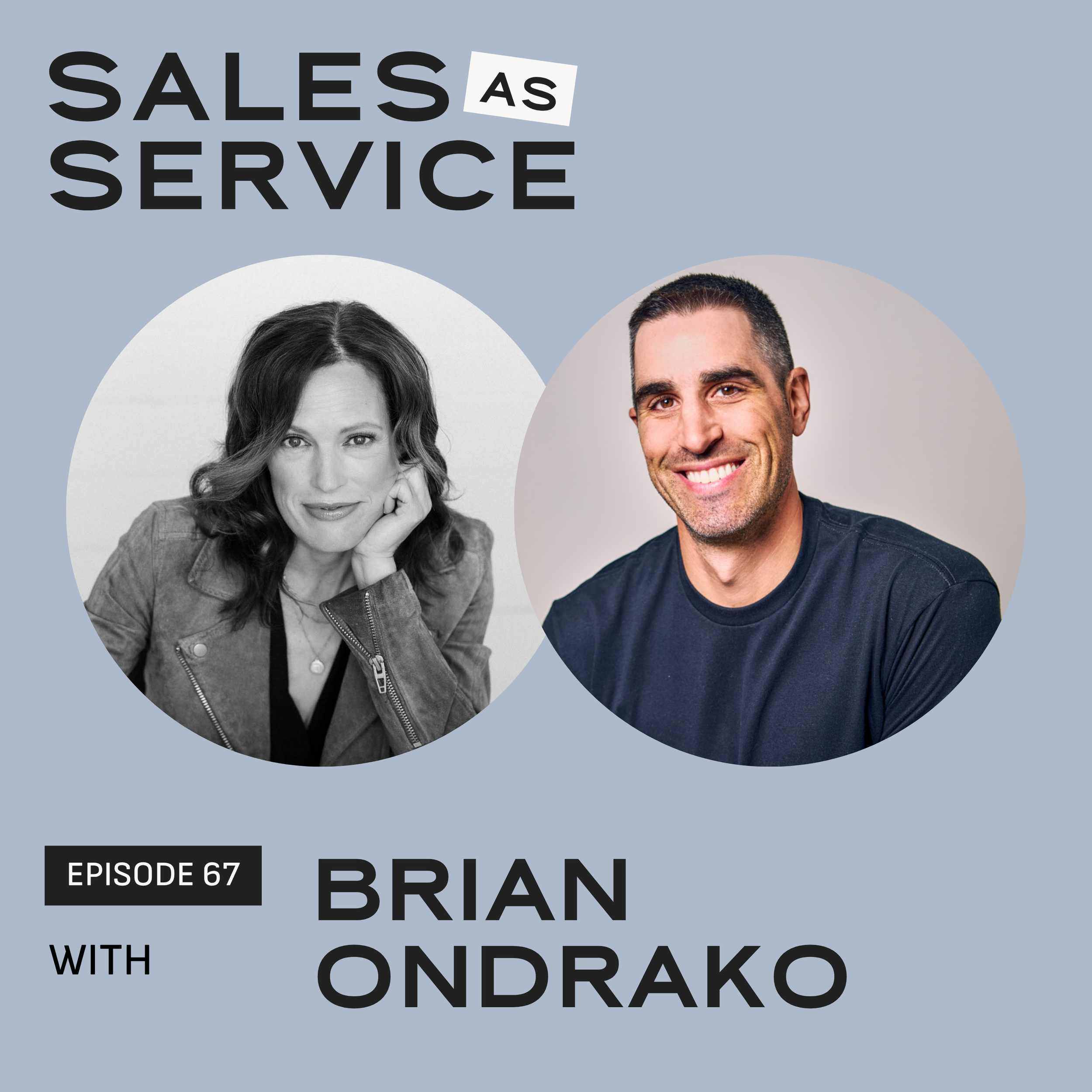
Where Good Leads Get Stuck: Why They Aren’t Becoming Clients with Brian Ondrako
EPISODE: 67
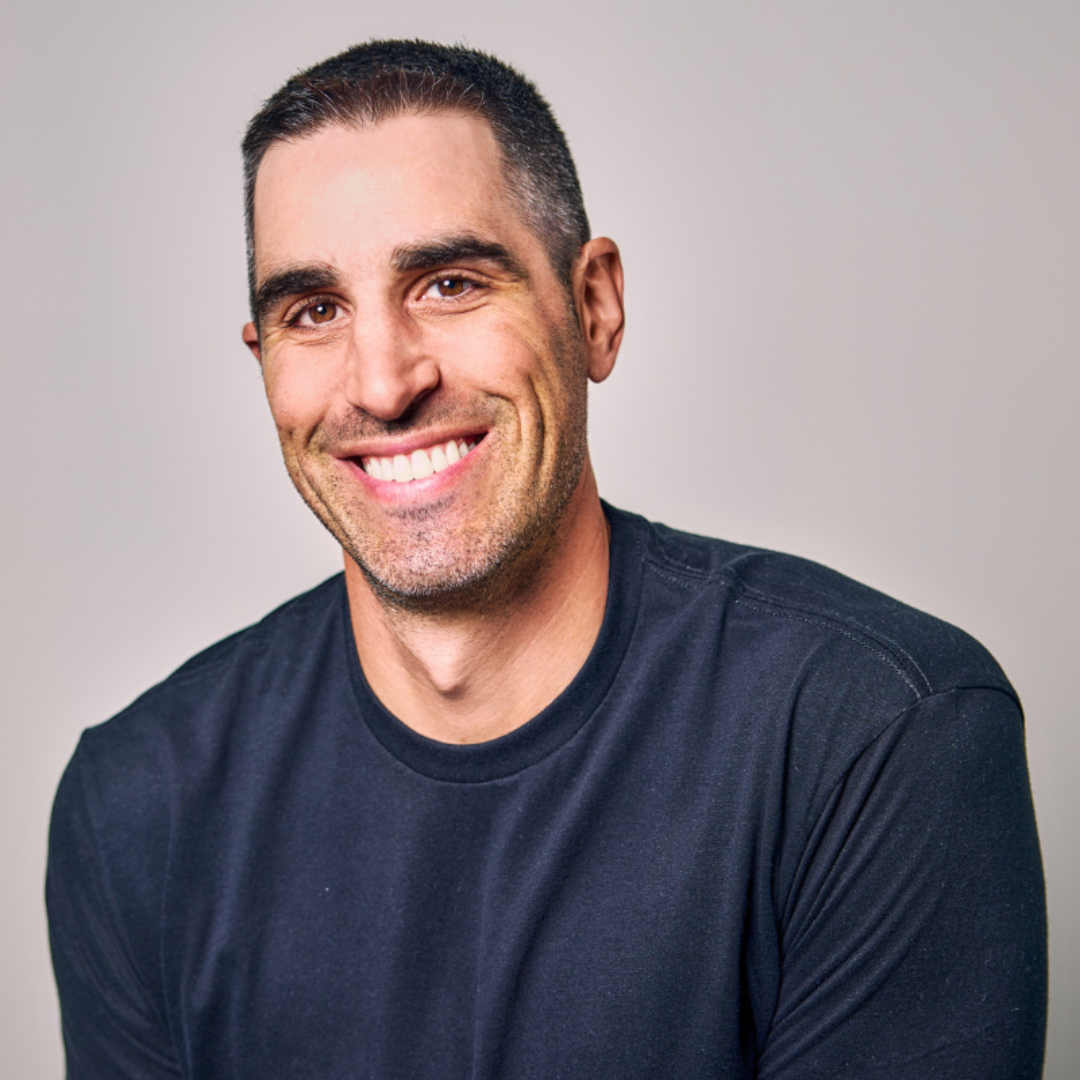
Talking to someone outside your network can feel like a very different kind of sales conversation. Brian Ondrako helps founders make that shift. After 15 years in software sales, he now works with early stage businesses that need to move beyond their first warm introductions and build a more consistent sales process.
In this conversation, Brian and I talk about what changes when you stop trying to sell and start helping someone buy. We get into the questions that uncover the real problem, the habits that keep a pipeline moving, and why a message with someone’s name in it still might not feel personal. Brian also walks through the numbers founders need to know so “I need more business” can become a plan.
In this episode, we cover:
Why sales is a skill you can practice, even if talking to strangers feels uncomfortable
How deeper discovery can reveal a different problem than the one a prospect first describes
The difference between personalized outreach and a message that shows you understand the person
A simple way to start prospecting with a focused list of 25 to 50 people
How deal size, close rate, and pipeline coverage help you plan for a revenue goal
LISTEN TO THE EPISODE HERE 👇🏻
-
Brian: [00:00:00] I will tell you the big difference between, we'll call it a average to below average seller, and this could be in an organization or this can be a founder and someone that has really grasped selling and has done well and been successful. One of the biggest things I've noticed, the lower or average seller is trying to sell.
The great salesmen, the top performers, they're helping people buy, and that's a huge distinction. Selling versus buying. Because if I'm trying to sell something, what is it? It's about me. Selfish. I'm trying to push something on them. I'm trying to talk about my product. I'm talking about all the features I have.
I'm, I'm maybe talking negatively about the other vendors in the space, like whatever it is. But if I'm helping them buy, I'm curious. I'm not letting them off the hook. I'm having uncomfortable conversations. I'm pointing out things that they haven't really considered. So all of those things help them buy.
Now, whether they pick me or not, I [00:01:00] don't know the answer to that. But if I show up helping them, if I'm empathetic, if I give them the information they're looking for, but also push on some of the assumptions they already have, I put myself in a better position because A, I'm more trustworthy. B, I come off as knowledgeable.
Like if I'm knowledgeable in the sales process, well, there's a good chance that Brian or insert anyone else in their business and product and service is gonna be knowledgeable when I'm actually a client of theirs. Ultimately, that leads to them making a better decision at the end.
Tam: Welcome to Sales as Service, the podcast designed to help you change your mind about sales, literally.
I'm gonna help you change the way you think about selling. I'm Tam Smith, your host, sales bestie, and pitch partner next door. If you're tired of bros with biceps telling you how to crush a million dollars in your sleep or battling imposter syndrome on your own, you've come to the right place. All you need to do is listen, then take action.
No gym membership required. Let's get started[00:02:00]
Welcome back to Sales as Service. Almost all of my work focuses on helping founders and business owners generate leads and start conversations with their potential clients. But as my own audience has grown, I've had to learn and start practicing how to talk to people outside my referral network. And a referral basically short-circuits the sales process.
It often arrives with the trust already built in. Someone has told them about you, they know they need help, and a conversation can move pretty quickly to whether you're the right person. But when you meet someone new, there's more ground to cover. You find each other, connect, start a conversation, and build a relationship.
And if there's a genuine fit, you can invite them to work with you. And now, I've gotten really good at making friends. But what I noticed was that some conversations with people I knew I could help weren't moving forward. And it would have been really easy to decide those were just bad leads and go look for more, but I had to ask myself a much harder question: How well am I leading the conversation?
[00:03:00] You see, in the course of the sales process, working together often means asking someone to change what they're doing in their business. Even when they want the outcome, that change can bring up a lot of resistance. Our job isn't to push someone past it. It's to simply ask good questions, understand what's really happening, and help them make the very best decision for their business, whether that decision includes us or not.
That realization is what led me to Brian Andrejko. Brian spent 15 years in software sales, and now he helps founders build the sales skills and processes to sell beyond their warm networks. Working with him has been a reminder that sales is a skill and a practice. No matter how long I've been doing this work, I wanna stay coachable and teachable because there's always an opportunity to get better.
And today, Brian and I talk about what happens between getting a lead and gaining a client. We'll get into better discovery questions, how to help someone buy, and why more leads may not solve the problem you think you have. Let's get into it. Brian, thank you so [00:04:00] much for being here. Welcome to Sales as Service.
Brian: Thanks, Tam. Excited.
Tam: Yeah. Well, tell us, who do you help and how do you serve?
Brian: Who do I help? I help people sell to strangers, is probably the simple w- simplest way to say it. Who am I serving now? Um, I've, I've kinda laid my hat in terms of the market, is early stage, like seed stage startups, tech businesses sort of, 'cause that's where I come from.
I did 15 years in software sales. But really helping that startup that is doing founder-led sales to help them in really two big moments. One is they're trying to get out of selling just to their warm audience, right? In those first couple deals that, not that they're easy, but they're a little more easy entry into the businesses.
And how to actually sell more to strangers, people that I don't know? How do I do that whole process? And then secondly, well, once I get to a point where there is some momentum, we have some revenue, when do I look at hiring my first sales rep? Or making sure they're the [00:05:00] right rep? Or building sales processes that are more defined that, you know, as I start scaling the team and I wanna get out of founder-led sales.
So those are kind of the two big moments where I come in and help folks, and really providing, again, my expertise from a, a lot of years in sales to how do I help someone else that Pretty much most people have fear of sales. So how do I help them get o- get over that edge?
Tam: And I think there's this misconception that, you know, sales is just this innate, like, gift or, you know, that you're just born knowing how to do it.
Like, you just come- Yeah ... out of the gate being a good salesperson. What do you have to say to that?
Brian: I think it's like anything else. We make excuses. It's like anyone that's done anything started at square one. Now, it doesn't mean that genetically they didn't have... You know, if you're born and you're 6'11", you maybe have a better chance of playing in the NBA than someone that's 5'4", right?
So genetically you might be more predisposed. But for the most part, we all learned how to walk. No one knew how to [00:06:00] walk when they came out. We learn how to walk, right? Are some people better walkers and runners and athletes than others? Sure. Part of that is some genetic ability, but a lot of that is just the work ethic and putting in the time.
So it's the same with sales. I was never, quote-unquote, great at sales when I- especially when I first started. I didn't know the first thing about sales. I actually remember my first big corporate job that I got hired for where I was like, "Do I really wanna do full-time sales?" And I really questioned that for about a day before I gave them an answer of yes, 'cause I had thought about the old days of, like, you know, the Glen Glary- Glen Ross movies and those type of things of like, "Oh, is this how sales is?"
Turns out I was wrong, and I'm glad I was wrong. But yeah, I, I, I think everyone can sell if they just get out of their own way.
Tam: And you hit on a good point. I think for those from the outside in- The perception of sales is that, you know, very [00:07:00] pressure-filled, you know, transactional- Mm-hmm ... uh, kind of old school selling.
How would you compare that against modern selling?
Brian: I think people will call you out on your bullshit a lot more now. Like, there's more information. People have been sold to, quote-unquote, for a long time, different than, you know, 30, 40 years ago. Now, I was just a youngin' 40 years ago, right? At, at 43 years old, you can do the math.
So I don't know exactly how the sales world was. Like, people that were, you know, they're walking around town maybe. They're picking up the phone and just kinda cold call dialing. It was a different time. Nowadays, again, there's more exposure. You can go search. I mean, most people are looking at content, at, uh, businesses or looking at multiple vendors before they ever pick up the phone and actually talk to you if they're interested in buying something.
And I'm not talking just kind of a one-off thing. I'm like, especially if it's an enterprise sale, someone's actually looking to really solve a problem in their business, they're nor- normally looking at multiple vendors. They're [00:08:00] looking. They have a real problem, and they need a solution for it. They're going out and figuring it out, and then they might contact people.
So there's more information than ever, which means you need to show up more as yourself, as someone that actually cares, and, and have some empathy. And, and I, I don't wanna use the word authenticity, but we'll use it just for lack of vocabulary, is you need to be more authentically you and show up that way.
That doesn't mean if you're an a-hole, you should show up as an a-hole, but that means you need to show up with an idea of I'm here to help someone, not just sell them something.
Tam: Absolutely. It's, uh, I mean, I've... Just the attitude that, you know, sales, it's the whole point of this podcast, sales is a ser- act of service, you know?
Yeah. It's how can you help, how can you serve and solve, versus what y- what can you get?
Brian: Yeah.
Tam: And I, to your point, I think the most recent stat I heard, like 90% of buyers are, you know, researching, you know, heavily before they ever even reach out to have a conversation. And, like, 60 to 70% of the decision is already made before you ever have the opportunity to have a conversation.
That's just k- [00:09:00] startling but true.
Brian: Yeah, I mean, people are have... If you don't think people are ha- And this is even during the sales process, I see a lot of people stub their toe where it's like, "Oh, that person ghosted me," or, "That person went away," or, "They didn't get back to me. It's been three weeks." I'm like, well, one, you didn't set the tone.
You didn't lead the conversation. We can go into all that stuff. But at the end of the day, if you don't think decisions are happening behind the scenes, water cooler talk, conversations in a meeting that comes up, you don't think those things are happening? You don't think that other decision-makers that you haven't talked to don't also have people that are in their network that are looking for referrals and looking for business and, it may be a competitor of yours?
You're naive if you don't think that. So those things are happening behind the scenes, and I think when we understand that, it allows us to be more empathetic in the process, but also pull out more information that's helpful to the buyer, and to be able to guide them along the process. Whether it works in your favor or not right away, we don't know that.
We don't know the outcome, but we certainly can still help and make sure they're getting to their outcome [00:10:00] goal.
Tam: I, I wanted to go back to your statement about the, um, getting comfortable talking to strangers. I'm guessing that a large, uh, portion of our audience is cringing at the thought of that, of having to do that.
Brian: Sure, yeah.
Tam: But kind of touch on the point, you know, that prompts founders and business owners to come to you, where I'm guessing probably that, you know, warm network may have slowed down, or they've had a big project that's moved off and suddenly they've got a, you know, they do have to start doing, you know, a widening the net a little bit and talking to people that, you know, aren't immediately in their, you know, um, their immediate referral network.
Just want to get into the kind of the typical inflection points or that people are coming to you and what they're struggling with.
Brian: Well, y- to your, yeah, your what you mentioned, you're, they're struggling with, how do I talk to someone that I don't know-
Tam: Mm-hmm ...
Brian: and not come off, quote unquote, "salesy." That's all we, that's like the general phrase I hear.
I don't know where that word ever came from, but- Mm-hmm ... I don't wanna be salesy. [00:11:00]
Tam: Mm-hmm.
Brian: And when you're salesy, it's, yes, it's you trying to sell. It's a mentality. That's really what this is. Again, I, I ca- I try to simplify stuff so much. I think we try to overcomplicate it and we use all this language and lingo, and it's like, it's super simple.
Tam: Mm-hmm.
Brian: If you're struggling selling to strangers, the first step is to have a mindset that, yes, I'm have to sell to strangers if I wanna grow this business. But that doesn't mean I have to show up feeling like I'm trying to sell something. I think the biggest difference, so let me, let me kind of map this out and then I'll go into your-
Tam: Yeah
Brian: deeper into your question, because I think it's really helpful. I will tell you the big difference between, we'll call it a average to below average seller, and this could be in an organization or this can be a founder-
Tam: Mm-hmm ...
Brian: and someone that has really grasped selling and has done well and been successful.
One of the biggest things I've noticed, the lower or average seller is trying to sell [00:12:00] The great salesmen, the top performers, they're helping people buy, and that's a huge distinction, right? Selling versus buying, because if I'm trying to sell something, what is it? It's about me. Selfish. I'm trying to push something on them.
I'm trying to talk about my product. I'm talking about all the features I have. I'm, I'm maybe talking negatively about the other vendors in the space, like whatever it is. But if I'm helping them buy, I'm curious. I'm not letting them off the hook. I'm having uncomfortable conversations. I'm pointing out things that they haven't really considered in their sales process or the, in the process of, of buying.
So all of those things help them buy. Now, whether they pick me or not, I don't know the answer to that. But if I show up helping them, if I'm empathetic, if I give them the information they're looking for, but also push on some of the assumptions they already have, I put myself in a better position because, A, I'm more trustworthy, B, I come [00:13:00] off as knowledgeable.
Like if I'm knowledgeable in the sales process, well, there's a good chance that Brian or insert anyone else in their business and product and service is gonna be knowledgeable when I'm actually a client of theirs. Ultimately, that leads to them making a better decision at the end. It may not be you, though.
I've had plenty of times where I've built a phenomenal relationship with people and the product compared to another product based on all of their decision criteria, it didn't stack up exactly. So when you have consensus selling and you have a lot of people, you might have the greatest relationship with a champion.
It doesn't mean you're gonna win the partnership, and that's okay. You're not gonna win 100% of deals, and you need to be settled with that.
Tam: That's a soundbite right there. Like that, I'm even having my own, like, just that, that reframe for myself of, um... 'Cause I, I mean, you know, I've sh- We're working together.
You know, I'm kinda y- I'm your, the, the client that, you know, [00:14:00] came, spent years in, uh, you know, corporate sales, sales leadership, and it was very, I won't say easy, but it was a different experience selling for someone else.
Brian: Mm-hmm.
Tam: Uh, you know, doing business development for someone else and someone else's brand and business, and then, you know, shifting into now my own brand and business, there's, um...
I, you know, it, it unearthed all sorts of, you know, fear, insecurity, lack of trust, all the things, um, in myself, representing myself and my brand. And, uh, you know, kinda hit the point in my business where my warm network had slowed down and I was starting to, you know, get in front of a, a, a broader audience, and it's a very different conversation talking to strangers versus talking to your warm network.
The point being that I'm not trying to, you know, sell anyone. It's being able to identify, you know, who, based on, you know, what I'm doing, who can I help, who can I serve? And- Mm-hmm ... so much of what I [00:15:00] feel like I'm doing now is helping people ultimately get out of their own way and, and be able to take leadership in the conversation to, like, if they're...
Great, I have this, you know, perfect candidate in front of me that I, there's every opportunity in the world I can help them, you know, grow their business. But ultimately, I'm asking them to make a change. Mm-hmm. And that's scary. So how do I effectively lead a conversation to help someone, you know, embrace change and doing something different that they haven't done before?
How do you coach founders, you know, to take leadership in those conversations? Like, what is your fir- like, what is your first recommendation? I mean, practice, but-
Brian: Sure, yeah. I mean, depends if we had 10 hours, we can really go into it, uh 'Cause there's a lot. But you actually said something that's really important, so let's underscore it.
I think most people, a- and again, I, I use most people as a general phrase, it's nowadays different than maybe years ago when you had to do different things different. With automation nowadays, I see so many people cutting [00:16:00] corners.
Tam: Mm.
Brian: They want volume, and they want, "Oh, I wanna get to people as quick as possible, and get, and get to a yes as quick as possible."
And I'm like, "That's not how life works." So A, most people, in terms of founders, don't even know, like, what their sales cycle is. They don't know if it's three weeks or three months or a year or whatever. They have no idea. And some do make assumptions like, "Well, I'm selling..." Like, I remember this when I started into s- I started selling into local and state government in 2018, and I remember that first couple months in there, I was getting told by other reps and other, you know, managers in the company like, "Yeah, dude, it's slower in government.
Probably, you know, at least nine months, maybe 12 months, like longer sales processes." And although that might be true, especially for large jurisdictions, I found you could bring in new deals in three, four, five, six months. Yeah, they didn't-- Some didn't take that long. Because what I realized was if I help them buy, if I know the process better than they do, now [00:17:00] I can inform them a little bit more.
I can be there as an educator. I can be there as a guide, as an advisor, and not just someone peddling product. And that was a big shift in my career. So one of the big things, especially for, for founders, I don't care if you're on your own or you're trying to build a big software business, is be the industry expert, and most people shortchange this.
Now, so th- so let's take it from two angles, right? You have someone that is coming from the industry That they were in. So they were an expert in X industry, and now they're building a product to solve that pain point in that industry. They already have some industry expertise. What they don't have though, but maybe they do, depending again, where they're coming from.
What they don't have though is a lot of the stories and the nitty-gritty of the other poten- So they had it from their one situation that they were in maybe, may- maybe they're an organization for several years. They might not have it at 20 or 30 or 40 [00:18:00] other organizations and hearing different stories and little different ways that the, the customer's talking.
So that's one of those ways. Let's say they're at level four. I'm making up that, right? They're not at level one because they've already been in the industry. They know the industry. They know whatever. But they don't know at the specific problems across the board potentially. If they do, maybe they're a couple level, levels ahead.
If not, okay, go deeper there. But what I've al- what I found mostly though is a lot of these founders are at level one or two. They don't have a ton of industry expertise. They know surface level. Maybe they know the problem there is, but they d- haven't talked to enough people and have enough stories and enough insight.
I would spend so much time if I was a founder learning so much where I'm on a call with someone, and I almost can teach them something, where they're the expert technically, right? They're at some organization, but I know enough to be able to hold the conversation, to be able to give, "Hey, have you considered this?"
Or, "What... Oh, Billy down the street, I [00:19:00] noticed he was doing this. Have you done that?" Like, I, I can't have those conversations if I actually haven't done the research. I would say first and foremost is become, like, the biggest expert you can. Know more about the space than physically possible so that you can have more educated conversations 'cause you can't guide someone if you don't have any information 'cause so what do you fall back on, Tam?
You fall back on the general questions Right? I'm asking general questions because I actually can't ask a deeper underlying question because I don't actually know about that. As an example, if I had a plumber come in my house, I don't know the first thing about plumbing. I don't really know what, like, the third or fourth layer question to ask the plumber.
I have to take their word for it. They're the expert. But if I knew everything about plumbing and the plumbing industry, but maybe I physically wasn't doing the task and I brought them in, now I can ask them a question. I, I can't even give you an example. That's how much I don't know about plumbing on this.
[00:20:00] I'm literally just using that as an example. But, like, that's where I can go deeper into that specific area, and now I pull out more information. So I don't wanna go too long on that because I feel like I went on a diatribe there, but mo- a- again, most folks are not prying that deep. They just sort of, like, show up, they talk and ask general questions, and then they wonder why deals don't close or advance.
It's because you're not a trusted advisor. That's first and foremost.
Tam: Well, even in our own work together, you know, it's moving from I'm what I would consider, like, a, you know, sales professional. Like, I've been this... I made a career out of this in my corporate life, transitioned into, you know, doing this work as a, a founder, business owner.
But it's so easy to get into, you know, when you get on a call, you know, I'm excited about the work, I'm excited about what I do, and I am my own worst client. You know, I fall into the trap of telling versus- Right ... you know, because I wanna, you know, be sure I'm, you know, sharing and adding value and that someone is, you know, getting, you know, something out of the, you know, [00:21:00] the time that we're having together on that call.
But I end up, you know, over-explaining, over-talking, over-sharing. And even then moving into, you know, asking the questions, it really is, like, being a, having the ability to ask those deeper questions. So even just in my own growth, I think, you know, showing up to, you know, ask versus tell, but then staying in that, um, discovery long enough to ask those deeper questions and really get to the, you know, what's underneath, what's, what's under- under the surface.
Brian: 'Cause at the end of the day, like, what's the whole point? The point is someone is coming to you with a problem.
Tam: Mm-hmm.
Brian: And you're trying to help them find a solution. The solution might not be your solution I've turned people away before. I've turned people away because maybe they didn't have the budget available, or maybe they weren't thinking about the problem exactly, and, and actually the problem they had was something a little different.
Um, it didn't match with the solution I was selling. There's [00:22:00] plenty of times, plenty of people across the board that just sell like, "Ooh, I'm gonna sell them." And it's almost like this competitive thing like, "Ooh, I'm gonna sell them." Do they even need what you are selling? Because by the way, that turns out to be client churn on the back end, bad testimonials, right?
So why do you want those bad reviews on the back end? People aren't thinking about that. They're very shortsighted. So yeah, so if the goal is to see if we can actually help them, I have to know what the problem is. And if I just ask general questions, how do I get to the actual root of the problem?
Because oftentimes the problem is sitting below the problem they say. Like, here's a great, a great, a great example. If someone came to me and says like, like, "Yeah, I, I need to get more leads." Why do you need to get more leads? Well, I need to do this. Like, well, I'm not, I'm, I'm not closing enough business.
Okay. Tell me about your bu- you know, clo... And what you might realize is like, oh, they actually have enough leads. They [00:23:00] just suck at the sales process in bringing new clients. So if they actually improve that, their lead flow is actually fine. It's the closing part that's challenging for them. It's the showing value.
It's the articulating, you know, where they help and where they don't, and making sure there's a fit. You know, it's talking about pricing and not being scared of those things. Like, all of those things are actually maybe more important than the leads But they think because they're not bringing in business, they need more leads.
That, there's a perfect example of like- Mm-hmm ... yes, they came in with that problem, but that's actually not their real problem. Exactly.
Tam: Exactly.
Brian: But if we take that as the problem, now we try to solve that, and there's n- there's not a fit.
Tam: We've kind of talking about that, you know, once you have the opportunity, being able to, you know, lead the conversation and help the, the, the prospect buy.
But when it is actually a, a lead generation problem, I think, or my experience has been on a, uh, so many founders and business owners, if you don't come from a sales background and understand that it's a [00:24:00] discipline and a practice, that there's a real challenge in having consistent lead flow. So how do you guide founders in their dis- to, for their own lead generation process?
Hey, Tam here. Most consultants and service-based founders are great at delivery. Referrals prove it, but referrals aren't predictable. And you've avoided sales because you think you have to be something you're not. Sales isn't pressure or cringey tactics. It's connection, starting conversations, recognizing when you can actually help someone.
The hard part? Doing it consistently. That's why I built the VIP Lead Gen Pipeline System. It gives you a repeatable way to book three to five sales qualified meetings each week through relationship first outreach, not cold pitching. Ready to create opportunities on purpose? Book a free alignment call using the link in the show notes.
Sales is a practice. Let's make it consistent.
Brian: Let's break it into two categories, okay? 'Cause this'll, I think this'll be helpful if we talk through it in this 'cause then we can compartmentalize. I'm gonna use a different [00:25:00] word than discipline. I'm gonna use habits.
Tam: Hmm.
Brian: Okay? So let's use habits. So let's, let's put that on the, on the side, on one side.
And then the other thing, and I, I talked about it earlier, is this whole piece of, like, automation. And the way I explain it is right now the big problem I see with outbound is people are trying to personalize, but they're not being personable, and they conflate these things. You know what I'm saying, Tam?
Uh-huh. Right? Uh-huh, uh-huh. They're trying to personalize, like, oh, I ha- Like I, I mean, how many... You think of how many emails you get a week, right? I get them all the time where it's like, one, this service is not even close to me. Like, I'm a one-person, like, fractional sales leader and coach. I'm not, I don't have this massive business, but you're tr- you're trying to sell me something that, like, makes me seem like I'm bigger because what you did was pulled my title or something from LinkedIn and just put it into a thing.
That's being personalized- Mm-hmm ... but it's not personable.
Tam: Mm-hmm.
Brian: Okay? So let's put that on the other side. So let's start on the habits first. [00:26:00] This comes back to, yes, practice, right? It's, okay, what am I doing each and every week? And there's really two parts of the habits. There's the showing up, but then there's actual where's the effort go.
So the showing up piece is how much ti- Like I would, I would encourage someone if they're like, "Ah, I need more lead flow, my pipeline's dry," whatever, well, let's look at your calendar. How much time a week are you allocating to pipeline generation? And if you don't have pipeline at all, n- this is an it depends.
If you have zero pipeline, it should be 80% of your time. And people are like, "Oh my God, I gotta... You want me to do four hours a day or whatever?" Yes, absolutely, until you actually get leads. The other stuff doesn't matter. Now, if you have some pipeline but you want more, then maybe that's less time. Maybe you're like, you know, I'm gonna do an hour a day and I'm gonna try to be, you know, s-specific with it.
And then if you have a lot of pipeline, maybe you have it coming in from different areas, maybe you don't have to do it for an hour a day. I would still [00:27:00] encourage some time per day, but maybe at least block out one or two days a week where you're doing a couple hours just to kind of keep the engine flowing.
So that's on the habit piece. And again, th- discipline becomes very easy when you have the habits in place. When you make it... I mean, go read Atomic Habits. We don't have to reinvent the wheel on, on habits, right? James Clear simplified it very much. But literally make it super simple. Block out your calendar.
Don't miss it. Do it the first thing in the day. It's the whole thing. Brian Tracy wrote the whole thing about eat the frog. Like, do the hardest thing in the morning. If most people probably prospecting's a hard thing, do it right first thing. Get it out of the way. Don't let other stuff get in the way. So that's the habit side of it.
Tam: Mm-hmm.
Brian: Then it comes back to, well, then where is my focus? I see too often it's the automation piece. I'm gonna send out... Let me just send out as many emails as I can automated, and that'll do the trick. Let me hit one button, let AI do some of it, and I'm gonna reach out, [00:28:00] and then I don't get results, and what do I do?
First thing people say, "It's not working."
Tam: Mm-hmm.
Brian: Right? It's not working Hear it all the time
Tam: Uh-huh
Brian: I would encourage you to look at it a different way. It's, it's not that it's not working, it's that your effort in that way did not work. It doesn't mean cold calling's dead, it's that maybe you're not good at cold calling.
It doesn't mean email's dead, it's maybe you're not good at emailing. I hear people all the time, even on like LinkedIn, they're like, "I'm commenting a lot. I'm not getting people that are, you know, messaging me." People aren't just gonna randomly message you. You need to actively go out there. You need to actively message, right?
Okay, so then what does your messages look like? Well, most people, it's a generic pitch. Mm-hmm. My question to them, I, I, to every single person, I said, "How many video messages have you sent to people over the last month?"
Tam: Mm.
Brian: The answer is almost without a doubt zero. Go send some video DMs. Make it more personable.
Do some research around it, right? So this all comes together. It's [00:29:00] like so we have the habit side of it, and then if we customize it for the people we're talking to, we become more personable. Do some research on their actual business, what they care about. Now again, this goes back to what I said earlier.
If you're an industry expert, you're gonna be able to make some assumptions. You're gonna know where to look to make the research very quick. But then you have to curtail it to that specific business and individual so they actually know you're talking to them. You didn't just make some one video and you're sending it to 20 people.
It's specific to that person, and that's the difference. So yes, you can definitely ... I mean, listen, from a referral standpoint, if you literally ... If, if someone like emailed or called me today and said, "Brian, my pipeline is stacked," you know, I always recommend to have three to four times what your annual goal is.
So if your annual goal is to do 500,000 in revenue, you need to have $2 million in pipeline over the course of the year as, just as a general rule, right? If your pipeline's filled and you have all that and it's all through referrals, I'll applaud you. Go do it. Great, [00:30:00] right? Write the book on it. Show, show other people why that's working for you.
Most people, though, don't have the habit of building their network properly, of building relationships, of doing the right thing when they're asking for referrals and getting that engine flowing. They do it every once in a while. It's more passive. So you're gonna have to reach out to strangers. So then the question is what's the best thing for you to do?
And this is where looking at your industry, right? You ... Like what I sold in the local and state government, I had the luxury, which I'll call it a luxury, that public officials answer the phone, right? They're public servants, taxpayer dollars, they're answering the phone. Now, in 2024, did they answer the phone as much as 2018?
Absolutely not, but they still answered the phone Right? You're still able to get in touch with them. I can walk in somewhere if I wanted and talk with them, 'cause they're in the office mostly. So that's different though, but that's knowing my market. Okay, local government [00:31:00] you're selling to, I can call in, I can have a conversation potentially.
You- if you're trying to sell to, like, VPs of sales, you think they have their phone number? No, most of them are working remote. They're not, they don't have even a phone number you can call unless somehow you're able to scrub it from some email signature or something. And whether they would answer, who knows?
So okay, there's a different avenue to get to them. That might be email, that might be LinkedIn, that might be going to events. Like, there's a, there's a lot of different ways to do this. So let me pause there, but like, if we think of habits and being personable and those two categories, I think if you focused on those and, like, how do you accelerate in each of those areas a little better, that's what makes you successful when you're doing outbound.
Tam: And I just app- like, throughout that whole, like, kind of- The mono- the monologue
Brian: there?
Tam: That was a monologue ... conversation. No, I just, just thinking, I just appreciate that, you know, it, it requires effort. I, it's just inter- I'm, I'm in the business of talking to people and, you know, through all of the con- you know, some of the content I consume and just the messaging online, it, it feels like we're all [00:32:00] trying to figure out how to just push a button and not talk to someone.
Brian: Yeah, that's for sure.
Tam: Yeah. And I feel like that's, you know, working against us.
Brian: Yeah, I mean, everyone's trying to do... I mean, that, that, unfortunately again, it's kind of where the patterns go. You see- Yeah ... people, and this is why it's so important to, like, not just take what people say- Mm-hmm ... as, like, science, uh, or as, like, this is it.
Because the reality is you don't know their business. You don't know what they have in their back pocket potentially. You don't know anything about someone else's business. So just because someone's touting online, "Oh, I send 5,000 emails a week and I get this," whatever. We don't know what they're selling.
We don't, we don't know if they're telling the truth. So you can't take that as, like, this is the only way.
Tam: It's really knowing your audience and what works for, you know, your audience and your industry, you know? Is it's- Right ... yeah.
Brian: And then it's putting in, I do not like the phrasing, it's a numbers game.
That's been something that's been touted for so many years. [00:33:00] What I, I don't mind, it's a numbers game, if the word quality is somehow worked in there
Tam: Absolutely
Brian: Yes. If you have quality outreach that's personable, that's to the right audience, and in the right kind of, um, again, the way that they wanna be communicated with-
Tam: Mm-hmm
Brian: yes, the more that you do, the more you're gonna get, for sure. But just sending 10,000 emails randomly, like the emails that I get from people that I'm not even their client, how, how is that even serving you? That actually is ruining your reputation, your brand. So I think that's super important is, like, don't take what everyone says as gold.
You have to go out and put in the, the reps yourself and see if it works for you, and tweak it and, and adjust it along the way.
Tam: If someone doesn't have, like, a, a daily or, you know, some sort of, you know, weekly block habit of pipeline generation, you know, business development, how... what would you recommend, just a breakdown of that hour, like, just to start that habit?[00:34:00]
Brian: Well, uh, this is one of those things, like, you just have to put the work in on wh- So I- define... Let's, let's go back then. Let's get really specific. Define where you're gonna go first. So let's, let's say hypothetically, like I... So I'll, I'll give you a real example. A client of mine that sells into, um, like higher education, K through 12 and, and non-profits, and a lot of it is regionalized, and this is what we've worked on about focusing, well, you and I can get into this if we want, but just to say my piece, like I think people have too many industries they go after.
Like focus on one or two and go hyper-specific into that industry. Again, you're now the expert, you've done it enough, you build relationships, and that obviously helps not only the referral engine, but it helps some of the outbound work you're doing as well. So for her, it was, well, first we have to know who we're selling to, so we have to build some sort of lead list.
Now, I'm not one to say buy a list. I would go and [00:35:00] find those people. So the easiest way nowadays, right, is on LinkedIn. Whether you use Sales Navigator or not, you don't need to use a Sales Navigator. I think there's a lot of issues with that tool, but I won't get into that. But it's good for some people, depending, again, what, what you sell to.
But at worst, it's looking at your network, looking at the people, like if... Uh, here's, here's like a simple way, right? If you're commenting and you're looking, let's, let's say hypothetically, right? 'Cause I, um, obviously with my eight years background in GovTech, I have some GovTech clients and I'm working with, you know, GovTech businesses 'cause I can really share that experience I have and help them.
Well, if I'm looking at prospecting in a GovTech, and let's say I follow a specific GovTech business or something, well, all the people that are commenting and engaging with their post, if I go look on LinkedIn, you know, you can click on all the engagements and who the people, there's a good majority that are other GovTech businesses.
Okay, right there, that's potential lead list, and I can start looking at those people. So first thing is let's [00:36:00] build a list. Don't sit for five weeks and build a list of 1,000 people. Start with 25 to 50. And then, okay, so I have my list of people, now we have to do what I just said earlier, is what angle am I going after?
Am I gonna email these people? Am I going to do LinkedIn outreach? So I have to make that decision, and then based on that decision, I have to start doing the outreach. So if you're gonna do email, I'll give you a couple, I mean, just for sake of time, again, we can always go deeper into this, but like for sake of time, if you're gonna send an email, what's that email have to say?
Well, it be as per, it damn well be personable. It damn well have information specific, like Tam, if I was reaching out to you, specific to you. Like I, the client I was mentioning, it's gonna be specific to, you know, how they help higher education and universities, right? Uh, maybe a specific problem or two.
But if they can do some research and they know where to look, whether it's on a website or a, it might be a, a financial report or [00:37:00] something, and they can s- call out specifically, "Hey, I saw this. Like, this is what I..." I, I was helping someone the other day who was like, "Look on, look on Salesforce or look on, uh, LinkedIn, and you might find, like, maybe their employee count is changing.
Maybe they're rapidly hiring." Okay, that might be something you call. "Hey, I noticed you all are, have a 30% hiring increase. Well, we help people in that aspect," and, and that's part of your kinda like, "Hey, thought this might be a fit." Mm-hmm. But I would lean way more on the side of, like, super specialized and personable.
Send less emails, but higher quality.
Tam: Mm-hmm.
Brian: And the same with LinkedIn. If you do LinkedIn, same thing, but I would do video DMs. I would, I would... I- Text is fine, but try do video DMs. Try to send a 30-second video. Take that same email you might send and do it in a video form. Oh my God, you'd be so surprised the increase in, um, responses you get.
So let me pause [00:38:00] there. That's kind of like if you have an hour, well, we bu- you know, maybe d- maybe on a Monday we build the lead list, and then Tuesday through Friday we start doing some of those outreaches. Mm-hmm. And then we're gonna follow up maybe a couple times depending on the thing. We can go deeper into that, but, like, just start doing the practice, the lead list and the first outreach.
Most people don't even get that far.
Tam: What I'm hearing is do less, but do better.
Brian: Yeah. Yeah. It's, it's like essentialism, right? If, if you never... Did you ever read the book Essentialism by Greg McKe- Yeah. It's like less but better.
Tam: Mm-hmm.
Brian: Focus on the right activities, and don't just say, "Oh, I'm doing prospecting," and then scroll LinkedIn for 20 minutes liking a couple things and think that's prospecting.
It's not.
Tam: I wanted to get into your Math first pipeline coverage approach and talk a little bit about that. Well, just what is that?
Brian: Well, most people talk in just kind of pie in the sky like, "Oh, I need more pipeline."
Tam: Mm-hmm.
Brian: Okay, how much do you need? No, and people can't answer.
Tam: Mm-hmm.
Brian: So the [00:39:00] math first approach is let's make it super realistic and specific for your business.
Tam: Mm-hmm.
Brian: Right? So I'll give you an example. If someone... Let, let's say if I talk to someone and they had a goal, we'll just use like random math. They had a goal of I wanna do $500,000 in revenue this year. Okay. Great. How are you gonna get there? And most people don't have an answer. It's like, "Well, I gotta close more business."
Tam: Mm-hmm.
Brian: Well, okay, but before we do that, we have to realize a couple things. So a couple simple numbers we need to know. The biggest is what's your average deal size, right? Because if I sell $500,000 products and my goal is 500,000, I need one deal. Mm-hmm. If I sell $5,000 products I need 100 deals. That's a massive difference-
Tam: Mm-hmm
Brian: in, in the amount of time and energy I have to spend to bring deals in, right?
Tam: Mm-hmm.
Brian: So first is like, okay, what's your average deal size? And then now we start looking at, okay, what's your close rate? You know, those things are important, right? 'Cause if your [00:40:00] close rate's 15% and you can raise it to 25%, well, that might be one or two more deals, uh, a month or a quarter, okay?
Mm-hmm. So first is we ha- we have to have some of that knowledge, but then it's working backwards. So okay, my goal is 500,000. Now, I mentioned this earlier, Tam, right? I like three to four times pipeline coverage.
Tam: Mm-hmm.
Brian: But just a, an arbitrary $2 million is kinda hard for people 'cause they don't have that in their pipeline today, so that's why we work backwards.
So if it's $500,000 as the yearly goal, the quarterly goal would be $125,000.
Tam: Mm-hmm.
Brian: Right? The monthly goal would be, whatever my math is on that you know, 42 and a half thousand or whatever it is, would be my monthly goal. So now I can start looking at my CRM and my pipeline growth to say, all right, if my quarter I have to bring in $125,000 to stay on pace, well, what do I need in pipeline?
Well, I need four times that. [00:41:00]
Tam: Mm-hmm.
Brian: So it... When I have my... If I'm looking, if my CRM's properly set up, which most peoples' are not, but if I have my close date set so I know these are gonna probably close this quarter, they may or may not, but I'm projecting and I've done good forecasting, I've audited my pipeline, and I know these deals are in this quarter.
Well, what's the pipeline number? What's the total number? Well, you want that to equal somewhere between 375,000 and $500,000 in pipeline because you know either, A, the deal's not going to close-
Tam: Mm-hmm ...
Brian: but it, it might close, right? But we know our closing percentage. It might not close or it might push out to the next quarter.
So we have to have that coverage in there to be able to satisfy. So that's really what pipeline math is. It's like, let's get really specific on the numbers and then we can start doing some calculations of like, oh, do I have enough in my pipeline- Mm-hmm ... to satisfy the number that I wanna get to? And the more that we keep that [00:42:00] top of mind- the better chance we have our hitting of our goals.
Tam: I was gonna say, like, just the va- the value of doing that exercise and actually getting it out of your head and into- Mm-hmm ... either, you know, into a spreadsheet or into your CRM is, um, it's so valuable. And I'm, I'm just laughing thinking about this because, you know, that was just, like, a non-negotiable as long as I was working in, you know, my corporate sales environment.
Yeah. But yet I had kind of fallen, fallen out of the, um, habit of doing it for myself and my own business, and it lived in my head for a long time. And just the, um, the exercise of committing that, again, to a CRM or to a spreadsheet to actually look at it and work, you, you set the goal and then reverse engineer the math, and then you've got something actually to, you know, work towards versus just this sort of- Yeah
"Oh, I just, I need more leads. I need more business." Like, you actually have, um, something to work towards.
Brian: Well, and the, and the important thing with that is if you only have... 'Cause most people do this, is they only have the annual goal.
Tam: Mm-hmm.
Brian: Right? I have the an- I have that [00:43:00] 500,000 in my head, it's like, "Ooh, I have to get...
Okay, where am I at getting close to the 500?" But you don't realize that you're not gonna close 100% of the deals. So you need to have more in the pipeline so that when shit hits the fan-
Tam: Mm-hmm ...
Brian: you have, you have some you can backfill. You have some that you can pull forward. And oh, by the way, if you start closing more, maybe you exceed the goal, right?
Right. That's a good possibility. But that's, that's the whole point here, is we gotta get specific. Don't be scared of the math. Do it so you know, and then you can build a plan around it. But you can't build a plan if you don't know where you actually wanna go and how to get there.
Tam: Well, let's jump into our fast five.
Brian: Let's do it.
Tam: What is the best advice you've ever received about sales and business development?
Brian: Probably if I'm thinking off, off the cuff here, do more of what's working. I think too many times we like start getting some momentum and then it's like, "Ooh, let me jump to something else."
Tam: Mm-hmm. "
Brian: Let me jump to another industry or another ICP or [00:44:00] something like that," instead of saying, "Why don't I just double or triple down on what's working?"
And this also goes back to our conversation on the prospecting.
Tam: Mm-hmm.
Brian: It's like, okay, if LinkedIn video DMs are working, why don't you keep doing them? Why worry about email? You don't have to do everything. It's kinda like people that think you have to be on every social media platform. Maybe, maybe people that have a whole team, they have the...
I don't have the time to do that, so I focused on LinkedIn and I put stuff on YouTube, like that's my, quote-unquote, "social media." That's my, where I put my content. That's where I wanna hang my hat. I don't have time for Instagram or Facebook or anything like that. Maybe someday, who knows? That's not today, though.
So I think do more of what's working and focus on that percentage of things that is gonna get you, you know, the whole 80/20 ru- rule, right? Let me focus on that and forget about the other crap. So that's probably advice I've learned and heard over the years that's probably the most, uh, helpful for people.
Tam: Very valuable and a good reminder. [00:45:00] What's something people are always surprised to learn about you?
Brian: I, I mean, I think that w- obviously there's specific inflection points that people are intrigued about, you know, with 525 podcast episodes of the Just Get Started podcast, written three children's books.
Like, those things are kind of, seems like off the wall, so it's like, wow. But I think it's the, the biggest thing is that higher level that I've packed ... I'm, I guess I'm surprised when I look at this sometimes, and when I talk to people, it's really a testament of you can do a lot of things in a short period of time if you just focus.
Tam: Mm-hmm.
Brian: So over the last 10 ... I mean, the, the Just Get Started podcast as an example, I started that in, the first episode launched in November of 2017, so not even 10 years ago, right? But I look at really that was one of the big inflection points and changes in my life in a whole different direction. But I look at what I've done in just the last 10 years alone.
The, the podcast episodes, I mentioned the children's books. I've written [00:46:00] over 500 blog articles. Obviously, I've started a business and been able to, you know, build clients and build around. But I also tried other businesses or tried other ideas and, and decided to change those. I've done countless, like, races.
I've done half marathons. I've done, did my first triathlon, uh, last week. Like, I've done a lot of the, you know, Spartan races, CrossFit, like, all these other things. I've taken trips. I've done all this stuff where some people are like, "Oh my God, you've done..." Like, I, uh, like, one of the things I, I get from a lot of people is like, "Oh my God, you do so much.
Like, how do you do all this?" And I just say, "Because I decided to just do it." I stopped procrastinating. I stopped making excuses. This goes back to our habits discussion. I know, Tam, this is supposed to be a fast vibe, so I've gone a little winter. But I think this is ... I mean, it's literally my whole Just Get Started mission.
It's like Remove the crap. Like I stopped watching seven hours of NFL on Sunday afternoons. Okay, that exposed me to more time to do other things. Like, I stopped doing things that weren't serving me anymore [00:47:00] and start filling that with things and people that were serving me and made me, uh, have a better, more fulfilled life.
So I think that's the thing people are surprised about is how much I've accomplished, but anyone can do that. I'm not anything special. I just decide to take action and just get started.
Tam: One task you've handed over to AI in your business or life.
Brian: Uh, I mean, I've been, I've been trying to use it a l- for a lot of things.
Um, I think I, I think of just a couple notes that have been helpful. One is using like, um, Cowork-
Tam: Hmm ...
Brian: to update HubSpot as an example. Instead of actually... I don't think I've logged into HubSpot in months. I just use Cowork to ask it to update tasks and deals and those type of things. So that's been cool.
I've used it to update my website a lot. I've been using my-- I've had my website for like 15 years, and I'm f- proficient with WordPress, but I am not a developer. My brother's done a lotta help with me on that. But I've, uh, but I've used it now to really tweak my website and, and help build out, um, some [00:48:00] fresh pages, so that's been helpful.
And I'm building an app right now, which is kinda cool. I may commercialize it, but it's kinda cool. Like I'm not a developer, but I can build a tool, um, that's useful. So yeah, that's kinda some of the ways I've been, uh, using AI.
Tam: Your go-to way to recharge after a busy week.
Brian: Uh, I mean, this is probably like even after a busy day, it's working out.
I, I like to push myself hard, do a hard workout, do the sauna after, like obviously e- eat some good healthy food after that. But like I feel energized when I'm doing a workout. I feel like I'm... And, and by the way, for me, I don't listen to music. Um, I don't put the AirPods in anymore. Like it's a chance-- it's almost like, um, it's like a, a mindset, mindfulness type thing for me.
It's, it's... I don't wanna go as far as saying it's meditation, but maybe someone could say it is. But it's like just a way that I could go and get away from the rigors of business or whatever and just think and just let my mind [00:49:00] wander. So, um, that's, that's been a huge thing for me for years.
Tam: And if you only had one hour each day for business growth, how would you spend it?
Brian: Talk to strangers in whatever that means to you. You know, for me right now, you know, living in Raleigh Durham, I know, Tam, we live in the same area. Like, one of my big goals is to-- I want in two years when a VC or a startup founder, when they're talking about struggling with sales and they're like, "Man, we really need help with X, Y, and Z," I want to be like, "Oh my God, you need to talk to Brian."
Like, I want my name to come up in that conversation first. So if that's the goal, well, what do I need to do? I need to introduce myself to more people, have more coffee conversations, do workshops, um, do other speaking engagements, get myself out locally and really serve the community. And to do that, I have to talk to strangers, people I've never met before.
I have to build relationships in different ways. So whatever that [00:50:00] means to you listening in, that might be I have to do more LinkedIn stuff and put more content out there, right? In a way that's talking to strangers. Like if you put a video out about your expertise and you posted it online, that's scary.
Most people don't do that. Only a small percentage of people actually post on LinkedIn or YouTube or, and another platform. But yeah, it might be, it might be sending those emails, right? It might be making phone calls, whatever industry you're serving, but talk to more strangers. By the way, the referrals you'll have, you'll get referrals if you ask for them and if you have a good, um, you know, kind of working plan, but think of those as gravy on top.
Tam: Mm-hmm.
Brian: If you talk to more strangers, you're gonna inflate your pipeline, which in turn is gonna help you hit your goals quicker. And at the end of the day, isn't that what running the business is about?
Tam: Absolutely. Well, this has been such a valuable conversation. Where can folks find and connect with you online?
Brian: Well, as I've said a couple times, like, LinkedIn and, and YouTube are where I'm hanging [00:51:00] my hat. Um, the nice thing is I have sort of a unique name, you know, with last name Ondrako, O-N-D-R-A-K-O. So just search for me, Brian Ondrako, Brian with an I, um, Ondrako on LinkedIn. And if you listen to me through the podcast, just send a connection, add a note, and just say, "Hey, saw...
You know, listened to you on Tam's podcast, you know, wanna connect." I love connecting with new people, meeting people, having virtual coffee chats. Um, YouTube channel's the same, it's at Brian Ondrako there. So those are the... Ob- obviously my website, but it's brianondrako.com. So again, you can't, you can't really go wrong just typing my name into the internet.
Tam: Thank you so much for being here. I just, I have gotten so much value from, uh, working together, and I'm just excited to bring this conversation to our audience.
Brian: No, Tam, I appreciate it. Uh, congrats again on the growth of the podcast and just, uh, it's fun to be on this side of the microphone, um, and fielding and discussing and whatever.
So, uh, yeah, great job. Um, appreciate you having me on.
Tam: Thanks again to my guest, Brian Ondrako, for joining me. I love his distinction between trying [00:52:00] to sell and helping someone buy. I know how easy it is to hear, "I just need more leads," and start thinking about how to get them. But if the real problem is happening after those leads arrive, more outreach isn't gonna solve it.
And I found this out the hard way. I thought I was an excellent listener until Brian and I reviewed some of my recent sales calls. And even when I go into a call intending to help, I get so excited about the work and I start explaining too much. I wanna serve and solve, and I don't wanna come across as salesy, and then I look back and realize I'm the one that did most of the talking.
After working with Brian, I have a Post-it note on my computer now that says, "Say less and ask one more question." And I need that reminder. So here's your sales as service challenge this week. Think back to your last sales conversation that stalled. How much did you talk and how much did you listen? What did you learn about the problem beneath the one your prospect first described?
And did you leave the call knowing what they needed to make a decision, and more importantly, with a [00:53:00] clear next step? So before your next discovery call, write down three or four guiding questions. Include one that helps you understand what's happening now, one that gets at what they've already tried, and one that explores what's making change difficult.
You don't need a script here. Just give yourself enough structure that you stay curious and in the problem just a little bit longer. And when you feel the urge to explain your solution, try asking one more question first. Next week, I'm talking with Phil "The Connector" Harrington, founder of the Connector Community.
We're gonna talk about the relationships behind new opportunities and what it means to be one connection away from something that could change your business or your life. And now when that connection turns into a conversation, you're gonna have a few more tools to help you lead it. All right. That's it for me this week.
Thank you so much for listening. And remember, sales is an act of service. It's about what you give, not what you get. And when you serve well, the ROI always follows. I'll see you next week.
Brian: You've just listened to the Sales as Service podcast, the podcast to help you shift your [00:54:00] mindset around selling. The executive producers for this show are Jess Milanes and me, Tam Smith.
This show is produced by KNWN Media and Studio 349.
MORE OF A READER? 👇🏻
For a while, a founder’s first clients may come through people they already know. A former colleague makes an introduction. A past client sends a referral. Someone who has followed their work reaches out.
Then things slow down.
You still know how to do the work. You may even have years of experience selling it. But starting a conversation with someone who has never heard of you feels different. I know that firsthand. Selling for someone else’s business and selling your own services can bring up very different fears.
Brian Ondrako works with founders at that point. After 15 years in software sales, he helps early stage businesses move beyond their warm networks and build a process for reaching new buyers. His advice starts with a shift in how we approach the conversation: stop trying to sell, and start helping someone buy.
When you’re trying to sell, it’s easy to lead with everything your service can do. When you’re helping someone buy, you need to understand the decision they’re facing. What problem are they trying to solve? Why does it matter now? Who else is involved? What would need to change for them to move forward?
That takes more than a few standard discovery questions. Brian gave an example I see often: a founder says they need more leads. A little more conversation might reveal that they already have enough inquiries. The difficulty is turning those inquiries into clients. More leads would give them more conversations, but it wouldn’t address what happens during those conversations.
You can only uncover that distinction if you stay curious long enough to ask what sits underneath the first answer. It also helps to know your clients’ industry. The more you understand the problems they face and the language they use, the better questions you can ask.
Of course, you need people to have those conversations with. Brian recommends making pipeline generation a regular appointment on your calendar. If you’re starting from scratch, begin with one or two industries you understand and build a small list of potential clients. Twenty-five to 50 names is enough to begin. You can add to it as you learn.
Then choose a way to reach out that makes sense for those buyers. That might be email, LinkedIn, a phone call, or an in-person introduction. Brian made a useful distinction here: an automated message can be personalized with someone’s name and title without being personable. A message becomes more useful when it shows you’ve paid attention to that person’s business and have a relevant reason to start a conversation.
The final piece is knowing what your pipeline needs to produce. If your annual revenue goal is $500,000, your average deal is $5,000, and you close a fraction of your opportunities, “get more leads” isn’t a detailed enough plan. Your average deal size and close rate help you estimate how many opportunities you need. From there, you can look at what’s already in your pipeline and decide where to focus your time.
None of this requires you to be born good at sales. It asks you to practice: learn about the people you serve, start conversations, listen closely, and keep track of what happens next. When you find an approach that works, do more of it.
✦ YOUR SALES AS SERVICE CHALLENGE
Talk to someone new this week. Choose one type of client you can help and make a list of five people or businesses outside your immediate network. Spend a few minutes learning about each one. Then reach out to at least one with a short message that reflects something specific you noticed and opens a conversation.
Put another block on your calendar to keep going. The goal is to start a habit you can repeat and learn from.
RESOURCES & LINKS
Learn more about Brian Ondrako.
Your next client - Calculate what it takes.
Learn how to consistently book 3–5 sales-qualified meetings each week - Book an Alignment Call.
READY TO STOP WAITING ON REFERRALS?
If this episode sounds like where you're at right now, let's talk. Book a free Alignment Call and we'll map out what's actually stalling your pipeline. Book an Alignment Call →
And if you loved this episode, subscribe and leave a review on Apple Podcasts — it helps more service pros find the show.

TAM SMITH
I’m Tam Smith-Sales Growth Strategist and Founder of Studio Three 49. I help service-based founders find, connect with, and convert right-fit clients through predictable, sustainable outbound sales solutions.
No pushy pitches. No bro-marketing. Just simple, structured systems that turn connections into clients.