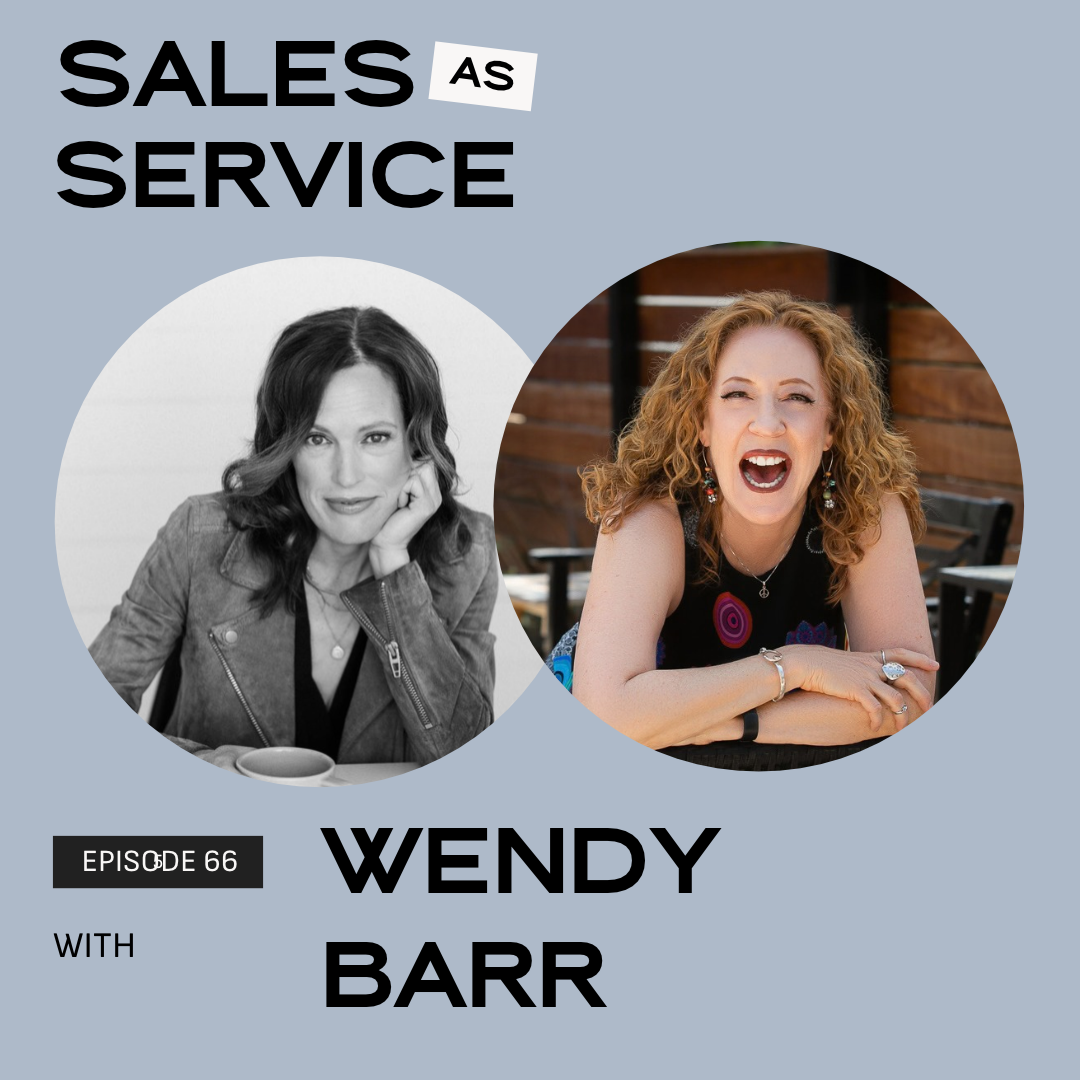
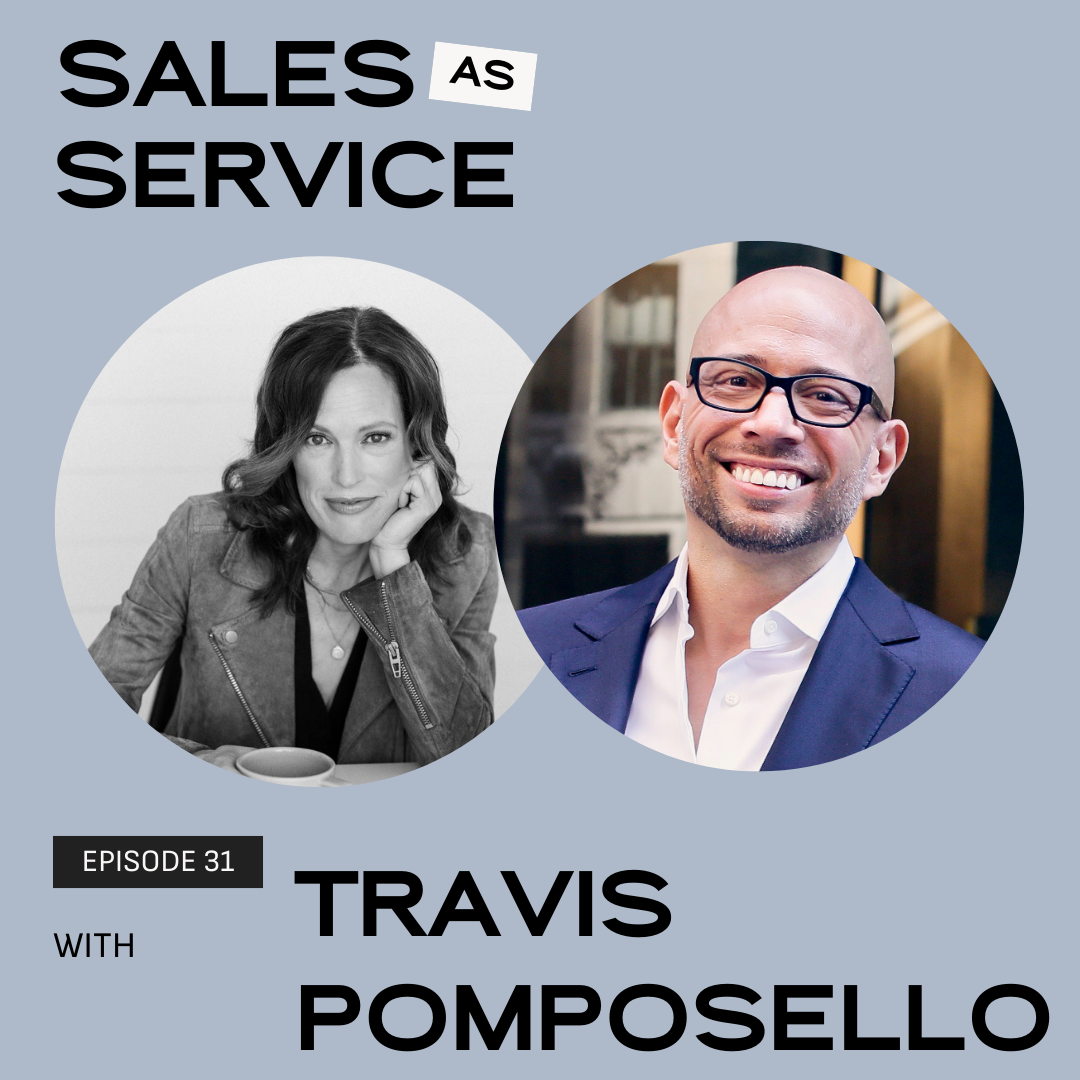
Just Show Up: Rethinking Sales, Networking, and Personal Branding with Wendy Bar
EPISODE: 66
A lot of women tell me they’re not good at sales or networking. But sometimes the problem isn’t that we’re bad at either one. We’ve just been trying to do them in a way that doesn’t feel like us.
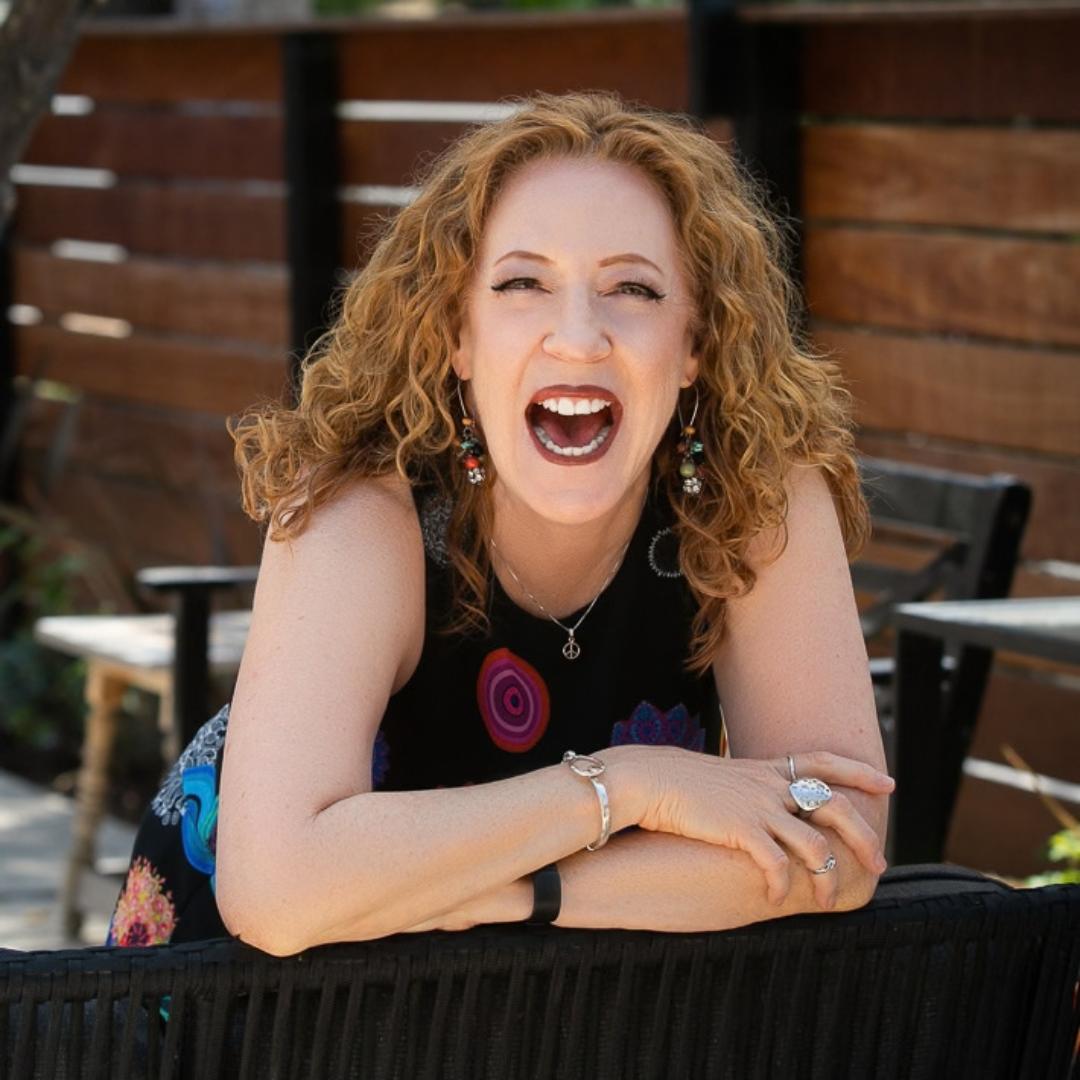
My guest, Wendy Barr, has spent more than two decades creating a different kind of space for women in business. What began as a happy hour with five women in Denver grew into Women’s Business Link, a community that reached more than 5,000 members and eventually evolved into the virtual community Wendy leads today.
In this conversation, Wendy and I talk about what changes when we stop trying to fit ourselves into someone else’s version of sales, networking, or even personal branding. We also get into the importance of staying consistent long enough for something to work, finding the communities where you can build genuine relationships, and letting people see more than just your expertise.
In this episode, we talk about:
Why relationship-building can be one of our greatest strengths in sales
What Wendy learned from growing a five-person happy hour into a community of thousands
Why showing up matters even when networking or selling feels uncomfortable
How personal stories help people understand who you are beyond your expertise
Why consistency and knowing when to make a small adjustment can be more useful than constantly changing your strategy
LISTEN TO THE EPISODE HERE 👇🏻
-
Wendy Barr: [00:00:00] You know, so what is it that makes you unique? You know, how do you feel on the inside? What do you think about on the inside? You know, what do you stand for? Because so many of us are afraid, "Oh, it's not professional for me to talk about my..." And I'm not saying to get out there and talk about politics and religion, but I'm not saying not to.
The right people will be attracted to you.
Tam Smith: Welcome to Sales as Service, the podcast designed to help you change your mind about sales, literally. I'm gonna help you change the way you think about selling. I'm Tam Smith, your host, sales bestie, and pitch partner next door. If you're tired of bros with biceps telling you how to crush a million dollars in your sleep or battling imposter syndrome on your own, you've come to the right place.
All you need to
do is listen, then take action. No gym membership required. Let's get
started.
Welcome back to another episode of Sales as Service. If you've been listening for any amount of time, you've heard me talk [00:01:00] about how often people tell me they're, quote-unquote, "Just not good at sales," especially women. And what that usually means is they're not good at the version of sales they were handed, that transactional close-at-all-costs version that is the last thing any of us wants to be.
But here's what I think is missed in the story a lot of us as women tell ourselves about sales. The things we think make us bad at it, caring about the relationship, wanting to actually know someone and adding value before we ever make an ask, those are exactly the things that can make us really good at it.
We don't need to become someone else to sell well. We need to trust what we already do naturally. And my guest today has built her entire business around that idea. Wendy Barr started Women's Business Link in 2003 as a happy hour with just a handful of women in Denver. It grew to more than 5,000 members before she rebuilt it as a fully virtual community years before that became the norm.
These days, Wendy works one-on-one with women on personal branding and thought [00:02:00] leadership, and she's got some strong opinions about why so many women have been told that they're bad at sales and networking when maybe we've just been measuring ourselves against the wrong version of both. Here's my conversation with Wendy Barr Wendy, thank you so much for being here.
Welcome to Sales as Service.
Wendy Barr: Thank you for having me. I'm super excited to be here, Tam.
Tam Smith: Tell us, who do you help and how do you serve?
Wendy Barr: I work closely with entrepreneurial women and professional women. My goal is to help women build, grow, and scale profitable businesses.
Tam Smith: You have worked inside brands like MTV, RCA Records, Rockefeller Center before starting Women's Business Link.
What did that world teach you that you didn't expect to carry into working with individual founders?
Wendy Barr: Creativity and innovation can open doors, and that once that door is open, it's critical to address the human [00:03:00] on the other side of the desk. Like, not treat it as if you are working with MTV, but you are working with Becky Smith, the MTV marketing director.
And to get to know her and find out what's important to her so that you can support her in her ro- in her role.
Tam Smith: I love the story behind Women's Business Link. I mean, it started as a happy hour with just a handful of women in 2003. What was the moment you realized that this was becoming something much bigger than just a social gathering?
Wendy Barr: I'm a very determined person anyway, and I really understand that there's power in numbers. At the time, I was working for New York Life Insurance Company.
Tam Smith: Hmm.
Wendy Barr: I had signed a training contract, which is hilarious because I have a master's degree, like, in art. But I wanted to learn about finance, so I signed, like, a three-year contract with them.
Hmm. And, and I realized that there was power in [00:04:00] front of the room. So I was networking everywhere trying to keep that pipeline full. But I decided, have you ever heard of NAFE, National Association for Female Executive?
Tam Smith: Yes.
Wendy Barr: It doesn't exist anymore. It was in New York, and I was a member. And I had called them and said, "Hey, do you have a local chapter in Denver?"
Where, which is where I was living. And they w- they said, "No, sorry, we don't. Um, no chapter in, in Colorado at all. But the strangest thing happened. Another woman called today asking about Denver, and we've never had an inquiry, so maybe you should, you know, call her." So not only did I call her, we went on a coffee date, and we fell in love, like, right away.
We started like, "Oh, let's just do a little happy hour and see what the ladies want." And it just kept growing and growing and growing. And then we started getting requests, "Oh, you know, I wish this was, you know, [00:05:00] closer to where I live. This is quite a drive away," or, you know, "I can't usually make it because I have small children at home," or, "I wish it was at lunchtime or at breakfast time or whatever."
And it eventually evolved into we grew from five ladies to over 5,000 ladies in a matter of five years, and ended up having about six events live, in-person events a month. So we had MAC, Monday Afternoon Club, which was our happy hour, and then North MAC and Boulder MAC, and then we had Mini MAC where moms could bring their kids and we would provide, uh, childcare.
Then we had TLC, The Lunch Club, and we had BWC, Breakfast With Champions, and it just kept growing. I've always cared so deeply about the community that I realized it was much bigger than just a little happy hour.
Tam Smith: And I feel [00:06:00] like people are just craving in real life experiences. So much of my business is online and I just had the...
went to a networking event early this week and, you know, was realizing, you know, I have not admittedly done the best job of, you know, connecting with my local network and, you know, really am, uh, myself am working to be much more intentional about that because there's just something about being in the room.
Wendy Barr: It's true, and that was our challenge because, um, after a hiatus, we brought MAC back in 2017. Mm-hmm. And we decided it would be virtual. Yeah. So that was our challenge. It was such a personable in-person event, and how can we make... how can we create a virtual event where virtual events have a lot of benefits, right?
Like you don't have to commute. R- right. You can fold it in with your in-person events, and the best part is you have a global reach. So if [00:07:00] in fact you can do business across borders, state borders, um, country borders, then virtual networking is critical to your marketing strategy. So how do we create an event that feels personable and- And where the women are actually connecting-
Tam Smith: Mm-hmm
Wendy Barr: but yet it's virtual. Our latest iteration of the Women's Business Link is 100% virtual. And again, we started this in 2017-'18, so that was before COVID, so before the pandemic, before people really became comfortable on Zoom calls. So we were kind of ahead of our time, but the world caught up with us. The pandemic was just for us.
But the world caught up with us, uh, you know, post-pandemic, and everybody was ready. They, they were used to it by then. They, they could see the benefits. They figured out how to make [00:08:00] it work for them, and we figured out how to facilitate their growth virtually.
Tam Smith: I was gonna say, you were, you're definitely ahead, you know, of the, of the pandemic, and it's kind of sounds like that's a theme.
I was gonna ask you w- what you credit the community lasting this long, and it, it sounds like that, you know, you, you've been really intentional to think about how to keep evolving and keep it fresh. So anyway, I'll let you speak to that. Like, how... What do you credit it to lasting this long?
Wendy Barr: Just that. Yeah.
You know, knowing when to pivot, knowing when something is working and something isn't. And I think that a lot of entrepreneurs do this. We think, "I'm gonna serve in this way," but it's not well-received, so they feel like they failed, and the truth is, you didn't. It- it's probably the smallest little tweak, and if you really pay attention to what your ideal client is asking for, and you make that very small tweak, everything changes.
So I, I think that I... We keep [00:09:00] fine-tuning it and fine-tuning it and fine-tuning it until... I mean, our, our virtual event is pretty well... I mean, we have about 80, um, that register, and probably about 60 that show up every single month, and I think that's a pretty nice accomplishment. And women go away not feeling like a number.
They feel... Or like a little Hollywood Square. They feel like they've been heard, they've been seen, and they always connect with someone. I guarantee when someone comes to MAC that they will meet at least one person.
Tam Smith: I love whether your events have been in person or, you know, virtual, you, you have created an environment that is really focused on, you know, relationship and community.
Was there something you, you did intentionally or, you know, um, some- that it didn't turn into just, you know, a transactional pitch fest?
Wendy Barr: That is actually [00:10:00] my, um, gift on our website, uh, six virtual networking secrets for women.
Tam Smith: Mm.
Wendy Barr: Because women network differently than men, but the infrastructure was created for men.
The networking infrastructure, everything i- uh, in our business infrastructure, our government infrastructure, everything was created for men.
Tam Smith: Mm-hmm.
Wendy Barr: So it's so much more than women just finding a role inside of that infrastructure. I believe that the infrastructure itself has to change and evolve to include women, because we just do things differently.
So we network differently. Men are much more transactional.
Tam Smith: Mm-hmm.
Wendy Barr: Are much more concerned with trust and honesty and interpersonal relationships. And so that's what we foster. [00:11:00] Because I don't think, you know, especially like when it comes to sales. The other thing I noticed was that oftentimes in these networking events, I, I'll network with people, but I notice that they're not doing business together, and I'm going, "What is the problem?"
If, if women want to support women in business, then when you network with them, you absolutely have to do business with them if they fill a need, right? Because otherwise we're just really missing the mark. And so I try to create an environment where you have an opportunity to get to know each other, like each other, trust each other, because I think on the other side of that is your personal brand.
If you come to the table being real and authentic in your, your own unique weirdness, whatever that is, your, your quirky you, th- that people are going to resonate to you, and [00:12:00] then you can do business with them.
Tam Smith: I so relate to that, uh, just on a personal level. You know, my corporate sales career, you know, all of the lesson...
You know, the, the training, you know, was from that male point of view, you know, that it was... Uh, it was very transactional, you know? And I felt- Yes ... it felt very, um, you know, against how I, you know, just naturally wired and naturally wanted to do business, and I thought I was doing it the wrong way. And, you know, it wasn't until I really leaned into...
You know, I'm just more, m- myself personally more naturally, you know, very, um, you know, service-oriented, relationship-focused, and, you know, leaned into, you know, the strengths of what, you know, made me unique that, you know, the success followed. You know, as long as I was trying to do it, I guess the traditional, you know, what, what I perceived to be right, I, I was really struggling 'cause it was just not aligned with, you know, who I am and how I'm wired.
Wendy Barr: Honestly, Tam, that's why women need you. That's why they need [00:13:00] you. Because, um, I know a lot of women that are purpose-driven, maybe heart-centered, they have that kind of a business, and they are repelled by doing sales.
Tam Smith: Mm-hmm.
Wendy Barr: But I think they are repelled by doing sales because it's always been presented to them in that tran- transactional way.
Because if it was presented to them in that interpersonal, relational way, they would love it because that, that is how women connect.
Tam Smith: Yeah. Just an opportunity to serve and solve.
Wendy Barr: 100%.
Tam Smith: I wanna kind of circle back on, you know, talking about the, you know, being able to make a pivot. What was something, you know, that you tried maybe that, you know, you had an expectation was gonna be really successful that, that didn't work that, you know, you...
Kind of an example of your own pivot, um, in the community?
Wendy Barr: I'm a big bucket of ideas. That's what I am, and I'm constantly thinking, "Oh, well, then I'll roll this [00:14:00] out, and I'll roll that out, and I'll..." But what I learned about myself after years of being an entrepreneur, this is my seventh business. I've owned seven businesses in my lifetime, Tam.
I've owned everything from a branding and design agency to a hip hop nightclub and a record label. I have owned so many businesses, and I, what I learned about myself is to stay the course, first of all, and that my personality, I'm more interested in building it. So I'll have an idea, I'll build it, and then I'll launch it, and then I'll lose interest.
I'm like, "Oh, what's next? Let me, let me roll out something else. What... There's something shiny over there. Let me do that." And so in order to be a successful entrepreneur, I had to pick a lane and stay in my lane and go, "Okay." [00:15:00] Even my business partner used to say that to me. "Well, Wendy, you're gonna change your mind in, like, five minutes, so, like, how hard should we work on this particular idea?"
So I've, I've learned about myself that I get bored easily, so I had a mastermind for years, and while I loved all of the people in the mastermind, I was bored And so that doesn't work for me, my style. That's just not for me. For me, things have to constantly be evolving and, and changing. And so MAC, we keep it the same.
It's on the third Monday of every single month, right? We- Mm-hmm ... do it the same. We promote it the same way. We market it the same way. We sell it the same way. And the interesting, we have a different speaker every month. I offer, um, um, I call it a MAC snack. So I'm, I'm offering a, a tip, a business tip for business growth, and that keeps it interesting enough for [00:16:00] me to stay the course.
Mm-hmm. So I think that there's really something to be said for getting to know yourself. What do you love and what don't you love? Because if you're gonna serve others, it absolutely has to be something that you're passionate about.
Tam Smith: That consistency piece, I, I just posted, you know, talking about I'm my own worst client sometimes, that, like, I know the power of, you know, consistency and discipline.
Uh, but I also have a extremely high sense of urgency, and I'm very impatient. And when things don't immediately, you know, show the signals that it's gonna be, you know, a massive success, I think I need to completely redirect and, you know, start over and, you know, uh, change the strategy, you know, find the next, the next shiny object.
When, you know, I'm just sabotaging myself, not, like you said, you know, pickin' a lane and stayin' the course.
Wendy Barr: Right. Try to find a way to stay the course but still keep it interesting enough that you are in there and you are all in. You're not bored. You're [00:17:00] creative and innovative, but yeah, but you're holding the, yeah, holding the consistency because that's key.
Tam Smith: Yes. I say this repeatedly, but the hill I will die on is that every opportunity that you have had, have, or will have comes from relationship. And I feel like, you know, that's what, you know, whether w- I think the message from this conversation really is, like, find your c- you know, find your community, you know, and be putting yourself out there, whether it is in person or, you know, online to find that community where, you know, you're consistently, you know, giving yourself opportunity to, to make and make new connections and deepen relationship.
For people that are challenged to do that, you know, w- what... You know, that f- I hear a lot of, "Oh, I'm an introvert," or, "Oh, I'm bad at networking," or, "Oh," you know. What is your advice to them?
Wendy Barr: Wow. You make me wanna slide over to your lane for just a minute and because a w- a lot of women are uncomfortable with sales.
And [00:18:00] I talk a lot about sales to my community. It's like-
Tam Smith: Mm-hmm ...
Wendy Barr: you think your job is life coaching. It's not actually life coaching. Probably 20% of your job is life coaching, 80% is sales.
Tam Smith: Hmm.
Wendy Barr: And keeping your pipeline full, networking, make these sales. Like, and I am constantly giving them the numbers. How many people do you need to meet to schedule this many appointments, and then how many of these appointments do you need to have to sell this many of your goodies?
Tam Smith: Mm-hmm.
Wendy Barr: Because, y- you know, what is your conversion rate? Do you meet three people and sell one product? You know, do you meet five people and sell one? You need to know your own numbers, and you need to get over it. Like, to think that I'm an introvert and I'm, I don't like to do networking, and I'm an introvert and I don't like to do sales, I'm sorry, this is actually your job.
Tam Smith: Mm-hmm.
Wendy Barr: And if that's uncomfortable for you, and [00:19:00] if it's not something you can move past, then you probably aren't going to succeed as an entrepreneur.
Tam Smith: And I feel like there's also this perception from the outside in that, you know, we're all, like, you know, you and I are just naturally good at this. But- Ooh
you know, I've, I identify as a, a high-functioning introvert. And it's just taken, uh, I mean, again, a lot of exposure therapy and just practice. You know, yes, is it, you know, is it sometimes uncomfortable? But do it anyway. Um, and I appreciate you, uh, just being like, uh, get over it and just practice. You know, that, uh, it gets it...
Not to say that it's ever not
Wendy Barr: going to-
Tam Smith: Show up. Yeah, exactly.
Wendy Barr: Just show up and you don't have to be anybody but you. Mm-hmm. And I always say that you can't say the wrong thing to the right people, and you can't say the right thing to the wrong people. Mm-hmm. So even if you're more reserved, I'm definitely outgoing, okay?
[00:20:00] And if you are not, and you're more reserved, you are still magnetic in your own way. They are still going to be attracted to you. I guarantee you introverts out there, I guarantee you that some people are repelled by my outgoingness.
Tam Smith: Mm-hmm.
Wendy Barr: And those are probably not my people. They're your people. But if you don't show up, you are leaving that on the table.
Tam Smith: Mm-hmm.
Wendy Barr: They never get to meet you.
Tam Smith: Mm-hmm. And I appreciate the cur- encouragement here, is there's, there's nothing to be... I think we put this pressure on ourselves, especially as women, that we need to be something other than who we are, and it's just, just show up and be you.
Wendy Barr: Somebody is going to be like, "Oh, I like her.
She's soft-spoken," or, "Oh, I like her that she's so real and human. I can really relate to her." Because I guarantee there are other people in the room just like you.
Tam Smith: Mm-hmm.
Wendy Barr: You're missing out on them if you don't show up.
Tam Smith: Hey, Tam here. Most consultants and [00:21:00] service-based founders are great at delivery.
Referrals prove it, but referrals aren't predictable. And you've avoided sales because you think you have to be something you're not. Sales isn't pressure or cringey tactics. It's connection, starting conversations, recognizing when you can actually help someone. The hard part? Doing it consistently. That's why I built the VIP Legion pipeline system.
It gives you a repeatable way to book three to five sales qualified meetings each week through relationship first outreach, not cold pitching. Ready to create opportunities on purpose? Book a free alignment call using the link in the show notes. Sales is a practice. Let's make it consistent. You speak a lot about in terms of personal branding, creating a very human, approachful personal brand.
To the women that you work with, how do you help them develop that? You know, when they don't feel like they have anything interesting. Again, like I'm the introvert, I don't have anything interesting to say. Like, they just don't know what step one is in developing that and, you know, their visibility and thought leadership.
How do you work with them [00:22:00] to create that?
Wendy Barr: You know, we really just go deep. We, you know, we look at maybe what your clients are saying about you, right? Maybe we look at some testimonials. Maybe you don't have any because you didn't wanna ask for them, because I think that women were just taught to play small.
I just read a book called The Mad Wife, and I think that we have been conditioned as women To play small, um, be a good girl, and seen and not heard. And yeah, it just, it, if you're going to be an entrepreneur, you are, you're simply going to have to step into the spotlight. One of the best pieces of advice that I ever received from a business coach, she said, "What are you waiting for?
If you wanna be the queen, just put on the crown. Go sit on the throne. Don't just stand there and go, 'When is somebody gonna give me the crown?' Or, or, 'When is somebody going to [00:23:00] invite me to be successful?'"
Tam Smith: Mm-hmm.
Wendy Barr: You don't need an invitation. All you, all you have to do is sparkle. So I work with women to kind of discover who they want to work with, who actually is their ideal client, and I'm not talking about demographics or simple psychographics either.
Like, who is it that you really relate well to? Who is it that you wanna work with? You know, what is it that makes you unique? I've always done that kind of work, personal brand strategy and marketing strategy, and I've recently stepped into thought leadership and what that looks like. First I tried it out on myself, right?
Because I wasn't doing it.
Tam Smith: Mm-hmm.
Wendy Barr: Like what you said, I was my own worst client. I'm like, yeah, well, I looked at my social media, um, like on LinkedIn, and like on, um, Facebook, and I looked at my posts. It was like, "Hey, wanna come to MAG? Hey, wanna..." You [00:24:00] know, um, "Wanna buy my stuff? You guys wanna buy my stuff? I have great stuff."
And then also I was posting my tips about personal branding, another tip about personal branding, another tip about marketing. And, and it just felt like there wasn't anything about Wendy, and so they weren't relating to me. Mm-hmm. I was just like a marketing machine to them. Mm-hmm. I was just spitting out marketing tips, hyperbole all the time.
You know? So what is it that makes you unique? You know, how do you feel on the inside? What do you think about on the inside? You know, what do you stand for?
Tam Smith: Mm-hmm.
Wendy Barr: Because so many of us are afraid, "Oh, it's not professional for me to talk about my..." And I'm not saying to get out there and talk about politics and religion, but I'm not saying not to.
The right people will be attracted to you. So I help my clients now create a thought leadership ro- roadmap, and if s- if [00:25:00] you f- follow me on social media you'll see that my posts have shifted dramatically to... I don't know. I wrote a post about a woman that I met in a hotel lobby. She said to me, we're waiting for the shuttle.
She said to me, um, "Yeah, but you know," she was older, about 30 years older than me, and she said, "Yeah, my, uh, brother and I are from the East Coast, and we migrated to LA about 30 years ago And I was like, "Oh, so interesting." And I got on the shuttle, I, I was on the plane, and the whole way on the plane I'm thinking to myself, "Migrated?
Like who says migrated?" You might say relocated. You might say moved. You might say pick up, uh, picked up our lives and traveled across country. She said migrated. And it, it really started twisting around in my mind until it turned into this whole post [00:26:00] about evolution and about migrating. And I'm not the only one.
Listen, I'm fairly simple. Like I said, I have a art degree like I'm a creative. And so I not only do I have the attention span of a gnat, but I'll spend 15 minutes thinking about the colors of a flower. So all of us have these thoughts. Somebody, you might meet someone at a networking event and you're thinking, "Why of everything I was wearing did she focus on my earring?"
Tam Smith: Mm-hmm. "
Wendy Barr: And what does that mean? And what kind of a human is she?" And putting those thoughts out there on social media, that's the game changer. Trust me. That is the game changer because now people get to know you. Mm-hmm. And I believe that people wanna do business with people, and they wanna know if your value system is in alignment with theirs.
Tam Smith: Mm-hmm.
Wendy Barr: And if you're not even sharing who you are on [00:27:00] the inside, they will never know, so they're going to scroll right past you.
Tam Smith: This is... You're speaking to me. I mean, just I'm thinking about my own content right now. It's educational, you know, m- I'm so focused on sharing value, so I, you know, I think it was very, you know, trying to, you know, share, you know, tips, I know, some- something that's gonna help someone in their own business development journey.
But, you know, it's very, as far as, um, I, I have not put a lot out there recently that allows, you know, anyone to really get to know me. And, and it's... I, I think I'm the classic, I do that, "Oh, nobody's interested in that," or, you know, "No one cares about..." You just dismiss the stories that make, you know, that, that, you know, make you interesting, you know, that can tie to your expertise, but then allow people to get to know you and expose a little bit of, okay, what it, what it would be like to work with you and to, you know, kind of be sitting next to you in the room.
So I'm inc- I need to, to think about the stories just in my day-to-day that I can tie to my expertise to give people more of a window into who [00:28:00] I am as a person. Totally. Uh, and to not dismiss those.
Wendy Barr: Yeah, and don't dismiss the educational posts- Yeah ... also. It needs to be a nice balance of both. Tam, I posted a video on Instagram about my trash can that got a quarter of a million views.
Tam Smith: Oh, that is fantastic.
Wendy Barr: People still come up to me and they're like, "Oh, I saw that trashcan video." "You did? We just met." "Yeah, but w- I follow you." So it was about, it was really about customer service.
Tam Smith: Mm-hmm.
Wendy Barr: Because I called the number on the inside of ... It's one of those, uh, touchless trashcan lids. Yeah. And so it wouldn't, it didn't work anymore, so there's an 800 number, uh, um, on the other side of the lid.
So I called and I said, "Yeah, you know, it's not working anymore." And the guy told me, I swear to you he told me this, he told me to take it and put it in a dark place for three hours. So I took it in the garage, I closed it in there for three [00:29:00] hours, and then to bring it back out and unplug it, plug it back in, you know, turn it off, turn it back on, and then it'll work.
And yeah, well, it didn't. And but just the fact that I ... He was messing with me. He had to be messing with me to think that I would take the trashcan lid and put it in a dark place for three hours, but I did and I watched the clock. I set a timer. So really it was about customer service. But yeah, I, um, yeah, we had to buy a d- another lid that didn't actually
But it was just, I just started talking about my career as a waitress in New York City, and the conversation just the whole time. Yeah, so, so you never know what people are going to latch onto. Mm-hmm. And if you would just be yourself, even if you made a mistake, even if, you know, you ... After my dog passed away, I started feeding the [00:30:00] squirrels on my patio.
Well, my best entertainment are these little squirrels that will eat from my hand now. And so it's content. Yeah. And that's the kind of ... So if you combine the two-
Tam Smith: Mm-hmm ...
Wendy Barr: where you're posting value and educational strategies and tips, et cetera, but you're also letting them get to know you, then boom, what happens?
They wanna do business with you.
Tam Smith: Let's jump into our fast five. What's one task that you have handed over to AI?
Wendy Barr: Writing promotional email sequences. These are not thought leadership. Types of communication. That comes from you. So yeah, that has to come from you even if your AI assistant helps you edit it slightly.
The key though is, yeah, making sure your AI assistant knows who you are on the inside, teaching your AI assistant to speak in your voice. Then your emails, it can help you with more of those emails. Taking long form [00:31:00] video, for example, and turning it into... You know, repurposing it into clips, and reels, and written posts.
After today, I can go back to this video, I can share this with my AI assistant, and I can say, "What are the key points," right? Or I can pull my transcript from a Zoom call and say, "What did we talk about here, and what... Can you pull out the key points? And, and how can I follow up with this person in a way that I really connect well with them?"
And then, um, problem-solving and brainstorming. That's probably the biggest one, is, you know, should I roll out this product or should I roll out that? Um, we're getting ready to add some events. Women's Business Link is getting ready to add some events. So should I add this one, this one or this one? And my AI assistant will say, "Well, that one, you know, cannibalizes math.
Now you're gonna have half as many people in two places. [00:32:00] Why don't you give the ladies what they really need, which is this one?" Sometimes I agree, and sometimes I don't. You can't take it at face value. So you absolutely... I edit every single thing. I am using AI to help write standard operating procedures, to help with my SOPs.
Then I can just talk to my AI assistant and say, "Well, this is how I do this. I do this, then I do that, then I do this. Two weeks later, this." And Claude will just, yeah, help me generate operating procedures and... You know, I gave my website link to Claude and I said, "What's outdated? What needs to work? What can I add?
What would make this website better?" Right? Like- Mm-hmm ... and, and there's a whole list, and he's not wrong.
Tam Smith: No. It- He's not wrong ... in my own just the way I work, I f- I find that I am talking to my computer more than I'm typing. I've ne- Like, it's, it's such an interesting shift. [00:33:00]
Wendy Barr: Well, I only type with these.
That's it. Yeah. So I'm slow. Oh. I'm so slow. So, uh, yeah, so for me it's always better if I can talk.
Tam Smith: Best advice you've ever received about sales and business development?
Wendy Barr: I think that the best advice I've ever received is that there are people out there looking for me. There are people out there that need what I do.
And if you have clarity, or if your language is full of hyperbole and words that they can't connect with, you will not be able to connect to the people that need you the most.
Tam Smith: Best purchase you've made for your business under $100.
Wendy Barr: That one was a hard one, Tam. I knew you were gonna ask me this one. And I think probably the external mic or, um, or the external, um, camera because nothing's worse than getting on
a video call with somebody that's [00:34:00] blurry or, um, yeah, or they've got their laptop on their lap and they're moving and like, yeah, you're looking all the way up their nose. Not cool.
Tam Smith: What's always in your work bag?
Wendy Barr: All the chargers, right? All the adapters and, um, my slide clicker for if I'm speaking on stage.
Free tickets to MAC. Mm. Always have free tickets available, and I would love to offer anybody in your audience that's interested in coming, come as my guest for the first time. See what we're up to. And of course, and this should be in everybody's bag, are my inspirational tacos
Tam Smith: Oh my gosh. Audi- if y- I wish you could see this.
This is This.
Wendy Barr: It's a taco. Uh-huh. And it says, "Crunch time, you'll conquer it." So if I have a few of these in my pocket at a networking event, like at a [00:35:00] personal one, so you know, this circles back to feeling uncomfortable or being an introvert, is, you know, people, "Hey, I'm Wendy. What do you do?" "I'm Becky. What do you do?"
It's like, "Taco distributor, and I would like to..." Yeah, so giving them something. They have these inspirational tacos, little inspirational book. They, they're on Amazon, so... And I think they're called Positive Taco.
Tam Smith: That is fantastic, and you will always remember the person that gave you a Positive Taco.
Wendy Barr: For sure.
Absolutely. Absolutely. So y- I have m- I use that a lot in my marketing.
Tam Smith: Yeah.
Wendy Barr: Um, I'll say, "Let, let's taco about it," right? And then I'll put a little taco. So like in my emails before I share my calendar link or something like that, it'll say, "Let's taco about it." So the tacos were perfect for me.
Tam Smith: That is what I'm always gonna associate you [00:36:00] with now, and it's a great, it is a great association.
Everyone loves tacos. Finally, if you only had one hour each day for business growth, how would you spend it?
Wendy Barr: Spend it using AI. I would be using Claude. Listen, I use AI four or five hours a day, and I feel like I am
barely scratching the surface.
Tam Smith: Mm-hmm.
Wendy Barr: There is so much that I still wanna learn. I still wanna learn more about AI agentics. I want to build agents for my business. I'm working on that. Um, I haven't pulled the trigger yet just because I just haven't had time to really dig in, and I feel like I need to understand.
I'm not just gonna create an agent that... Or let someone else create an agent for me. So if you're listening out there and you're thinking, "I'm gonna call her and tell her I can create her agents for her," I'm probably not gonna do that because, well, I'm a control freak, and I wanna make sure that it's do, it's doing what I [00:37:00] need it to do.
And then, yeah, I... There are so many other parts and pieces. For example, I'm using Claude, and I probably could have mentioned this before when you asked, but I'm using Claude to help me organize the chapters of my book that's coming out called The Nuances of Networking.
Tam Smith: Mm.
Wendy Barr: So I wrote the content, The Nuances of Networking.
But how to organize all that in your head? I've got 14 workbooks that I've already created in my voice, in my tone, with my own words, these fingers. Now how do I just organize the content? So what I'll do, especially if you're writing a book, listen to this. If you're going to do this, um, in AI, make sure that you tell AI that you wrote this.
So if you're uploading a PDF or something, say, "I wrote this. These are my words. Don't change my words." Right? "Just offer me suggestions for how to pull this all together." Because o- [00:38:00] otherwise they're gonna... A- your AI's gonna think that you might have borrowed it from someone else, and, uh, and what it, what its job is to change it into yours.
A lot of people are doing this. I am not. I- if- uh, because it's somebody else's work. You-
Tam Smith: Right ...
Wendy Barr: you know, we don't... Yeah.
Tam Smith: Yeah.
Wendy Barr: That's not cool. But it's my work, so I make sure to ta- tell my AI that I wrote this. These are my words. Please don't change my words or the nuances of my message.
Tam Smith: Well, when can we expect that book to come out so that we can watch for it and read it?
Wendy Barr: Around the holidays this year, at the end of the year, um, 2026. I'm actually on my way to Portugal, and we're gonna spend s- a considerable amount of time there. I got all of my work done ahead of time so that I wouldn't have to work on the day-to-day work while I'm there, and instead work on my book.
Tam Smith: Nice.
I'm... I'll, I'll be watching out for that one. [00:39:00] Well, yay. And where can folks find and- Thank you. Yo- yeah. And where can folks find and connect with you online?
Wendy Barr: Well, womensbusinesslink.com will... is a great place to find out more about our events. So we have an events page. So go to womensbusinesslink.com. Um, you can find me, Wendy Barr, on LinkedIn.
I love to play on LinkedIn and on Facebook, and occasionally on Instagram. I'm on Instagram, it's iamwendybarr. So yeah. I'm very responsive, so message me on LinkedIn. Message me on Facebook. Ask me for a free ticket to MAC. I will send you one in a heartbeat, unless I'm on a plane to Portugal, then I'll get right back to you.
Tam Smith: Thank you so much for being here, and thank you so much for the community that you have built and nurtured and grown to support, uh, female founders and business owners.
Wendy Barr: Of course. Thank you. Thank you for all you do. Thank you for showcasing me. I mean, that's a [00:40:00] gift. I appreciate you.
Tam Smith: Absolutely Thanks again to my guest, Wendy Barr, for being here.
I talk all the time about relationships being the foundation of sales and business development. Every opportunity I've had in my business can be traced back to a relationship somewhere. But those relationships don't happen if we're always waiting for someone else to make the first move. And I'll be honest, this is one I'm still working on myself.
I run a lot of my business online, and if I'm being fully transparent, I have not done the best job of showing up in real rooms here in my own local community of Durham, North Carolina. So I've made myself a rule. At least once or twice a month, I show up somewhere new just to be in the room, to make connections and engage, to find out where I can add value.
And I say that as someone who identifies as what I like to call a high functioning introvert. I'm not naturally the person who wants to walk into a room full of strangers and start introducing myself. But I also know that every time I do it, it gets just a little bit easier. So here's your sales as service [00:41:00] challenge this week.
Just show up. Find one room and put yourself in it. It could be an in-person networking event, a virtual community, an industry group, a local meetup, wherever the people you wanna know are gathering. And then introduce yourself to just one person. Ask a genuine question. Find out what they're working on, what brought them there, or what they need.
Look for an opportunity where you can add value without needing anything in return. That's it. Because Wendy is right. There are people out there right now looking for someone just like you, but they have to know you exist. So this week, get in the room and give them a chance to meet you. I'll put Wendy's information and everything we talked about today in the show notes.
And until next time, remember, sales is an act of service. So keep showing up, keep starting those conversations, and keep being the first one to say hello. I'll see you next week.
You've just listened to the Sales as Service podcast, the podcast to help you shift your mindset around
selling. The executive producers for this show are [00:42:00] Jess Milanes and me, Tam Smith.
The show is produced by KNWN Media and Studio 349.
MORE OF A READER? 👇🏻
“I’m just not good at sales.”
I hear some version of that all the time, especially from women.
Usually, what they’re describing isn’t an inability to sell. They’re reacting to a version of sales that feels transactional, aggressive, or disconnected from how they naturally build relationships.
My conversation with Wendy Barr, founder of Women’s Business Link, was a good reminder that the qualities we sometimes think make us bad at sales may actually be some of our greatest strengths.
Wendy started Women’s Business Link in 2003 with a simple happy hour for a handful of women in Denver. Within five years, that group had grown to more than 5,000 members, with multiple events designed around the different ways women wanted and needed to connect.
The format has evolved considerably since then. The focus on relationships hasn’t.
For Wendy, networking isn’t about walking into a room and collecting as many business cards as possible. It’s about getting to know the human being standing in front of you.
That idea sounds simple, but it applies to almost every part of business development.
Of course, relationship-first sales doesn’t mean we get to avoid the parts of business development that make us uncomfortable.
Wendy was pretty clear about that.
If you own a business, sales is part of the job. So is keeping your pipeline full, meeting people, having conversations, and understanding your numbers.
I appreciated that distinction because relationship-first selling can sometimes get confused with passive selling.
They aren't the same thing.
We can sell in a way that feels like us while still doing the work required to create opportunities.
I identify as a high-functioning introvert. Networking didn’t magically become comfortable because I decided relationships mattered. I got better at it because I practiced.
The goal isn't to become the loudest person in the room. It's to actually enter the room.
As Wendy put it, you can’t say the wrong thing to the right people. Someone may connect with Wendy because she’s outgoing. Someone else may connect with you because you’re quiet and thoughtful.
But neither connection can happen if you never show up.
That same principle applies to how we show up online.
Wendy shared something during our conversation that made me take a hard look at my own content.
She realized that much of what she was publishing was either promotional or educational. People could learn from Wendy, but they couldn’t necessarily get to know Wendy.
So she started sharing more of the observations, stories, experiences, and ideas that showed how she actually thinks.
That doesn't mean abandoning useful educational content. It means creating a better balance.
This is something I’m thinking about in my own marketing.
I spend a lot of time asking, “Is this useful?” That's important. But there’s another question worth asking:
Does this give someone any sense of who I am?
Because people aren't only deciding whether we know what we're talking about. They're deciding whether they trust us, relate to us, remember us, and want to spend time working with us.
One of my favorite things Wendy said during our conversation was that there are people out there looking for what we do.
I believe that.
But relationship-first business development still requires participation.
We have to go to the event. Join the community. Start the conversation. Share the story. Follow up. Stay consistent long enough to build trust.
We don't need to become someone else to do any of those things.
We just have to give the right people an opportunity to meet us.
✦ YOUR SALES AS SERVICE CHALLENGE
This week, put yourself in one room where a new relationship can happen.
That can be an in-person networking event, a virtual community, an industry group, or even a conversation you’ve been meaning to start with someone already in your network.
Your job isn’t to pitch yourself or walk away with a lead. Just show up as yourself and talk to someone you don’t already know.
Ask a question. Get curious. Find out something about the person on the other side of the conversation.
As Wendy said, there are people out there looking for someone like you. But they can’t find you if you don’t show up.
RESOURCES & LINKS
Connect with Wendy on LinkedIn.
Drop Wendy at note at wendy@womensbusinesslink.com or schedule a call.
Your next client - Calculate what it takes.
Learn how to consistently book 3–5 sales-qualified meetings each week - Book an Alignment Call.
GET THE CLIENT PIPELINE CALCULATOR
If this episode got you thinking about your own pipeline, the Client Pipeline Calculator shows you how many conversations stand between you and your next client. Get the calculator →
And if you loved this episode, subscribe and leave a review on Apple Podcasts — it helps more service pros find the show.

TAM SMITH
I’m Tam Smith-Sales Growth Strategist and Founder of Studio Three 49. I help service-based founders find, connect with, and convert right-fit clients through predictable, sustainable outbound sales solutions.
No pushy pitches. No bro-marketing. Just simple, structured systems that turn connections into clients.