Ask for the Introduction: Turning Relationships Into Opportunities with Phil “The Connector” Herrington
EPISODE: 68
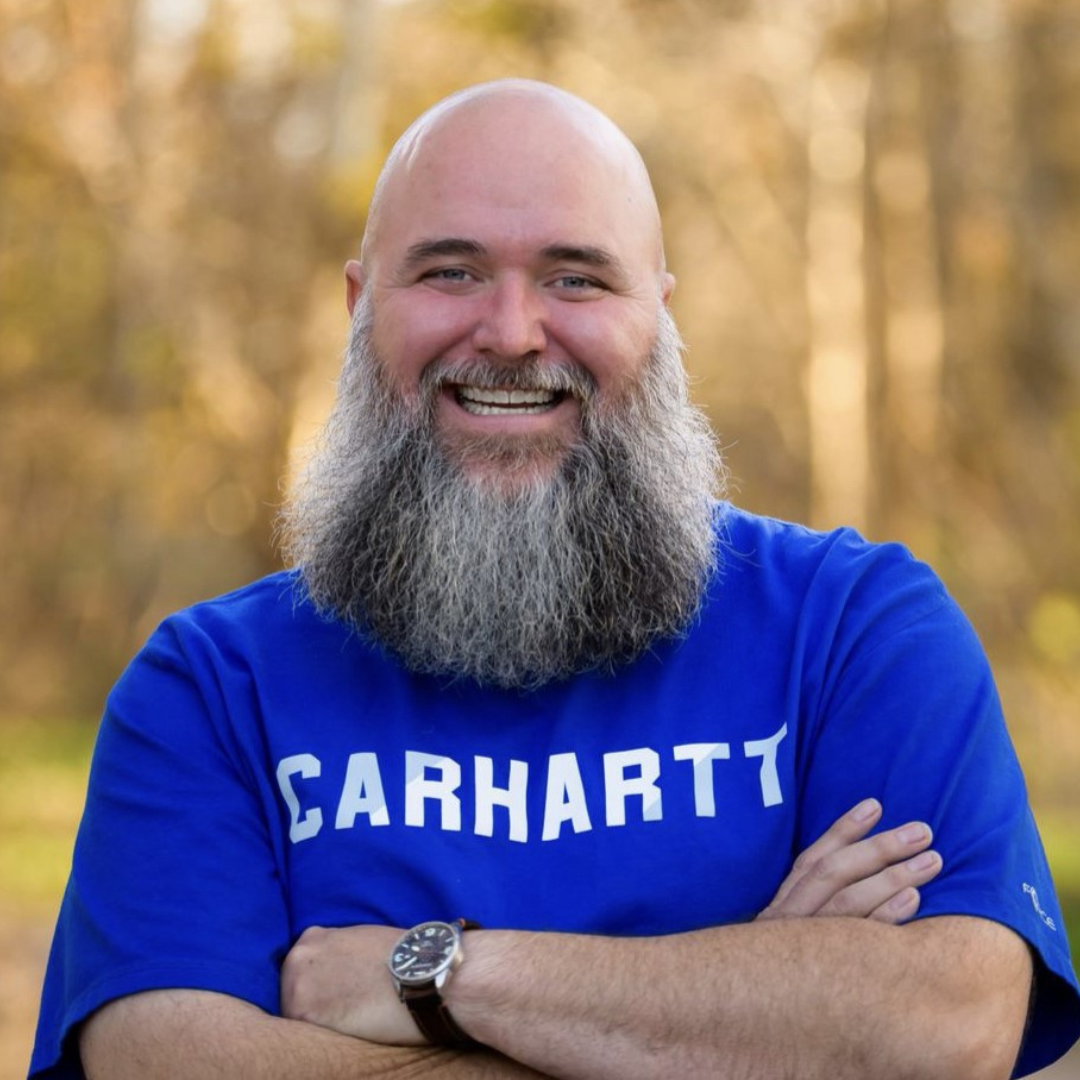
Phil “The Connector” Herrington spent more than three decades in sales, including years of cold calling and door-to-door prospecting. When he discovered business networking, he brought that same sales mindset with him—and admits he initially got it completely wrong. He treated every one-to-one like a lead instead of a relationship.
Today, Phil helps B2B business owners build strategic relationships through The Connector Community. In this episode, we talk about what changed when he stopped trying to close every conversation and started focusing on giving first. We also get practical about the other side of relationship-first sales: eventually, you still have to ask. Phil shares how to make that ask easier, why he prefers introductions over referrals, and how consistency and enough conversations keep a pipeline moving without turning people into numbers. phil-tam-take-02
In this episode, we talk about:
Why your first networking conversation doesn’t need to become a sales call
The simple shift from asking for “referrals” to asking for specific introductions
How to create value before asking someone to buy
Why relationship-first sellers still need to get comfortable making the ask
How consistent prospecting keeps you out of the feast-or-famine cycle
LISTEN TO THE EPISODE HERE 👇🏻
-
Phil: [00:00:00] When you ask for a certain industry, Tam, you're not gonna send me the one you don't like. You're gonna send me the one you do like. So not only we got a thousand introductions coming over in the last couple years, but they're the cream of the crop, the best of the best. So then you start doing business with only amazing people because friends have sent them over.
It's really, really powerful.
Tam: Welcome to Sales as Service, the podcast designed to help you change your mind about sales, literally. I'm gonna help you change the way you think about selling. I'm Tam Smith, your host, sales bestie, and pitch partner next door. If you're tired of bros with biceps telling you how to crush a million dollars in your sleep or battling imposter syndrome on your own, you've come to the right place.
All you need to do is listen, then take action. No gym membership required. Let's get started. Welcome back to another episode of Sales as Service. I'm your host, Tam Smith, sales growth strategist and founder of Studio Three 49, where I help service-based [00:01:00] businesses build a more consistent pipeline through relationship-driven outreach.
Basically, you can think of me as your professional conversation starter. And if you've listened to this show for any amount of time, you know I believe relationships are the foundation of sales. But there's a tension that comes with that. On one side, we have that very traditional version of sales where we're trying to force every conversation to become a lead.
Every interaction has an agenda, and we're constantly looking for the fastest path to the close. And on the other side, especially for those of us who believe in relationship for selling, it can be really easy to swing too far in the opposite direction. We build the relationship, we share resources, we make introductions, and we stay in touch, and sometimes we never actually ask for anything.
My guest today, Phil "The Connector" Herrington, has lived both sides of that equation. Phil spent more than 30 years in sales, including years of cold calling and door-to-door prospecting. When he eventually discovered business networking, he brought that same transactional [00:02:00] mindset with him. He'll tell you himself that for the first several thousand one-to-one conversations, he was still treating everyone like a lead.
Today, his approach looks very different. Through the Connector Community, Phil helps B2B business owners build strategic relationships and make the right connections. And what I love about his approach is that it isn't simply about networking or collecting more contacts. It's about learning how to listen, give first, make thoughtful introductions, and still be willing to ask when the opportunity is there.
In this conversation, we talk about why the first meeting doesn't need to become a sales call and why Phil asks for introductions instead of referrals. It sounds like a small shift, but in the last two years alone, Phil says it's led to more than 1,000 introductions. We also talk about why being specific makes it easier for people to help you, and finally, why relationship for sales still requires us to get comfortable making the ask.
Let's get into my conversation with Phil "The Connector" Herrington. Phil, thank you so much for being here. Welcome to Sales as Service. [00:03:00]
Phil: I'm so happy to be here. Thank you. The name of your podcast is like, oh, that's what I do.
Tam: Well, tell us then, who do you help and how do you serve?
Phil: Oh, yeah. Thank you so much.
Um, I help that busy business owner, B2B business owner that doesn't have time to, um, go find those strategic partners anymore, but they know they're just one connection away from that strategic partner or, or, uh, their next sale. And, uh, they hire us to go find them for them. So I'm a B2B business matchmaker, and we do that inside of our connector community.
Tam: You spent over... Gosh, this makes me sweat just thinking about it, but you spent over three decades cold calling before you shifted toward, you know, relationship driven sales. Was there a moment or a call that, you know, made you start questioning whether, you know, that had to be the whole strategy? I mean, don't get me wrong, cold calling, regardless of what anybody said, is not dead.
You know, and now I [00:04:00] would say people are so hungry for that one-to-one connection, but it gives people a lot of, you know, high anxiety
Phil: Well, let me, let me answer the question this way. You don't know what you don't know, so I never knew this world existed, the networking world. So because I didn't know it existed, I just did what my mentors taught me, which was go door to door.
Uh, my longest career was in the credit card processing business, and I would actually go door to door, small town America. I lived in Wichita, Kansas, and we'd drive a couple hours out to these towns that were 30,000 people. There was basically a Walmart there, and the s- and the main street, like you remember back in the day.
And we'd walk down the main street, and I'd hand out 30 business cards a day. I'd get five appointments and close two and a half the next week, and I just did that, right? And, um, it's the only thing I knew. I tell you that to say, when I did find business networking, I went like, "Holy crud, everyone will do a one-to-one?"
And I did it all wrong for my first, [00:05:00] like, two, I would say even 5,000 one-to-ones. Because I treated them like most people do in networking, I treated them as leads. Because as a salesperson, especially when you're, when you're, when you're built and trained to be a one-call, cold call closer, like you don't leave until they give you money, then all of a sudden these people will sit down with you.
I, of course, I did networking all wrong. So who's the best person to teach networking is the... or teach something is the one that does it all wrong. So now, fast-forward to today, after doing 5,000 one-to-ones and doing them incorrectly, now I teach people how to build deep relationships, which is so funny.
Tam: Well, it's... I mean, I'm kind of having the same experience. You know, it's like I am solving my own problem in the work that I do, and a lot of it, you know, it's been learned through experience, uh, just through my own, you know, mistakes. You know, success and failures. You know, we teach what we need to learn.
Phil: Mm-hmm. That's right. That is so true. Like,
Tam: talking about doing it r- like, what are the fundamentals of good networking and relationship building? Let's just start there.
Phil: Oh, [00:06:00] love it, love it. That's, uh, my favorite question. I have a framework for one-to-ones now, and it's how to have a true, authentic conversation and then be able to separate that from a get-to-know-you call to a sales call if it requires that.
What I mean by that is I ask so many questions to the, to the other person. By the way, if somebody shows up and do- and gives you the gift of doing a one-to-one with you, and a lot of times people don't see it that way, 'cause they can get a anybody with a pulse on their calendar. But if they show up and you ask them to do a one-to-one, you wanna honor them by making sure you ask lots of questions abou- about them, 'cause people wanna be seen, heard, and loved.
So you wanna see them, hear them, and you love them by not selling them on the first call. Then we invite them to a second call if they wanna learn more about what you do. And by the way, that only happens about 10 to 15% of the time because a lot of people aren't ready for your service at that time. And allow that to be the way it is, and you'll, you'll be-- you'll do great.
Just separating that call, it's called [00:07:00] the two-call close because we don't know if we're gonna be partners or anything like that on that first call. There's no way to know. So don't offer them anything. Give, give, give, right?
Tam: Absolutely. And knowing, you know, that maybe only like 10, you know, plus or minus percent actually move to that second call, you know, you're making a lot of connections.
What do you recommend in terms of, like, staying in front of that, let's call it that warm network, and nurturing that relationship, you know, until, okay, they remember you at some point, whether they need your service or they know someone who does, you know, you're still top of mind?
Phil: Yeah. Th-that's a great question.
That's the whole program that I teach in our six-figure connector program, how to stay in contact with the other 90%. And we do it in such a gentle way. We borrow other people's networks, and what I mean by that is we gently ask them for introductions. So we switch it from asking for referrals to asking for introductions, and it's amazing what happens.
In our first year of playing around with this, I received [00:08:00] 300 introductions. Yeah, just playing around with it. Just saying, "Hey," at the end of every one-to-one, I said, "Can you introduce me to a blank?" But I, I found that I started getting traction when I asked for an actual industry So this is what I teach now.
And then so then the second year, before we hit the, uh, y- year two, we were already at 1,000 introductions. So I became known as the person they, they wanted to introduce to because I was giving on every call, and it became this, "I just wanna introduce you." And so I'm now teaching this, how to hone in on your, activate your network and get them to send you introductions and not referrals.
Tam: I love that ch- I mean, just the simple change in language from, you know, introduction to referral. I think you, you know, hit on something I talk about a lot, is being really specific about the ask. Like, make it easy for someone to know how to inter- know how to introduce you.
Phil: And it's our basic BNI training, right?
It's, uh, if you remember BNI, anybody that's been in that. You ask for anybody, you get nobody. You ask for a particular thing, you get somebody. [00:09:00] And so people are so afraid to not tell every single person they can serve, but guess what the brain does? It just shuts down. It gets you nobody. But when you're very detailed, and w- and play around with it, "Do you know a COO?"
Tam: Mm-hmm.
Phil: You probably thought of the best one, too. That's the beauty of asking, guys. When you ask for a certain industry, Tam, you're not gonna send me the one you don't like. You're gonna send me the one you do like. So not only we got 1,000 introductions coming over in the last couple years, but they're the cream of the crop, the best of the best.
So then you start doing business with only amazing people because friends have sent them over. It's really, really powerful.
Tam: Knowing that you w- 300 to 1,000 connections, like, how are you managing that in your kinda day-to-day? Like, fundamentally, what does that look like? And, uh, it, are you kinda prioritizing those conversations in terms of, you know, what the day-to-day practice is of, you know, reaching out and staying [00:10:00] connected?
Phil: The, and this is great. That's a great question. So when you start out, you won't get that many. You'll be able to handle them. So what you're basically doing is replacing all the one-to-ones. Let's just take a, uh, someone that's out there networking, and they're doing 10 one-to-ones a week, so 40 a month.
Some people are doing that. Let's just say that. So over the next three to six months, what you're gonna slowly do is start replacing all those I'll-meet-with-anybody-everybody to people that are being referred over to you. Then when you get too busy, then you do what I do, which we do group calls, and, and you can still have a good conversation with three to four people on the call, get to know them, and give them value.
So now your bandwidth just went from 10 to 30 a week. And then the ones that identify and wanna do business with, wanna do another, or do a one-to-one with you, then you do one-to-one with those people, but you start to filter them. And then where we've gotten to is now we have a, now I have somebody that interviews people before they ever meet me, and then I'm only, I'm talking to the people that actually [00:11:00] align with our, with our message.
Tam: If someone spent their whole career On referrals and had never made a cold call, or on the flip side, what do you feel like from your perspective is the harder skill to learn?
Phil: Well, if you come from cold calling into what I did, it is the hardest to transition from a transactional person to a relationship person.
It is, it is a difficult move. But if you can start to value that, the, everyone in front of you, and it's not just a conversation today, but it's gonna be deeper, and it does take some time for that mind shift. But you can start at zero just like I did, and, you know, two and a half years ago, I didn't know one soul, and I, and I sort of started the Connector community and just ma- And then we started staying in contact, and now they're just coming in every single day.
You said the opposite side, what if they've always lived referral? So they've done a great job, obviously, of building their brand. They've done a great job of delivering to their customer. What they're probably not doing, maybe, some are, is asking those people to give [00:12:00] them more I mean, if they're doing a business with a $5 million company, guess what?
They know other $5 million companies, and people kind of forget that, and they get weird about asking for a referral. But this introduction thing makes it real simple.
Tam: It's so interesting. I'm having this moment where I'm thinking about, you know, if, okay, you're coming from that one-call close environment, there's a high sense of urgency to make an ask.
And really, when you get into that, you know, longer, uh, that relationship selling that is more of a kind of long-term nurture, you can sabotage yourself making that ask too soon. But then on the flip side, for, you know, those of us that, you know, have spent most of our time on the relationship side, like at some point you gotta make an ask.
Phil: Exactly, yeah. That's ... Some people get afraid of the ask, right? Because they so don't wanna be that salesperson, and some people even say they're not salespeople, and that, well, every business has to be. You have to sell in every business in order to make money. So you can even do a gentle ask, where you ask over their head, right?
So who in your network, or who can you think of right [00:13:00] now that blah, blah, blah, blah, blah, blah, blah, blah. When the person self-identifies, let them go, "Oh, well that's me." That's another way to do it when you are f- nervous about the ask, but you have to ask something.
Tam: Hey, Tam here. Most consultants and service-based founders are great at delivery.
Referrals prove it, but referrals aren't predictable, and you've avoided sales because you think you have to be something you're not. Sales isn't pressure or cringey tactics, it's connection, starting conversations, recognizing when you can actually help someone. The hard part? Doing it consistently. That's why I built the VIP LeadGen Pipeline System.
It gives you a repeatable way to book three to five sales qualified meetings each week through relationship first outreach, not cold pitching. Ready to create opportunities on purpose? Book a free alignment call using the link in the show notes. Sales is a practice. Let's make it consistent.
When you talk about, you know, sharing value first, like, um, I think some people are like, "Well how, you know, what is, like practically, what is that?"
You know, beyond a referral or an introduction, beyond [00:14:00] that, are there other, you know, things that people can tap into in terms of value shared?
Phil: Oh, sure. Sure, sure. I mean, you have your basic FORD method that I always kind of remember in my head. You can ask family, occupation, recreation, and dreams I'll do my own more on the business side, and I ask very detailed questions about who they are, who they serve, who are they, uh, what are their programs.
I even wanna get more detailed in, like, what do they charge for their programs, all that type of stuff. Because for me, I'm looking for that strategic partner to introduce them to. But if you're just doing a basic call, then your FORD method works very well to open up conversation, because people don't care about you until they know you care.
And so remember, the, the whole conversation needs to be geared towards them to begin with. You wanna get to the point where they actually ask you, "Oh, by the way, what do you do?" That's when you know you've asked enough questions, and guess what that person is? They're ready to hear you. And if you're already about [00:15:00] 20, 20, 25 minutes into the call, that's a great time to say, "Oh, I t- I definitely wanna tell you about what I do.
Let's schedule another call in the next 72 hours." And here's why. Their brain now has, is, uh, getting filled with everything, and they're now ready to go to the bathroom, go to the next call, whatever. When you bring them to a new call, they're now fresh and ready to hear from you, and that's what you want, and they'll be more open to what you have to offer if you separate those calls that way.
Tam: Definitely. Going back to the fundamentals of what the kinda day-to-day relationship management, do you have, for listeners, kinda how to structure, like, a daily practice of how they're reaching out and who they're reaching out to and just kind of if they could implement a simple, simple daily practice, what would that look like?
Phil: I actually have it on my calendar. Every day it tells me, "Reach out with one DM that says, 'Hey, let's..." This is somebody you know. So you reach out to people that are your ideal [00:16:00] customer, but you reach out to serve them. So let's say that you know who your ICP is and your ideal customer, and say it's a bookkeeper, right?
So you reach out to this bookkeeper that's either on your Facebook, your LinkedIn, whatever, maybe you don't totally know them yet. But you reach out, and the message is very simple. They're magic words. "Hey, let's find a time where I can learn more about you and send you some business, and see if I can send you some business."
That tells them that you're a giver, and calls get booked from that. And make sure you do actually do that. So you listen, listen, listen, listen, and you're listening for something you can do for them. For me, it was just make good introductions. So I do two introductions on every call from my community and da, da, da, da.
Or if it, if it aligns. But find out what yours is, right? If you are a bookkeeper, I'm just gonna use that again, then give them a ch- ChatGPT you created to create a simple budget. Give them something to experience you. Before you get on the next call, they walk away feeling heard, seen, and [00:17:00] loved and given to.
Now they're open. You've opened up that flower, and they're ready to hear. So to begin with, before you start this program, you're gonna still be going to networking events. I call them pitch par- parties. You're still gonna be going to those. You're looking for the person that's, that's packaged. You're looking for the person that really is already further in business because they do their pitch very well.
Reach out and do one-to-ones with those people and then start asking for more introductions. We do an email campaign that goes out every week and ask for an introduction to a certain industry. And, um, we teach all this. But anyways, um, as you do that, I now don't go to meetings, I don't go to, uh, I don't go to networking meetings anymore because they're all coming to me.
I don't have time. So that's what you wanna create
Tam: After 30-plus years in sales, what's the one thing you believe about selling now that maybe you would have argued against earlier in your career?
Phil: I would say taking the me out of it. It was so transactional that I never will talk to you again if you're not doing business with me.
That's so terrible. I just feel even [00:18:00] gross saying it, but I was so, so commission breath that, boom, if you're not doing business with me, I don't even know you exist. See ya. Some of these sayings that I had in the past, which is follow up and buy or die, right? Or all those types of things. Now it's a little, it just is a little bit different.
It's the same principles, but it's like, oh, I'm just gonna keep you in my world, my ecosystem, until you become a raving fan or a customer or both. That sickens me a little bit, the, the lying, the cheating, the doing whatever it took to get a sale, those types of things. Yeah, I was thinking I needed to do, but I did- I never needed to do that.
I needed to build good relationships.
Tam: And I think that is really, like that version of sales is what everyone associates with sales being. And, you know, really with this podcast and this conversation, it's to, you know, that, you know, modern sales today, you know, with the buyer as educated and access to information as they have, you know, it, it is.
I'm a firm believer, you know, it is all about building relationship, and it's all about, you know. And I feel like it takes so much [00:19:00] pressure off when you can show up to a conversation knowing that it's not about you, you know. It's about the person in front of you, and you're simply just respon- like, ask good questions.
How can you add value to that conversation and help, you know, someone else achieve? Like I'm a full big believer, like whatever you put out there comes back to you.
Phil: Yeah, the law of reciprocity, right? You can't outgive it. You just keep giving, then this tidal wave comes back. Beautiful. And there's one thing too I would say, Tam, is that I said in the past, but I now firmly believe it, is you can't say the right thing to the wrong person, and you can't say the wrong thing to the right person.
So even if you totally screw up your pitch, if you wanna call it that, if the right person's supposed to be in your world, they'll jump through hoops to get to you. They'll go, "Yes, please, I want your stuff." And that's all we're trying to do here is get in front of enough people that that 10% can actually run your business, that do business with you, right?
And then down the road, more, more as we stay in contact with them, but you just need to talk to more people. That's usually what it comes down to in basic sales, right? Pe- [00:20:00] people are not talking to enough people.
Tam: I'm so glad to hear you say that 'cause I feel, feel like, you know, all the mes- a lot of, well, I shouldn't say all, but a lot of the message that, messaging that I see out there right now, I feel like everybody is trying to figure out how not to have to talk to each other.
And like I'm with you. Like if, if your pipeline has slowed down and it's not what you want it to be, you are probably just not having enough conversations.
Phil: Yeah, 'cause when you have lots of prospects in the pipeline, like you said, you're no longer so concerned about the person in front of you buying from you You let the process do its thing, and then when you start to really firm b- uh, firmly believe your numbers, which is I encourage everybody to figure out your numbers.
Just start doing your one-to-ones if you're doing online or doors or whatever. Know those numbers so you don't stress out anymore. You just re- uh, reverse engineer the amount of money you wanna make. That's why I love joining programs that will tell you what historically the numbers are. Like, I recently joined this program, and da da da, they said, "If you do what we say, 20% of the people are gonna buy."
I'm like, "Oh, cool. [00:21:00] I just need to do the work, and it'll happen. So every 10 calls, I'm gonna get two sales? Like, that's great. Let's go. Let's go do 40, 100 calls. Now I have 20 customers." It's just re- reverse engineering, which I'm sure you teach, too.
Tam: Yeah. Well, it used to, and, uh, listeners have probably heard me say, it used to irritate me so much hearing that, you know, that sales is just a numbers game 'cause it just calls up that transactional, you know, what can I get, you know, approach.
But To a degree, it is a little bit. And, you know, if you've got a goal in place for what you need, you know, to run your business, you, you can reverse engineer looking at, okay, if I talk to X number of people, you know, what percent of that actually turn into a client? And, you know, how many people did I talk to to actually get to that, you know, sales conversa- It is a little bit of a, a, a numbers game, if you will.
But, you know, I think it's the, it is the attitude that you approach it with, you know, that is the
Phil: difference. Totally. Like a numbers game with heart. If you're doing the right, doing it all the right way and, and loving on [00:22:00] people and all that type of stuff, and looking for opportunities for them, and you're doing all that, then lean on the numbers, right?
If the numbers are 30%, that's fantastic. That means every three calls you're gonna get a sale. That's great. Now just go do the work, but be the authentic self that you are.
Tam: And I appreciate you saying do the work, too. And that, and it really is, it is a, um, a, a practice, and, you know, uh, the, you system and process and that language 'cause I think there's also, you know, perception out there that it's a one and done, or something that you can do, you know, once a month or once every now and then, and it really is a disciplined daily practice to maintain a consistent lead flow.
Phil: 100% because you know as well as I do, I, I, I would think so, is that it takes 90 days to build a pipeline. What happens is people start to get success, and I've done this all my whole career. You start to get success, so what do you do? You back off on your prospecting. Now you're two months and you're, "Oh, crap, now I need money.
Let's go prospect again." All of a sudden I don't have the [00:23:00] prospects, and then you, your 90 days starts over. It's not your fault, it just happens. So you have to figure out a way, this is where your systems would come in, um, you have to figure out a way to find the right person that can help you get those systems going all the time so it, that, that prospecting part never slows down.
'Cause if it does, you know, then you're starting over. And that's why so many salespeople are like that, right? They haven't put that together yet. Well, when I go out, I'm really good at sales, but then when they get successful, most salespeople go, "Okay, I'm, I'm gonna go golf now. I made a sale this week." No, no, no, no.
Now you're, you're in your, you're in your zone. Go.
Tam: Mm-hmm.
Phil: Mm-hmm.
Tam: So let's jump into our fast five.
Phil: Okay, let's go.
Tam: Your best advice you've ever received about sales and business development.
Phil: Consistency is key.
Tam: What's one task you've handed over to AI?
Phil: Creating my introductions right after the call.
Tam: Tell me a little bit about that.
Phil: Yeah, yeah. I went into Claude, and I connected my Fathom, my GHL, and my, um, my GoHighLevel and [00:24:00] my, uh, Gmail, and then when I mention to the, the person on the call, I say, "I'm gonna introduce you to this person and this person," it not only creates your elevator pitch for the first time we meet, puts it in my GoHighLevel, but then it also grabs the other two people and then cr- drafts the emails and sticks them in my Gmail.
So then I'm at the end, and I go, "Oh." I just go click, click, send, send. I literally can send you introductions five minutes after the call.
Tam: And I have to, I have been the recipient of those introductions, so thank you very much.
Phil: You're welcome.
Tam: I have experienced success, and I, um-
Phil: Yeah ...
Tam: I, it is, yes.
Phil: And do you know why I created it?
Because most business owners, especially us that are entrepreneurial, we have ADHD or whatever, and we don't, we, we squirrel, so if I don't do it right now, I know it's not gonna happen. So I, okay, how do I use AI to make this happen immediately? Yeah.
Tam: Your best purchase you've made for your business under $100.
Phil: Ooh. Well, this headset, it, it's a little over $100, but I love it. It's a, it's noise-canceling. It's a, uh, Aftershokz. It'll, it'll call, [00:25:00] be called OpenMike. It's about 170 bucks.
Tam: Yeah.
Phil: It's the best headset I've ever had. I'll have trains going on behind me, all sorts of stuff, and the noise-canceling, no one can ever hear it.
Tam: It is like- It is really low profile too for listeners that- Yeah ... can see this. Yeah. Like, honestly, like, until you called attention to it, like I'm not dist- I don't really see it or d- I'm not distracted by it. Yeah.
Phil: Yeah. Nice. And what's great is it flips... It goes over your ear, which is their whole thing, so it doesn't go in- Uh-huh
your ear 'cause earbuds hurt. Uh-huh. And so to me it does, and some people say the same thing. So I love Aftershokz. That was, that's probably the best purchase.
Tam: Your go-to way to recharge after a busy week?
Phil: Ooh. Uh, fire. I... So I make sure I do this all the time. I have a fire every morning, um, in, at, on my property, and, um, just sit there with my 15 minutes of doing nothing and talking to God and doing my stuff.
And I always do my Bible study. When I've over-peopled, which I, that's what I call it, then I just need to do, like, lots of yard work. And we have property, so we have things like we're gonna be tilling up a whole third of [00:26:00] an acre for our garden next year this, this weekend. So that'll give me, like, a total reset because I'll be out there sweating and doing the thing, right?
So.
Tam: And if you only had... I think I know the answer to this. If you only had one hour each day for business growth, how would you spend it?
Phil: Figuring out the next thing that I can hand over to AI because those little five-minute things and everything, they can add up. So and then remember, I heard this from somebody, it takes 35 times as long as the task takes to create the automation.
So if I was to have an hour, I could, in that hour I could create, like, something that normally takes me one to two minutes, but now I never do that again. And so if I can just chip away at that. Um, and then probably throwing out a o- one, if you just get on the rhythm of throwing out at least one DM a day of asking someone to come to your calendar and be a giver, then you'll never want for anything because plenty of people will come.
Tam: This has been such a great conversation with so much great practical information folks can put to work, like, yesterday. [00:27:00]
Phil: Yeah.
Tam: I know folks are gonna wanna find and connect with you online. Where can they find you?
Phil: Yeah, so here's the fun thing. Every, almost every week we have a people party, and you can find it on all my socials.
So I'm on Facebook and LinkedIn mostly, Phil the Connector. If you're looking up my last name, it's Herrington, H-E-R-R-I-N-G-T-O-N, Phil. And, um, find me on my profiles and w- you can come to our people parties, or you just email me directly, phil@theconnectorcommunity.com. Pretty easy to remember.
Phil@theconnectorcommunity.com. I'm always happy to help.
Tam: Thank you so much, Phil.
Phil: Yeah, thank you. This has been so fun.
Tam: Thanks again, Phil, for being here. One of the things that really stood out to me in this conversation is the balance between giving and asking. I talk a lot about relationship first sales, but relationship first doesn't mean being passive.
We can listen, share resources, make introductions, and genuinely care about the personal other side of the conversation. But at some point, we also have to be willing to make the ask for the introduction, the [00:28:00] ask for the next conversation, and ask for the business. And I love Phil's point about making that ask specific.
When we ask someone, "Do you know anybody who needs what I do?" We're putting an awful lot of work on them to figure out who that might be. A specific ask gives them something to look for. They may recognize themselves in what you're describing, or someone else may immediately come to mind. So here's your sales as service challenge this week.
Choose one person in your network who already knows and trusts you. It could be a client, current or former, referral partner, collaborator, someone you've built a genuine relationship with. Think about one specific type of person or business you'd like to meet, and then reach out and ask, "Who comes to mind when you think of," insert specific role, industry, or type of business.
If someone comes to mind, ask if they'd be comfortable making an introduction. And don't stop there. Ask who they would like to meet, too. See if there's an introduction, resource, or an opportunity you can offer in return. One conversation, one specific ask, and [00:29:00] ideally, one introduction you can make for someone else this week.
All right. That's it for me this week. Thank you so much for listening, and I'll see you right back here next week on Sales as Service.
You've just listened to the Sales as Service podcast, the podcast to help you shift your mindset around selling. The executive producers for this show are Jess Milanes and me, Tam Smith.
The show is produced by KNWN Media and Studio Three 49.
MORE OF A READER? 👇🏻
There’s a tension I see all the time in sales.
On one side are people who have been taught to treat every conversation like an opportunity to close. On the other are business owners who care deeply about relationships and are so determined not to be “salesy” that they never actually ask for anything.
Neither extreme works particularly well.
My conversation with Phil “The Connector” Herrington was interesting because he has lived both sides.
Phil spent more than 30 years in sales, including cold calling and door-to-door prospecting. When he eventually discovered business networking, he approached those conversations the way he had been trained to approach sales: everyone was a lead.
After thousands of one-to-one conversations, his approach changed.
Instead of going into every meeting wondering, How do I turn this person into a customer?, he started asking questions. Who are they? Who do they serve? What are they trying to accomplish? And most importantly: How can I help?
That doesn’t mean there’s no place for selling.
It means we stop trying to make every conversation do everything.
One of Phil’s recommendations is to separate the initial relationship-building conversation from the sales conversation.
That first meeting can simply be about getting to know someone.
Ask questions. Listen. Look for ways to add value. Phil’s goal is to get to the point where the other person naturally asks, “So, what do you do?”
And if there’s genuine interest? Book another conversation.
The person sitting across from you may not need your service today. They may never need it. But they may become a referral partner, collaborator, resource, or someone who introduces you to exactly the person you need to know.
If we decide someone has no value because they aren’t buying from us, we miss most of what a network can actually do.
One of my favorite practical ideas from our conversation was Phil’s approach to referrals.
He asks for introductions.
And he gets specific.
“Do you know anyone who could use my services?” puts a lot of work on the other person. Their brain has to figure out who you serve, who might need you, and who would be comfortable receiving an introduction.
Compare that with asking whether they know a COO, an accounting firm, a staffing company, or whatever specific person fits your audience.
Now there’s something concrete to respond to.
As Phil put it, ask for anybody and you often get nobody.
This may have been the most important part of our conversation.
Those of us who believe deeply in relationship-first sales can sometimes overcorrect. We don’t want to pressure anyone, so we keep giving, nurturing and building relationships—but never actually make the ask.
At some point, you have to.
Ask for the introduction. Ask for the next conversation. Ask if they want to explore working together.
The difference is that the ask comes from a relationship and a genuine understanding of what the other person needs.
I used to resist the idea that sales is a numbers game because it sounded transactional.
But Phil offered a framing I can get behind: a numbers game with heart.
You can care deeply about people and still know your numbers.
If you know how many conversations typically lead to opportunities and how many opportunities become clients, you don't have to put the weight of your entire revenue goal on the person sitting in front of you.
You can simply have the conversation.
That’s where consistency matters. Phil pointed out that one of the easiest ways to create feast or famine is to stop prospecting as soon as business gets busy. Then the work slows down, the pipeline is empty, and you have to start rebuilding again.
Relationship-first sales isn't passive.
It’s a consistent practice of meeting people, listening, giving, asking and staying connected.
And sometimes, growing your business really can begin with one thoughtful introduction.
✦ YOUR SALES AS SERVICE CHALLENGE
This week, pick one person already in your network—a client, former client, partner, colleague, or someone you’ve built a genuine relationship with.
Instead of asking, “Do you know anyone who needs what I do?” make the ask specific.
Think about the kind of person or business you want to meet, then ask: “Who comes to mind when you think of [specific role, industry, or type of business]?”
If someone comes to mind, ask whether they’d be comfortable making an introduction.
Then return the favor. Ask who they would like to meet and look for one connection, resource, or opportunity you can share.
Relationship-first selling doesn’t mean never asking. It means earning the right to ask—and making it easy for someone to help.
RESOURCES & LINKS
Learn more The Connector Community
Connect with Phil on LinkedIn
Your next client - Calculate what it takes.
Learn how to consistently book 3–5 sales-qualified meetings each week - Book an Alignment Call.
GET THE CLIENT PIPELINE CALCULATOR
If this episode got you thinking about your own pipeline, the Client Pipeline Calculator shows you how many conversations stand between you and your next client. Get the calculator →
And if you loved this episode, subscribe and leave a review on Apple Podcasts — it helps more service pros find the show.

TAM SMITH
I’m Tam Smith-Sales Growth Strategist and Founder of Studio Three 49. I help service-based founders find, connect with, and convert right-fit clients through predictable, sustainable outbound sales solutions.
No pushy pitches. No bro-marketing. Just simple, structured systems that turn connections into clients.